1979 · Mercury · United States
1979 Mercury Capri (RS, 5.0 and special editions)
The Fox-platform Capri generation, whose trims included the RS and Turbo RS, began; a secondary source puts 1979 output at about 110,000, some 9,500 of them Turbo RS.
United States · researched through 2026-09-22
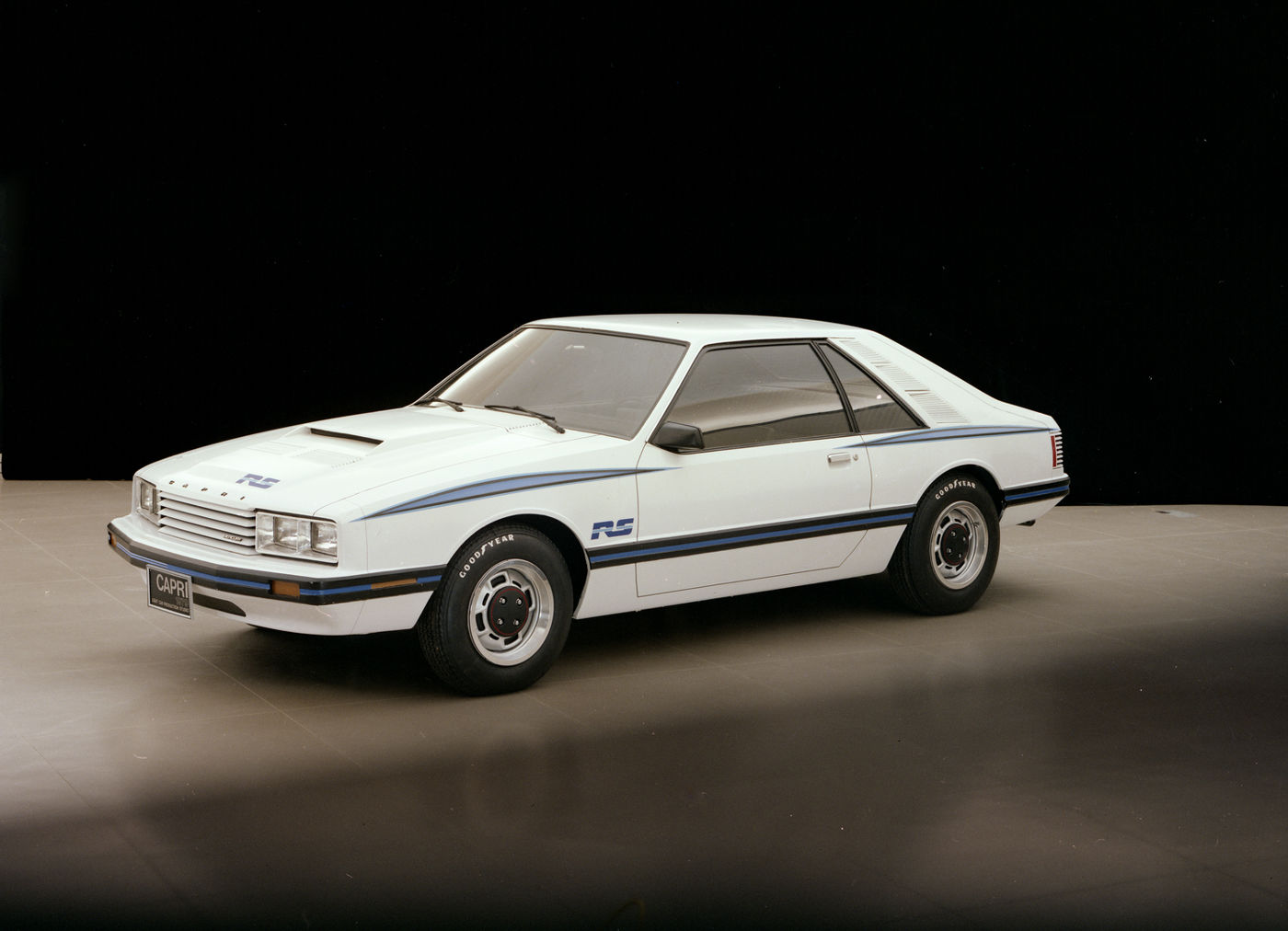
1979 opened the Fox-platform Capri generation, which Wikipedia's trim listing (not tied to individual years) spans as base Capri, Ghia, L, GS, RS and Turbo RS across 1979-1986. A secondary enthusiast source puts total 1979 output at roughly 110,000, with about 9,500 of those Turbo RS models; both figures are the source's own rounded relay of an earlier enthusiast-site count rather than an exact factory tally, and this record notes that a Ford production report or the Mercury section of a Standard Catalog of American Cars would be needed to close that gap.1,2
Four engines were offered: a 2.3 SOHC four, standard, with a 4-speed manual standard and 3-speed automatic optional; a 2.8 V6, optional, requiring power steering and brakes, with either transmission; a 5.0 V8, also optional and requiring power steering and brakes, with the 4-speed manual standard and an automatic optional (mandatory in California); and a 2.3 turbocharged four reserved for the Turbo RS, offered only with the 4-speed manual, no automatic available. The 4-speed manual was standard across every engine, with the 3-speed automatic optional on all of them except the turbo four.
Mercury's own 1979 catalogue reports skidpad figures from its own testing: 0.76 g with the base suspension paired with the 2.3 engine, and 0.81 g with the optional Rally Suspension paired with the 5.0 V8. A separate Radial Sport Suspension was optional, while the Rally Suspension, bundled with TRX tires and wheels, was itself optional elsewhere in the range but came standard on the Turbo RS; the base and Radial Sport suspensions were not available at all once the Turbo RS option was chosen.
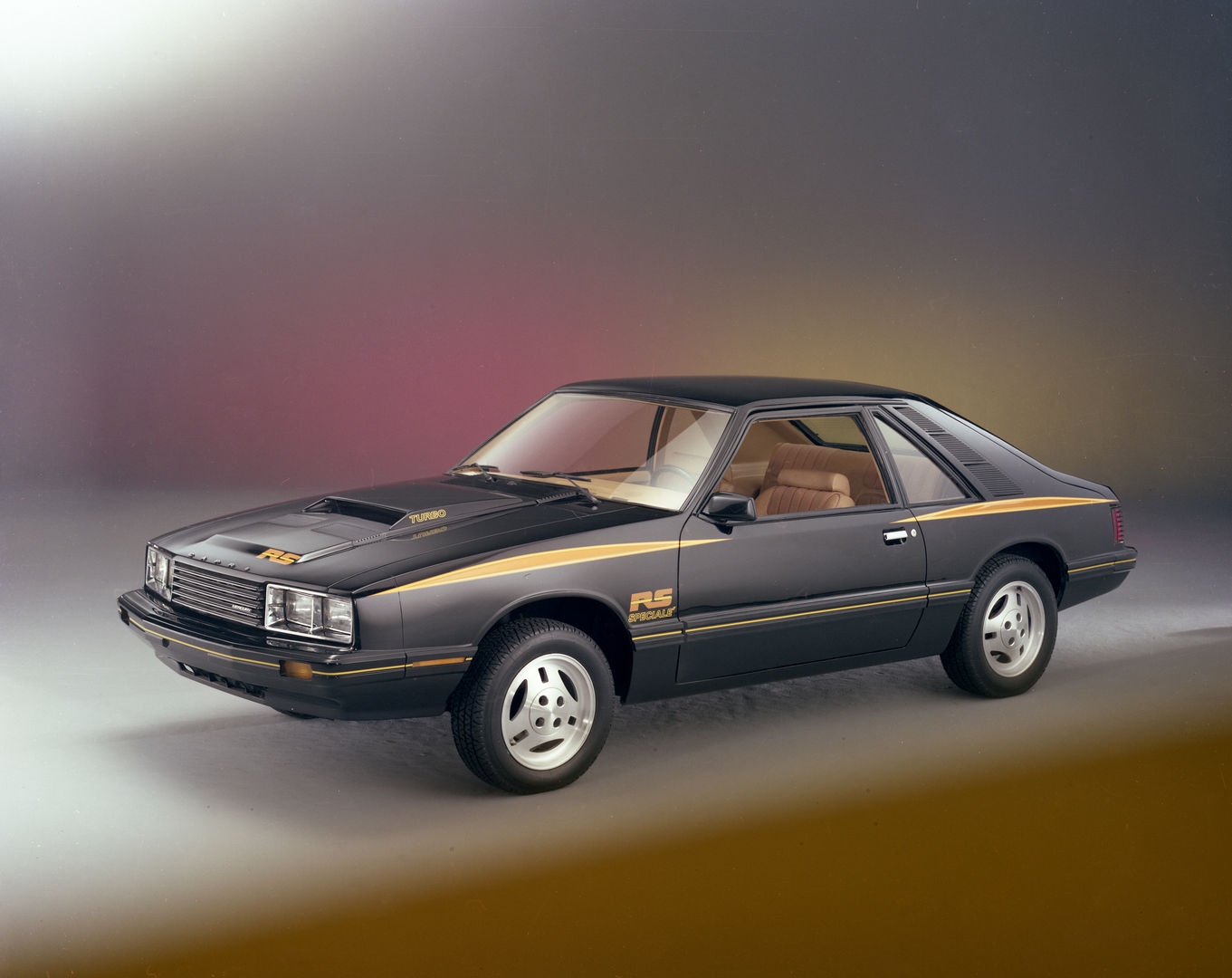
Fourteen exterior colors were charted, nine of them available across the range (including White, Tangerine, Bright Blue, and Black) and five more restricted, four of them further marked not available on the Capri RS or Turbo RS at all. RS and Turbo RS buyers chose from four paint-and-tape-stripe combinations: Medium Green with Lime Green, Bright Red with Orange, Medium Blue with Light Blue, or Light Orange with Yellow. Interior trim varied by model: Capri and Capri RS offered high-back buckets in Danbury cloth-and-vinyl or Corinthian vinyl, the Turbo RS instead had low-back buckets in Bradford cloth-and-vinyl or Cariban-and-Corinthian vinyl, and the Capri Ghia offered Edinboro cloth low-back buckets or natural grain leather; a separate Interior Accent Group added Bradford cloth-and-vinyl or a Cariban vinyl and leather combination with Corinthian vinyl.
The Capri measured 179.1 in overall on a 100.4-inch wheelbase, 69.1 in wide and 51.5 in tall, with a 56.6/57.0-inch front/rear tread, 32.4 cu ft of cargo volume with the rear seat folded, an 11.5-gallon fuel tank (12.5 with any optional engine), a base curb weight of 2,548 lb in the 49 states, and a drag coefficient of 0.48 as stated by the brochure. No price is carried in this record: one drawn from J.D. Power's live valuation pages was removed across this project on 2026-09-24 because those pages can change without notice and cannot be independently checked, and no source this record can stand behind has yet been found to replace it.
Fact sheet · 1979 · United States
The numbers
1979 Mercury Capri (RS, 5.0 and special editions) — The Fox-platform Capri generation, whose trims included the RS and Turbo RS, began; a secondary source puts 1979 output at about 110,000, some 9,500 of them Turbo RS.
Coverage: Partial — researched sections are shown; missing ones are not yet sourced. Researched through 2026-09-22.
Every figure is labeled with how sure we are. Reported means a manufacturer, registry, or reference figure we cite but have not reconciled against factory records ourselves. Disputed means credible sources disagree and both are shown. Rows are separately scoped; don't add them together unless the note says they make up a total.
Key facts
- Mercury's 1979 catalogue claims skidpad figures of 0.76 g with the base suspension (2.3 engine) and 0.81 g with the optional Rally Suspension (5.0 V8), from its own tests.
Production
| What was counted | Count | Basis | Status |
|---|---|---|---|
| All 1979 Capris (approximate)2 3-door hatchback · not stated The source's own rounded figure, relayed from the enthusiast site Four Eyed Pride; not an exact count. | 110,000 | built, model-year | Reported |
| What was counted | Count | Basis | Status |
|---|---|---|---|
| Capri Turbo RS (approximate)2 Turbo RS · 3-door hatchback · 2.3 turbo I-4 · not stated Rounded figure as given by the source; same lineage as the total. | 9,500 | built, model-year | Reported |
Only rounded secondary figures (about 110,000 total, about 9,500 Turbo RS) were found. Ford production reports or a Standard Catalog of American Cars 1976-1999 Mercury section would close this gap.
Prices when new *
No price is shown here. One was, until 2026-09-24: a figure from J.D. Power's live valuation pages, pulled from every page on this site because those pages can change without our knowing and we have no way to check them independently. We haven't found a source we can stand behind to put in its place yet. A price for this car elsewhere that looks suspiciously exact may be quoting that same J.D. Power figure rather than confirming it — several sites we checked turned out to be doing exactly that, without saying so.
Engines
| Engine | Factory rating | Availability | Built |
|---|---|---|---|
| 2.3 SOHC four 2.3 L | standard; 4-speed manual standard, 3-speed automatic optional | Not yet sourced | |
| 2.8 V6 2.8 L | optional; power steering and brakes required; 4-speed manual or 3-speed automatic | Not yet sourced | |
| 5.0 V8 5 L | optional; power steering and brakes required; 4-speed manual standard, automatic optional (required in California) | Not yet sourced | |
| 2.3 turbocharged four 2.3 L | Turbo RS; 4-speed manual only (automatic not available) | Not yet sourced |
Ratings are the manufacturer's advertised figures under the standard shown (SAE gross before 1972, SAE net after). They are not dyno results, and gross and net ratings can't be compared directly.
Transmissions
| Transmission | Availability | Built |
|---|---|---|
| 4-speed manual | standard with every engine | Not yet sourced |
| 3-speed automatic | optional except with the 2.3 turbo | Not yet sourced |
Options and packages
| Code | Option | Price | Installed |
|---|---|---|---|
|
Paint tape stripes, RS and Turbo RS: Medium Green/Lime Green, Bright Red/Orange, Medium Blue/Light Blue, Light Orange/Yellow | — | Not yet sourced |
|
Radial Sport Suspension [optional] | — | Not yet sourced |
|
Rally Suspension with TRX tires and wheels [optional; standard with Turbo RS] | — | Not yet sourced |
Paint
| Code | Color | Built |
|---|---|---|
9D |
White (standard) | Not yet sourced |
85 |
Tangerine (standard) | Not yet sourced |
3J |
Bright Blue (standard) | Not yet sourced |
1G |
Silver Metallic (standard) | Not yet sourced |
1P |
Medium Grey Metallic (standard) | Not yet sourced |
2P |
Bright Red (standard) | Not yet sourced |
46 |
Dark Jade Metallic (standard) | Not yet sourced |
1C |
Black (standard) | Not yet sourced |
83 |
Light Chamois (standard; not available on Capri RS or Turbo RS) | Not yet sourced |
64 |
Bright Yellow (standard; not available on Capri RS or Turbo RS) | Not yet sourced |
3F |
Light Medium Blue (standard; not available on Capri RS or Turbo RS) | Not yet sourced |
5M |
Medium Copper Metallic (standard; not available on Capri RS or Turbo RS) | Not yet sourced |
5W |
Medium Vaquero Metallic (optional Glamour colour; not available on Capri RS or Turbo RS) | Not yet sourced |
2H |
Medium Red Metallic (optional Glamour colour; not available on Capri RS or Turbo RS) | Not yet sourced |
3H |
Medium Blue Metallic (optional Glamour colour; not available on Capri RS or Turbo RS) | Not yet sourced |
Color names are the factory's. We don't show color swatches, because a screen color is no guide for a restoration.
Interiors
| Code | Trim | Built |
|---|---|---|
|
Capri and Capri RS: high-back bucket seats in Danbury cloth and vinyl - Chamois, Vaquero, Wedgewood Blue, Medium Red, Black | Not yet sourced |
|
Capri and Capri RS: high-back bucket seats in Corinthian vinyl - the same five colours and White with a choice of the five trim colours | Not yet sourced |
|
Capri Turbo RS: low-back bucket seats in Bradford cloth and vinyl - Chamois, Vaquero, Wedgewood Blue, Medium Red, Black | Not yet sourced |
|
Capri Turbo RS: low-back bucket seats in Cariban vinyl and Corinthian vinyl - the five colours and White | Not yet sourced |
|
Interior Accent Group: Bradford cloth and vinyl, or Cariban vinyl / natural grain leather with Corinthian vinyl | Not yet sourced |
|
Capri Ghia: Edinboro cloth low-back buckets, or natural grain leather | Not yet sourced |
Specifications
| Measure | Value | Applies to |
|---|---|---|
| Wheelbase | 100.4 in | all |
| Overall length | 179.1 in | all |
| Overall width | 69.1 in | all |
| Overall height | 51.5 in | all |
| Wheel tread, front / rear | 56.6 / 57.0 in | all |
| Cargo volume, rear seat down | 32.4 cu ft | all |
| Fuel capacity | 11.5 (12.5 with any optional engine) gal | all |
| Curb weight, 49 states | 2,548 lb | base |
| Aerodynamic drag coefficient | 0.48 Cd | as stated |
| Suspension choices | Standard; Radial Sport (optional); Rally Suspension with TRX tires and wheels (optional, standard with Turbo RS; Radial Sport and standard not available with Turbo RS option) text | by engine |
Same model year
Also in 1979
- AMC AMX The Spirit liftback carried the AMX name for 1979 with color-keyed flares, Rally-Tuned suspension and the 258 six or 304 V8. An unattributed secondary report puts deliveries at 3,657.
- AMC Gremlin X and Spirit AMX The Spirit liftback carried the AMX name for 1979 with color-keyed flares, Rally-Tuned suspension and the 258 six or 304 V8. An unattributed secondary report puts deliveries at 3,657.
- Buick Regal Turbo, Grand National and GNX The two-barrel turbo was dropped, the four-barrel Quadrajet became standard at 170 hp, and 21,389 turbo Sport Coupes were built.
- Buick Riviera Front-drive E-body Riviera and Motor Trend Car of the Year; the S Type brought the turbo 3.8 V-6 (185 hp).
- Chevrolet Chevy II and Nova Final year of the 1962-1979 chronology. Enthusiast-compiled production: 97,721 cars.
- Chevrolet El Camino SS RPO Z15 Super Sport trim on the fifth-generation El Camino; no production count from a verifiable source was found.
- Ford Ranchero GT In the Ranchero's last year a secondary source reports 12,159 GTs among 25,010 sold, a lineage no primary Ford record read here confirms.
- Ford Thunderbird The 400 was gone; a 302 V-8 with SelectShift was the standard power team and the Heritage replaced the Diamond Jubilee.
- Mercury Cougar Outside the muscle focus: 172,152 Cougars for 1979 per Wikipedia's table.
- Oldsmobile Cutlass, 4-4-2 and Hurst/Olds The Hurst/Olds returned on the downsized Cutlass Calais, built entirely by Oldsmobile with a 350 V-8: 2,499 built, 1,165 white and 1,334 black.
- Plymouth Road Runner A low-volume Volare appearance and performance package.
- Pontiac Firebird and Trans Am The peak: 211,453 Firebirds, 117,108 Trans Ams, and 7,500 Tenth Anniversary cars.
- Pontiac Grand Prix The last year of the SJ with a 301 4-barrel as the top engine.
- Pontiac Tempest and LeMans The downsized LeMans offered its strongest powertrain in the 301 four-barrel (L37), the only V8 listed with a four-speed manual.