1979 · Pontiac · United States
1979 Pontiac Grand Prix: The SJ Carries On
The SJ carried on for another year, with a 301 4-barrel as the top engine.
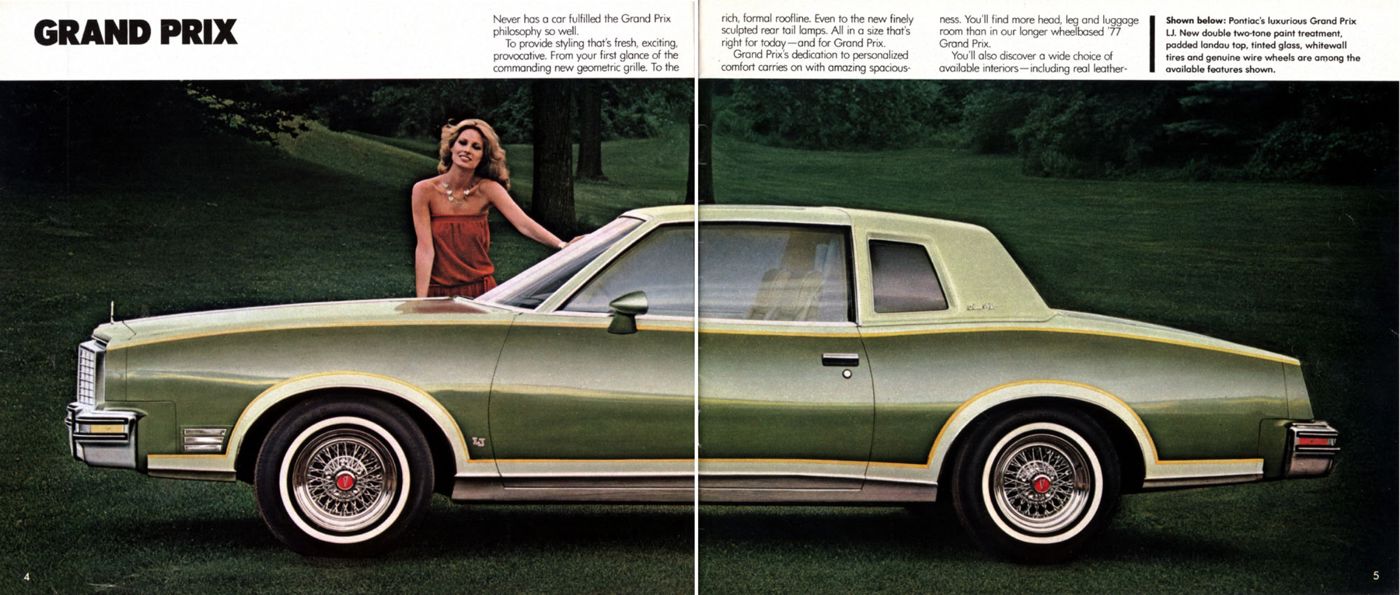
The 1979 Grand Prix was the second year of the smaller body, and the SJ still sat at the top of the line. Pontiac kept that body and offered V-6 and V-8 power, including a four-speed manual behind one V-8. A separate SSJ conversion added a distinctive appearance for buyers after something less ordinary. Pontiac's compact coupe was now established, and the SJ name would continue for one more model year, through 1980.1
Pontiac's buyer's guide lists a Buick 231 V-6, Pontiac 301 two- and four-barrel V-8s, and a Chevrolet 305 four-barrel for California and high-altitude use. Their codes are LD5, L27, L37 and LG4. The L37 could be paired with a four-speed; an automatic was available across the range and standard with the L27. The V-6 came standard with a three-speed floor-shift manual. Their ratings run from 105 hp and 185 lb-ft for the V-6 to 140 and 150 hp for the two- and four-barrel 301s.2,1
Pontiac built 124,815 J cars, 61,175 LJs and 24,060 SJs that year, for a total of 210,050. The J made up nearly 60 percent of the line. The SSJ was a conversion by Creative Automotive, not a factory Grand Prix trim.1
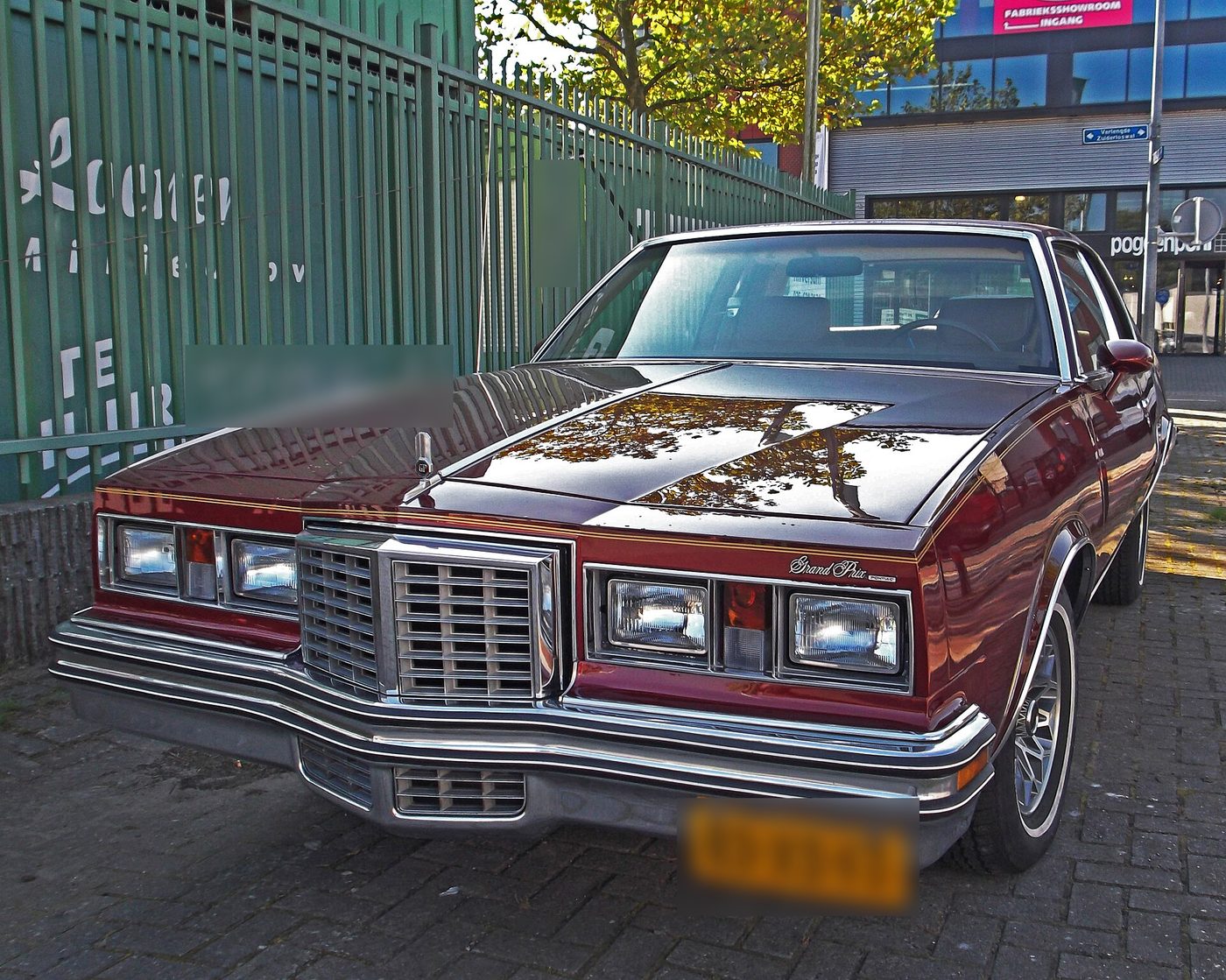

Prices were $5,113 for a V-6 J, $5,308 for a V-8 J, $6,192 for the LJ and $6,438 for the SJ. Options ranged from emissions and trailer packages to sunroofs, climate control, power seats and windows, stereo and CB systems. Pontiac offered Rally RTS suspension with 205/70R14 white-letter tires. The SSJ's silver or gold roof band, landau treatment, decals and wire wheels belonged to the conversion. A hatch roof, a glass sunroof or a power metal sunroof could open the top, and an AM/FM stereo came with 8-track, cassette or CB. Automatic level control was also listed.
The J's notchback seat came in cloth or all-vinyl, with cut-pile carpet and simulated walnut trim. The LJ used loose-pillow-look velour; the SJ had vinyl buckets and console. Viscount leather buckets were available in upper trims. The car measured 201.4 inches long on a 108.1-inch wheelbase, with 16.1 cubic feet of trunk space. Headroom was 37.6 inches in front and 37.8 in the rear, legroom 42.8 and 36.3. It was 72.7 inches wide on a 58.5-inch front and 57.8-inch rear tread.

Listed shipping weights rise from 3,126 pounds for a V-6 J and 3,205 for a V-8 J to 3,285 for the LJ and 3,349 for the SJ. The Grand Prix and LJ rode on 195/75R14 steel-belted radials. Axle ratios followed the powertrain: 2.93:1 for the V-6 with the three-speed, 2.41 for the V-6 automatic, 2.73 for the L37 four-speed and 2.29 for the L37 automatic, with 2.56 available.2
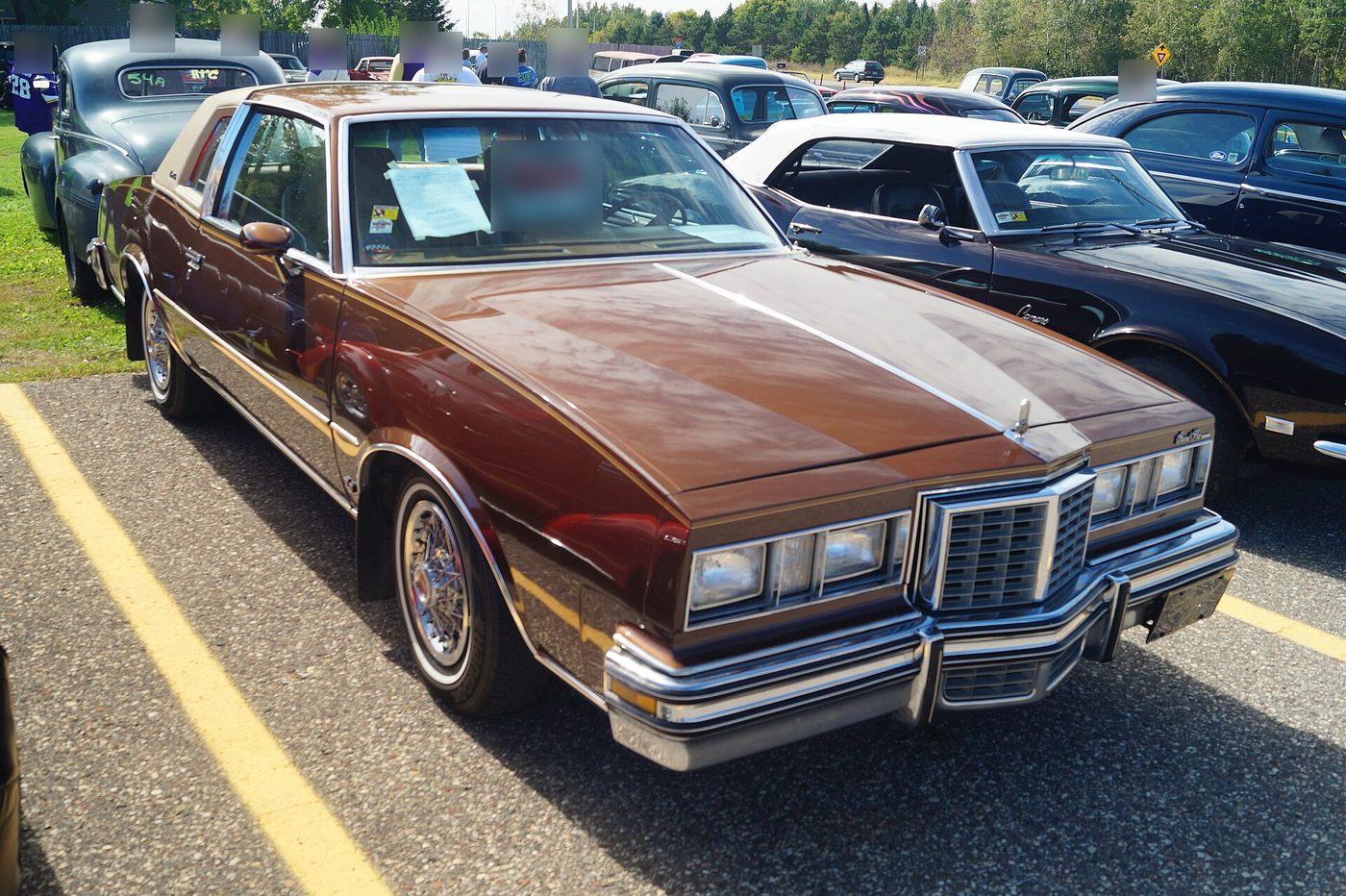
The SJ's 1979 run closed with 24,060 cars and a four-speed still on the list behind the 301 four-barrel. Creative Automotive's SSJ folder shows the conversion's brushed-silver or anodized-gold Targa band, Elk Grain vinyl landau roof with opera windows, decals and wire wheels, and offers it in 14 colors, from Cameo White, Platinum and Starlight Black through Skymist, Glacier and Nocturne Blue to Carmine and Claret.2
Fact sheet · 1979 · United States
The numbers
1979 Pontiac Grand Prix: The SJ carried on for another year, with a 301 4-barrel as the top engine.
Figures may describe different groups of cars. Add rows together only when the note says they make up a total.
Key facts
- Pontiac's 1979 buyer's guide lists four engines for the Grand Prix: the Buick 231 V-6 (LD5), the Pontiac 301 2-bbl (L27) and 4-bbl (L37), and a Chevrolet 305 4-bbl (LG4) for altitude and California cars, with a four-speed manual offered behind the 301 4-bbl.
- Factory prices: $5,113 (V-6) or $5,308 (V-8) Grand Prix, $6,192 LJ, $6,438 SJ.2
Production
| What was counted | Built |
|---|---|
| Base "J" Hardtop1,2 Base "J" Hardtop · 2-door | 124,815 |
| "LJ" Hardtop1,2 "LJ" Hardtop · 2-door | 61,175 |
| "SJ" Hardtop1,2 "SJ" Hardtop · 2-door | 24,060 |
| What was counted | Built |
|---|---|
| Grand Prix total1 | 210,050 |
Prices when new
| Model | Price | Price type |
|---|---|---|
| Grand Prix coupe (J37), V-62 | $5,113 | factory price, 1979 model year |
| Grand Prix coupe (J37), V-82 | $5,308 | factory price, 1979 model year |
| Grand Prix LJ coupe (K37), V-82 | $6,192 | factory price, 1979 model year |
| Grand Prix SJ coupe (H37), V-82 | $6,438 | factory price, 1979 model year |
Prices are the nominal dollars of the day, not adjusted for inflation.
Engines
| Engine | Factory rating | Availability |
|---|---|---|
| LD5 · 231 cid V61 231 cu in · 2-barrel | 105 hp, 185 lb-ft (SAE net (per source's note that post-1972 ratings are net)) | base powertrain, Grand Prix (federal and California); Buick-built |
| L27 · 301 cid V81 301 cu in · 2-barrel | 140 hp, 235 lb-ft (SAE net (per source's note that post-1972 ratings are net)) | base powertrain for the LJ (federal); Pontiac-built; the V-6 with automatic was available on the LJ |
| L37 · 301 cid V81 301 cu in · 4-barrel | 150 hp, 240 lb-ft (SAE net (per source's note that post-1972 ratings are net)) | base powertrain for the SJ; available on Grand Prix and LJ (federal); Pontiac-built |
| LG4 · 5.0 litre (305 CID) 4-bbl V-8 (Chevrolet) 305 cu in · 4-barrel | altitude (with UPC NA6) and California certification, all three models; Chevrolet-built |
Ratings are published figures, not dyno results. Gross and net ratings aren't directly comparable.
Transmissions
| Transmission | Availability |
|---|---|
| Three-speed manual, floor shift | base powertrain with the LD5 V-6 on Grand Prix (federal) |
| Four-speed manual, floor shift | with the L37 301 4-bbl on Grand Prix, LJ and SJ (federal) |
| Automatic (column or floor shift) | with every engine; standard with L27; the SJ's base powertrain pairs L37 with the automatic |
Options and packages
| Code | Option |
|---|---|
NA6UPC |
Altitude emissions (designed and recommended for high-altitude operation) |
V82RPO |
Trailer-towing package |
| Grand Prix SJ: custom finned wheel covers, wide rocker panel mouldings with extensions, body-colour outside mirrors (LH remote), SJ identification, accent stripes; custom stitched instrument panel pad, brushed-aluminium instrument panel trim plate, rally gauges and trip odometer, custom sport steering wheel, vinyl front bucket seats (Viscount leather available), console | |
| Grand Prix LJ: deluxe wheel covers, wide rocker panel mouldings, LJ identification, body-colour mirrors; custom seats with loose-pillow look in velour (Viscount buckets available), luxury carpet, rear quarter courtesy lamps, luxury cushion steering wheel, added acoustical insulation | |
| Air conditioning, custom | |
| Air conditioning, automatic climate control | |
| Cruise control | |
| Rear window defroster | |
| Hatch roof | |
| Glass sunroof | |
| Power metal sunroof | |
| Rally gauges and trip odometer | |
| Rally RTS suspension (with 205/70R14 white-letter tyres) | |
| 60/40 or notchback seat, reclining passenger seat | |
| Power windows, door locks and six-way driver's seat | |
| AM/FM stereo with 8-track or cassette, AM/FM with CB | |
| Automatic level control | |
| Trailer group, medium | |
| SSJ: brushed-silver or anodized-gold roof Targa-band, French-seamed Elk Grain vinyl landau roof with private back window and opera windows, SSJ decals and cast emblems, accent striping; wire wheels and T-top offered |
Paint
| Code | Color |
|---|---|
11 |
Cameo White |
15 |
Platinum |
19 |
Starlight Black |
21 |
Skymist Blue |
22 |
Glacier Blue |
29 |
Nocturne Blue |
40 |
Willowmist Green |
44 |
Jadestone Green |
54 |
Montego Cream |
61 |
Mission Beige |
63 |
Sierra Copper |
69 |
Heritage Brown |
77 |
Carmine |
79 |
Claret |
Color names are the factory's. We don't show color swatches, because a screen color is no guide for a restoration.
Interiors
| Trim |
|---|
| Grand Prix: notchback seat with centre armrest in cloth or all-vinyl; nylon-blend cut-pile carpeting; simulated Regal walnut instrument panel trim plate; deluxe cushion steering wheel |
| Grand Prix LJ: custom seats with loose-pillow-look design in velour; Viscount bucket seats available (leather with vinyl bolsters) |
| Grand Prix SJ: specific vinyl front bucket seats with console; Viscount bucket seats available (leather with vinyl bolsters) |
Specifications
| Measure | Value | Applies to |
|---|---|---|
| Shipping weight, V-6 / V-82 | 3,126 / 3,205 lb | Grand Prix (J37) |
| Shipping weight2 | 3,285 lb | Grand Prix LJ (K37) |
| Shipping weight2 | 3,349 lb | Grand Prix SJ (H37) |
| Overall length | 201.4 in | Grand Prix, base automobile |
| Overall width | 72.7 in | Grand Prix, base automobile |
| Wheelbase | 108.1 in | Grand Prix, base automobile |
| Tread, front/rear | 58.5/57.8 in | Grand Prix, base automobile |
| Head room, front/rear | 37.6/37.8 in | Grand Prix, base automobile |
| Leg room, front/rear | 42.8/36.3 in | Grand Prix, base automobile |
| Shoulder room, front/rear | 55.7/55.9 in | Grand Prix, base automobile |
| Hip room, front/rear | 51.6/54.9 in | Grand Prix, base automobile |
| Trunk capacity | 16.1 cu ft | Grand Prix |
| Standard tyres | 195/75R14 black steel-belted radial | Grand Prix and LJ |
| Axle ratios, Grand Prix and LJ (standard / available) | LD5 3-speed manual 2.93; LD5 automatic 2.41 (2.73); L27 automatic 2.14 or 2.29; L37 4-speed 2.73; L37 automatic 2.29 (2.56); LG4 altitude automatic 2.73; LD5 California automatic 2.73; LG4 California automatic 2.29 (2.73) :1 | Grand Prix and Grand Prix LJ |
| Axle ratios, SJ (standard / available) | L37 4-speed 2.73; L37 automatic 2.29 (2.56); LG4 altitude 2.73; LG4 California 2.29 (2.73) :1 | Grand Prix SJ |
Identification
- Series and body
- Series 2G; body style J37 for the Grand Prix, K37 for the LJ and H37 for the SJ.2
Identification
Read a 1979 Pontiac VIN
The VIN decoder runs in your browser and never sends the VIN anywhere. How the factory numbered this year's cars:
Same model year
Also in 1979
- AMC AMX The Spirit liftback carried the AMX name for 1979 with color-keyed flares, Rally-Tuned suspension and the 258 six or 304 V8; 3,657 delivered.
- AMC Gremlin X and Spirit AMX The Spirit liftback carried the AMX name for 1979 with flares, Rally-Tuned suspension and a 258 six or 304 V8; 3,657 delivered.
- Buick Regal Turbo, Grand National and GNX The two-barrel turbo was dropped, the four-barrel Quadrajet became standard at 170 hp, and 21,389 turbo Sport Coupes were built.
- Buick Riviera Front-drive E-body Riviera and Motor Trend Car of the Year; the S Type brought the turbo 3.8 V-6 (185 hp).
- Chevrolet Chevy II and Nova Final year of the 1962-1979 chronology. Enthusiast-compiled production: 97,721 cars.
- Chevrolet El Camino SS RPO Z15 Super Sport trim at $5,209.80, joined by the Royal Knight package (2,815 built); 58,008 El Caminos built.
- Ford Ranchero GT In the Ranchero's last year the GT was the best seller: 12,159 of 25,010 sold, just 66 ahead of the Ranchero 500.
- Ford Thunderbird The 400 was gone; a 302 V-8 with SelectShift was the standard power team and the Heritage replaced the Diamond Jubilee.
- Mercury Capri RS and ASC/McLaren The Fox-platform Capri generation, whose trims included the RS and Turbo RS, began; a secondary source puts 1979 output at about 110,000, some 9,500 of them Turbo RS.
- Mercury Cougar The XR-7 was nearly the whole line: 163,716 of the 172,152 Cougars built for 1979.
- Oldsmobile Cutlass, 4-4-2 and Hurst/Olds The Hurst/Olds returned on the downsized Cutlass Calais, built entirely by Oldsmobile with a 350 V-8: 2,499 built, 1,165 white and 1,334 black.
- Plymouth Road Runner A low-volume Volare appearance and performance package.
- Pontiac Firebird and Trans Am The peak: 211,453 Firebirds, 117,108 Trans Ams, and 7,500 Tenth Anniversary cars.
- Pontiac Tempest and LeMans The downsized LeMans offered its strongest powertrain in the 301 four-barrel (L37), the only V8 listed with a four-speed manual.