People · Team owner · Chrysler 300 program
Carl Kiekhaefer: Preparation Before the Word Superteam
An outboard-motor manufacturer bought a Chrysler 300, hired a champion, and built an operation remembered for uniforms and transporters as much as for eighteen victories.
Story reviewed July 27, 2026
Carl Kiekhaefer enters the 1955 story at Daytona through Tim Flock’s career. NASCAR says Flock encountered Kiekhaefer’s Chrysler 300 there, joined the new effort, and produced eighteen victories, thirty-two top-five finishes, and his second championship. The meeting is a stronger opening than a retrospective nickname because it shows a program at the moment it acquired the driver who would define its first season. Kiekhaefer was new to this level of team ownership, while Flock already knew what a manufacturer-backed championship felt like from Hudson.
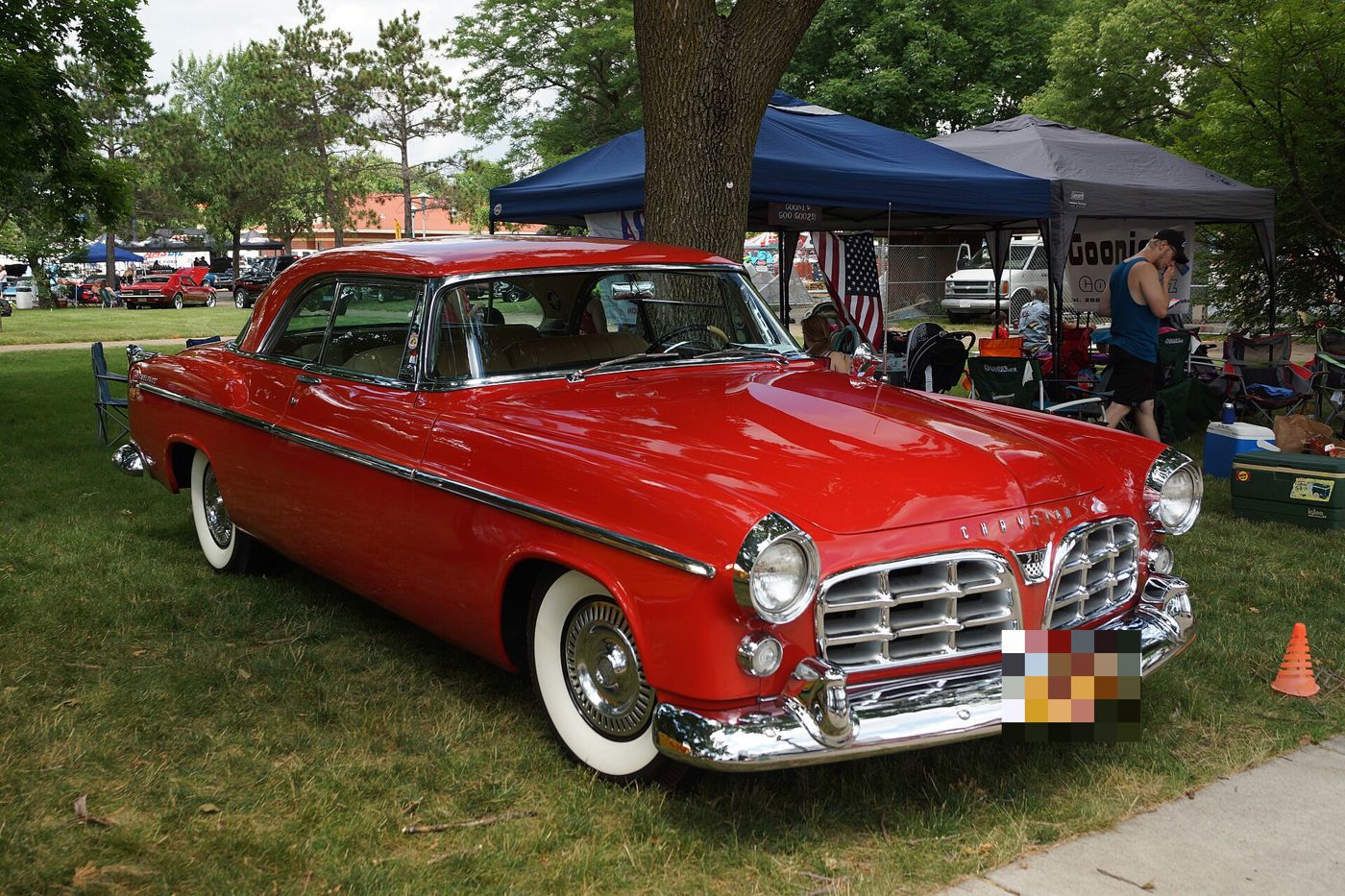
The Chrysler 300 offered an unusually suitable public identity. Its brochure advertised a 331.1-cubic-inch dual-four-barrel FirePower V8, 300 brake horsepower, heavy-duty suspension, power brakes, and a limited-quantity Sports Coupe. Race preparation went far beyond the showroom list, and this page never treats a production specification as a NASCAR setup. The connection was communicative as well as mechanical: the recognizable 300 allowed Kiekhaefer’s results to reinforce Chrysler’s performance special, while the brochure gave spectators a street car through which to understand the team.
Flock’s 1955 record is the secure numerical center. Two NASCAR biographies and the International Motorsports Hall of Fame agree on eighteen wins and the championship, with eighteen poles also appearing in institutional summaries. Start counts conflict at 38, 39, and 41 across NASCAR pages. Rather than silently selecting whichever creates the most dramatic percentage, the publication releases the stable results and withholds the start denominator until the archive explains whether the pages use different entry or race definitions.
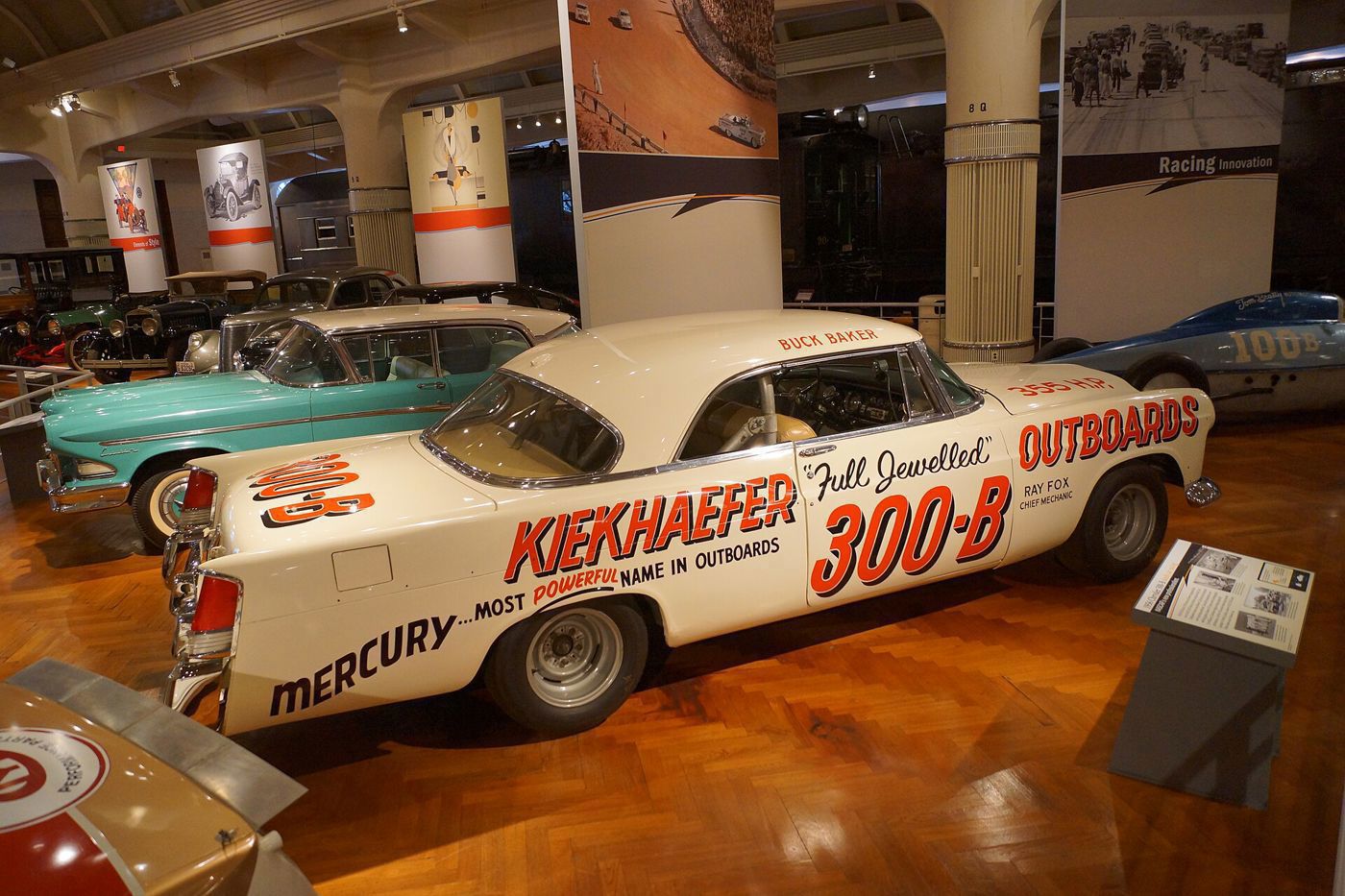
The organization’s preparation is visible in surviving artifacts and institutional interpretation. The Henry Ford describes matching uniforms, immaculately presented cars, enclosed transporters instead of open trailers, and deliberate pit-stop practice. A preserved Kiekhaefer pit board shows the practical communication system: chalk messages told a driver when to stop for fuel or tires and reported gaps ahead and behind. The board is not assigned to an invented race or message. As an object, it demonstrates that information flow itself had become equipment.
These practices are why later writers describe Kiekhaefer as a precursor to the modern racing superteam. The page lets the conclusion emerge from evidence rather than announcing a disputed first. Other teams also prepared carefully, transported equipment, organized crews, and communicated from the pits. Establishing who was first would require comparative research across the field. What can be said is concrete: Kiekhaefer’s operation combined uniform presentation, enclosed transport, immaculate cars, practiced stops, and structured pit communication at a notable scale.
Victory totals require equally careful scope. Flock’s eighteen belong to his 1955 championship season. The Henry Ford summarizes twenty-two wins in forty-one races for Buck Baker and Speedy Thompson in 1956. NASCAR reports fifty-two victories from 190 entries for Kiekhaefer’s Chrysler-Dodge organization across 1955 and 1956. Those figures are not competing answers to one question. They cover different drivers, seasons, marques, and organizational boundaries, so none becomes a 1955 C-300-only total.
The surviving 1956 Chrysler 300-B at The Henry Ford makes the scope issue physical. The museum identifies it as a Kiekhaefer-modified team car and documents its later engine and transmission specification, but warns that the team did not track victories by individual car. No particular win can be assigned to that chassis from the catalog. Nor can its 354-cubic-inch, 355-horsepower, three-speed configuration be transferred backward to Flock’s 1955 Chrysler 300. A survivor is evidence only within its documented identity.
Kiekhaefer’s role also should not erase the people executing the work. Flock drove, mechanics prepared the cars, crew members practiced stops, and other drivers expanded the organization. An owner could impose standards, supply resources, recruit talent, and insist on presentation without personally performing every task. Describing leadership at the correct level makes the achievement more credible. The operation was a system, and Kiekhaefer’s historical importance lies in building and demanding that system.
The contrast with Hudson is especially revealing. Hudson’s early-decade factory effort had supported Teague, Thomas, Flock, Yunick, and multiple Hornets. By 1955 the factory presence was gone even though the name and 308 remained in showrooms. Flock’s move carried experience from that dispersed program into Kiekhaefer’s new Chrysler organization. Performance history advanced not only because a new engine appeared, but because people who understood winning changed teams and applied their knowledge under different management.
There is colorful personality lore around Kiekhaefer, but this batch does not rely on it. No private tirades, invented workshop dialogue, or simplified motivations are needed to make the story lively. A driver meets a new owner at Daytona; the partnership wins eighteen times; objects reveal disciplined communication; museum records show a continuing fleet whose individual victories were not tracked. Those scenes are documented and allow readers to experience the transformation without a documentary voice reciting unsupported legend.
The program’s polished appearance can also be misread as mere publicity. In racing, presentation and logistics affect execution. Enclosed transport protects equipment and creates mobile work capacity. Uniforms clarify team identity. Pit practice reduces hesitation. A board turns scattered observations into instructions a driver can use at speed. None guarantees victory, but together they show preparation becoming repeatable. That organizational lesson would outlive the particular Chryslers and is the strongest reason Kiekhaefer belongs in the people section.
Kiekhaefer did not need to invent the modern team single-handedly to change expectations. The supported 1955 story is already substantial: he paired a potent new Chrysler identity with a proven champion, built an operation institutions remember for equipment and discipline, and delivered a season of eighteen wins. The unresolved totals remain visible, as does the boundary between street car and race car. What survives is not a slogan about being first, but a clear example of preparation becoming a competitive product in its own right.