Racing · Carl Kiekhaefer · Mercury Outboards · 1955
Kiekhaefer’s 1955 Chryslers: When Preparation Became the Main Character
Eighteen victories and a championship in one season, won by an organization whose uniforms, transporters, and practiced pit stops changed what a race team was expected to be.
Story reviewed July 27, 2026
Tim Flock met Carl Kiekhaefer’s new Chrysler effort at Daytona in 1955 and joined it. NASCAR’s retrospective condenses the consequence into a remarkable season: eighteen victories, thirty-two top-five finishes, and Flock’s second championship. The story begins at that encounter because the team was not yet an institution with decades of hindsight attached. It was a new owner, a proven driver, and a Chrysler 300 whose showroom identity already promised unusual power and chassis attention.
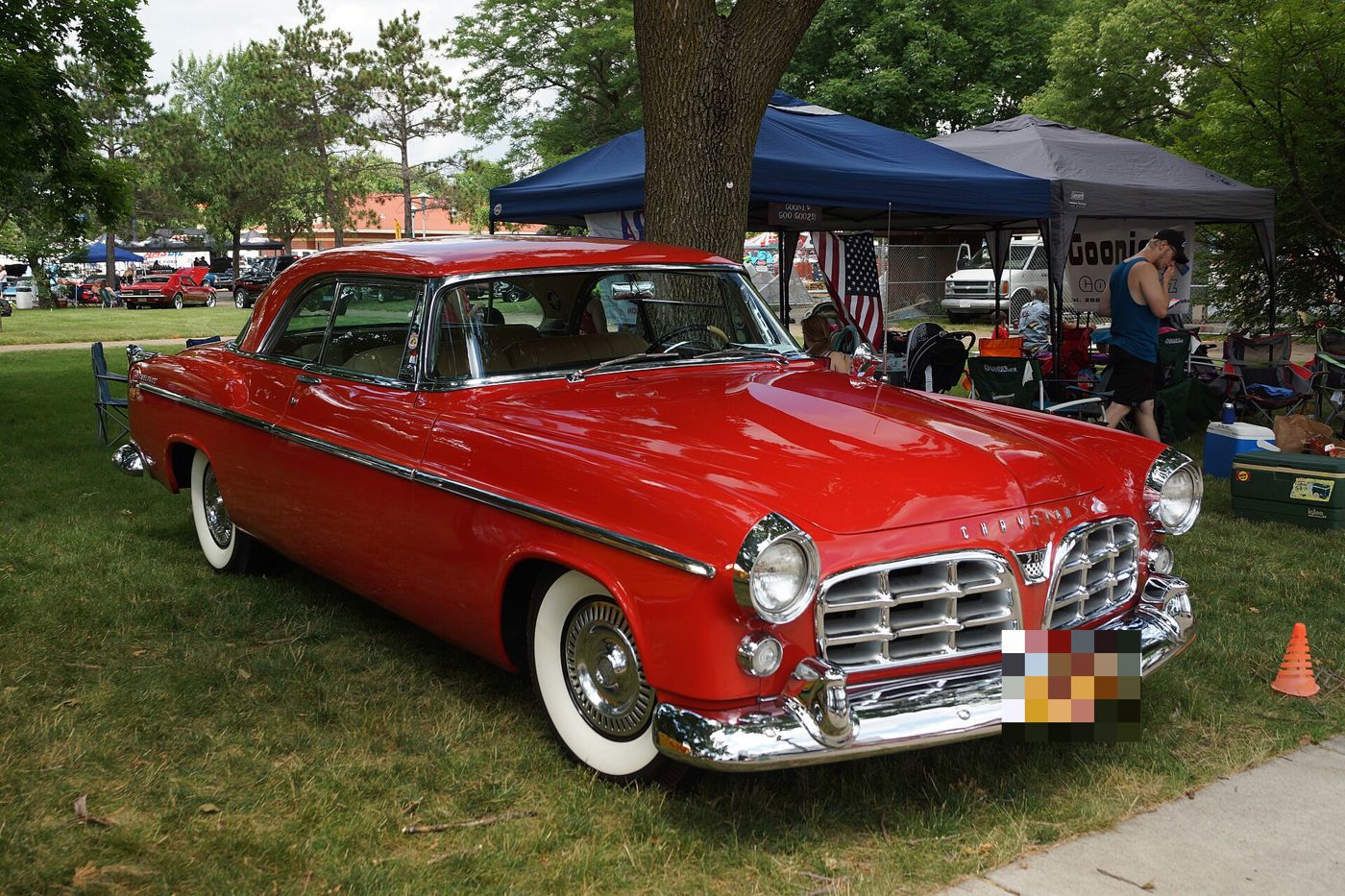
The production 300 made an effective public symbol. Chrysler advertised a dual-four-barrel 331.1-cubic-inch FirePower V8 with 300 brake horsepower, heavy-duty suspension, strong brakes, and PowerFlite. Kiekhaefer’s racing cars required preparation beyond those street specifications, so the brochure cannot authenticate a race setup. What it can establish is why the partnership made sense to spectators. A visible factory performance special and a winning stock-car team could reinforce one another without being mechanically identical.
Flock’s eighteen wins are supported across NASCAR and hall-of-fame records. His 1955 pole total is also reported as eighteen. The number of starts varies among NASCAR pages—38, 39, and 41—so this release refuses to calculate a definitive win percentage. That inconsistency is not hidden in a footnote while one denominator is selected. It remains an open archival question about entry and race definitions, while the stable win, top-five, pole, and championship facts carry the public narrative.
The organization distinguished itself through repeatable preparation. The Henry Ford describes matching uniforms, exceptionally clean cars, enclosed transporters, and deliberate pit-stop practice. These are not decorative details added to enliven a technical report. They show racing work being organized as a system. Presentation helped establish standards and accountability; enclosed transport changed what could travel with the team; practiced stops treated pit time as performance rather than interruption.
A surviving pit board makes that system tangible. Its chalk surface carried instructions about fuel and tires and gaps to competitors ahead and behind. The catalog does not tie it to a named race, driver, or surviving message, so this page does not invent one. The board is valuable precisely as ordinary equipment. It shows an organization collecting information, converting it into a concise instruction, and delivering it to a driver passing at speed. Preparation included communication architecture.
Later accounts often call Kiekhaefer’s organization the first modern superteam. This page uses “precursor” and lets the evidence support the interpretation. Proving a universal first would require comparing contemporary teams across NASCAR and other series. The documented practices are sufficient: scale, disciplined logistics, standardized appearance, deliberate pit work, and a season of dominant results. Readers can understand why the team changed expectations without being asked to accept an unsourced title.
The totals after 1955 require strict boundaries. The Henry Ford gives twenty-two wins in forty-one races to Buck Baker and Speedy Thompson in a 1956 discussion. NASCAR gives fifty-two victories from 190 entries for Kiekhaefer’s Chrysler-Dodge organization across 1955 and 1956. Neither is a 1955 Chrysler 300-only figure. Mixing them would create a larger but meaningless number. The story keeps driver, season, marque, and organizational scope visible every time a total appears.
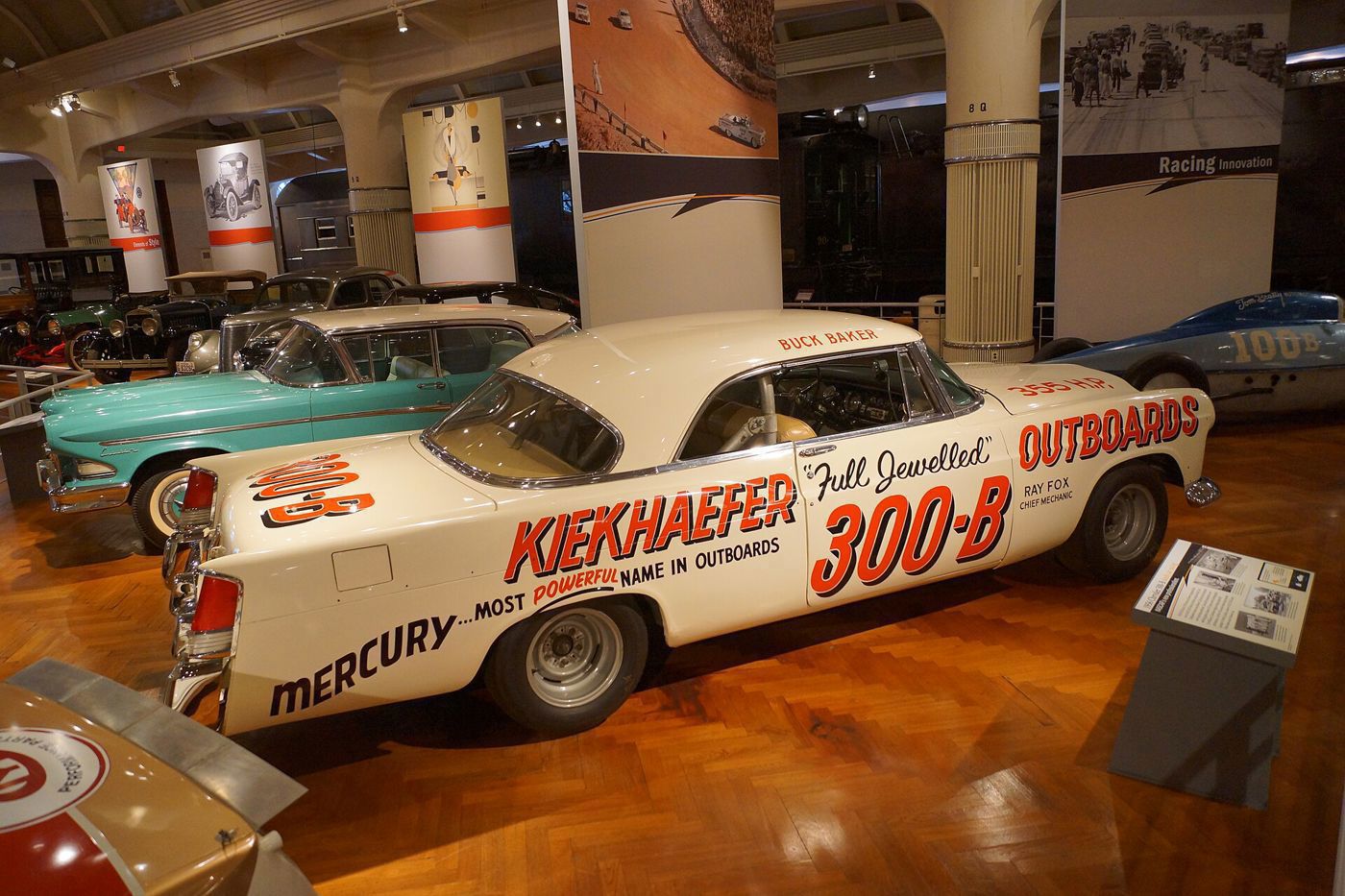
The Henry Ford’s surviving 1956 300-B adds continuity and another warning. It is a genuine Kiekhaefer-modified team car, but the museum says victories were not tracked by individual chassis. Its 354-cubic-inch engine, 355-horsepower rating, and three-speed specification belong to that 1956 artifact, not Flock’s 1955 comparison record. No famous victory is assigned to it without a chassis-level log. The survivor demonstrates the continuing program and the limits of retrospective identity at once.
Flock’s earlier Hudson championship gives the season historical depth. Hudson’s factory-backed peak had involved Teague, Thomas, Flock, Yunick, and a family of Fabulous Hornets. By 1955 the factory presence was gone, even though American Motors still sold a Hornet with the 308 and Twin H-Power. Flock carried championship experience into Kiekhaefer’s organization. The new team’s rise was therefore partly a story of talent migrating after an older program dispersed.
Street performance and racing influence flowed in both directions without becoming the same thing. The 300’s production identity made the race effort legible, and race success made the road car’s performance claim culturally powerful. Yet the comparison table contains no race result and the racing page does not pretend a customer’s PowerFlite coupe was prepared like Flock’s entry. Keeping the records separate makes the exchange clearer: marketing identity, engineering potential, specialist preparation, and driver performance each did distinct work.
This separation also protects future research. A period road test of a customer 300 can later enter the comparison as a measured observation with its axle, tires, weight, weather, and method. A newly found race log can refine entrant and chassis history without changing the street configuration. The shared model name becomes a navigational connection, not permission to move specifications or results between fundamentally different vehicles.
No image in this research pass is cleared merely because an institution displays it online. The Chrysler brochure, Henry Ford car, pit board, and NASCAR photographs each carry their own rights chain. Candidate images remain in the owner’s permission queue, and the batch is valid as text-only research. That restraint matters for a racing story because a mislabeled or later 300-B photograph could silently transfer 1956 equipment into the 1955 account even before a reader reaches the caption.
The 1955 season deserves a full page because the main character is not a trick part or one dramatic race. It is preparation becoming visible and systematic. Flock’s eighteen wins and championship supply the result. Uniforms, transporters, practiced stops, immaculate cars, and the pit board show how an organization pursued it. Disputed denominators and mixed-scope totals remain open. What can be said confidently is powerful enough: Kiekhaefer assembled a program whose way of working became as historically important as the Chryslers it raced.