People · Driver and builder · Shelby American, Ford, Chrysler
Carroll Shelby: The Driver, the Builder, and the Brand That Outlived Both
A Le Mans winner turned car builder whose name kept selling performance cars for four decades after he stopped personally building any of them — the line between Shelby American's own work and everything licensed afterward.
Story reviewed September 27, 2026
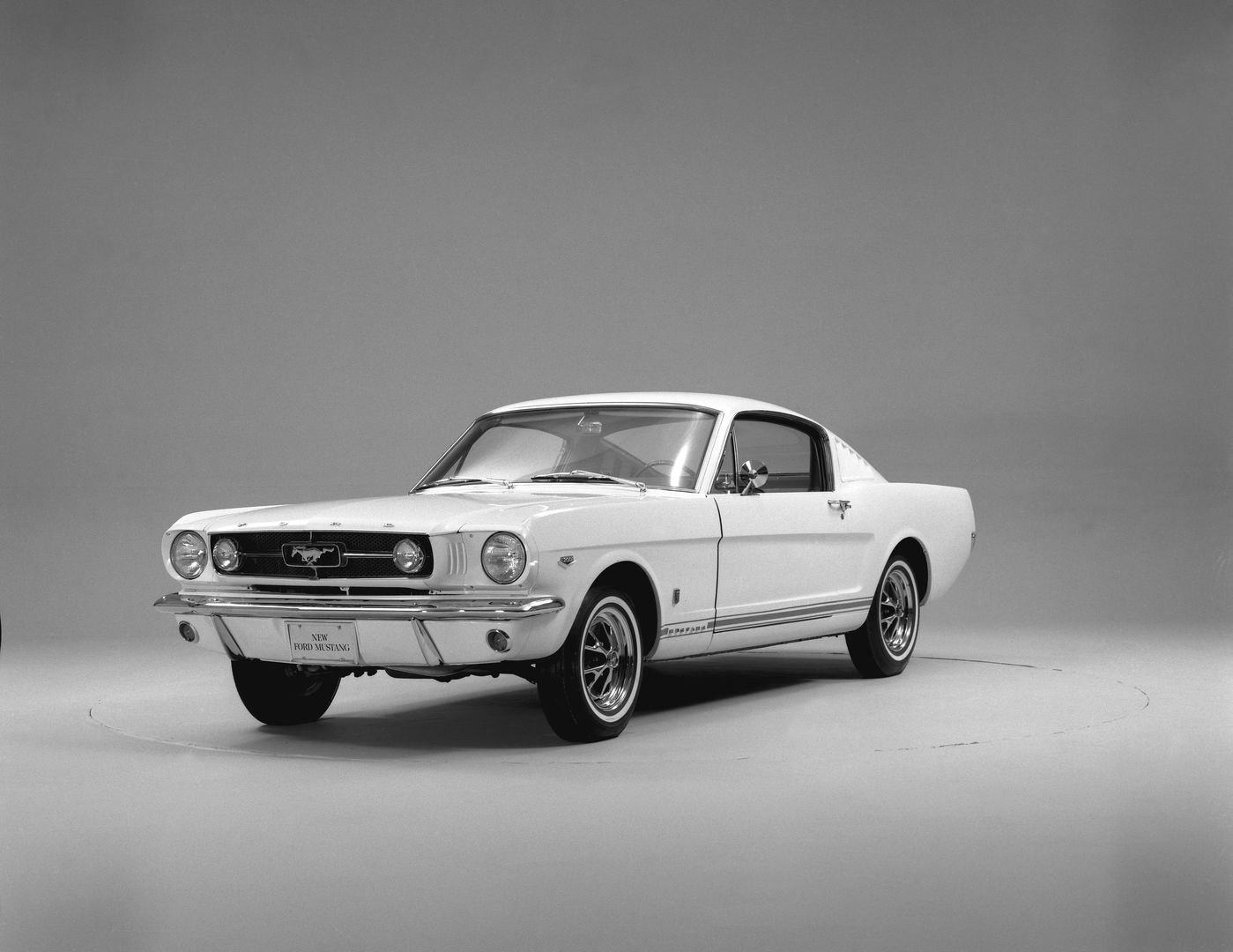
Carroll Shelby's signature has been stamped on cars spanning six decades, and not all of them passed through hands he actually had on a wrench. Separating what Shelby American physically built in the 1960s from what Ford, and later Chrysler, built afterward under a license bearing his name is not a technicality — it is close to the whole story of how a mediocre chicken farmer became one of the most licensed names in American performance.
Carroll Hall Shelby was born January 11, 1923, in Leesburg, Texas, the son of a mail clerk. He served as a flight instructor and test pilot for the Army Air Forces during the Second World War, a job that kept him stateside training other pilots rather than in combat. Afterward he tried raising chickens for a living before discovering he had a real talent for something else entirely: in 1952, driving an MG-TC, he won his first race.
Racing success came fast. Within two years he was driving Ferraris and Maseratis, winning a dozen races, and in 1954 he joined the Aston Martin factory team and made his Le Mans debut alongside Paul Frère in a DB3S — a race that ended early. He returned to Le Mans five times over the decade, and in 1957 alone won nineteen consecutive races on his way to an SCCA championship and Sports Illustrated's Driver of the Year award. The high point came on June 21, 1959, when Shelby and English co-driver Roy Salvadori won the 24 Hours of Le Mans outright in an Aston Martin DBR1 — a result that remains, to this day, the only outright Le Mans win in Aston Martin's history. A heart condition ended his driving career the following year, in 1960, at 37.
Retirement from the cockpit was not retirement from racing. Shelby had spent his driving years increasingly frustrated by the fast European sports cars of the day — Ferraris, Jaguars, Maseratis — being bulky, high-maintenance, and unreliable underneath their speed. His answer was to build something lighter: an English AC Ace chassis fitted with a compact American Ford V8. Shelby American, the company he founded in California in 1962 to build it, turned that combination into the Cobra. On July 4, 1965, a Cobra won the World Manufacturers' GT Championship, making Shelby the only American manufacturer, before or since, to take that title. A year earlier, Peter Brock's purpose-built Shelby Daytona Coupe had already beaten the Ferrari 250 GTO in class at the 1964 Le Mans.
Henry Ford II noticed. Ford wanted to beat Ferrari outright at Le Mans, and handed Shelby the GT40 program to do it. The payoff came in 1966, when GT40s swept the podium and a Chris Amon/Bruce McLaren car took the overall win, and again in 1967, when A.J. Foyt and Dan Gurney broke the 5,000-kilometer barrier on their way to victory. The Cobra had beaten Ferrari in GT racing; the GT40 program beat Ferrari outright, at the race that had made Shelby's own name a decade earlier.
The Mustang chapter began with a phone call, not a racetrack. Ford Division general manager Lee Iacocca worried the early Mustang lacked the performance image his "Total Performance" marketing push needed, and asked Shelby to turn it into something closer to a sports car. The result, the 1965 Shelby Mustang GT350, was built by Shelby American — not by Ford's own assembly lines — through the mid-1960s; a larger-engined GT500 joined it in 1967. That distinction did not last. Ford took over production of the Shelby cars itself in 1968, and Shelby, no longer building the cars that carried his name, left the automobile business entirely in 1970. Everything wearing a Shelby badge from 1968 through that GT500's final 1970 model year was Ford-built, whatever a badge or a dashboard plaque implied about whose hands had actually touched it.
"Retirement" suited Shelby about as well as it suits most restless people. He turned a relationship with Goodyear into a business supplying racing tires, founded the Shelby Wheel Company, raised cattle, and built a chili company successful enough that Kraft bought it in 1986. He also never fully left performance cars behind: in 1982 he reunited with Lee Iacocca, by then running Chrysler, on the Dodge Shelby Charger, and further conversations there led to the Dodge Viper RT/10 in 1987. In 1990, Shelby received a heart transplant; the following year, the same year he was inducted into the International Motorsports Hall of Fame, he founded what became the Carroll Shelby Foundation, later funding it in part through limited-production Cobra continuation cars sold with a large share of each price earmarked for the charity.
Shelby's return to Ford was formal and public: the Ford Shelby Cobra Concept debuted at the 2003 Detroit Auto Show, and Shelby spent his last decade lending his name and his shop's engineering work to a new generation of Ford Shelby GT and GT500 Mustangs, including a Shelby GT convertible in 2007 and a Shelby 1000 unveiled in New York in 2012. He died May 10, 2012, at Baylor University Medical Center in Dallas, at age 89, having outlived his 1990 heart transplant longer than almost anyone else who had received one.
The result is a career with a real seam running through it. The 1960s cars — the Cobra, the Daytona Coupe, the GT40 program, the Shelby American-built GT350s — were built by Shelby's own company, on his own engineering judgment, while he still held a controlling hand in every one. Everything with his name on it after 1968 was manufactured by someone else: Ford's assembly lines, then decades later Ford's Shelby-branded revival program, all operating under a license and a legend rather than under Shelby American's own roof. Both halves are real. Treating them as the same kind of achievement is the marketing myth this page tries not to repeat.