People · Designer · Corvette to Boss Mustang
Larry Shinoda: A Racer’s Eye from Corvette to Boss Mustang
Shinoda’s supported path from GM and Corvette to Ford and Boss 302 shows how performance design crossed corporate and site boundaries.
Story reviewed July 26, 2026
Larry Shinoda’s place in American performance history does not fit neatly beneath one badge. The National Corvette Museum traces his work through General Motors design and the Corvette program before he moved to Ford with Bunkie Knudsen and became identified with Boss 302. That path is the story. Shinoda carried a designer’s craft, a hot-rodder’s interest in how cars worked, and a racer’s sensitivity to purpose between corporate rivals. He belongs on this site not because every dramatic shape has to be assigned to one hero, but because his documented work connects the Corvette, Mustang, and the competitive culture around Camaro.
The Corvette years establish the depth of that connection. The museum places Shinoda in the development stream from the Q Corvette through the 1963 split-window Sting Ray. It would be easy to compress that into “Shinoda designed the Corvette,” but that language would erase the studios, leaders, engineers, and other designers involved. The careful claim is more interesting: he held a major role within a collective GM design process that produced one of the era’s defining American sports cars. His later work should be understood as experience carried forward, not as a second isolated act.
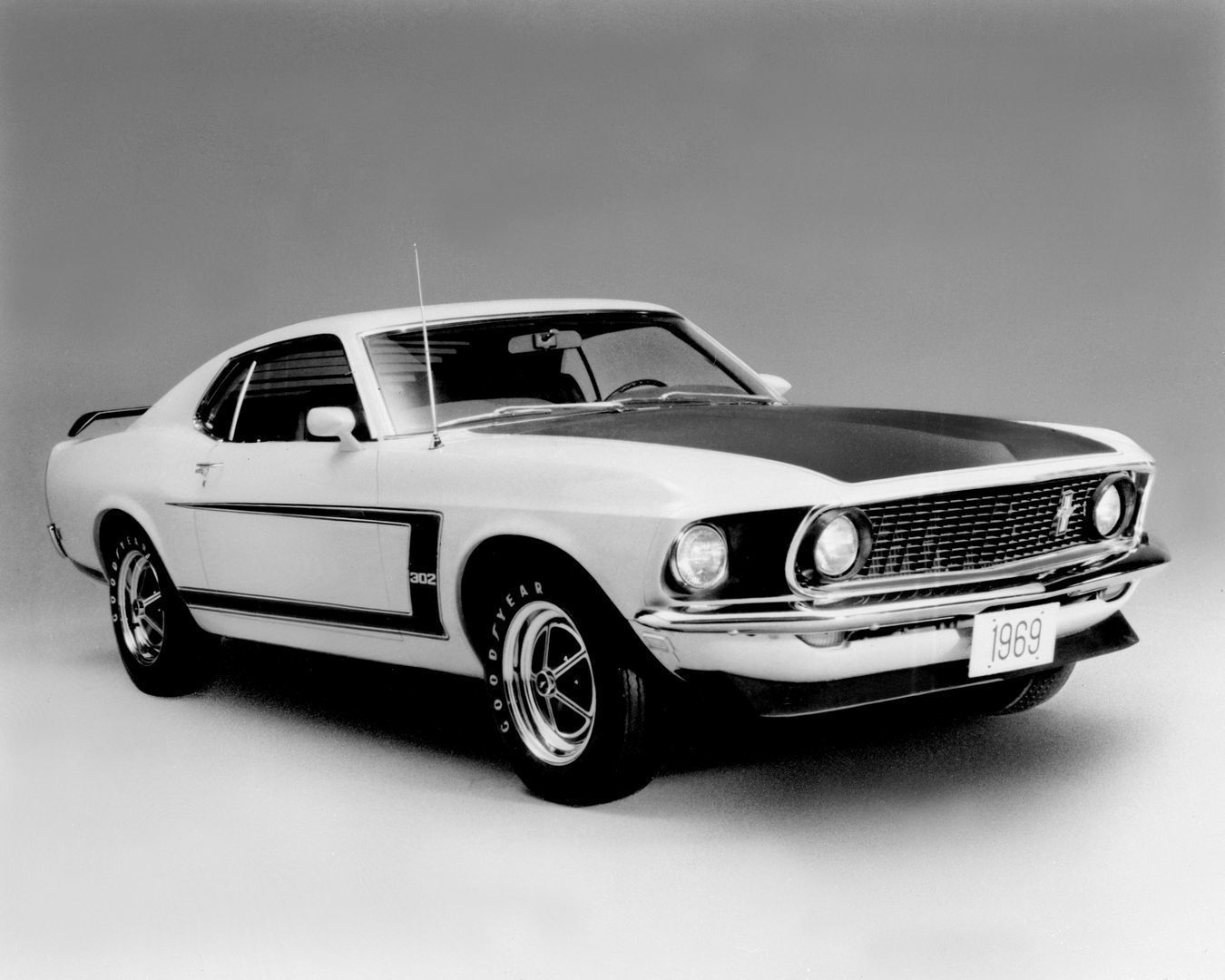
Shinoda’s racing background helped make his design work legible to performance enthusiasts. He did not approach competition cars only as shapes displayed under studio lights. The National Corvette Museum’s profile emphasizes the connection between his automotive work and his own performance interests. That does not mean appearance became engineering, or that a graphic treatment created lap time. It means he understood that a competition-oriented road car had to communicate function without becoming costume. On a homologation-minded Mustang, stance, deleted ornament, stripes, spoilers, and clear identity could support the mechanical purpose rather than distract from it.
The corporate hinge was Bunkie Knudsen’s move to Ford. In his later oral history, Knudsen recalled recruiting Shinoda and valued the designer’s sports-car and GM experience. The statement is attributed because it is memory recorded in 1988, but the move itself is well established by the institutional record. It placed Shinoda inside Ford as the Mustang-Camaro fight was becoming a Trans-Am struggle, not merely a sales comparison. Ford already had the 1967 big-block Mustang and Shelby halo cars; the next problem was a focused small-block competition identity.
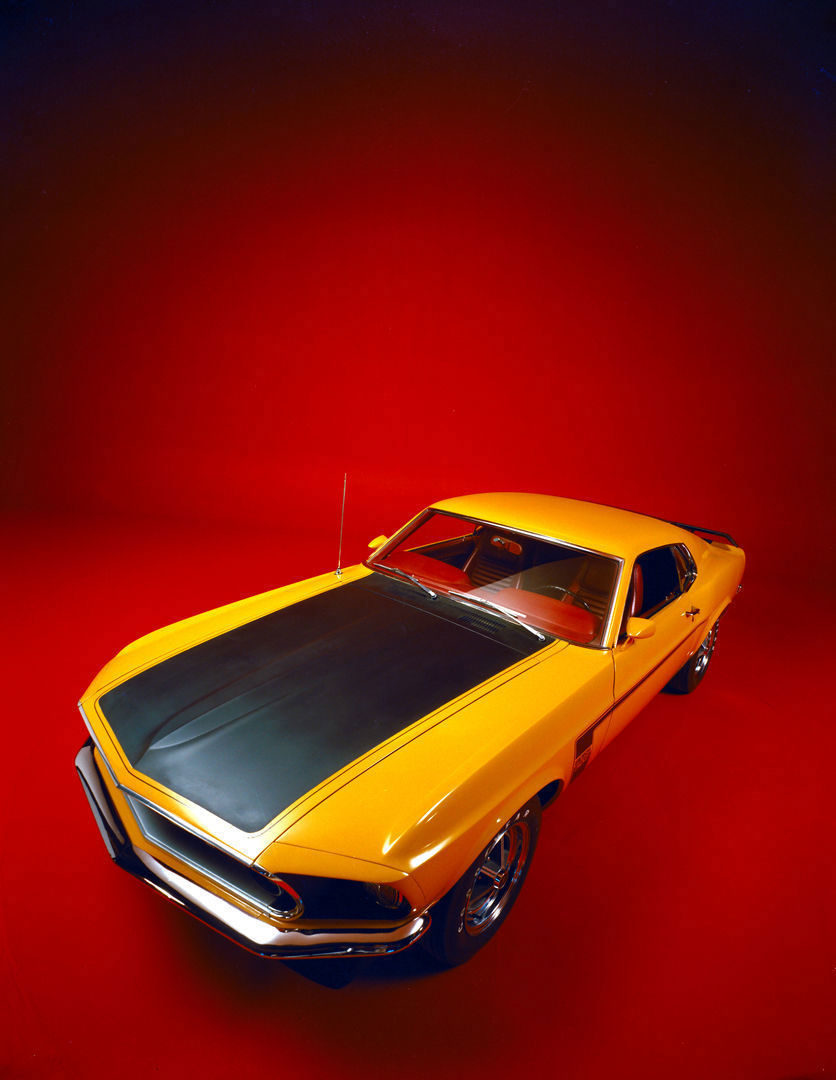
Ford’s 2012 Boss 302 supplement tells the company’s retrospective version of what followed. Knudsen assigned Shinoda to the original Boss 302 program, and Shinoda’s visual work helped distinguish the car. Ford also repeats the Boss naming account associated with their relationship. Because naming stories tend to sharpen with time, this page describes that as Ford’s published memory rather than recreating private dialogue. The supported core is strong enough: Knudsen and Shinoda were linked in the program, and Shinoda shaped the Boss 302’s design identity.
Boss 302 matters here even though it followed the 1967 comparison year. The 1967 Mustang and Camaro pages show Detroit discovering how many kinds of performance could fit inside pony-car bodies. By 1969, Trans-Am made the question more specific. A manufacturer needed a car whose displacement, chassis, and public identity served a racing purpose. Shinoda’s Boss work turned that purpose into something visible. It is the bridge from the broad 390-powered GT/GTA choice to a later Mustang conceived around a narrower competition brief.
The word “designed” needs care throughout that bridge. Styling programs move through sketches, clay, management review, engineering feasibility, production tooling, and countless revisions. Shinoda’s documented role can be important without erasing the studio or turning every visible feature into his personal mark. This page therefore uses “shaped,” “contributed,” and program-specific credit where the sources support them. It avoids the seductive habit of assigning an entire car to the best-known name standing near it.
His racing awareness also should not become a mystical explanation for every design choice. What the record supports is a person whose automotive interests crossed the studio and the track, and whose Boss 302 work communicated performance purpose. Mechanical effectiveness still belonged to the engineers and race-development process that made the car function. The value of Shinoda’s contribution was that the road car could look coherent with that purpose rather than merely wearing decoration after the hard work was done.
That bridge also creates natural links across the Car Facts family. VetteFacts’ XP-819 story shows Shinoda making a difficult Corvette engineering idea presentable, while MustangCarFacts’ Boss 302 racing story places his name beside the homologation car’s competitive purpose. American Muscle Car Facts shows why the movement between those worlds matters and connects it to the Camaro and Trans-Am rivalry. These are contextual paths, not a generic family footer: a reader meets Shinoda while following a person, a design decision, or a racing consequence, then moves to the site that owns the deeper vehicle history.
One popular Camaro connection remains outside the evidence boundary. Later secondary articles credit Shinoda with the 1969 Camaro ZL2 cowl-induction hood, but this pass did not locate a GM studio record, a time-coded Shinoda interview, or another source-owning artifact for that attribution. The Henry Ford holds a Shinoda oral-history collection, including audio and transcripts, but the relevant material has not been fully audited. The public page therefore does not repeat the ZL2 claim as fact. It records the research lead so a future source can resolve it.
Resisting that tempting attribution does not make Shinoda less important. It clarifies the achievements that can already be told well. He participated in the GM design culture that produced landmark Corvettes, crossed to Ford with a performance-minded executive, and gave the Boss 302 a visual identity that matched its competitive intent. His career shows that the American muscle story was not built only from displacement and advertised horsepower. It was also built by people who understood how a machine should announce what it had been made to do.
The next research step is unusually concrete. The Henry Ford catalogs a Shinoda oral-history collection with audio and transcript material, but this pass did not audit every recording or establish time codes for Camaro-related recollections. Listening to that collection may confirm, complicate, or reject later attributions. Until then, the open question stays attached to the source lead. That makes the page durable: new evidence can extend a clearly marked boundary instead of forcing a correction to prose that pretended the boundary did not exist.