People · Designer · 1969 Boss 302
Larry Shinoda in 1969: The Car the Committee Did Not Want
He proposed the Boss name and a committee turned it down — then Ford's own folder and the FIA form disagreed about what the engine made.
Story reviewed July 27, 2026
Gail Halderman remembered a name entering a committee room and failing its first test. “Boss,” he said in an oral history preserved by the Benson Ford Research Center, was Larry Shinoda’s idea, and the committee initially rejected it. The scene is valuable precisely because it is a remembered institutional moment rather than a slogan polished for a brochure. By the time the Boss 302 reached buyers, the name sounded inevitable. Halderman’s account restores the uncertainty and the people around the decision without requiring invented dialogue.
Shinoda had followed Semon “Bunkie” Knudsen from General Motors to Ford. Halderman remembered Knudsen seeing a broader performance role for Mustang and backing Shinoda’s changes. L. David Ash, another Ford designer interviewed by the same oral-history project, supplied a second view of the politics and the redesign, including removal of a simulated quarter-panel intake. Their accounts overlap without becoming identical. This page attributes each memory instead of turning retrospective testimony into a single omniscient transcript.
The corporate crossing mattered because Shinoda did not arrive as an isolated stylist. He brought experience from General Motors, including work now associated with Corvette design and a love of racing recorded by the National Corvette Museum. That background makes a contextual link useful, but Corvette remains documented on VetteFacts and the sports-car site rather than being folded into this catalog. Shinoda’s 1969 story is about the movement of ideas and people across company boundaries, not ownership of every car he touched.
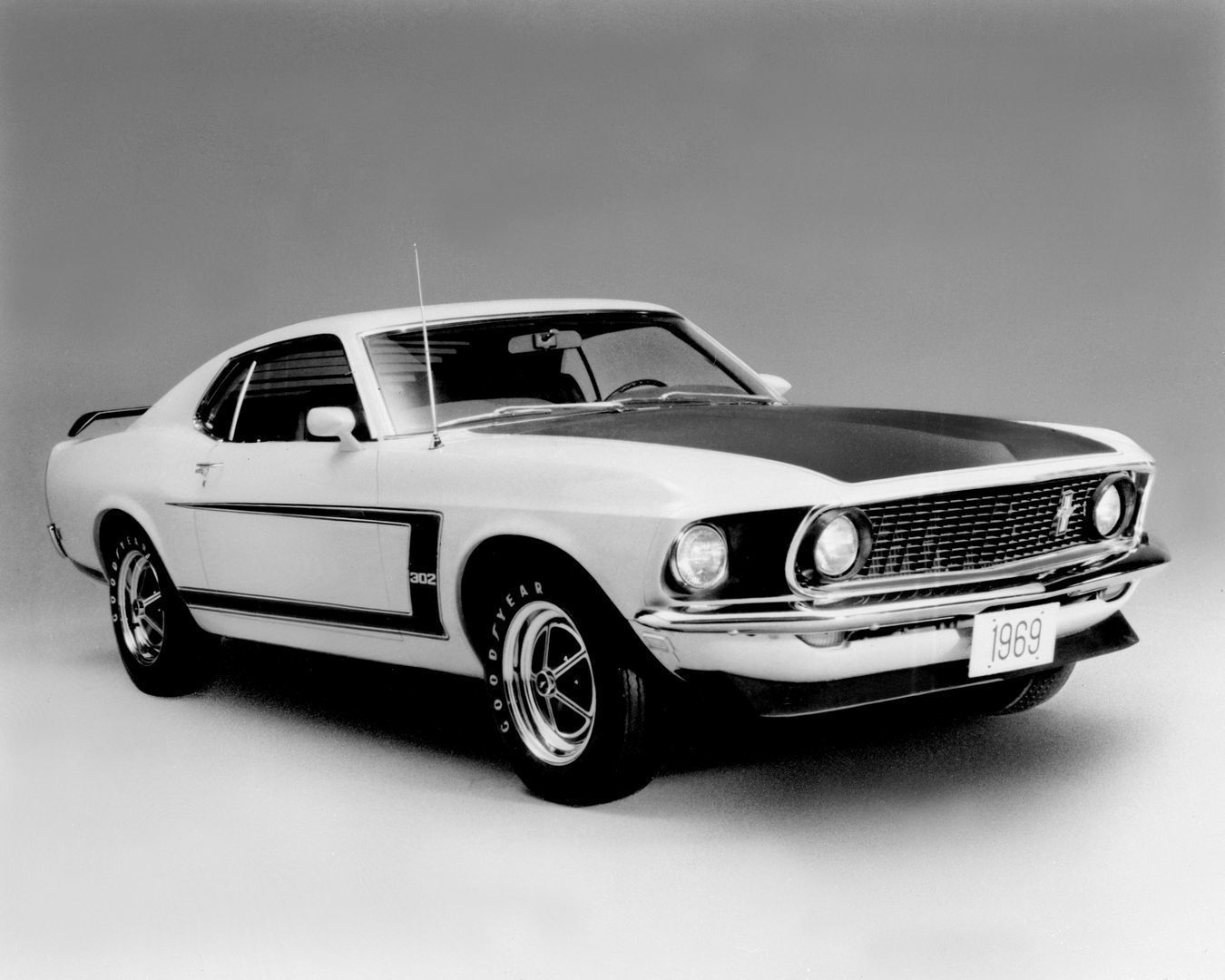
The Boss 302’s visual identity supported a specific engineering proposition. Ford’s period folder lists the short-stroke 302, mandatory four-speed, 3.50 axle, front discs, special suspension, and F60x15 tires. The road car was tied to International Sedan Racing, while FIA Group 2 paperwork catalogued competition brakes, coolers, oiling, induction kits, tank, and other equipment. Those race parts do not become standard street specifications. Shinoda’s graphics and body changes made the package legible, but engineering and homologation made it more than an appearance exercise.
Even the engine rating refuses a sole-authority story. Ford’s street folder publishes 290 bhp at 5,800 rpm and 290 lb-ft at 4,300. The FIA declaration lists 290 at 6,000 SAE and 345 lb-ft at 3,200. Both are period documents; neither grants permission to splice the preferred rpm and torque into a third specification. The road selector uses the street-folder values and carries the conflict. That small discipline mirrors the people story: multiple records can remain visible without being forced into one tidy answer.
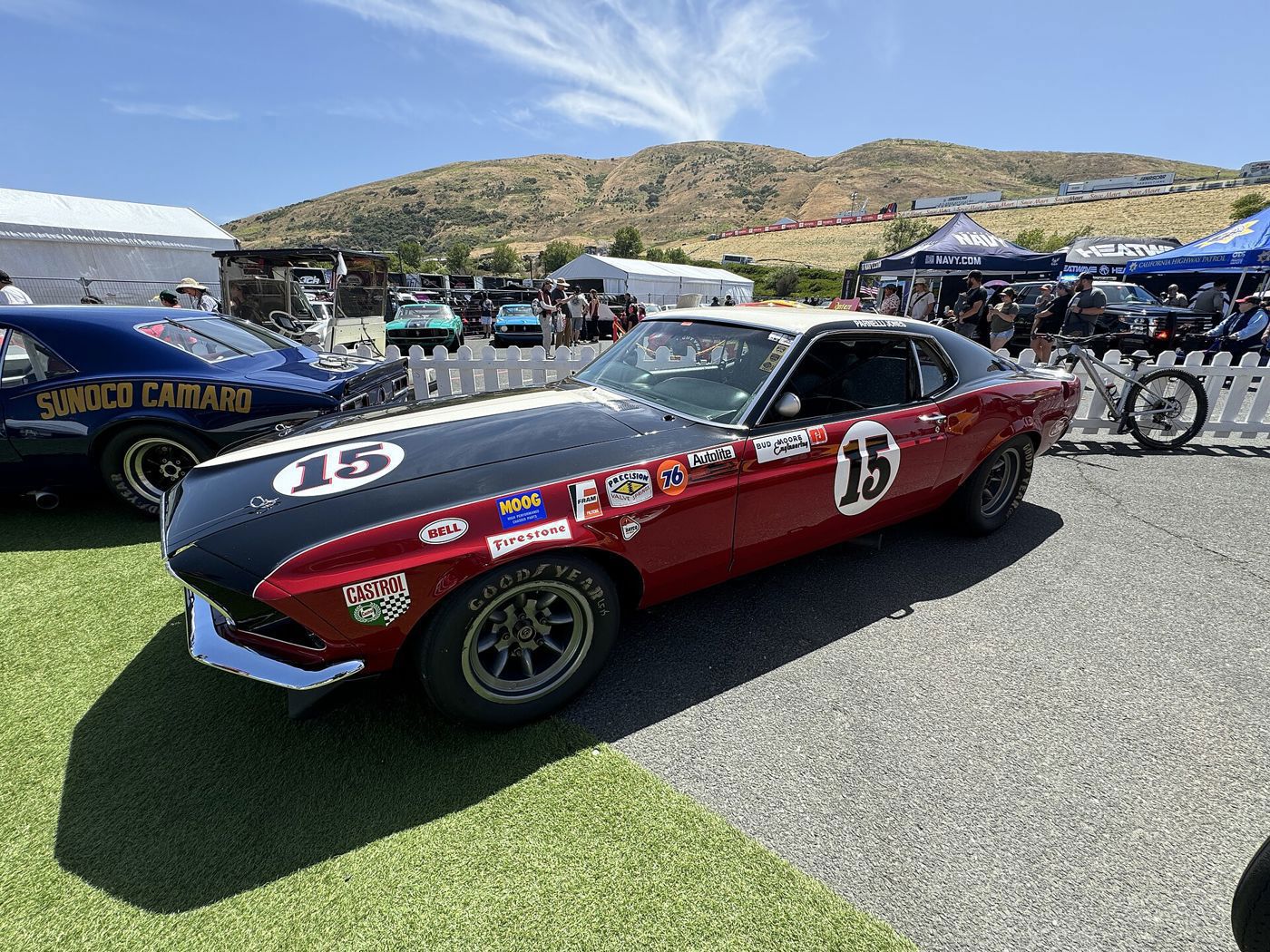
Ford’s organization extended far beyond Shinoda and Knudsen. Engineers developed the engine and chassis, homologation staff assembled the paperwork, suppliers delivered parts, and teams led by Bud Moore and Shelby prepared race cars. Parnelli Jones, George Follmer, Peter Revson, Horst Kwech, mechanics, and crews made the Mustangs compete. A design biography that names only Shinoda would repeat the very myth the oral histories help dismantle. His contribution matters more when the surrounding organization is visible, not less.
The 1969 Trans-Am season also prevents the page from ending in easy triumph. Mustang won four of the first five rounds, while Chevrolet won at Mid-Ohio and then swept the final seven—eight Camaro victories in all. Period SCCA sheets awarded the over-two-liter manufacturers’ championship to Chevrolet, 78 points to Ford’s 64. Ford’s new identity could lose its first major campaign and still endure. The result separates the success of a name and road package from the result of one season, while giving the rival teams their proper place.
Ash’s recollections require special care because a colorful driving memory may conflate Boss variants. Oral history captures attitude, sequence, and institutional experience, but it is not an engine sheet or vehicle invoice. The page therefore uses Ash for design politics and attributed observation, not as sole proof of displacement, output, or production. Halderman’s naming memory receives the same treatment. Neither participant is asked to remember more precisely than the archive actually records.
The Boss 429 complicates Shinoda’s 1969 legacy further. Its period folder describes a 429, four-speed, 3.91 Traction-Lok, and 375 bhp, while its NASCAR homologation motive and Kar Kraft assembly route make it a different program from Boss 302. Later Ford material disagrees with the period torque figure and aggregates production across two years. The famous shared name does not merge the cars. Detailed responsibility for the Boss 429 conversion remains held until Ford and Kar Kraft records support it.
What survived from that rejected name was not merely a decal. Boss became a compact way to join Knudsen’s performance strategy, Shinoda’s visual judgment, Ford engineering, homologation paperwork, and public racing ambition. The committee story is memorable because the outcome was not preordained. Told with attributed memories and the technical record beside them, Larry Shinoda’s 1969 chapter becomes a story about collaboration and corporate movement rather than a documentary list—or a lone-genius legend.
The page also creates specific reciprocal links instead of a family footer. Mustang Car Facts can carry the detailed 1969 Mustang lineage and link from its Boss discussion to this cross-company story. CamaroFacts can link where Knudsen’s or Shinoda’s GM work advances its own account. VetteFacts can do the same from an exact design or person passage. Readers receive context at the moment it matters, while each site retains responsibility for its own marque-specific evidence.
An image will follow the same discipline. A portrait, studio scene, or Boss design photograph must identify creator, institution, date, depiction, and rights status before it reaches the public page. A museum display or archive thumbnail is a research lead, not permission. Until an owner-approved license and depiction review exist, the story remains text-only and a prioritized request stays in the external licensing queue.
For now, the surviving voices and factory papers provide the picture: a contested name, a corporate crossing, and a team-built car.