Racing · Chevrolet and Ford factory programs · 1969
1969 Trans-Am: Six Points, Fourteen Cars, Thirty-One Seconds
Six points between two manufacturers, fourteen cars on a grid, and thirty-one seconds deciding what the record books would say.
Story reviewed July 27, 2026
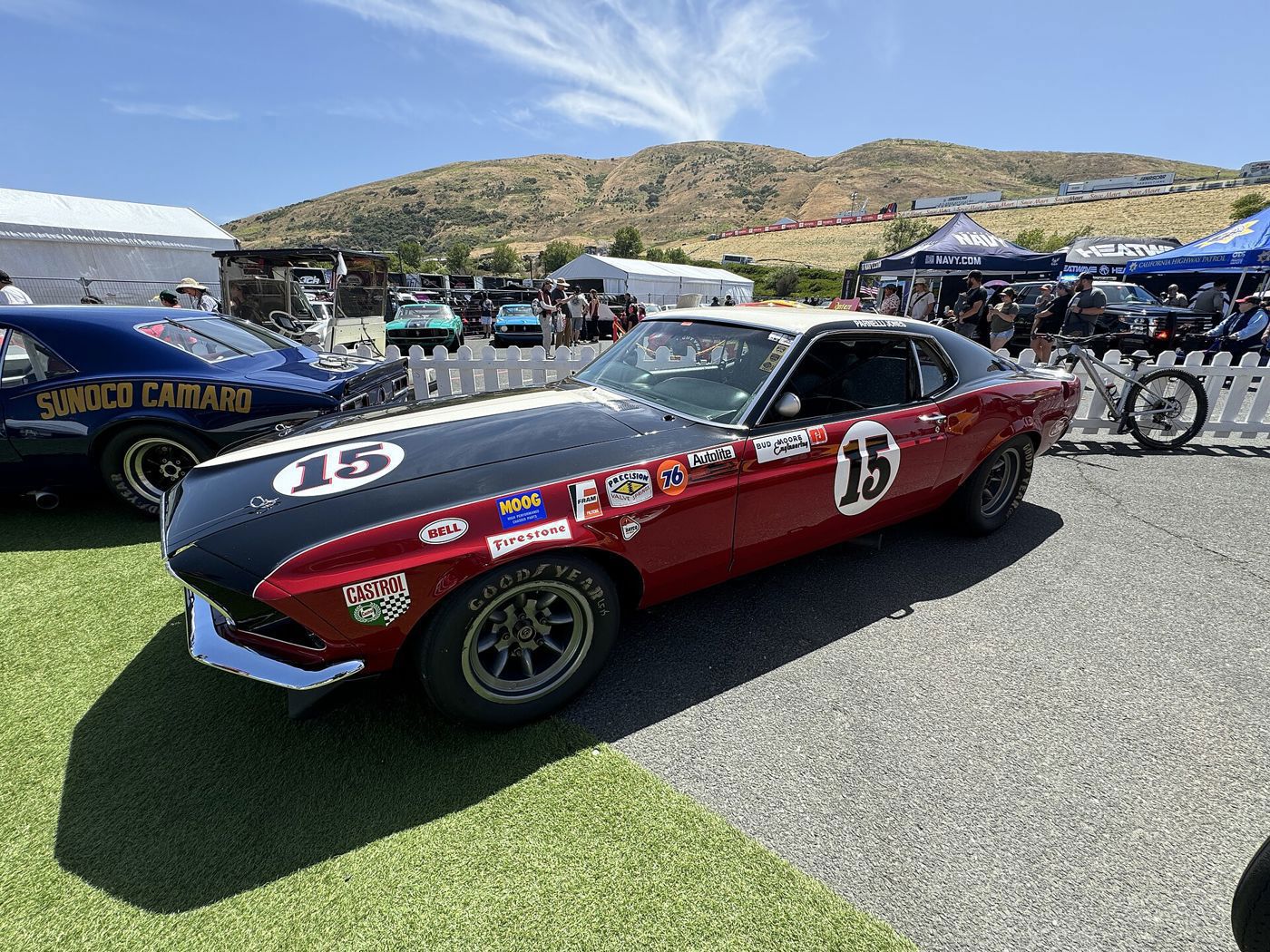
Snow, sleet, fog, and rain met the Trans-Am field at Michigan International Speedway on May 11, 1969. Parnelli Jones put a Bud Moore Boss 302 on pole, set fastest lap, and won. For a time the posted order said Mark Donohue had won, until officials corrected a missed-pit-stop record and placed the Penske Camaro second. The season opened with a result that had to be revised before the competitors left, an apt beginning for a championship whose later name would also change in memory.
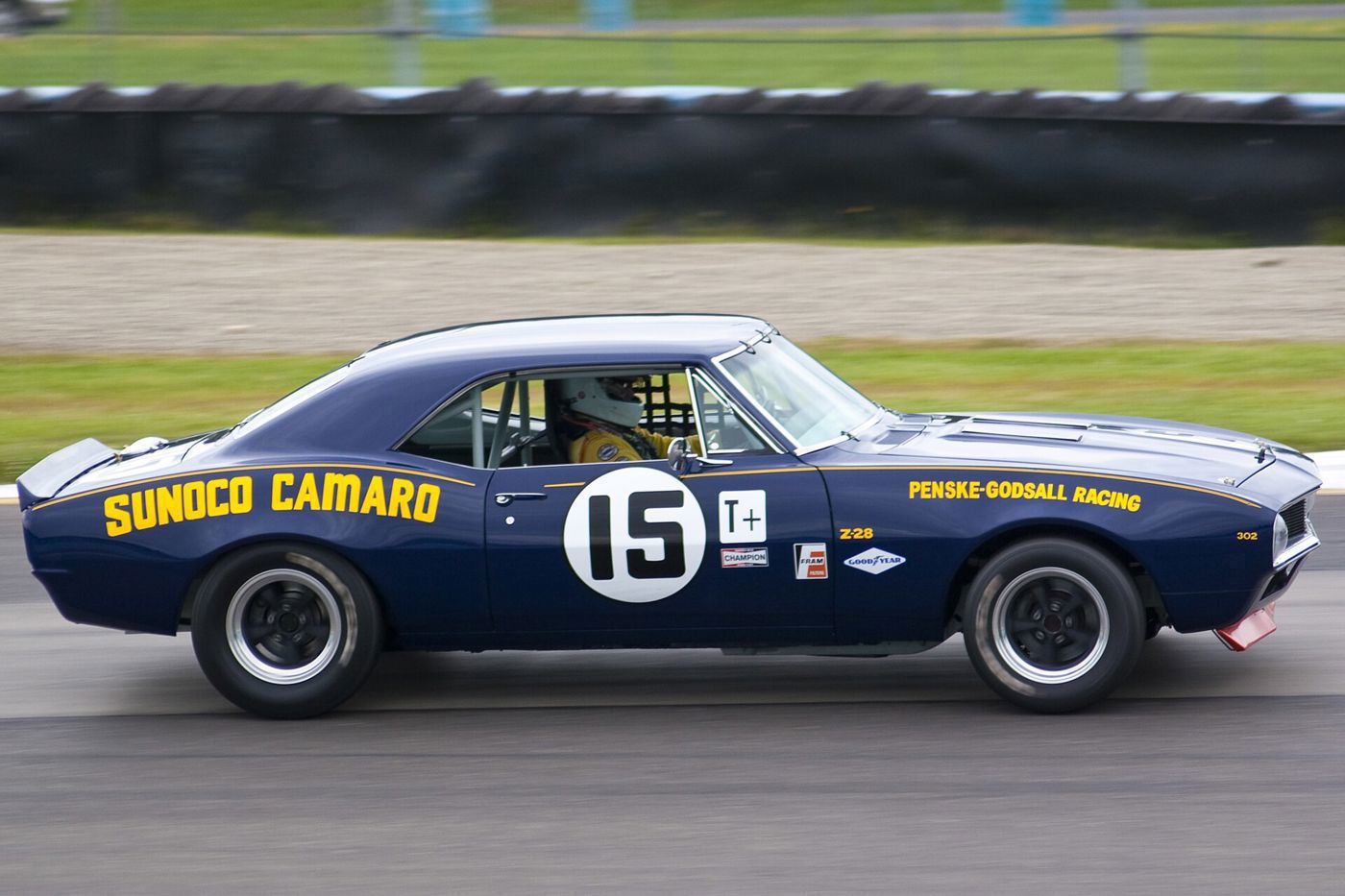
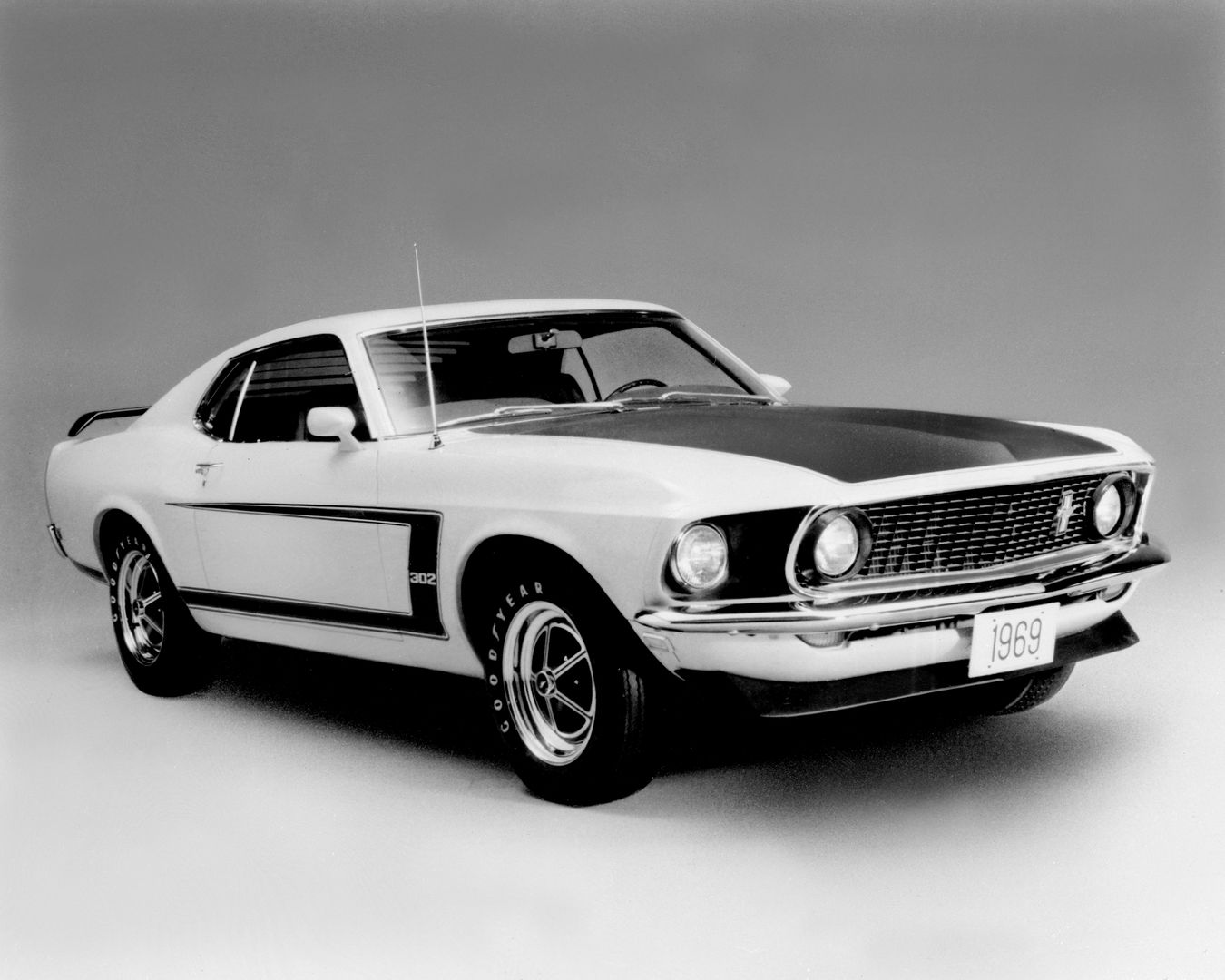
Ford arrived with depth. The official retrospective identifies six factory Mustangs among four two-car Boss teams, including Jones and George Follmer for Bud Moore and Peter Revson and Horst Kwech for Shelby. Penske brought Donohue and Ron Bucknum in Camaros. Those cars rested on showroom identities—the Boss 302 and Z/28—but they were not stock specification cards. Homologation paperwork lists competition brakes, cooling, induction, tanks, ratios, and other permitted equipment that remains outside the road-car selector.
Mustang won four of the first five rounds, but not in an uninterrupted streak. Ron Bucknum’s Penske Camaro won round three at Mid-Ohio while Donohue finished seventh; Ford then answered at Bridgehampton and Donnybrooke. At Bryar, round six, Donohue and Ed Leslie finished first and second in Sunoco Camaros, yet Ford still led the manufacturers’ standings 44–40. The points belonged to marques under the period rules, so the second cars and supporting finishers mattered even when headlines followed the most famous driver.
Ford reached Mont-Tremblant on August 3 six points ahead. Jones retired after nine laps. Follmer’s engine failed and left oil at a blind corner; the series history records a fourteen-car collision and Trans-Am’s first red flag. Donohue won by 85 seconds, and Chevrolet moved ahead 49–46. The scene is dramatic without invented crowd noise or dialogue because the documented sequence already carries the reversal: an engine failure, an obscured hazard, a mass incident, and a championship lead changing hands.
Penske’s recovery became a run. Donohue followed Mont-Tremblant with victories at Watkins Glen and Laguna Seca, while Leslie’s podium finishes supplied manufacturer points and team depth. Modern biography often compresses the period into Donohue’s dominance. The SCCA sheets preserve a larger operation: Penske’s preparation system, Bucknum’s wins, Leslie’s support, and Chevrolet’s scoring objective. Donohue was the lead driver and an engineer, but the record does not need to diminish him in order to name everyone else.
Seattle provides the clearest proof. Donohue retired after 32 laps with an engine problem. Bucknum won, and the result-sheet note said Chevrolet had secured at least a tie. The “second Camaro” did not merely protect a famous teammate’s personal tally; it delivered the result required by a manufacturers’ championship. When a later story calls Donohue the 1969 driver champion, this race is the reason to pause and explain what the period actually awarded.
At Sears Point, raw qualifying speed met pit work. The institutional account says Jones qualified about two seconds faster and made two stops to Donohue’s three, but Penske’s three stops consumed 31 seconds less. Donohue led the final eleven of eighty laps and won by 2.17 seconds. The numbers turn preparation into a visible race action. They also keep the result from becoming a vague tale of superior machinery: time recovered by a team can outweigh an extra stop and a rival’s qualifying advantage.
Riverside closed the year with Chevrolet’s seventh consecutive victory. Donohue won and Bucknum finished second. The final over-two-liter table in the archived SCCA packet reads Chevrolet 78, Ford 64, Pontiac 32, and American Motors 13. Across the season Donohue won six rounds and Bucknum two. Mustang had taken four of the first five; Camaro won Mid-Ohio and then the final seven, eight races total. The 78–64 margin was substantial, but it was built after Ford had controlled much of the opening portion of the calendar.
Period result sheets repeatedly describe twin manufacturers’ championships, divided above and below two liters. Modern Trans-Am histories sometimes calculate retrospective driver points and call Donohue champion. That later convention is useful when labeled, but it does not rewrite the award made in 1969. The publication records a conflict set rather than choosing whichever phrasing sounds familiar: Chevrolet won the contemporary over-two-liter manufacturers’ championship, and Donohue leads the retrospective driver calculation.
The season’s best story is therefore not a simple Camaro victory or a Mustang defeat. It is a sequence in which Ford’s Boss 302 program won four straight, a second Penske Camaro exposed the turn, fourteen cars met at an oiled blind corner, pit work recovered 31 seconds, and Bucknum secured the championship position when Donohue’s engine failed. The street Z/28 and Boss 302 made the contest understandable to buyers. The race teams made those identities matter. The evidence lets both layers coexist without pretending they were mechanically identical.
That separation protects future data. A team document can refine pit procedure; a rule book can explain permitted changes; and an event report can correct a lap or retirement without rewriting the showroom cards. Likewise, a modern driver-points calculation can remain accessible as retrospective interpretation while the period manufacturers’ award stays intact. Disagreement becomes part of the story when credible records describe different scopes, not a reason to hide one behind a single label.
The missing images are deliberate. The Henry Ford holds Dave Friedman photographs of Jones’s Boss 302 and Donohue’s Camaro at the Michigan opener, while Revs Institute offers a Sears Point Donohue image through a licensing workflow. They would make a powerful matched sequence, but visible archive access is not commercial permission. Both remain owner-review candidates outside the repository. The page tells the complete factual arc without borrowing an image whose creator, license, or permitted use is unresolved.
Until then, the lap sheets and points tables supply a sharper ending than an unlicensed victory photograph could.