Racing · Penske Racing · American Motors · 1971
Mark Donohue, Roger Penske, and the 1971 Season AMC Did Not Retreat
The same crew, a different badge, and a season in which one team’s ten-round ledger settled what a later museum caption could not.
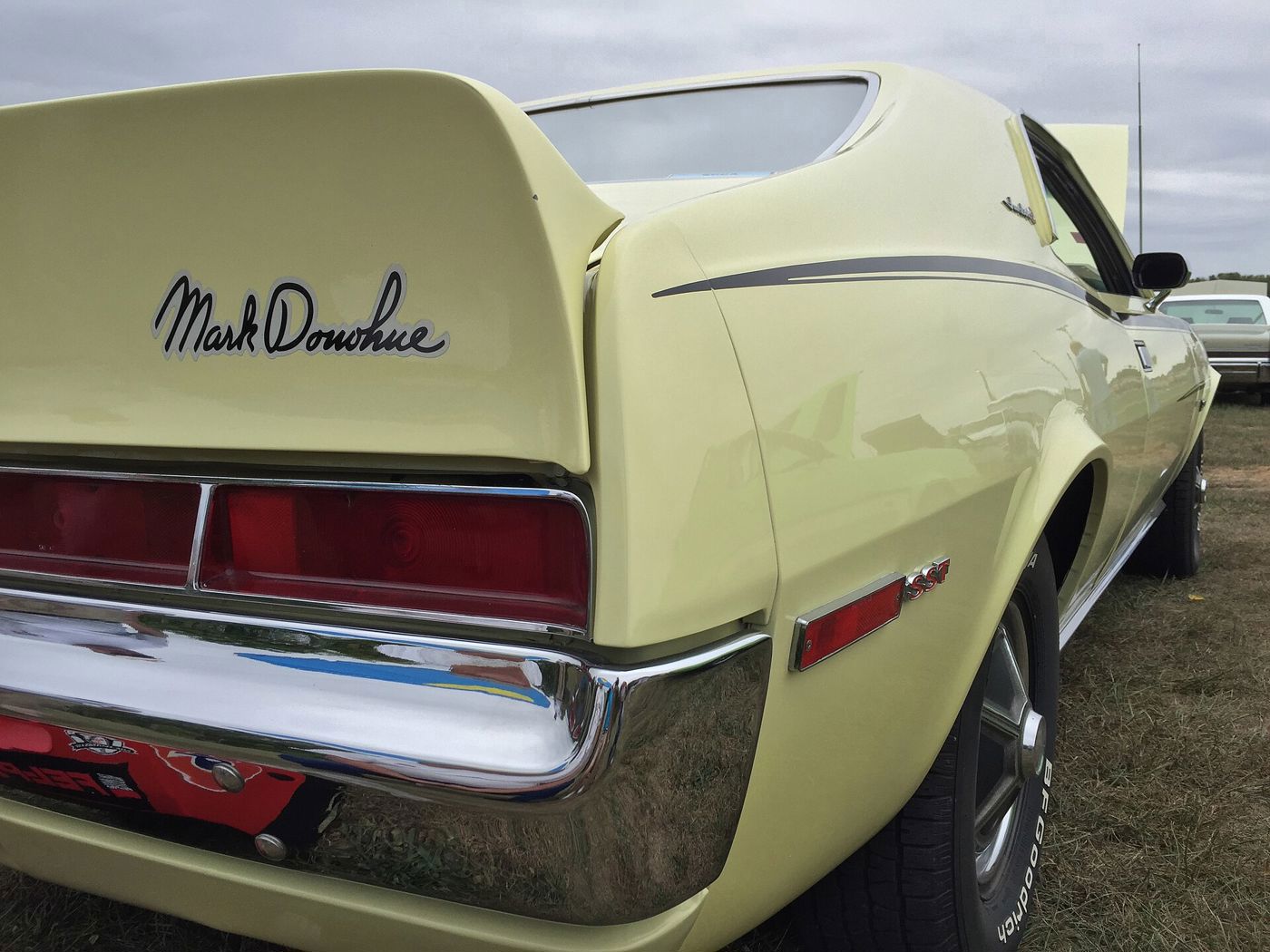

George Follmer was close enough to make Mark Donohue work for Road America. Donohue had started the July 17 race from pole in the new Penske Javelin, Vic Elford had put Roy Woods's older Javelin alongside him, and Follmer's Bud Moore Mustang waited in third. Then, on lap four, Follmer cut a tire just after passing the pit entrance. He had to carry the damaged car around the four-mile circuit before the crew could help him. Donohue suddenly had the road and the race to himself—but not because the Mustang had disappeared.
Follmer returned in tenth and began taking the places back. By the finish he was second, two minutes ten seconds behind Donohue after 50 laps and 200 miles. Elford completed 30 laps before the official SCCA result classified his retirement only as “mechanical.” The Wisconsin Historical Museum's Road America exhibit supplies the more specific oil pump attribution. Keeping both descriptions matters: one is the period result field, the other a later institutional explanation.
That afternoon was not AMC's first victory, and it was not the moment the season ceased to be competitive. It was the middle of something becoming unmistakable. Road America was Donohue's fourth win of 1971 and the third round in a run of six consecutive victories from Edmonton through Michigan. Follmer's recovery showed the quality still ranged against him. Donohue's margin showed how completely Penske's team could convert an opening into a result.
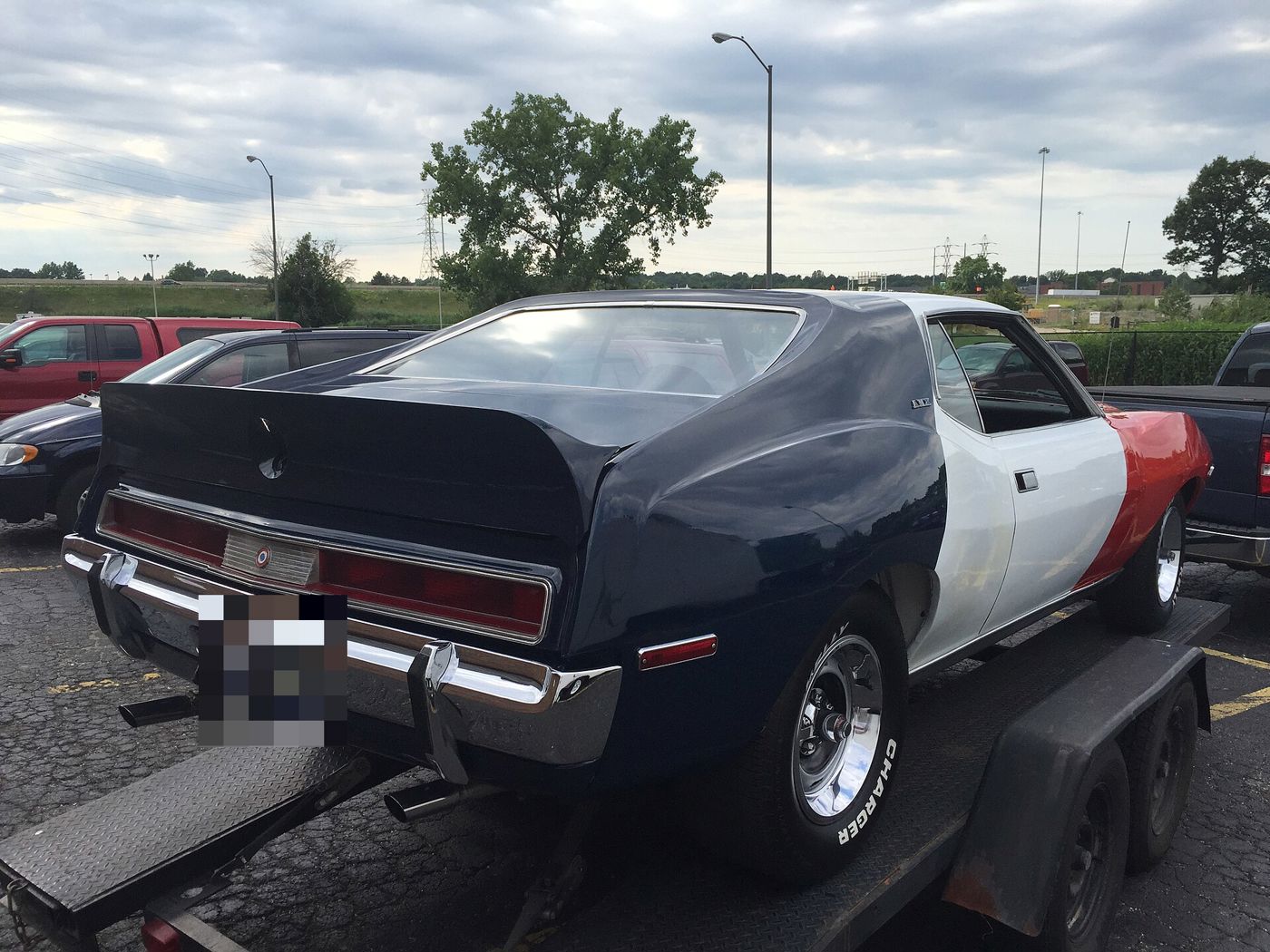

The road to that Javelin began after Penske and Donohue had made their reputation in Chevrolet's Camaro. That earlier chapter belongs in detail at CamaroFacts, but it gives the AMC switch its stakes. Team Penske's own history says the operation moved from Camaro to Javelin after 1969 and had to adapt to a different car. Don Cox later remembered an AMC proposal with financial appeal, continuity for the Penske-and-Donohue arrangement, and the attraction of a new challenge.
Why Penske accepted is not established as a complete private decision. Cox's recollection gives credible reasons, but it is not the contract and cannot account for every conversation. The difference between an attributed memory and a proven corporate motive is part of honest storytelling. What the record does show is that AMC's investment let the still-small operation expand modestly and that the team entered 1970 with a new engineering problem rather than a rebadged Camaro.
Nor was the solution the work of two famous names alone. Roger Penske organized the resources and program. Donohue raced, tested, and translated the car's behavior into development work. Team Penske identifies Karl Kainhofer, John “Woody” Woodard, Earl McMullen, Chuck Cantwell, and Cox among the early crew. Cox joined in November 1969 as the operation's first dedicated engineer. The surviving accounts support collective credit, though they do not assign every one of those people an exact Road America duty or make any one person sole author of the 1971 car.
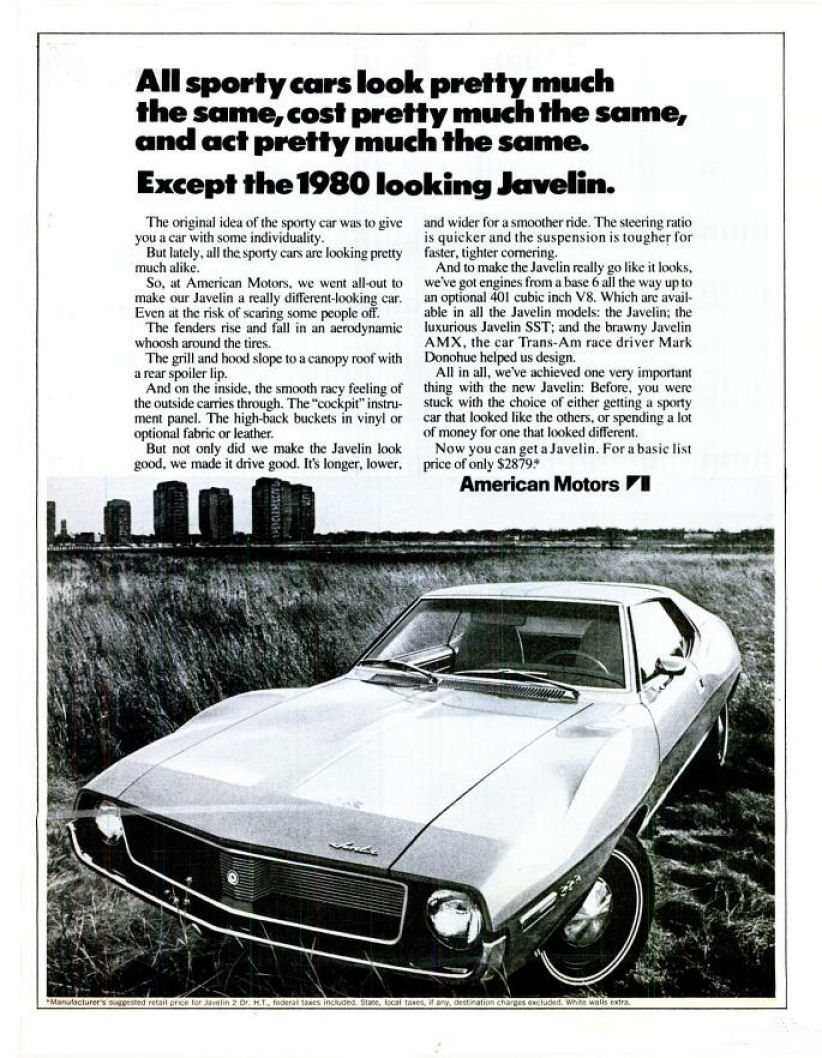
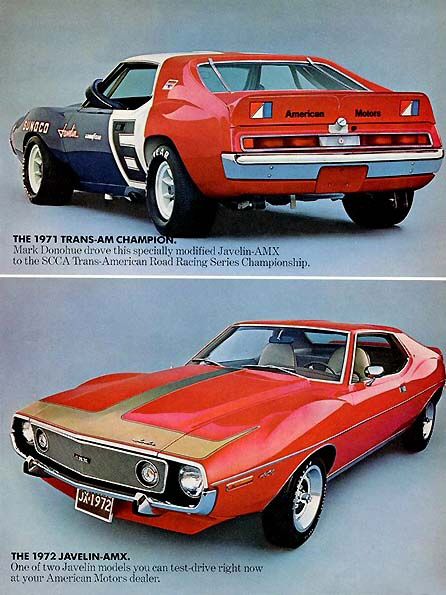
The showroom Javelin helped AMC tell the public what kind of company it wanted to be. Its 1971 brochure advertised the Javelin AMX and Go Package combinations with 360- and 401-cubic-inch V-8s, four-speed transmissions, cowl induction, dual exhaust, power front disc brakes, Twin-Grip, handling equipment, wheels, tires, and instruments. “Javelin AMX” was now a model identity within the redesigned Javelin line, not the short-wheelbase two-seat AMX that had ended after 1970.
The race car shared a name, silhouette, and promotional purpose with that street car, but the brochure is not a Penske specification sheet. It cannot prove the race engine's exact build, output, weight, gearing, fuel, brakes, tires, suspension settings, chassis history, or the rule paper governing a particular weekend. Those fields remain withheld until race records establish them. Donohue's victories do not make the advertised 401 street configuration a retrospective winner of a showroom comparison.
Across the ten over-2.5-liter rounds, Donohue won seven of ten races and seven of his eight starts. He won Lime Rock, missed classification at Bryar, finished second at Mid-Ohio, then won Edmonton, Donnybrooke, Road America, St. Jovite, Watkins Glen, and Michigan. He did not receive a classification at Riverside. Follmer took the three remaining victories—Bryar, Mid-Ohio, and Riverside—so the ledger describes domination without pretending only one capable driver or car remained.
That ledger also resolves a small but revealing error. The Wisconsin museum exhibit says that after Road America Donohue “went on” to win seven more races. The calendar makes that impossible: Road America was already his fourth victory and only four rounds remained. He won three of them, reaching seven total. The exhibit is valuable for its Road America context, its oil-pump detail, and its Owen Viergutz image lead, but its sentence cannot outweigh the ten dated SCCA sheets. The discrepancy belongs in the story because institutions can preserve history and still compress a number incorrectly.
The title needs the same care with time. The final SCCA sheet records Javelin with 82½ points, ahead of Mustang at 61, Camaro at 17, and Pontiac at 7, and says Javelin had clinched the championship. That was the contemporary manufacturers' championship. The series did not award a drivers' championship in 1971. A later Trans Am reconstruction applied driver points to the early seasons and retrospectively recognized Donohue as the driver champion. Both statements are true only when their dates and rules travel with them.
Ford and Chrysler had reduced direct factory support by 1971, changing the shape of the contest AMC chose to continue. That did not erase Mustangs, Camaros, independent entrants, engineers, or experienced teams. Follmer's season in the Bud Moore Mustang is the obvious warning against that shortcut: he won three rounds and drove back to second after the lap-four tire at Road America. AMC found an opportunity in concentration, but Penske, Donohue, and the crew still had to execute ten times.

Penske's earlier Chevrolet work and later breadth also keep this from becoming an isolated AMC fable. Before the Camaro program was famous, Dick Guldstrand gave Penske's new team its first driver relationship, a connection told at VetteFacts. The link does not turn this page into a career documentary. It shows how organizations acquire memory: one program supplies people and methods that are tested again when the badge, budget, and engineering problem change.
Road America is where those threads become visible at speed. There is the new factory-backed Penske Javelin, the older Javelin in Roy Woods's hands, and Follmer's privately entered but thoroughly developed Mustang. There is a damaged tire on lap four, a four-mile return to the pits, a recovery to second, and a mechanical retirement after lap 30 whose exact component comes from a later museum account. None needs invented radio chatter to become a scene.
By Riverside, the numbers were complete: seven Donohue wins, six consecutive, and a manufacturers' championship for Javelin. The achievement was larger than a slogan about a small automaker beating giants and more interesting than a bare result table. AMC sustained the commitment; Penske organized it; Donohue and a named crew developed and raced it; Follmer made the strongest days difficult. The SCCA ledger fixes the result, while the conflicting museum sentence, the later driver title, and the street-versus-race boundary show why telling the story well requires more than repeating the loudest number.