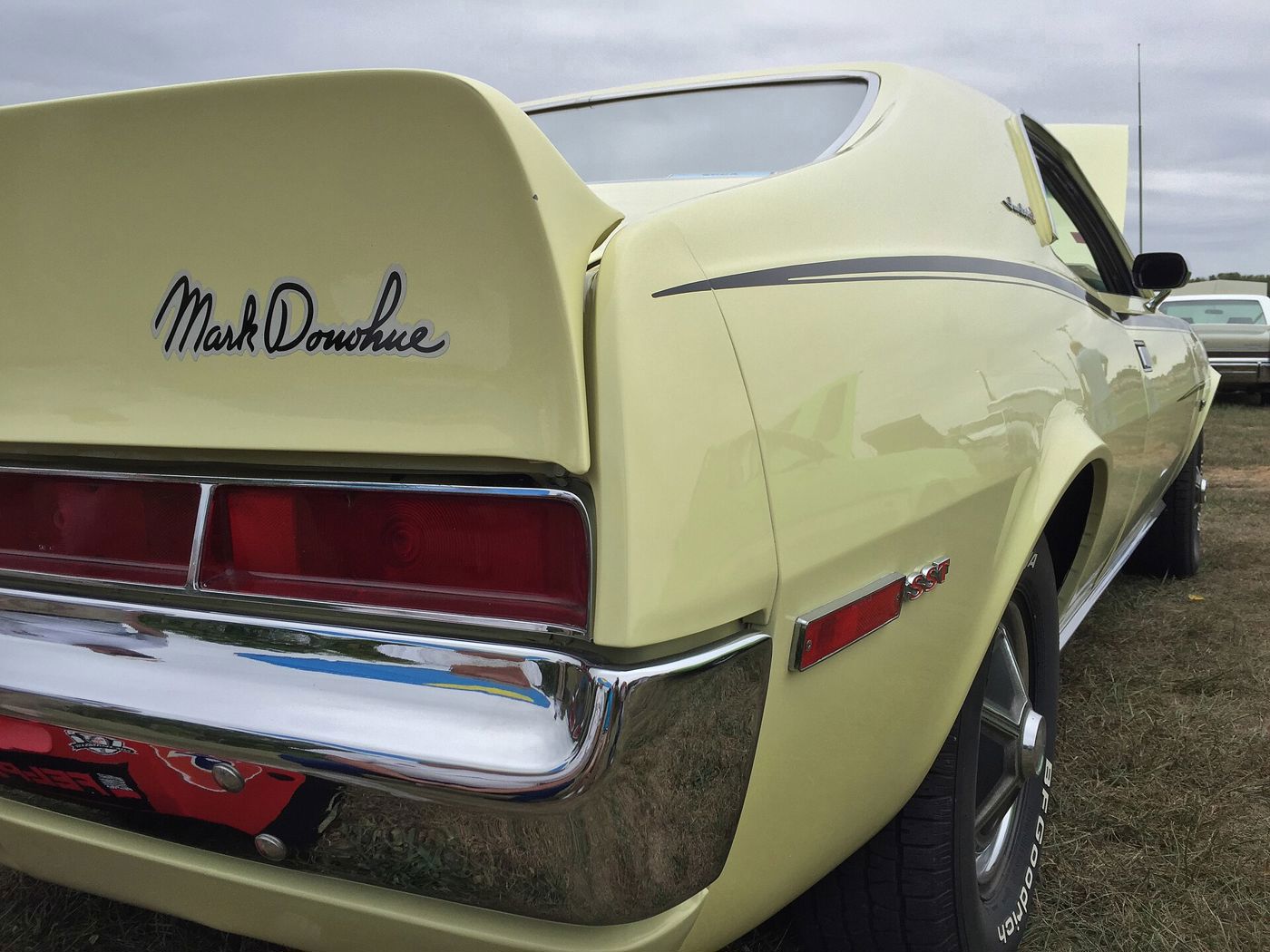
People · Driver and engineer · Penske Racing
Mark Donohue: The Engineer Who Drove
An engineering degree let him argue setup with the people building the car rather than only report back what it did on track — the missing biography behind Penske's Camaro and Javelin programs.
Story reviewed September 26, 2026
Mark Donohue's nickname was "Captain Nice," and the racers who resented him meant it as an insult. Donohue held a mechanical engineering degree, and in an era when many of his rivals never finished high school, he could set up and develop a race car as capably as he drove one. Some considered that combination an unfair advantage before he ever took the phrase for the title of his own book. The nickname and the resentment behind it are the clearest way into who he was: not simply a fast driver, but a driver whose speed came from understanding the car underneath him.
Donohue was born March 18, 1937, and graduated from Brown University in 1959 with a bachelor's degree in mechanical engineering, according to SpeedSport's career retrospective; Brown's own athletics department separately credits him among its Hall of Fame honorees. SpeedSport also records Donohue's own characterization of the trade-off: he did not consider himself among the sport's naturally fastest drivers, and believed his mechanical ability made up the difference. That self-assessment, not false modesty from a man who won at nearly every level he entered, is closer to how this page frames him than the "Captain Nice" label alone would suggest.
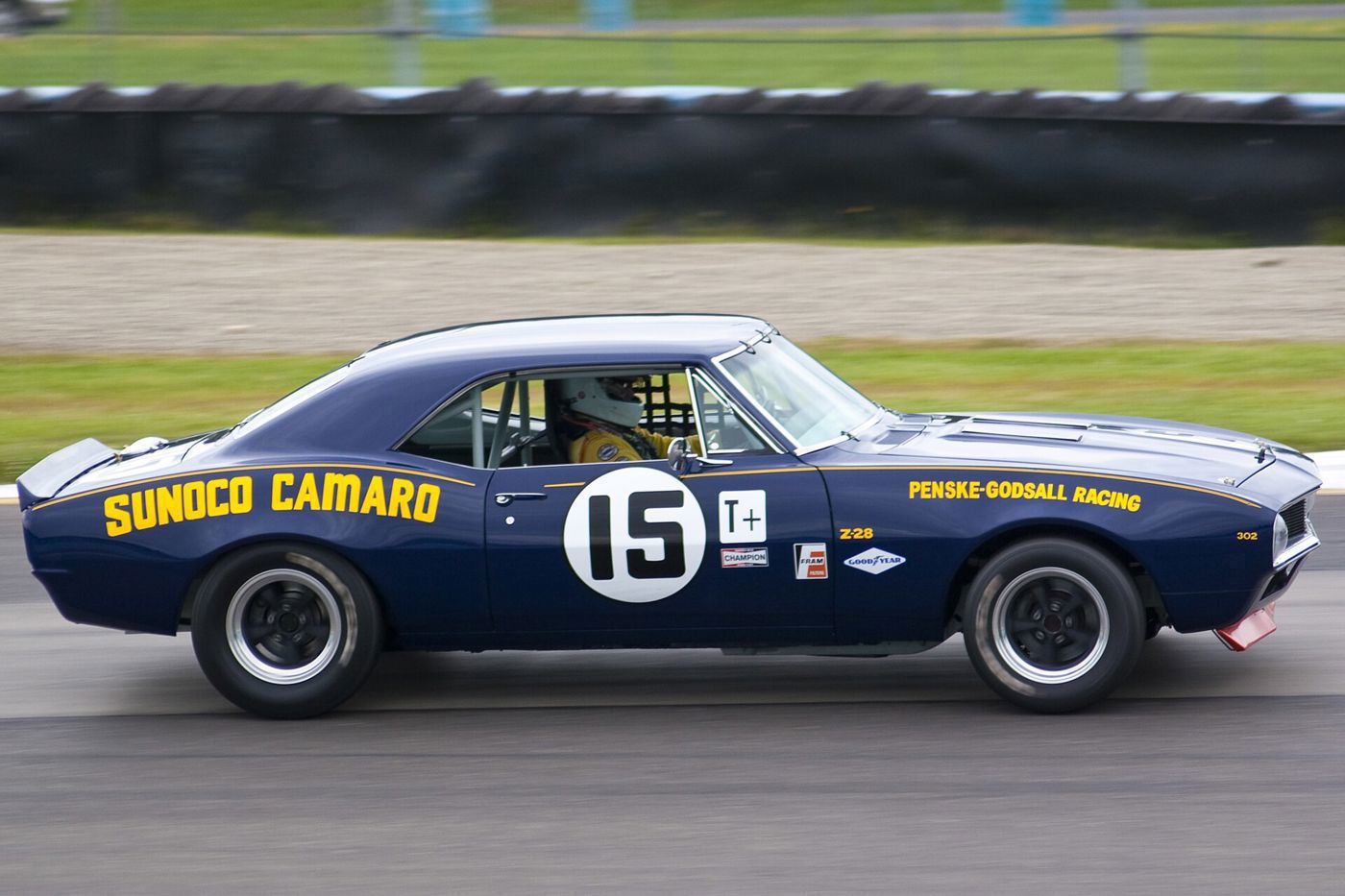
He joined Roger Penske's team in 1966, and the partnership defined the rest of his career. Motor Sport Magazine's retrospective calls him "Penske's first racing muse," a description that captures the working relationship better than a simple driver-owner arrangement: Penske built the operation and the opportunities, and Donohue built and refined the cars that filled them. Driving Penske's Chevrolet Camaro in Trans-Am, Donohue won three of twelve races in 1967. His 1968 season is remembered as an even bigger one — SpeedSport calls it a single-season win record that stood for twenty-nine years, until Tommy Kendall broke it in 1997 — but the exact win count that campaign is credited with is not settled even inside this site's own research: Penske, Donohue, and the Camaro already carries two source-backed figures for 1968 that disagree, and this page defers to that dispute rather than repeating one side of it as fact. Penske moved the program to the AMC Javelin for 1970 and 1971, and SpeedSport credits Donohue with a third Trans-Am title in 1971 with that car. This page does not re-derive the fuller mechanics of that 1971 season, including which parts of the record are manufacturers' results as the period rules actually awarded them and which are retrospective driver recognitions — Mark Donohue, Roger Penske, and the 1971 Season AMC Did Not Retreat already carries that distinction claim by claim, and a reader who wants the exact win count and title mechanics for that one season should start there rather than here.
Indianapolis carried a separate arc. Driving for Penske, Donohue was the team's first Indy 500 entry in 1969 and won Rookie of the Year after finishing seventh. He finished second in 1970. In 1972 he won the race outright, driving a McLaren-Offy to a new closed-course speed record that the Indianapolis Motor Speedway's own Hall of Fame profile credits as standing for roughly the next twelve years — the first of what would become Team Penske's long run of Indy 500 victories.
Donohue announced his retirement from driving after the 1973 season, and he did not retire quietly. SpeedSport and Motor Sport Magazine agree that his final full season included the SCCA Can-Am championship in a Porsche 917-30, a car built to exploit a rules window before it closed, a NASCAR win at Riverside driving an AMC Matador (SpeedSport specifies six Cup Series starts across 1972 and 1973), and, per Motor Sport Magazine, a closed-course speed record at Talladega of 221.16 mph — a number this page treats as reported rather than independently reverified against a timing sheet. What is not settled on this page is exactly why he chose that moment to stop: several accounts outside the sources cited here connect the decision to the death of a fellow Indianapolis 500 competitor earlier that season, but neither IMS Museum, Motor Sport Magazine, nor SpeedSport's own retrospective states that connection directly, so it is left open rather than asserted.
Retirement did not hold. Penske drew him back for a Formula One program, first for isolated appearances — Donohue had already made a one-off F1 start at the 1971 Canadian Grand Prix in a hired McLaren, finishing third in wet conditions — and then for a fuller Penske Cars effort beginning in late 1974. The 1975 season, run in Penske's own PC1 chassis before a mid-season switch to a customer March 751, was a struggle by the team's own later account; a fifth-place finish at the British Grand Prix was its best result.
Donohue died from injuries sustained during a practice session for the 1975 Austrian Grand Prix. A tire failure sent his car into the catch fencing; a track marshal was killed in the same incident. Donohue initially seemed only mildly hurt, but his condition worsened overnight into a cerebral hemorrhage. He underwent surgery and died two days later, on August 19, 1975, at 38 years old. The sources describe the crash and its aftermath consistently; this page treats the account as settled rather than disputed.
His book, The Unfair Advantage, was written with Paul Van Valkenburgh and is described by reviewers as retaining Donohue's own voice despite Van Valkenburgh doing the writing — an assisted autobiography rather than a ghostwritten one, by the accounts cited here. It remains, by the same accounts, one of the few period books that treats race-car setup and engineering as seriously as it treats driving, which is the through-line of Donohue's career: the Camaro and Javelin Trans-Am seasons, the Indy 500 program, and the Can-Am 917-30 were all, in different ways, engineering problems he helped solve from inside the cockpit.
This page exists because the AMC Javelin's 1970–1971 Trans-Am story already named Donohue and Penske as the people who ran it, without either having a biography of their own — a gap this site's own editorial review had flagged, since the corpus contained no AMC Javelin vehicle page and no Donohue or Penske profile to point a reader toward. It covers the arc around that campaign rather than repeating what the racing page already sources in detail, and it deliberately stops short of building a full career catalog: seasons, results, and cars outside the arc described above are left for a future revision rather than summarized loosely here. A Roger Penske profile, closer sourcing on Donohue's Brown University years, and firmer sourcing on the exact Camaro-era Trans-Am title mechanics all remain open work, the same way this site leaves other unresolved research leads visible rather than quietly filled.