Racing · Petty Enterprises · 1971
Richard Petty in 1971: The Million-Dollar Threshold and the Work Around No. 43
A championship season documented closely enough to be told as a sequence of afternoons rather than a points total.
Story reviewed July 27, 2026
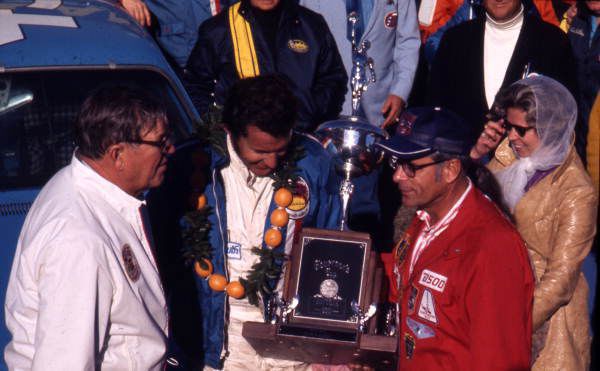
At Atlanta, Richard Petty beat Bobby Allison by two car lengths and became the first stock-car driver credited with more than one million dollars in career winnings. The threshold made an irresistible headline, but the money did not arrive through one afternoon or one person’s labor. Petty Enterprises combined Richard’s driving, Dale Inman’s crew leadership, Maurice Petty’s engine work, team preparation, and Plymouth support across a season of decisive results.
The Daytona 500 supplied Petty’s third victory in the event. That result belonged to a prepared competition Plymouth, not to any one street Road Runner, GTX, or ’Cuda configuration. Factory showroom rows need brochures and AMA sheets; race records need entrant, model, engine preparation, rules, and event sources. The public association between Petty and Plymouth matters, but it never authorizes copying a race result onto a street car.
Richmond produced a different scene. A penalty placed Petty at the rear and required a restrictor plate, yet NASCAR’s win catalog records him leading 348 of 500 laps. The page stays with the institutional facts rather than inventing anger, radio dialogue, or mechanical explanations. Starting behind the field and leading most of the race already shows the scale of the recovery.
The fall Richmond event clinched Petty’s third championship. A season narrative needs that moment because the title was not merely inferred after the final race; the result made the outcome secure. Exact points and competitor scenarios can be added from official standings, but the acquired record supports the clinching function. It also keeps the championship from being reduced to the million-dollar milestone.
At the Texas finale, Petty won eighteen seconds ahead of teammate Buddy Baker. The margin and teammate identity show Petty Enterprises functioning as more than the No. 43. Baker’s presence belongs in the story, just as crew and engine roles do. A team can center a famous driver without making every other participant scenery.
Dale Inman and Maurice Petty require role-specific institutional sourcing before detailed scenes are drafted. Inman’s crew-chief decisions and Maurice’s engines are historically central, but the win catalog alone does not document the division of labor at each race. This page names their established roles and holds private conversations, exact adjustments, and event-specific tasks until team papers or interviews support them.
The showroom year was changing around the team. Plymouth’s clear Barracuda rows still included engines from 340 through Hemi, while Road Runner, GTX, and other B-body claims await dedicated locators in this release. Race success does not fill those gaps. Petty’s season can explain Plymouth’s public performance identity without becoming substitute evidence for a dealer order form.
The financial threshold also needs context. “One million dollars” refers to credited career winnings as NASCAR presents them, not income after team shares, expenses, taxes, or sponsorship arrangements. The page preserves the institutional wording and avoids converting a public milestone into a private financial statement. Precision protects the human story from a headline that otherwise sounds more comprehensive than it is.
Photographs of Atlanta, Daytona, Richmond, Texas, the Petty crew, Inman, Maurice, and Baker remain permission leads with NASCAR and Petty archives. Each needs creator, event, car, depicted people, rights holder, permitted use, and credit. An iconic No. 43 image from another year would not document these 1971 scenes. Text publication proceeds while the owner evaluates exact candidates.
Petty’s 1971 season can be told through decisions and consequences rather than a documentary list: a third Daytona 500, a rear-of-field Richmond recovery, a clinching fall victory, a million-dollar threshold at Atlanta, and an eighteen-second team finish in Texas. Richard occupies the center because of his driving, while the page keeps the work around No. 43 visible and leaves every unsourced shop detail outside the scene.
Official results and standings remain the next data layer. They can supply dates, entrants, starting positions, laps led, points, and margins for each selected scene. The win catalog is strong for the narrative spine, but no single modern page should become the entire season database. Period sheets also make it possible to correct later summaries without changing the story’s sourced core.
The restriction-plate Richmond account deserves exact rules context before mechanical conclusions are drawn. NASCAR’s institutional summary establishes the penalty, rear start, and 348 laps led. It does not by itself explain plate dimensions, appeal procedure, or comparative engine effect. Those fields remain held for the rule book and event report, preventing a dramatic comeback from becoming an unsourced engineering claim.
The financial milestone can later connect to purse records and the economics of a team, but only with careful scope. Career winnings are not personal wealth, team revenue, or inflation-adjusted value. The site records the threshold NASCAR celebrated and does not speculate about distribution. That restraint lets the milestone remain culturally important without pretending access to private accounts.
Petty Enterprises imagery must also show the work around the driver. A useful licensing set would include Richard in the car, Inman with the crew, Maurice in the engine context, Baker as teammate, and a precise event scene. Each image needs its own rights and depiction review. A generic portrait alone would reproduce the lone-hero framing the page is designed to correct.
Placed beside Donohue’s Trans-Am season and Sox’s Pro Stock campaign, Petty’s title shows how different rule systems rewarded different forms of performance. The site does not normalize their wins into one ranking. It preserves the team, calendar, category, and contemporary stakes, then lets readers compare how manufacturers and people pursued success across American racing.
The finished page therefore has two responsibilities. It must let Petty’s remarkable year feel remarkable, and it must show why the achievement cannot be explained by Richard alone. The selected scenes meet both: the driver repeatedly produces the public result, while the teammate, crew chief, engine builder, owner organization, and manufacturer form the system around him. Later evidence can add names and detail without changing that structure.