Racing · Cadillac Racing · 2004
Andy Pilgrim: Restarting Cadillac’s Racing Argument
He stalled it, restarted it, passed the entire GT field inside six laps, and set fastest lap. Cadillac was back in the argument.
Story reviewed July 27, 2026
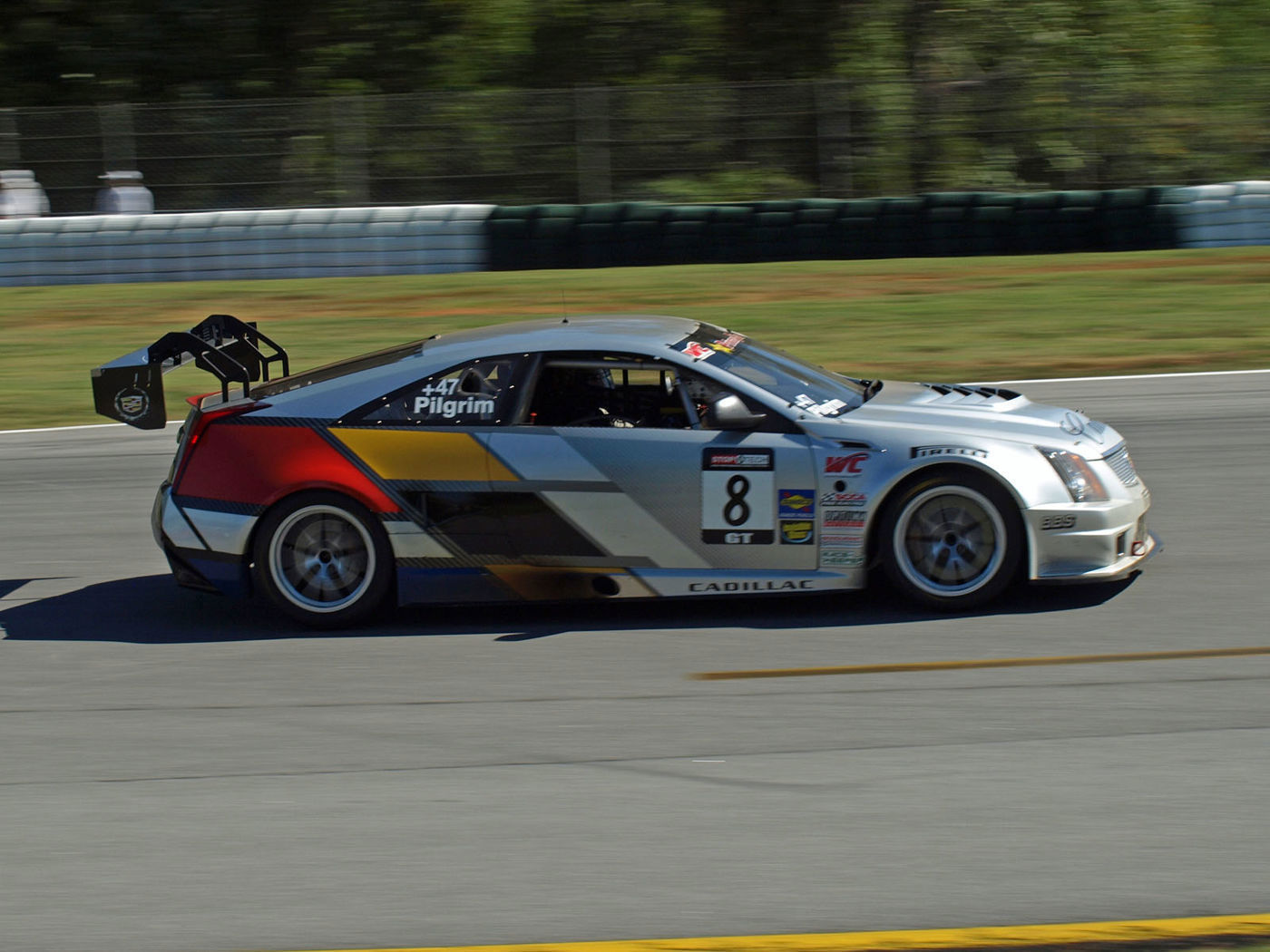
The green flag was ready at Sebring on March 16, 2004, and Andy Pilgrim’s Cadillac CTS-V was not. Cadillac’s own racing history says the second-row car stalled while teammate Max Angelelli took the lead. Pilgrim restarted and faced the field from behind. The launch of Cadillac’s new V-Series racing program had become a recovery drive before its first race had properly settled.
Pilgrim passed the GT field in fewer than six laps, set the fastest lap, and reached Angelelli for a Cadillac one-two finish. Those are the institutional account’s facts, and they give the story sufficient motion without invented radio calls or cockpit sensations. Exact lap times, pass locations, caution context, and margins remain acquisition targets for the official timing packet. A vivid event does not authorize imaginary detail.
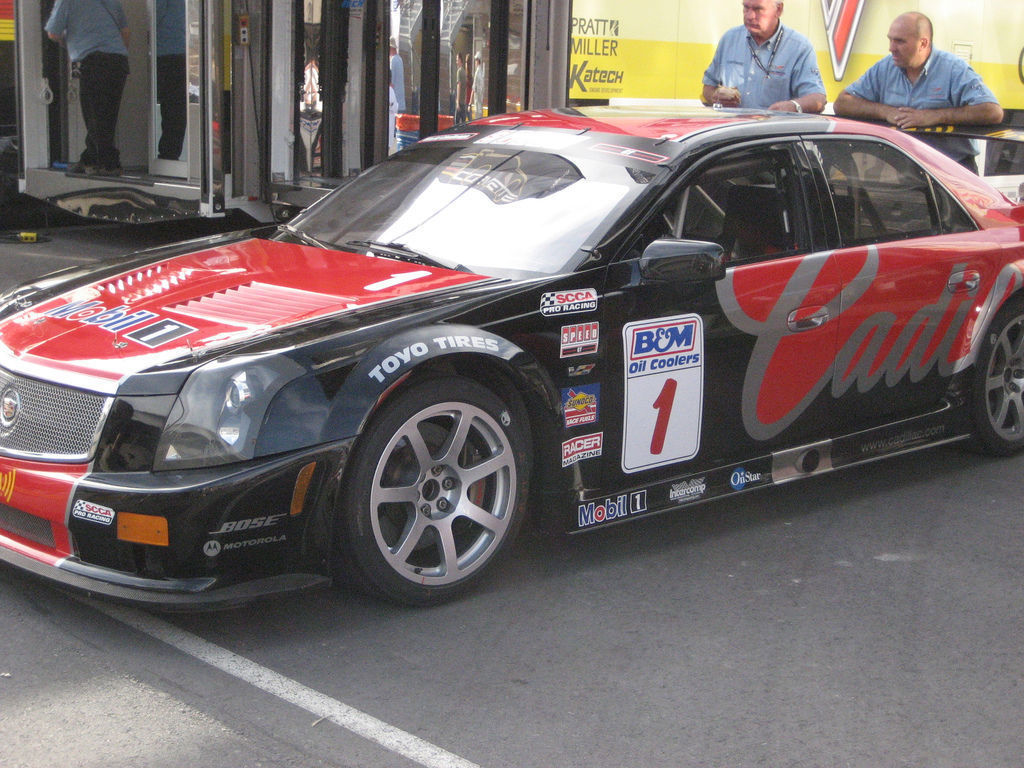
The stall mattered because the race program was carrying a new showroom claim. Cadillac introduced the 2004 CTS-V as the first production V-Series, a rear-drive sedan with a 400-horsepower LS6 and six-speed manual. Racing placed the V badge under public pressure immediately. Sebring could show that Cadillac intended more than an appearance package, but the race car was never simply a production sedan wearing numbers.
“Production-based” describes a relationship created by SCCA World Challenge rules. It does not make the race engine output, gearbox, weight, suspension, brakes, body, tires, or calibration interchangeable with the street CTS-V. The production selector publishes the LS6, MN6 transmission, 3.73 axle, FE4 suspension, and J56 brake codes supported by factory evidence. The race page waits for the 2004 rulebook and technical sheet before describing Pilgrim’s machine at the same resolution.
The people around the program also require distinct roles. Pilgrim and Angelelli drove. GM engineer John Heinricy appears in Cadillac’s broader V-Series development history. Cadillac engineers, racing personnel, fabricators, mechanics, and strategy staff turned the program into cars that could start a season. The first source does not establish every responsibility, so this page avoids a lone-creator story and identifies team and Pratt & Miller records as necessary next evidence.
That restraint makes Pilgrim’s verified work clearer. A stalled car requires a restart, then repeated overtaking under race conditions. Passing the field in fewer than six laps is not the same claim as winning from the rear under every possible scoring interpretation; it is Cadillac’s described sequence. Setting fastest lap is another category. Reaching Angelelli for a one-two finish is the result. The page keeps the stages separate rather than compressing them into “Cadillac dominated.”
Angelelli’s lead is equally important. Pilgrim’s recovery only produced a one-two because the other Cadillac remained at the front. A page centered on the stalled car can still credit the teammate whose race formed the target. Complete timing will eventually show how their paths converged, while contemporary interviews may explain the team’s view. Until then, the institutional summary supports the arc but not fictional conversation between the two drivers.
The season continued beyond the opening image. Cadillac’s later history reports two wins in 2004—Sebring and Road Atlanta—and three poles. Those numbers belong after the scene because they show the program becoming repeatable. They are not a substitute for a race-by-race results dump. Future dossiers can add event locators and explain which driver earned each pole or win rather than attributing the whole season indiscriminately.
The street car’s held data demonstrate why racing cannot fill gaps. Cadillac evidence clearly supports 400 factory horsepower, but this release holds the commonly reported 395 pound-feet and both rating rpm locators until a contemporary launch sheet is acquired. The race car’s performance cannot be reverse-engineered into street torque. Nor can the C5 Z06 origin of the LS6 make Corvette specifications controlling; Vette Facts is contextual, and Corvette stays outside this catalog.
That cross-site link can still teach something valuable. A reader may follow the LS6 from Corvette context to CTS-V, provided both pages warn that shared engine-family terminology does not prove identical intake, exhaust, calibration, rating, or installation. The relationship explains Cadillac’s engineering starting point. It does not erase the sedan’s mass, cooling needs, certification, drivetrain, or mission.
The comparison with the year’s other sedans broadens the stakes. Mercury offered the rear-drive Marauder with 302 advertised horsepower and an automatic. Chevrolet revived the Impala SS as a front-drive supercharged V-6 sedan at 240. Cadillac offered a manual-only, 400-horsepower rear-drive CTS-V and then took a related race identity to Sebring. Those were different answers, visible only when body, layout, transmission, and evidence stay beside horsepower.
Pilgrim’s recovery is also a story about development meeting consequence. Nürburgring work and V-Series planning can sound inevitable in retrospective prose. A stalled car at the first green flag removes that inevitability. Programs are tested by failures as well as planned demonstrations, and the driver’s task begins from the condition actually delivered to him. The drama requires no claim about why the engine stopped unless technical records establish it.
The desired hero image is obvious and uncleared: Pilgrim’s CTS-V at Sebring, preferably in the opening or recovery sequence, or the two Cadillacs finishing together. A Cadillac media PDF or archive gallery is an evidence lead, not republication permission. Creator, event, car, session, source, rights holder, license, crop, credit, and commercial editorial terms must be recorded for owner review in the separate licensing workspace.
The stalled start ultimately strengthened Cadillac’s argument because the response became the memorable part. Pilgrim restarted, crossed the field quickly, recorded fastest lap, and joined Angelelli at the front. The production car and race car remain separate machines, but their stories met at Sebring under the new V badge. One was a precisely selectable street configuration; the other was the racing program’s first abrupt test.
What remains unknown is explicit: full timing, technical specification, crew roles, exact failure cause, and firsthand description. Those holds do not make the page unfinished. They prevent a strong institutional scene from swelling into a false omniscient account. When the event packet and team archives arrive, they can deepen the recovery lap by lap without changing the core story Cadillac already supports.