Stories · 2004 · cross-marque
2004: Performance Without One Accepted Shape
Eighteen sources, no agreed shape: a Mustang ending its Dearborn run, a GTO shipped from Australia, and a Marauder nobody quite knew how to sell.
Story reviewed July 27, 2026
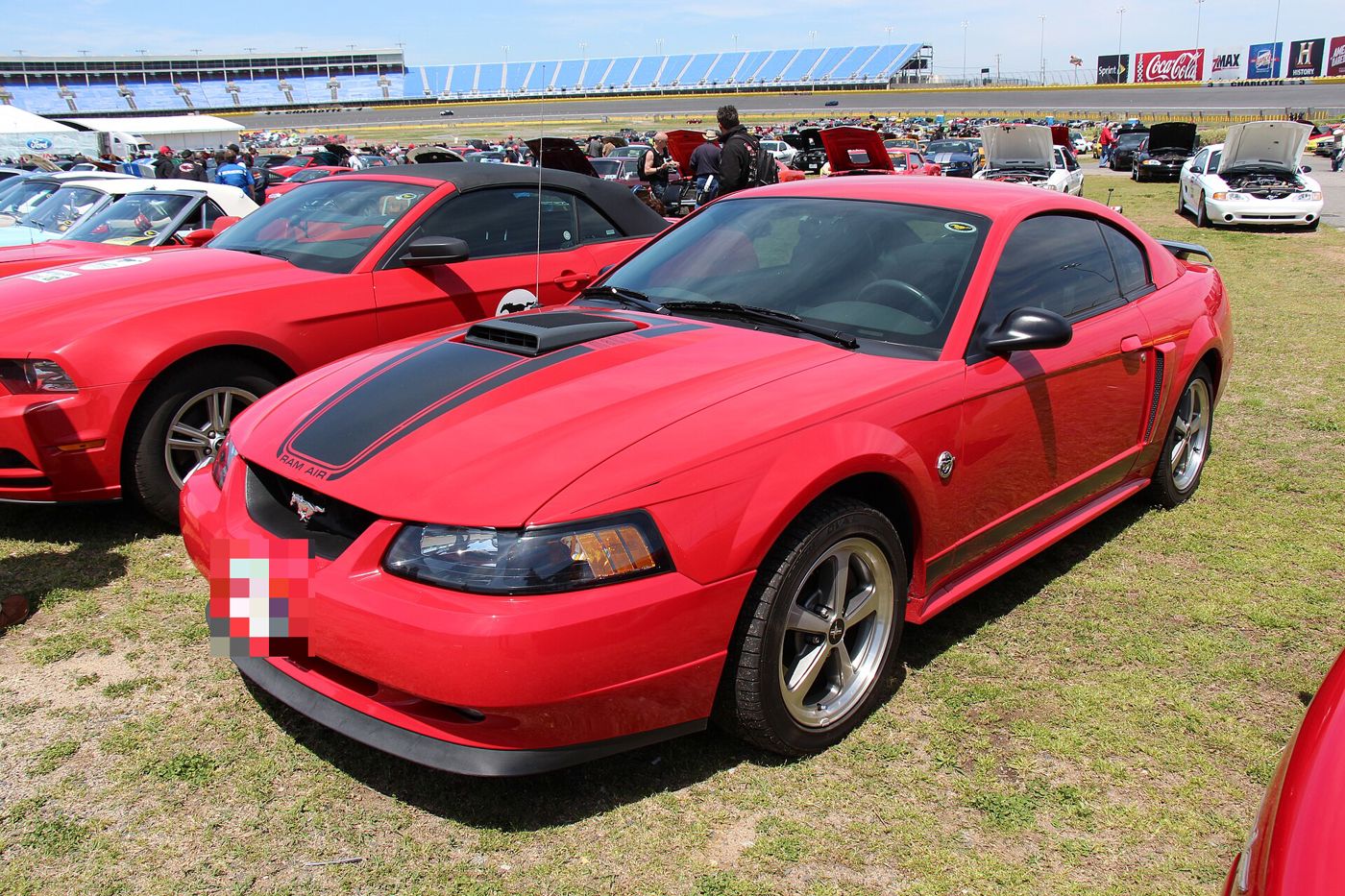
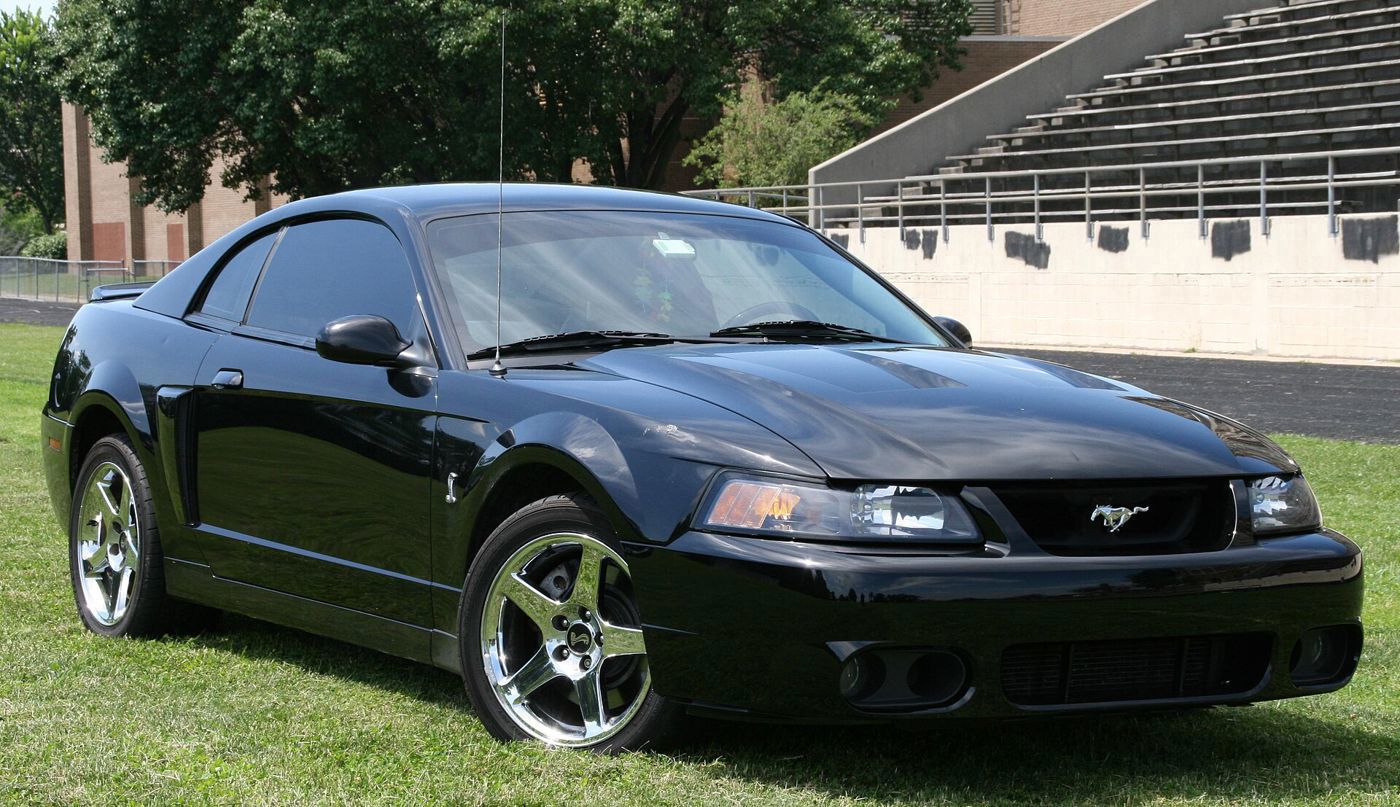
Ford’s 2004 showroom could place three cars with 4.6-liter V-8s under one Mustang name and still offer three substantially different answers. The GT used a naturally aspirated single-overhead-cam engine advertised at 260 horsepower. Mach 1 used a naturally aspirated dual-overhead-cam engine at 305. SVT Cobra used a supercharged and intercooled dual-overhead-cam engine at 390. Shared displacement was only the beginning of the description, not permission to merge the cars.
The comparison therefore identifies body, trim, engine construction, aspiration, induction, transmission, axle where supported, drive layout, and rating basis. That detail makes a GT-versus-GTO comparison possible without reducing either to a badge or headline horsepower figure. It also allows the reader to select a manual Mach 1 rather than an automatic, or a standard Monte Carlo SS rather than its supercharged sibling. When factory evidence supports only one power team, as with Marauder, CTS-V, or Thunderbird, the site publishes one instead of inventing symmetry.
The Mustang GT coupe row carries Ford’s 260 horsepower at 5,250 rpm and 302 pound-feet at 4,000, a five-speed manual, and 3.27 limited-slip axle. The Mach 1 rows carry 305 horsepower at 5,800 and 320 pound-feet at 4,200 with a 3.55 axle. Manual and automatic remain separate because Ford’s history identifies an automatic-specific crankshaft distinction even though advertised output is shared. The Cobra’s supercharged 390-horsepower, 390-pound-foot engine, T-56 six-speed, and 3.55 axle form a fourth factory configuration rather than a tuner conversion.
The familiar claim that Cobra was underrated does not replace Ford’s observation. A chassis dynamometer measures a particular car through its driveline under stated conditions; a magazine acceleration result measures another configured car on another day. Both can become evidence with complete pages, method, conditions, and vehicle identity. Neither converts itself into Ford’s advertised crankshaft rating. The selector begins with the 390/390 factory claim and leaves later measurement classes visibly separate.
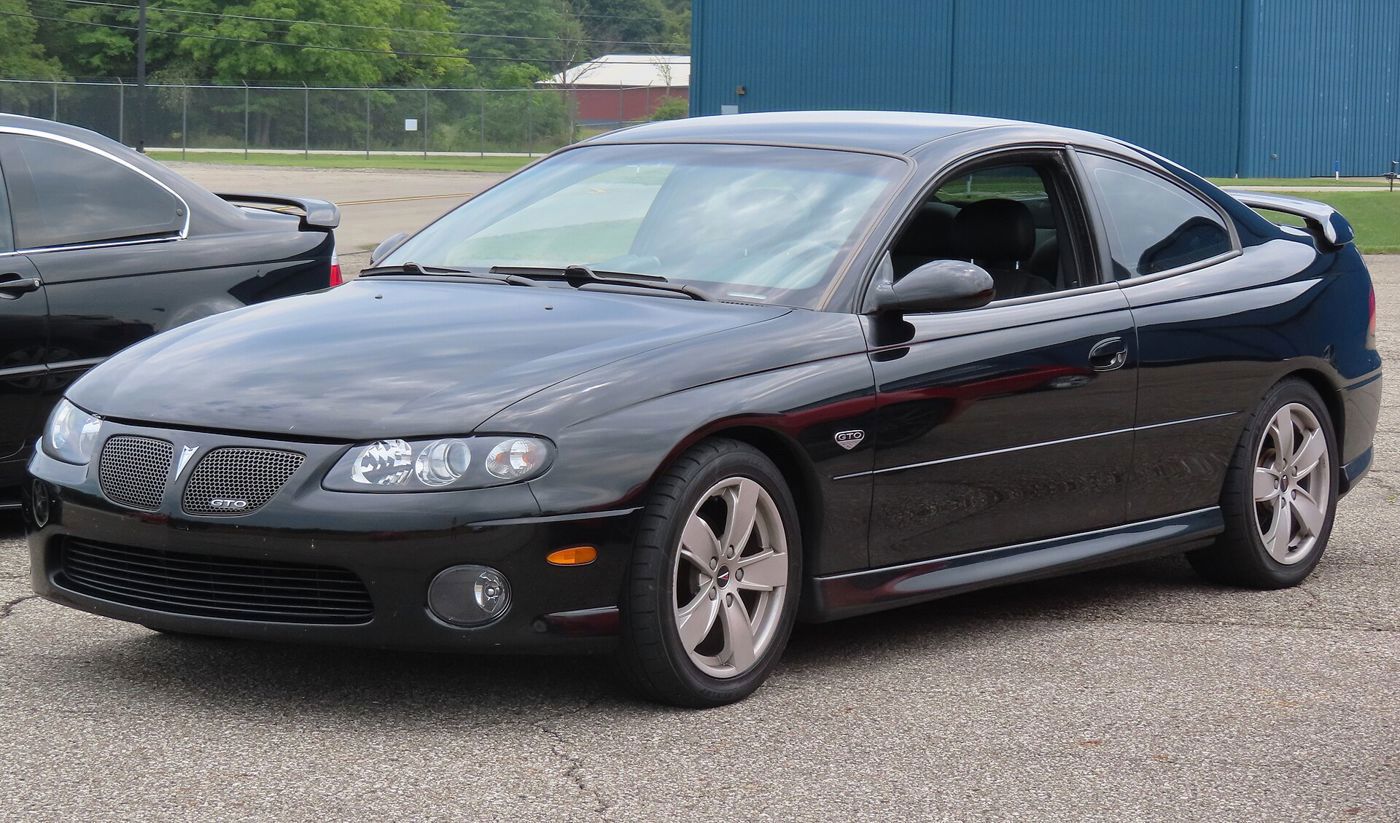
Pontiac’s GTO returned with a different kind of complication. The U.S.-market coupe was assembled at Holden’s Elizabeth plant in Australia and related to the Holden Monaro. Pontiac advertised its LS1 5.7-liter V-8 at 350 horsepower and 365 pound-feet with either an M12 six-speed manual or M30 four-speed automatic. Both transmissions receive rows even though advertised output is shared. Australian assembly is part of the car’s identity; “American brand” is not rewritten to mean American assembly.
Calling the GTO merely a rebadged Monaro would go farther than the current evidence. General Motors uses that broad retrospective wording, while Pontiac material establishes the U.S. car’s engine, transmissions, rear drive, limited-slip differential, and four-passenger body. A complete export-change matrix remains held. The story can say what crossed the Pacific without claiming that every fascia, fuel, exhaust, safety, certification, or calibration detail was unchanged.
Chevrolet’s Monte Carlo demonstrates why two letters do not identify an engine. The ordinary SS used a naturally aspirated L36 3800 V-6 at 200 horsepower and 225 pound-feet with a front-drive 4T65-E and 3.29 final drive. The Supercharged SS used an L67 at 240 and 280, the heavy-duty automatic, and 2.93 final drive. Both are factory SS cars. The word “SS” alone cannot transfer the supercharged rating onto the standard car.
Mercury’s Marauder brought a rear-drive four-door answer: a 4.6-liter DOHC V-8 at 302 horsepower and 318 pound-feet, electronic four-speed automatic, and 3.55 limited-slip axle. Mercury advertised one relevant factory power team. Later supercharger installations belong to tuner or dealer branches with kit, installer, calibration, invoice, and vehicle provenance. Enthusiasm for what owners built later cannot manufacture a factory-supercharged Marauder row.
Cadillac’s first CTS-V made the four-door field more serious. Factory history and RPO evidence establish a rear-drive sedan with a 400-horsepower LS6, MN6 six-speed manual, GT4 3.73 axle, FE4 suspension, and J56 brakes. The often repeated 395 pound-feet and the horsepower rpm remain held until a contemporary Cadillac launch specification is preserved. Unknown torque is not zero, and a generic GM automatic reference cannot create an automatic 2004 CTS-V.
Ford’s Thunderbird occupies the edge deliberately. The two-seat roadster used a 3.9-liter DOHC V-8 at 280 horsepower and 286 pound-feet with a five-speed automatic. It is personal luxury and sports-car adjacent rather than conventional muscle, but its exact row shows what an American-brand buyer could compare in 2004. The tool exposes its two-seat body and mission rather than letting horsepower pretend it was a Mustang, GTO, or Marauder equivalent.
The Impala SS rows are similarly labeled as a borderline modern extension. The front-drive sedan’s supercharged 3800 produced 240 horsepower and 280 pound-feet through a heavy-duty automatic and 2.93 final drive. The limited-availability Indy SS carries the same powertrain with distinct commemorative appearance and trim. Its configuration is clear; its production total is not. The site publishes the trim and holds every “one of N” claim pending final accounting.
Absences help define the year. Camaro and Firebird production had ended after 2002. The rear-drive Charger and Challenger had not returned. The 2005-model Chrysler 300 may have appeared during calendar 2004, but that does not create a 2004 model-year row. Neon SRT-4 remains a deferred performance compact. Corvette, Viper, and Crossfire belong to sports-car coverage, while SSR and Ram SRT-10 are trucks. The selector does not grow by crossing a documented scope boundary.
Race cars remain outside it too. Andy Pilgrim’s SCCA World Challenge CTS-V, Kurt Busch’s NASCAR Ford Taurus, and a NASCAR Monte Carlo share names and manufacturer stories with road cars but not their street specifications. “Production-based” is a rules relationship, not a promise that engine, gearbox, weight, suspension, or brakes match the dealer configuration. The racing pages link back for cultural context while carrying independent technical evidence.
Contextual sibling links follow the same discipline. Mustang configurations connect to Mustang Facts’ 2004 page. Shared LS-engine terminology can lead readers to Vette Facts’ 2004 C5 coverage, with a warning that a shared family name does not establish identical calibration or output. Corvette remains link-only here. These are story-specific routes, not a generic family footer.
Thirteen rows across seven model families reveal a year without one accepted performance shape: coupe, sedan, and roadster; rear drive and front drive; natural aspiration and supercharging; American and Australian assembly; two seats, four seats, and five. The comparison never chooses a universal winner. It gives readers enough identity to choose the cars they actually mean and enough evidence context to understand why famous but unresolved numbers remain outside the table.