Racing · Ford Racing · 2010
Five Boss 302R Cars Carry an Engine Question to Daytona
A race-only car built to answer a production question, and telemetry that went back into the road engine.
Story reviewed July 27, 2026
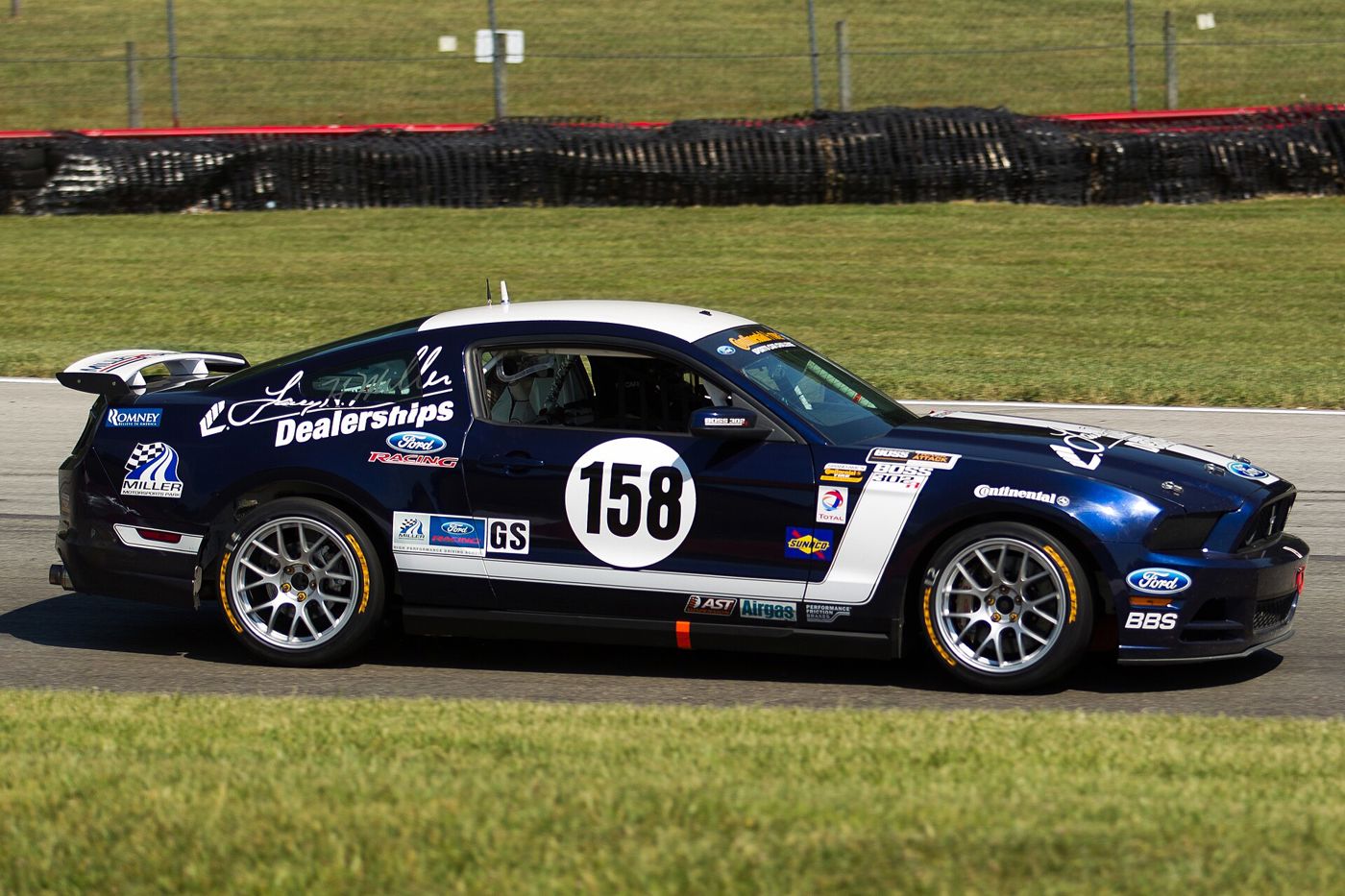
Five Boss 302R race cars went toward Daytona carrying engines that were doing more than preparing for a race. Ford’s engine history says durability engines in five competition cars supplied telemetry that informed the later production engine. The useful opening is therefore not a finishing position. It is unfinished road-car work installed in race-only machines and sent into conditions a laboratory could not completely reproduce.
Ford Racing’s release defines the boundary clearly. Boss 302R was a factory-built competition car intended for Grand-Am, SCCA, and NASA use. It was not a 2010 street Boss 302 hidden in a catalog. The street Boss arrived in a later model year. Calendar-year racing activity, development chronology, and model-year showroom identity remain three separate facts.
The number five describes the documented development fleet, not five ordinary Mustangs converted by owners. Each car belongs in a race branch with its own chassis, safety equipment, engine state, gearbox, weight, tires, electronics, and rules identity. None enters the street comparison beside V6, GT, or GT500. The selector can link here for program context without pretending a Boss 302R was available from the 2010 road-car order guide.
Multimatic belongs in the story as an engineering and build partner. Its history identifies the 2010 program and names drivers including Scott Maxwell, Joe Foster, Gunnar Jeannette, and Frank Montecalvo. Those records establish participation, not every individual setup decision. Team documents, entry lists, timing, and role-specific interviews must precede claims about who changed a spring, diagnosed a fault, or interpreted a particular telemetry trace.
Telemetry makes a compelling word because it promises direct access to the car, but it must be treated as evidence rather than magic. Sensors measure selected channels at defined rates and locations. Engineers interpret those channels against models, inspections, component histories, and driver reports. Ford’s history supports the broad statement that race data informed production development. It does not expose every channel or allow this page to reconstruct private engineering conclusions.
Daytona matters because sustained speed, braking, traffic, curbs, heat, pit work, and repeated transitions can expose durability questions differently from a short proving-ground run. Exact weather, lap count, failures, and component changes require event records. The page can explain why competition was useful without manufacturing a cinematic night stint or attributing a vibration to a driver who has not described it.
The race program also complicates the familiar phrase “race on Sunday, sell on Monday.” These cars were helping develop a future street engine rather than merely advertising a completed showroom package. Engineering flowed through the race effort while marketing identity flowed outward from the Boss name. The relationship was real, but it did not make the race car and eventual production Boss technically interchangeable.
Ford’s 2010 street lineup makes the chronology visible. The Mustang GT still used the 4.6-liter SOHC V-8 at 315 horsepower. Shelby GT500 used the supercharged 5.4 at 540. No 2010 street selector is labeled Boss 302. A later car can have roots in 2010 testing without being backdated. The database preserves that distinction so search and comparison do not convert development history into false availability.
Results will enter only when they change the program arc and have complete locators. Grand-Am rulebooks, homologation, entry lists, qualifying sheets, lap charts, and official classifications can show where each car ran and what happened. A team retrospective may describe significance; the sanctioning record establishes result. The story need not become a season dump, but it cannot borrow remembered wins or failures from another year.
The people page implicit in the program is larger than its drivers. Ford Racing engineers, Multimatic staff, engine-development teams, mechanics, data engineers, suppliers, and production-program personnel occupied different links in the feedback loop. A future revision should name them where contemporary records establish roles. Until then, collective terms prevent a famous executive or driver from absorbing unseen work.
The Boss name itself invites ancestor storytelling. Earlier Boss 302 Mustangs were tied to another racing and regulatory world. The 2010 Boss 302R deliberately activated that history, yet historical resemblance does not prove continuity of parts, rules, homologation, or purpose. A contextual link can help readers understand the name while the event-year car remains defined by 2010 evidence.
Camaro GT.R provides the natural parallel. Both manufacturers placed recognizable coupe identity into purpose-built race programs as Camaro rejoined the market. The programs used different builders, rules contexts, and development goals. A comparison between them must begin with class and event evidence, not street horsepower. Their simultaneous presence explains the renewed rivalry without flattening it.
Images from Daytona or the build shop remain rights leads. Ford Racing, Multimatic, Grand-Am/IMSA, teams, and credited photographers may control different frames. A press-release image is not automatically cleared for this commercial editorial site. Exact car, event, driver, photographer, holder, license, crop, and credit must be recorded in the separate review location before owner approval.
The five cars ultimately matter less as a production count than as five moving test environments. Ford’s institutional account says their telemetry informed a later production engine, while the racing documents establish a factory-built competition program. The strongest narrative follows information moving from track to engineering decision, not trophies being listed without causal connection.
What remains held is explicit: exact durability-engine state, telemetry channels, component changes, team roles, and race-by-race results. Those holds protect the program’s real significance. The Boss 302R can be an important 2010 racing story precisely because it stays a race-only car carrying a future question, not a fictional 2010 showroom model created by hindsight.
The eventual page can also show how evidence moved in the other direction. Race reliability does not automatically certify a road engine, because production duty cycles, emissions, noise, service, warranty, and customer use impose other requirements. Track telemetry was one input inside a broader validation system. Treating it that way credits the race program without claiming five cars alone finished the street engine.