Stories · 2023 · cross-marque
Brampton’s Final Shift Closes Three Different Cars
Brampton's final shift closed the Challenger, the Charger, and the 300 together, ending three different arguments with one assembly line.
Story reviewed July 27, 2026
Workers gathered around a Velvet Red 300C as the final car completed production at Brampton. Stellantis’s record gives that closing image a date and vehicle identity; it should not be generalized into the final Challenger or Charger without their own records. One plant was closing a chapter for three related but mechanically and culturally distinct cars.
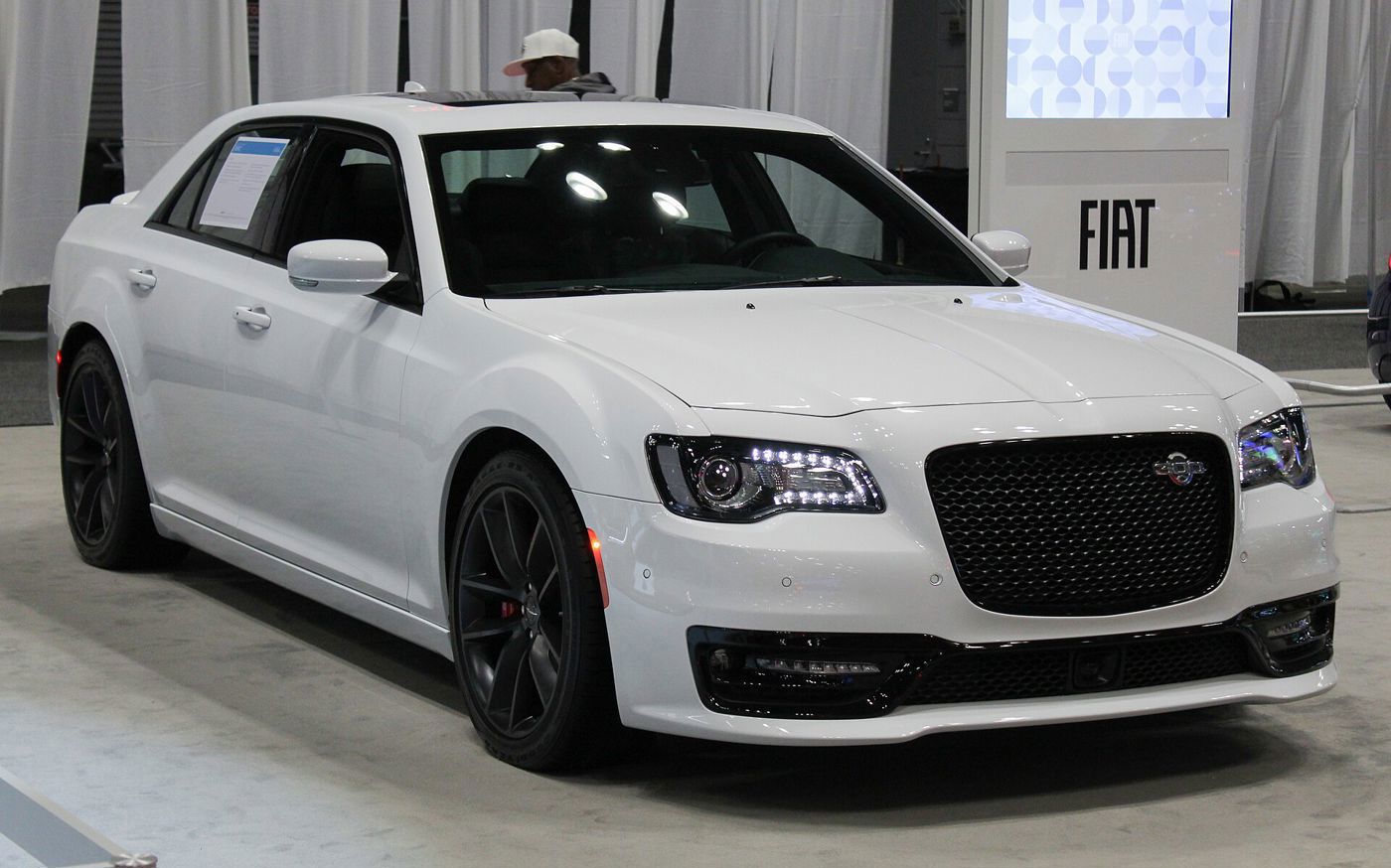
The 2023 Chrysler 300C provides one exact configuration: a 6.4-liter HEMI at 485 horsepower and 475 pound-feet, eight-speed automatic, and 3.09 limited-slip. Chrysler described it as fully equipped and offered 2,000 units in the United States plus 200 in Canada. Offered quantity is not final production accounting, so “one of 2,000” remains held.
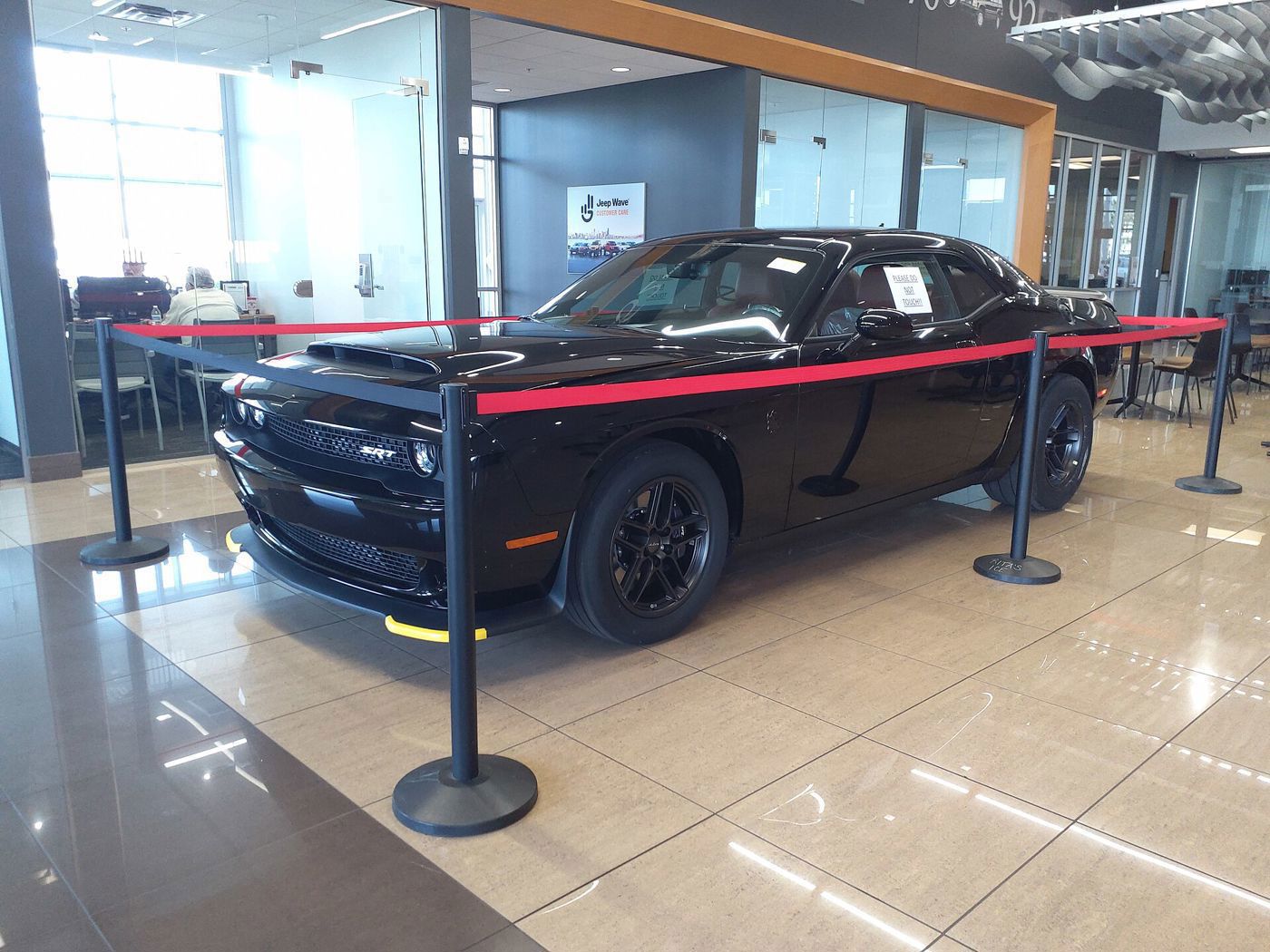
Challenger contributed twelve clear non-Jailbreak baselines plus Demon 170, ranging from rear- and all-wheel-drive V6 cars through R/T, Scat Pack, Hellcat, Redeye, Super Stock, and the fuel-dependent finale. Manual transmission survived in R/T, Scat Pack, and Hellcat. The body name alone cannot identify engine, drive system, gearbox, axle, or output.
Charger contributed eight released rows after the 807-horsepower Jailbreak lead was held. SXT and GT split rear drive and all-wheel drive; R/T, Scat Pack, Hellcat, and Redeye formed the V8 hierarchy. Every released Charger uses an eight-speed, but output and axle still vary. A held row is visible research work, not an invitation to infer.
The Jailbreak hold matters because exact 2023 order-code applicability has not been archived. A 2022 rule or a specialty King Daytona claim cannot establish the baseline 2023 row. The site would rather release 46 defensible configurations than reach 47 by inheritance. If the order artifact arrives, the row can join with its evidence.
Shared Brampton production and corporate architecture do not make 300C, Challenger, and Charger interchangeable. Coupe versus sedan, seating, wheelbase, drive system, transmission availability, axle, package, chassis tuning, and intended use remain part of identity. Plant history connects the stories while the selector preserves the differences.
“Last Call” receives the same scoped treatment. Dodge said goodbye to Challenger and Charger in their current HEMI-powered forms. The phrase is not an absolute end to Dodge performance, the Charger name, or every internal-combustion product. Later electric or multi-energy Charger information belongs to its actual model year and architecture.
The workers’ story requires more than a corporate photograph. Brampton plant records, Unifor materials, interviews, shift information, and role-specific documentation can identify how the final sequence was managed and experienced. A corporate release establishes the milestone; it does not speak for every worker or authorize fictional farewell dialogue.
The three-car ending also includes suppliers, logistics, quality, engineering, and dealers. A plant completes the physical car inside a wider system. Closing production changes that system unevenly. The page should name people and organizations when evidence defines their role rather than reducing the end to executives posing beside a hood.
Final VINs, dates, and totals must remain car-specific. The final 300C is not the final HEMI vehicle by implication, and the final current-form Challenger is not proved by a later auction caption. Factory completion records and final accounting control. Registries and survivor counts can become secondary context but cannot manufacture production.
Third-party Drop Top Customs conversions remain independent body branches. A converted Challenger does not prove a factory convertible configuration, even when sold through a dealer relationship. Body provenance matters because axle, structure, weight, and equipment can change. Coupe baselines stay coupes in this release.
The transition forward belongs only in aftermath. Brampton retooling, future products, and the next Charger help explain why the final shift mattered, but their specifications do not enter 2023. The page can say a transition was underway without treating future promises as delivered current-model facts.
The hero image is unusually well defined: the dated final 300C scene, with exact workers and vehicle captioned from the record. Rights still require Stellantis, photographer, plant, and visible-person review. Worker collections or union archives may offer other perspectives. No image enters Git merely because it accompanied a press release.
Contextual links can connect 300C’s return to earlier Chrysler 300 history and Challenger/Charger to their ancestors, provided exact routes advance the scene. Viper is absent because no 2023 Viper exists. Generic corporate or family navigation adds nothing and remains excluded.
Brampton’s final shift closes the story honestly when it holds common place and different cars together. The 300C’s single configuration, Challenger’s broad manual/automatic range, and Charger’s sedan hierarchy shared production context but not one technical identity. The final photograph is powerful because it marks a real ending, not because it erases those differences.
The 300C offered quantity and Demon maximum plan illustrate two different counting traps. One announced a market allocation; the other stated a capacity-dependent ceiling. Neither is a final completion total. Final plant accounting must also distinguish U.S., Canada, pilot, retained, damaged, and other categories before public rarity language becomes defensible.
Special editions require the same discipline. A paint color, decal, heritage name, or announced package count does not necessarily create a distinct powertrain selector. A specialty page can tell its story while order codes and mechanical changes remain under review. The database does not reward marketing variety by duplicating identical baseline configurations.
The closure’s aftermath will include plant retooling and new labor arrangements, but those are not footnotes to be guessed from future product announcements. Institutional records and worker accounts should show what actually changed. That work can deepen the ending without rewriting the 2023 cars as prototypes for whatever followed.
Comparison routes preserve the completed work even as products change. A user can select final-year 300C against 2015 300 absence, 2023 Challenger R/T against its 1970 ancestor, or final-form Charger against earlier sedans. Every row retains market and model year, so the closure becomes a navigable historical boundary rather than a claim that one badge carried unchanged through time.
The ending stays specific, searchable, and human.