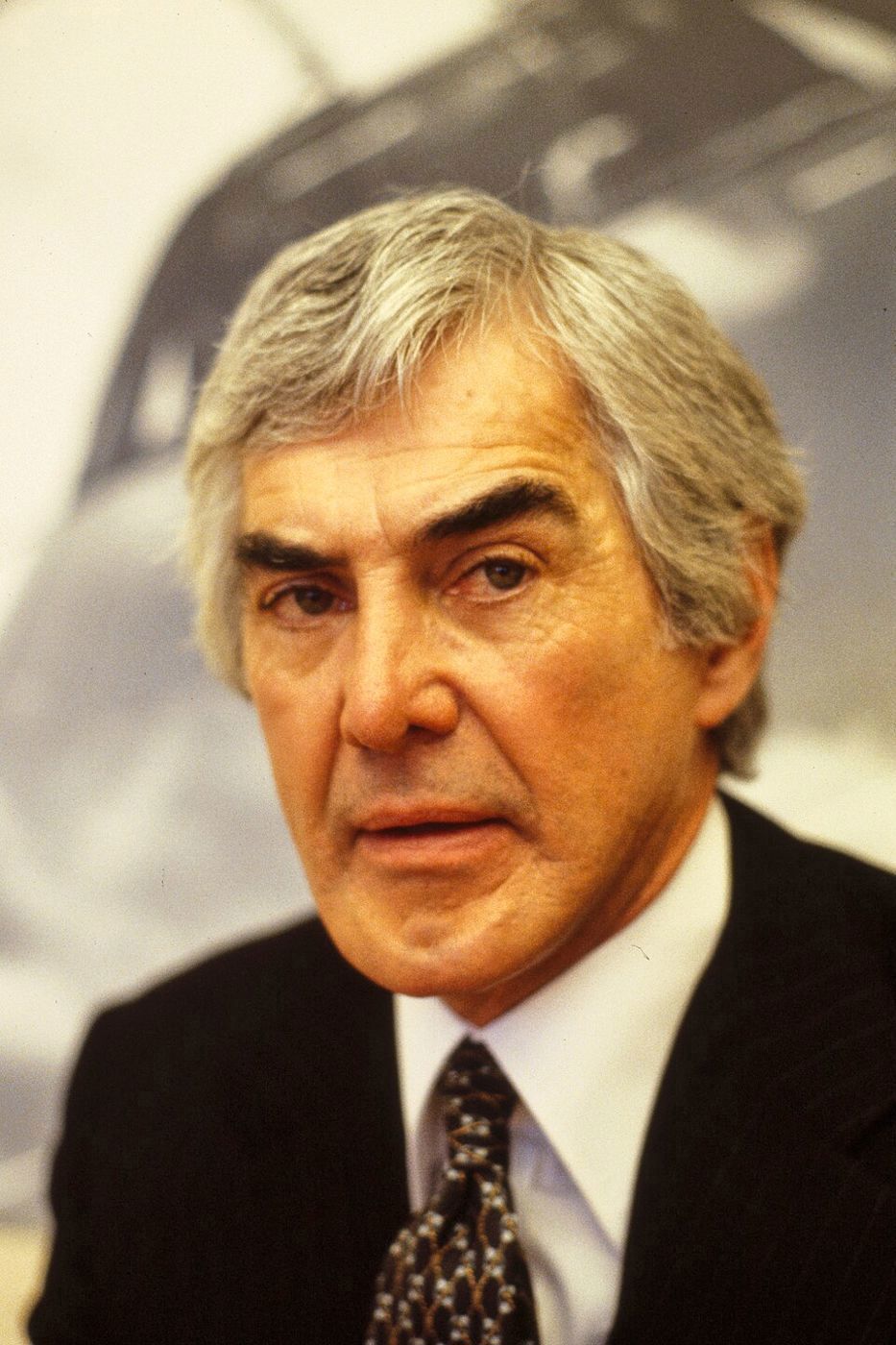
People · Engineer and executive · Pontiac
John DeLorean and the GTO: A Saturday Remembered Three Ways
The engineer who let a 389 into a Tempest, remembered three different ways by three sources that do not agree on who had the idea.
Story reviewed July 27, 2026
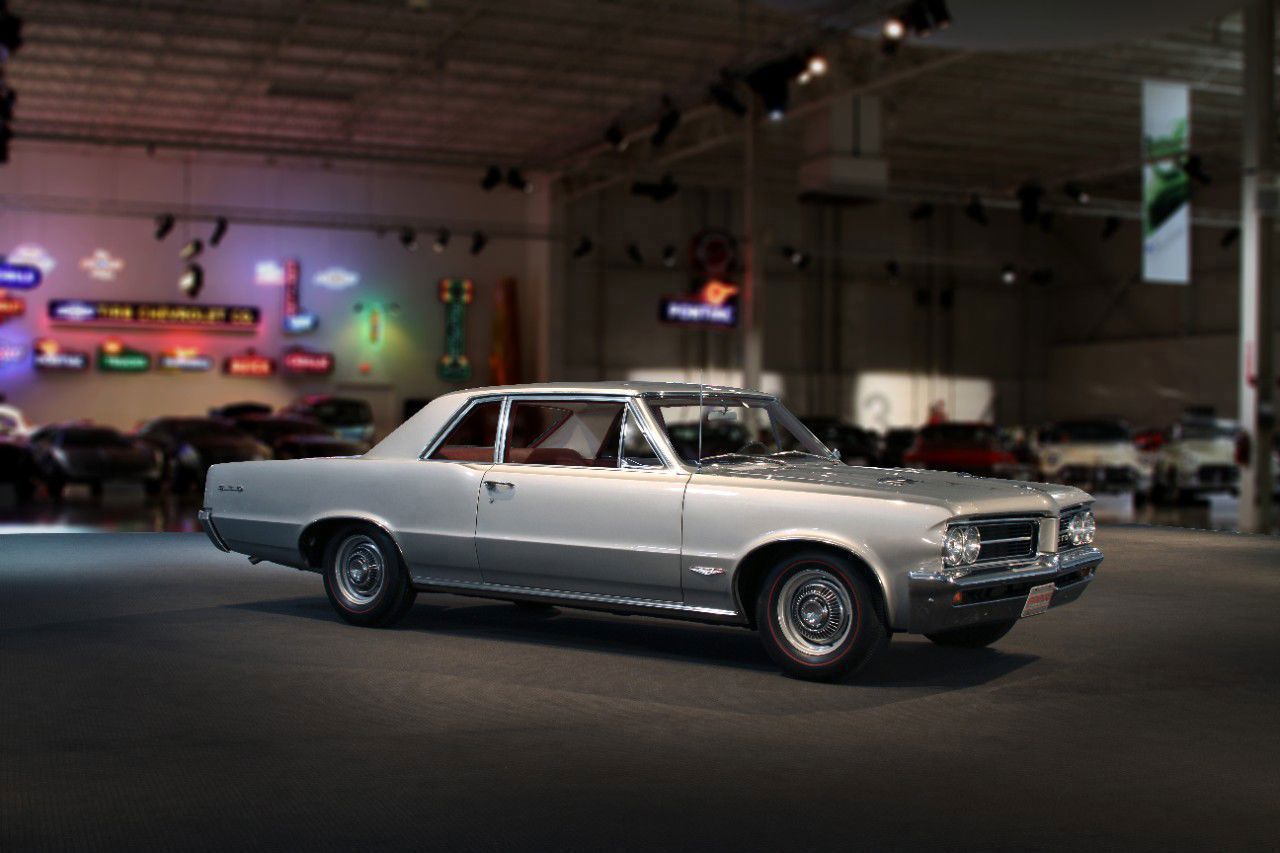
The most durable GTO origin scene places a Tempest prototype on a lift at General Motors’ Milford Proving Ground during one of John DeLorean’s informal Saturday sessions. Jim Wangers remembered Bill Collins noticing that common mounting points made a 389 swap plausible and Russ Gee signaling that the work could be done. By the next Saturday, the story goes, a running prototype existed. It is a vivid beginning, but it is not a period engineering log. It is participant memory recorded decades later, and the page keeps that label attached.
Wangers was unusually explicit about credit. He named DeLorean, Collins, and Gee as the people responsible for the product and said his own role was selling it. That statement resists the later habit of assigning the GTO to one charismatic executive. DeLorean was Pontiac’s chief engineer in the remembered scene and could create room for experiments, but Collins supplied chassis insight and Gee’s Experimental Department turned an idea into hardware. Leadership, suggestion, and execution were connected roles rather than interchangeable titles.
Collins’s 2013 account supports the three-person setting while changing the motive. He remembered discussion of stretching the Tempest wheelbase for NASCAR, DeLorean authorizing a prototype, and Gee’s department producing it for the following Saturday. The released GTO retained a 115-inch wheelbase, so the publication does not call it a NASCAR homologation special. Collins’s memory explains what engineers may have been exploring; the production brochure and FIA form establish what Pontiac actually released.
DeLorean’s own late-1993 recollection begins elsewhere. He described building a 326-powered Hurst-equipped Tempest for personal use, lending it to friends, and treating their reluctance to return it as informal market research. He minimized Wangers’s role in the concept. That account does not erase Collins or Gee, just as Wangers’s lift scene cannot erase DeLorean’s remembered personal-car experiment. The conflict is the story: important products can emerge through overlapping prototypes and later memories that reorganize causation.
The eventual 389 prototype became associated with DeLorean’s personal driving too. Wangers recalled that people who borrowed it did not want to give it back. This detail is presented as his memory, not invented dialogue or a quantified consumer test. It helps explain why the team saw more than an engineering exercise. A larger engine in the intermediate body changed the car’s character in a way that was immediately legible to experienced drivers.
The GTO name is another DeLorean contribution in Wangers’s account. Borrowing Ferrari’s Gran Turismo Omologato initials was audacious because Pontiac’s car, market, and competition history were radically different. Yet the choice was not empty forever. FIA homologation form 180 recognizes the Pontiac Tempest Le Mans GTO in Group GT effective July 13, 1964. The name began as provocative positioning and acquired a real homologation record, without proving Pontiac ran a works road-racing campaign.
Corporate policy formed the background. Pontiac had built performance credibility through Super Duty engineering and public competition, but a January 1963 divisional bulletin canceled new 389 and 421 Super Duty engine orders while leaving 421 HO available. GM’s 1965 testimony described the longer-standing AMA racing recommendation and the company’s own racing and promotion policy. The broader 1963 corporate directive remembered by Wangers has not been acquired, so DeLorean’s page does not invent its words or claim a simple act of personal defiance.
Later histories often say DeLorean evaded a GM displacement ceiling by making the GTO an option instead of a model. The Henry Ford calls the strategy a workaround, but the underlying period rule was not inspected in this pass. Terms like illegal, smuggled, and forbidden create drama by pretending the exact policy document is known. The page instead states that later institutional accounts describe a workaround and places acquisition of the actual rule among the unresolved priorities.
This restraint does not make DeLorean passive. Engineering leadership includes choosing which experiments receive time, protecting promising work, connecting a prototype to product approval, and accepting the risks of a provocative name and package. It also includes relying on specialists. Collins, Gee, test staff, powertrain engineers, production planners, and countless other employees made the car repeatable. DeLorean’s role becomes more credible when organizational power is described rather than converted into lone-genius mythology.
Jim Wangers then made the engineering experiment public. His agency and Royal Pontiac recollections show how advertising, dealer performance work, press preparation, and controversy turned a new option into a cultural event. The March 1964 Car and Driver feature helped, although its archive now calls the Ferrari comparison fictional and later allegations about a 421 test engine remain unresolved. DeLorean’s person story meets Wangers’s without merging engineering authorization and marketing execution.
The Automotive Hall of Fame confirms DeLorean’s wider stature and a 1974 Distinguished Service Citation, but its short biography does not decide GTO authorship. That is an important source boundary. A career honor can establish how the industry later regarded a person; it cannot resolve the moment-by-moment creation of one car. The strongest origin evidence remains the set of participant accounts, and their disagreements must remain visible.
Additional records could change the balance among those accounts. Milford logbooks, experimental vehicle orders, installation releases, photographs, expense approvals, and personnel records might establish dates and responsibilities without relying only on memory. The acquisition queue seeks those artifacts explicitly. Until they appear, the page distinguishes what participants remembered from what Pontiac and FIA documented about the finished product.
DeLorean belongs at the center of the GTO story, but not alone. A Saturday experiment, a personal 326 car, Collins’s NASCAR motive, Gee’s rapid prototype work, Wangers’s sales campaign, Pontiac’s policy dilemma, and a real FIA form all intersect around him. The page’s conclusion is therefore collective: DeLorean created institutional space and helped carry the result into production, while other people supplied essential ideas and execution. The GTO is more interesting as a team achievement remembered imperfectly than as the invention of one man.