1964 · Pontiac · United States
1964 Pontiac GTO: When the Racetrack Moved into the Order Form
An option package on a mid-size Tempest, sold past a corporate racing ban by people who understood advertising as well as engineering — and the car the rest of Detroit spent the year answering.
United States · researched through July 26, 2026
Power-team selector
Choose the exact GTO
Pontiac’s April 17, 1964 brochure does not ease into the GTO. It warns buyers that the suspension is firm, the dual exhaust is audible, and fuel economy will not be the car’s virtue. That candor is the best opening to the production story. The GTO was not presented as a trim package that happened to contain a larger engine. Pontiac called it performance machinery and described the compromises as part of the choice. After years of selling performance through visible competition, the division had found a way to put the argument directly into a Tempest Le Mans order.
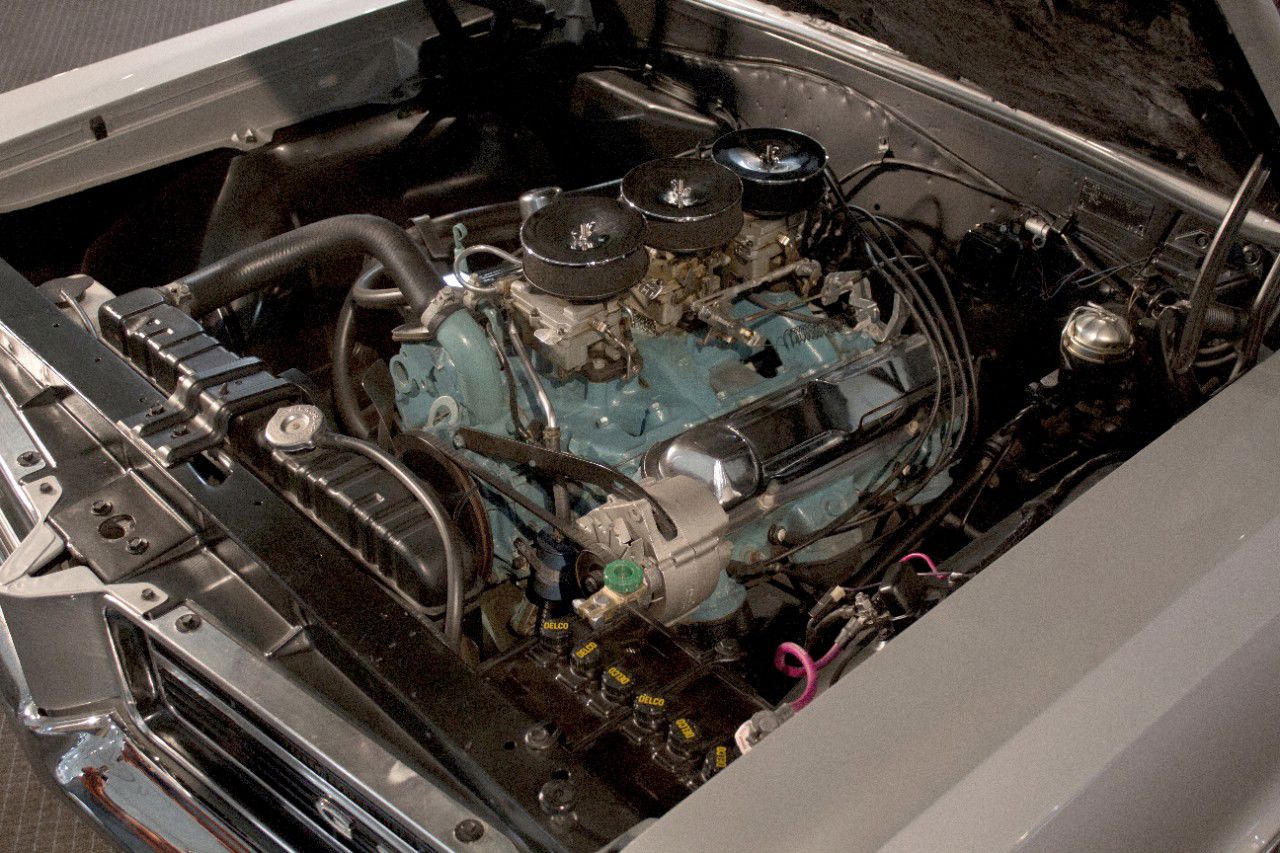
The basic configuration used Pontiac’s 389-cubic-inch V8 with one four-barrel carburetor. The brochure published 325 brake horsepower at 4,800 rpm and 428 lb-ft at 3,200 rpm, with 10.75:1 compression. A floor-shift three-speed manual was standard. Those are manufacturer-advertised figures and remain labeled that way; they are not chassis measurements. The factory literature also supplies a 3.23 standard axle and heavy-duty suspension with coil springs, a four-link rear, firm shocks, and a 0.938-inch front stabilizer bar.
The second selector branch changes induction and transmission rather than pretending “GTO” described one car. Three two-barrel carburetors raised the advertised rating to 348 brake horsepower at 4,900 rpm, while torque remained 428 lb-ft at a higher 3,600 rpm. The selected version uses Pontiac’s optional fully synchronized four-speed. Visual inspection matters here: OCR rendered the power peak as 4,500 rpm, but the brochure image reads 4,900. The record follows the artifact, and the research note preserves why a machine-readable extraction was rejected.
Body style belongs in the configuration too. Pontiac offered coupe, hardtop, and convertible forms, and the brochure’s shipping weights change with them: 3,272, 3,292, and 3,422 pounds respectively. Shipping weight is not curb weight, a magazine test weight, or an FIA homologation weight. The selector therefore does not attach the hardtop’s 3,292 pounds to every GTO. It records body-specific weight with its factory definition and leaves later measurement types in separate fields.
FIA form 180 complicates the familiar claim that the initials were only borrowed theater. Pontiac took GTO from Ferrari’s Gran Turismo Omologato language, a provocative move that invited comparison with a very different machine. Yet the FIA Historic Database recognizes the Pontiac Tempest Le Mans GTO in Group GT effective July 13, 1964. The form documents the 389, compression, induction choices, transmission ratios, and final drive. The name borrowed cachet, and homologation later became real; neither fact proves a Pontiac works road-racing program.
The form’s production figures need a date attached. Pontiac certified more than 1,000 matching cars by May 7 and listed 16,593 four-barrel and 6,402 triple-two-barrel cars in a footnote. Those are certificate-to-date quantities, not final model-year totals. Later histories publish a larger overall number, but this release does not turn the FIA snapshot into a full-year count or import an uninspected final ledger. A dated homologation artifact answers the certification question, not every production question.
Creation belongs to people whose memories do not line up perfectly. Jim Wangers credited John DeLorean, Bill Collins, and Russ Gee with the product. His remembered Saturday scene gives Collins the engine-swap suggestion and Gee an approving role. Collins later recalled a NASCAR-motivated discussion and rapid prototype work by Gee’s Experimental Department. DeLorean’s later account began with a personal 326/Hurst Tempest and friends who did not want to return it. The page tells the collective, conflicting story rather than naming one inventor.
Wangers drew a clear boundary around his own contribution: his job was to sell the car. That meant translating engineering into a public identity after Pontiac’s overt racing channels had narrowed. Royal Pontiac, press-car preparation, advertising staff, and a deliberately provocative magazine opportunity all appear in his retrospective account. Those memories are valuable because the participant identifies the marketing system, but they are not independent build records. The engineering configuration continues to rest on Pontiac and FIA artifacts.
The March 1964 Car and Driver feature became part of the launch mythology. The archive now calls its Ferrari comparison fictional while preserving the Pontiac test specifications and results. Later accounts allege that the test cars carried 421 engines, but no engine-number record, vehicle manifest, Royal Pontiac work order, correspondence, or direct admission was acquired in this pass. The public story names the allegation as unresolved and refuses to convert a repeated accusation into the specification of every GTO.
Even the test car’s compression illustrates why provenance matters. Pontiac’s brochure and FIA form give 10.75:1, while the magazine lists 10.4:1 for its tested vehicle. The publication does not “correct” one with the other. Factory configuration data and a period test-car statement occupy different records. If documentation later proves a substituted engine or another preparation change, that evidence can refine the test-car history without rewriting what Pontiac advertised to buyers.
Calling the GTO the first muscle car creates another argument disguised as a fact. GM and many later histories use birth and first language, but definitions change with body size, price, production volume, streetability, and whether earlier Chrysler, Hudson, Oldsmobile, or factory race specials qualify. This site calls the GTO pivotal and explains why: a broad intermediate body, a large engine, selectable induction and transmissions, a deliberately forceful identity, and a sales channel that made performance accessible without requiring a race-team relationship.
The GTO’s importance lies in how many threads met inside one package. Pontiac’s competition credibility, a remembered Saturday prototype, corporate policy pressure, dealer and agency promotion, provocative naming, real later homologation, and two clearly documented street configurations all became one public story. The selector keeps the four-barrel and Tri-Power cars distinct; the narrative keeps memory and documentary evidence distinct. Together they show why 1964 felt like a beginning without requiring history to declare that nothing comparable had existed before.
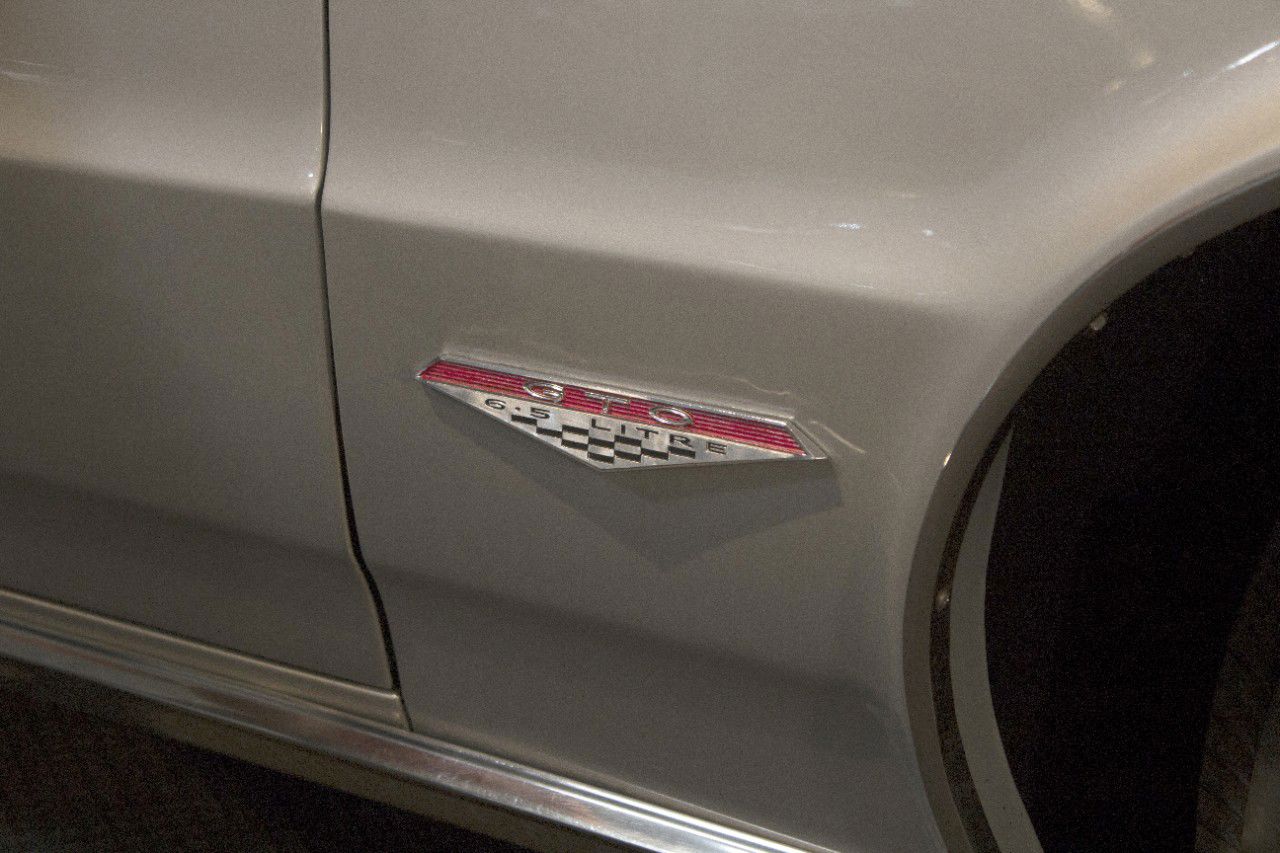
Fact sheet · 1964 · United States
The numbers
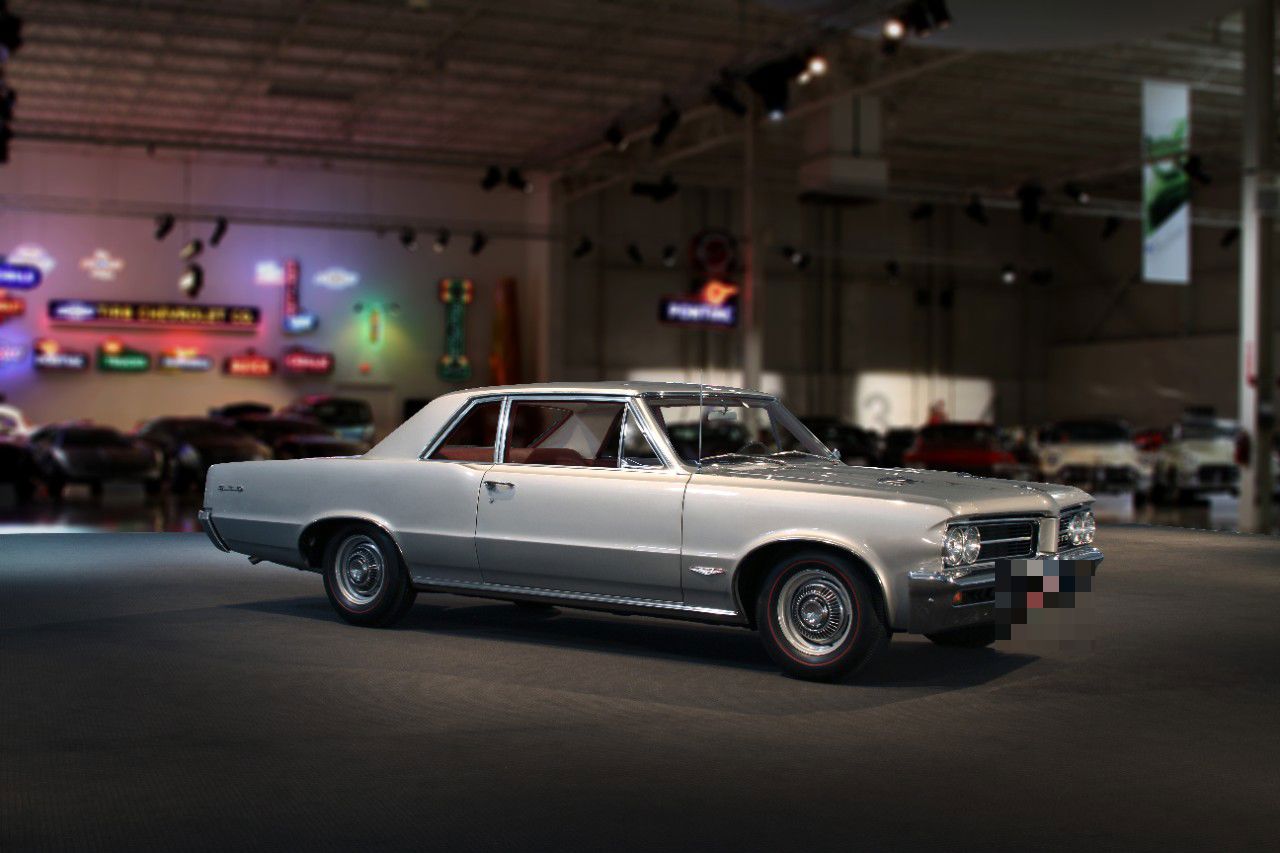
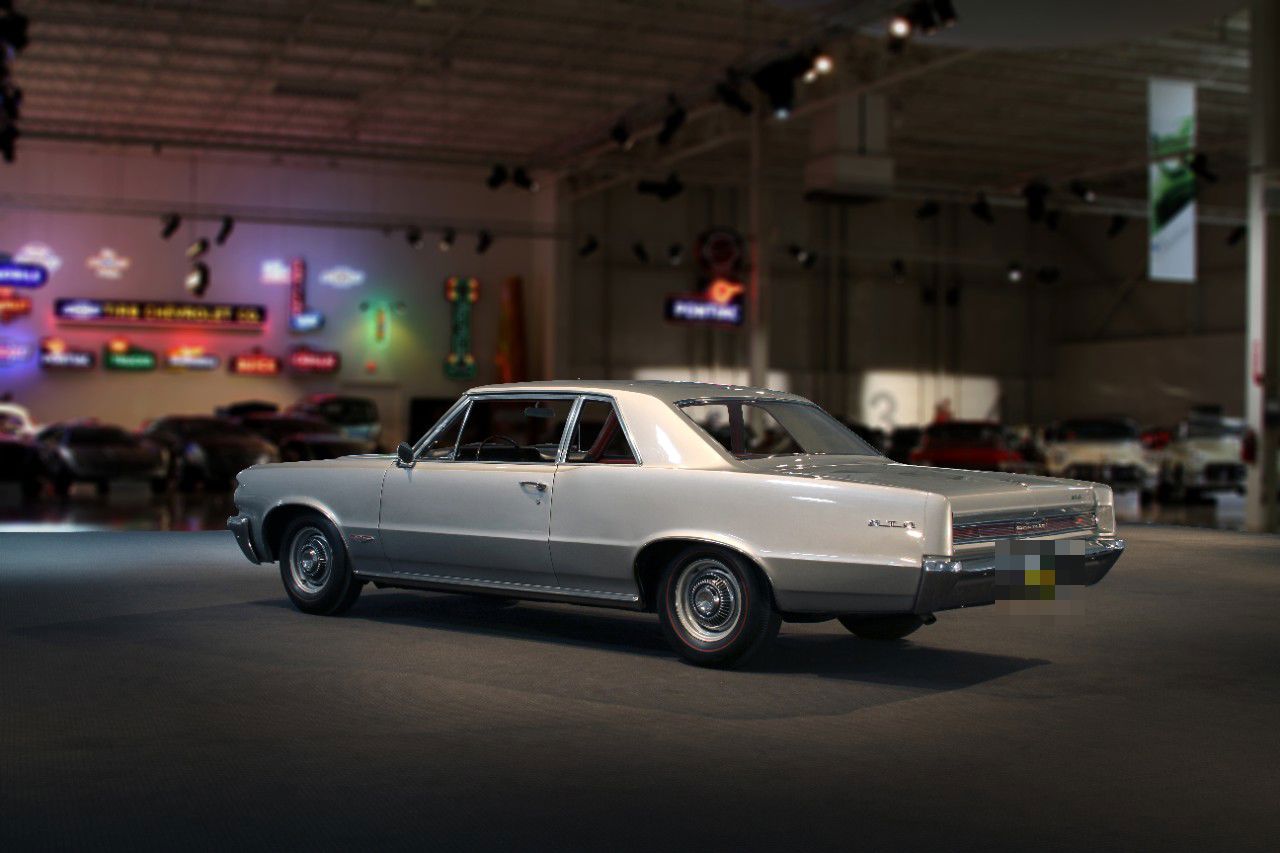
1964 Pontiac GTO — A $295 option on the Tempest LeMans that put Pontiac's 389 in the intermediate body; 32,450 were built.
Coverage: Partial — researched sections are shown; missing ones are not yet sourced. Researched through 2026-09-22.
Every figure is labeled with how sure we are. Reported means a manufacturer, registry, or reference figure we cite but have not reconciled against factory records ourselves. Disputed means credible sources disagree and both are shown. Rows are separately scoped; don't add them together unless the note says they make up a total.
Key facts
Production
| What was counted | Count | Basis | Status |
|---|---|---|---|
| GTO option total, all bodies1,2 Tempest LeMans GTO · not stated by source Both pages are in the Standard Catalog lineage. | 32,450 | built, model-year | Reported |
| What was counted | Count | Basis | Status |
|---|---|---|---|
| GTO sport coupe1 Tempest LeMans GTO · 2-door sport coupe · not stated by source | 7,384 | built, model-year | Reported |
| GTO hardtop coupe1 Tempest LeMans GTO · 2-door hardtop · not stated by source | 18,422 | built, model-year | Reported |
| GTO convertible1 Tempest LeMans GTO · convertible · not stated by source | 6,644 | built, model-year | Reported |
| What was counted | Count | Basis | Status |
|---|---|---|---|
| Four-barrel GTOs certified to FIA form date4 Tempest LeMans GTO · 389 4-bbl · not stated Partial-year count to the form's date, not a final total. | 16,593 | built, to homologation date (partial model year) | Reported |
| Tri-Power GTOs certified to FIA form date4 Tempest LeMans GTO · 389 Tri-Power · not stated Partial-year count to the form's date, not a final total. | 6,402 | built, to homologation date (partial model year) | Reported |
The three body rows are presented by the compiled table as partitioning 32,450.
The two FIA rows are a dated snapshot and must not be compared with the final total as if they were full-year engine splits. Unattributed full-year engine splits are listed under unpublishedLeads.
Prices when new
| Model | Price | Basis |
|---|---|---|
| GTO sport coupe (LeMans with GTO option)1 | $2,852 | factory price as compiled, 1964 model year |
| GTO hardtop (LeMans with GTO option)1 | $2,963 | factory price as compiled, 1964 model year |
| GTO convertible (LeMans with GTO option)1 | $3,081 | factory price as compiled, 1964 model year |
| List price, GTO hardtop as printed by Car Life3 | $2,776 | list price as printed in the road-test data panel, 1964-06 |
| Price as tested, Car Life hardtop (348 hp engine, four-speed, heavy-duty suspension, radio, exhaust splitters, spinner hubcaps, tinted glass, washer, metallic brakes, padded dash, limited-slip, tachometer)3 | $3,599 | equipped as tested, as printed, 1964-06 |
Prices are the nominal dollars of the day, not adjusted for inflation.
Engines
| Engine | Factory rating | Availability | Built |
|---|---|---|---|
| 389 4-bbl (standard)5 389 cu in · Carter AFB four-barrel | 325 hp @ 4,800, 428 lb-ft @ 3,200 (SAE gross) | standard with GTO option | Not yet sourced |
| 389 Tri-Power3 389 cu in · three Rochester two-barrel carburetors | 348 hp @ 4,900, 428 lb-ft @ 3,600 (SAE gross) | optional with GTO option | Not yet sourced |
Ratings are the manufacturer's advertised figures under the standard shown (SAE gross before 1972, SAE net after). They are not dyno results, and gross and net ratings can't be compared directly.
Transmissions
| Transmission | Availability | Built |
|---|---|---|
| Three-speed manual, floor shift | standard | Not yet sourced |
| Four-speed manual, all-synchromesh (Muncie)3 | optional | Not yet sourced |
| Two-speed automatic3,5 | optional | Not yet sourced |
Options and packages
| Code | Option | Price | Installed |
|---|---|---|---|
|
GTO option on Tempest LeMans5 | $295 | 32,4501 Reported |
612order code |
Heavy-duty suspension and brake option3 | — | Not yet sourced |
|
Tachometer5 | $54 | Not yet sourced |
|
Bucket seats5 | $134 | Not yet sourced |
|
Power steering5 | $75 | Not yet sourced |
|
Air conditioning5 | $319 | Not yet sourced |
Paint
| Code | Color | Built |
|---|---|---|
A |
Starlight Black5 | Not yet sourced |
C |
Cameo Ivory5 | Not yet sourced |
D |
Silvermist Gray5 | Not yet sourced |
F |
Yorktown Blue5 | Not yet sourced |
H |
Skyline Blue5 | Not yet sourced |
J |
Pinehurst Green5 | Not yet sourced |
L |
Marimba Red5 | Not yet sourced |
N |
Sunfire Red5 | Not yet sourced |
P |
Aquamarine5 | Not yet sourced |
Q |
Gulfstream Aqua5 | Not yet sourced |
R |
Alamo Beige5 | Not yet sourced |
S |
Saddle Bronze5 | Not yet sourced |
T |
Singapore Gold5 | Not yet sourced |
V |
Grenadier Red5 | Not yet sourced |
W |
Nocturne Blue5 | Not yet sourced |
Color names are the factory's. We don't show color swatches, because a screen color is no guide for a restoration.
Interiors
| Code | Trim | Built |
|---|---|---|
214 |
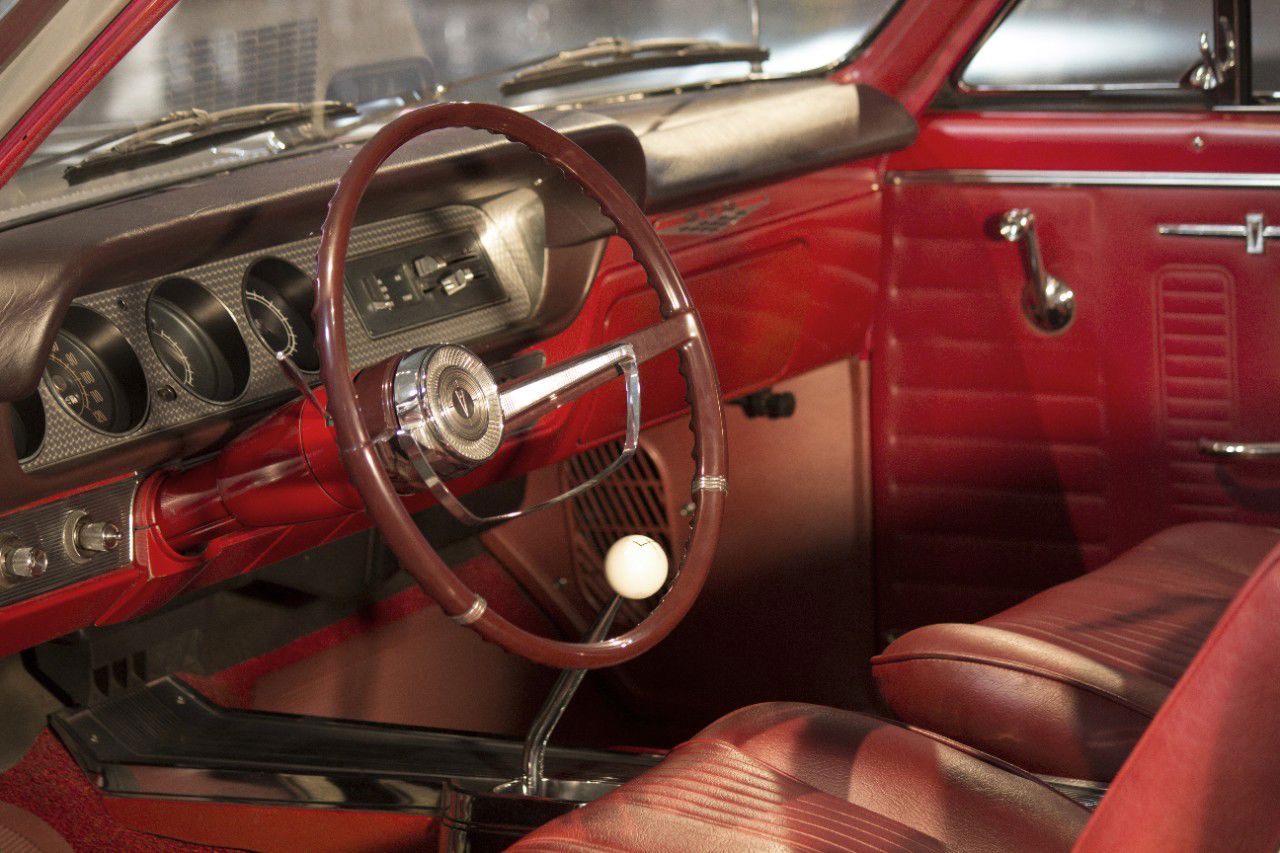
Black (vinyl, per the page's key) [LeMans trim list] (The GTO was a LeMans option this year; the page lists LeMans trims, not GTO-specific ones.)6 | Not yet sourced |
215 |
Dark Blue (vinyl, per the page's key) [LeMans trim list] (The GTO was a LeMans option this year; the page lists LeMans trims, not GTO-specific ones.)6 | Not yet sourced |
216 |
Saddle (vinyl, per the page's key) [LeMans trim list] (The GTO was a LeMans option this year; the page lists LeMans trims, not GTO-specific ones.)6 | Not yet sourced |
217 |
Dark Aqua (vinyl, per the page's key) [LeMans trim list] (The GTO was a LeMans option this year; the page lists LeMans trims, not GTO-specific ones.)6 | Not yet sourced |
218 |
Medium Red (cloth, per the page's key) [LeMans trim list] (The GTO was a LeMans option this year; the page lists LeMans trims, not GTO-specific ones.)6 | Not yet sourced |
219 |
Parchment (vinyl, per the page's key) [LeMans trim list] (The GTO was a LeMans option this year; the page lists LeMans trims, not GTO-specific ones.)6 | Not yet sourced |
Specifications
| Measure | Value | Applies to |
|---|---|---|
| Wheelbase1,3 | 115 in | all bodies |
| Overall length3 | 203 in | hardtop as printed by Car Life |
| Compression ratio | 10.75:1 | both 389 engines |
| Standard axle ratio3 | 3.23 ratio | either engine and any transmission; 3.08, 3.55 and 3.90 available per Car Life |
| Front stabilizer bar diameter3 | 0.938 in | GTO heavy-duty suspension |
Period road tests
| Test | Car tested | Result |
|---|---|---|
| Car Life, 1964-0630-60 mph | GTO hardtop, 389 Tri-Power (348 hp gross), four-speed, 3.23 limited-slip, 7.50-14test weight 3,800 lb; tuning checked by Pontiac Engineering before release | 6.6 s |
| Car Life, 1964-0630-100 mph | GTO hardtop, 389 Tri-Power (348 hp gross), four-speed, 3.23test weight 3,800 lb | 14.9 s |
| Car Life, 1964-063standing quarter mile | GTO hardtop, 389 Tri-Power (348 hp gross), four-speed, 3.2399 mph | 14.8 s |
| Car Life, 1964-063curb weight | GTO hardtop, 389 Tri-Power, four-speed, 3.23as reported | 3,470 lb |
| Car Life, 1964-063fuel consumption, normal range | GTO hardtop, 389 Tri-Power, four-speed, 3.23as reported | 12-15 mpg |
A road test result belongs to the one car that was tested, with its engine, gearing, tires, and conditions. It is not a figure for every car of the year.
Identification
- Body (cowl) plate
- Body (cowl) plate riveted to the top left cowl under the hood. It carries the build date (month 01-12 and week A-E), the style number (year, series and body style), the body number (assembly-plant prefix and production sequence), the trim code, the lower and upper paint codes, and factory accessory codes. The page's example plate reads: Build Date 03D; Style 64-2267; Body KC 13XX; Trim 217; Paint P11.6
- Body-plate assembly-plant codes
- BA = Baltimore, MD; BT = Arlington, TX; BA = Doraville, GA; BW = Wilmington, DE; BC = Southgate, CA; EP = Euclid, OH; BF = Fremont, CA; KC = Kansas City, MO; BK = Kansas City, KS; PO = Pontiac, MI; BL = Linden, NJ.6
Where the sources disagree
Shipping weight by body
- Sport coupe 3,272 lb; hardtop 3,292 lb; convertible 3,422 lb
- Sport coupe 3,106 lb; hardtop 3,126 lb; convertible 3,360 lb1
The Pontiac brochure leads because it is the factory artifact. The compiled table's weights are shown as a secondary figure and not used in the specifications.
Identification
Read a 1964 Pontiac VIN
The VIN decoder runs in your browser and never sends the VIN anywhere. How the factory numbered this year's cars:
Same model year
Also in 1964
- Buick Riviera The 425 became standard, the dual-quad Super Wildcat 360 arrived as an option, and the Super Turbine 400 replaced the twin-turbine automatic.
- Buick Wildcat The best Wildcat year at 84,245, with a 425 in 340- or 360-hp form and an available four-speed.
- Chevrolet Chevelle and Malibu SS The first Chevelle; the Malibu SS was a series, and its strongest released engine was the midyear 300 hp L74 327.
- Chevrolet Chevy II and Nova First V8 (283) year in the source engine table. Enthusiast-compiled production: 191,691 cars; Super Sport 10,576.
- Chevrolet El Camino SS No factory Super Sport El Camino is documented for this year; the record carries the host El Camino production as context.
- Chevrolet Impala SS Super Sport becomes its own series: 185,325 built.
- Chrysler 300 letter series Cheaper by about $1,000, with a single-four-barrel 360 hp 413 standard, leather made optional and the convertible restored, the 300K became the best-selling letter car: 3,022 hardtops and 625 convertibles.
- Dodge Dart 330/440, Polara and Max Wedge The Max Wedge's last year brought the Ramcharger 426-III, a 365 hp street 426 for Polara buyers, and in midyear a competition-only 426 Hemi in lightened 330/440 bodies; Roger Lindamood's Dodge won Top Stock at the Nationals.
- Ford Fairlane The year of the Thunderbolt: a midsize Fairlane with a 427 installed for NHRA Super Stock, which carried Gas Ronda to the national Stock title.
- Ford Falcon Sprint The restyled Falcon kept the Sprint hardtop and convertible with the 164 hp 260 V8 standard; the club counts 18,108 built, many with a bench seat.
- Ford Galaxie Ford sold its 427 in the restyled full-size range in two advertised versions, 410 hp with one four-barrel and 425 hp with two, and the Galaxie 500 XL hardtop was the bucket-seat flagship.
- Ford Thunderbird The redesigned fourth-generation car offered one drivetrain, a 300-hp 390 with Cruise-O-Matic, and output rose to 92,465.
- Mercury Comet and Cyclone The Cyclone name first appeared on a 1964 Comet hardtop; the only production figure found is a single secondary total.
- Mercury Marauder and S-55 Marauder now meant the fastback roof on any full-size Mercury series, two-door or four-door, with the 390 standard and the 427 optional.
- Oldsmobile Cutlass, 4-4-2 and Hurst/Olds Oldsmobile's first 4-4-2 was a mid-year option package, B09 Police Apprehender Pursuit, with a 310 hp 330, a four-speed and dual exhausts; 2,999 are tabulated.
- Oldsmobile Starfire Production fell to 16,163 as the cheaper Jetstar I took the same body; Motor Trend timed a convertible at 9.7 s to 60.
- Plymouth Barracuda and 'Cuda Plymouth's glassback Valiant-based fastback launched in a short first season and sold 23,443 cars.
- Plymouth Savoy, Fury and Max Wedge Plymouth's last Max Wedge year offered the Super Stock 426-III beside a 365 hp street 426 Commando, while a competition-only 426 Hemi went into lightened Savoy/Belvedere drag cars and swept the Daytona 500.
- Pontiac Catalina 2+2 and Super Duty The 2+2 arrived as a $291 Catalina option and the 370 hp 421 HO replaced the Super Duty at the top.
- Pontiac Grand Prix A carryover year: 63,810 built, with the 370 hp 421 HO at the top of the option list.
- Pontiac Tempest and LeMans The Tempest becomes a 115-inch intermediate with a 326 V8, and the LeMans carries the new GTO option.
- Studebaker Avanti The last Studebaker Avanti, cut short when South Bend stopped building cars on 20 December 1963. It got rectangular headlamp bezels and a level stance, and 809 were built, including the nine production R3s.
- Studebaker Hawk The final Hawk, with a new deck lid and an optional vinyl 'Sports Roof', ended when South Bend closed on 20 December 1963. 1,767 were built, 1,484 of them domestic.
- Studebaker Lark and Super Lark Brooks Stevens restyled the Lark-type line and the Daytona became its top series. Of the V8 Daytonas, 111 got the R1 and 48 the supercharged R2, and one got the only production R4, before South Bend closed in December 1963.