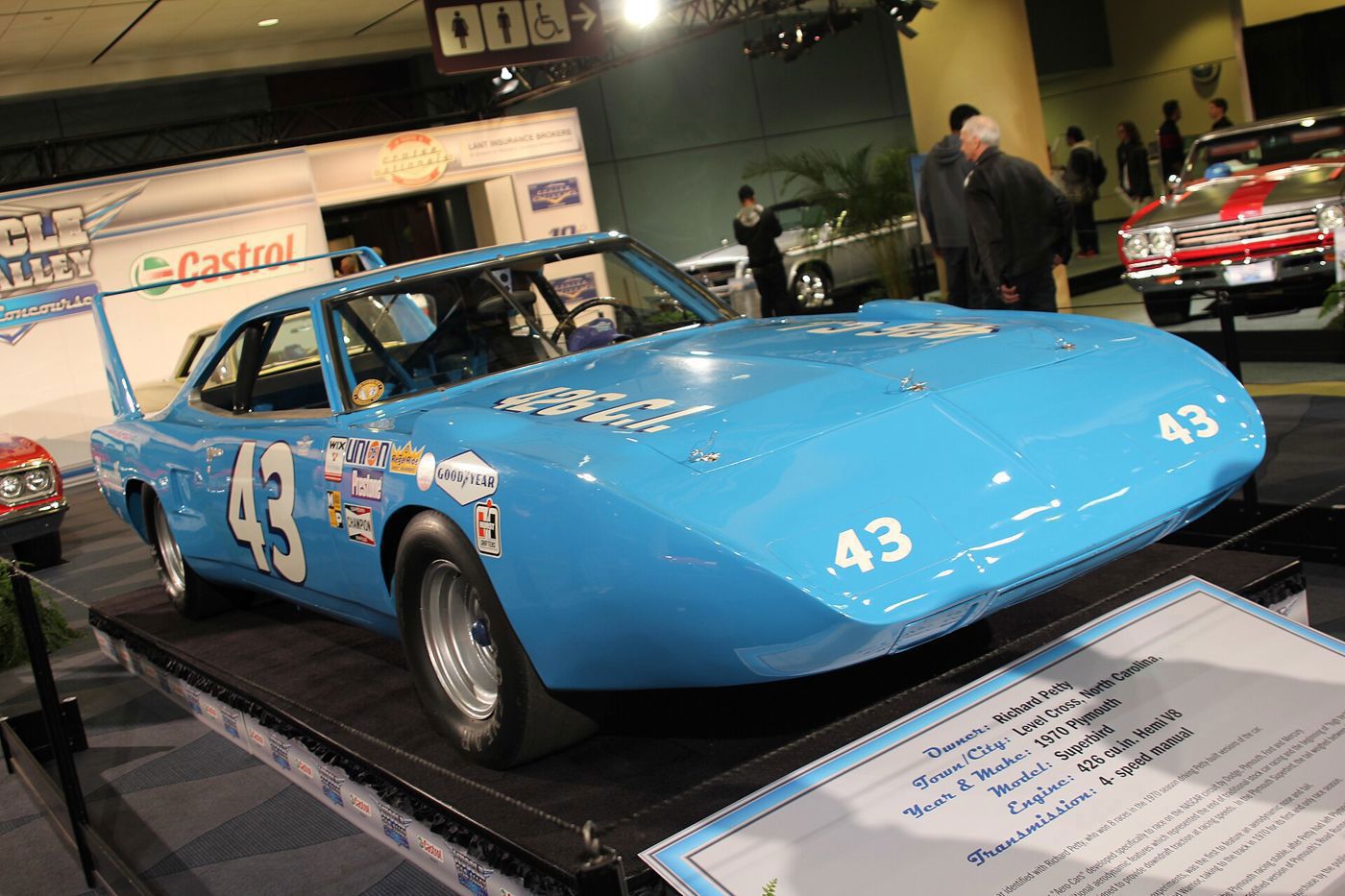
Racing · Petty Enterprises · Plymouth · 1970
Pete Hamilton and the 1970 Superbird: Plymouth Asks Petty for a Second Car
Plymouth built a winged car to bring Richard Petty home, and a team-mate won the Daytona 500 in it.
Story reviewed July 27, 2026
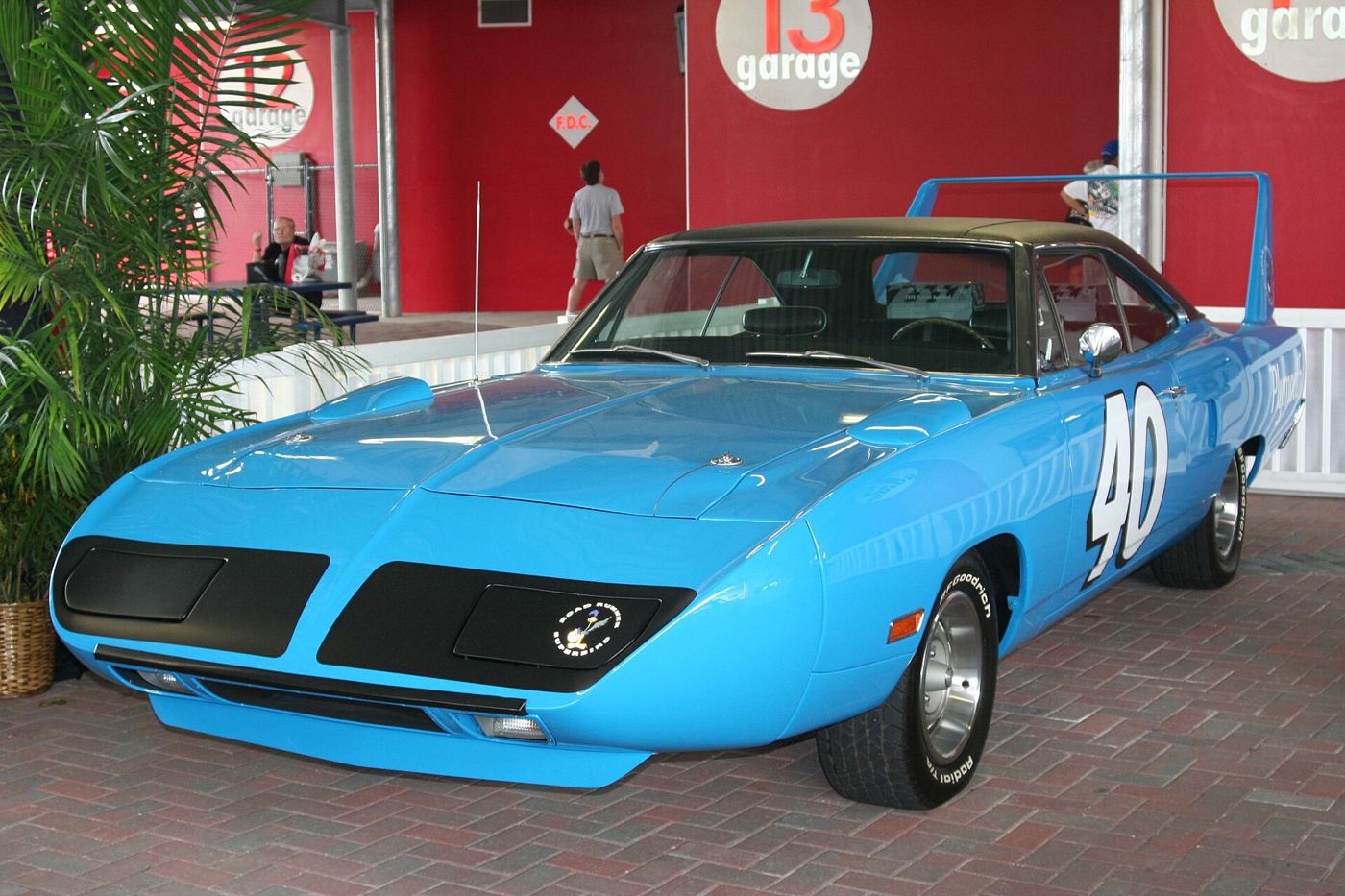
Plymouth wanted two Superbirds on the largest tracks, and Petty Enterprises needed another driver. The connection brought Pete Hamilton, a Massachusetts racer with a very different public profile from Richard Petty, into one of stock-car racing’s most recognizable machines. NASCAR’s later account preserves Richard and Maurice Petty’s recollections of the arrangement and Hamilton’s ability. The story begins with a manufacturer request and a team decision because the Daytona 500 victory that followed was not created by an aerodynamic body alone.
The Superbird was a factory aero homologation special based on the Road Runner. Its extended nose, tall rear wing, and competition purpose place it outside the ordinary Road Runner selector. Plymouth’s street comparison rows instead document 383, 440 Six Barrel, and Street Hemi configurations. A road Superbird requires its own factory sheet, power-team record, and vehicle evidence; a Petty competition car requires event, entrant, chassis, preparation, and driver records. Similar appearance does not merge those populations.
Hamilton arrived with a record that justified the choice. NASCAR’s account identifies his National Sportsman championship and premier-series rookie honors before the Petty partnership. That path matters because later memory can make him seem like a temporary occupant of a famous second car. He was a proven racer selected for a specialized program, not an anonymous supporting driver. Petty Enterprises supplied organization, preparation, and manufacturer connection; Hamilton supplied judgment at superspeedway speed.
Richard Petty’s role extended beyond driving his own car. Maurice Petty’s engine work and the wider family team made the second entry viable, while Plymouth’s desire for two cars shaped the opportunity. The page credits those functions without inventing a closed-door meeting or assigning undocumented tasks. Manufacturer support, team ownership, engine preparation, crew labor, and driver execution are separate contributions that meet in the same result.
At the Daytona 500, Hamilton’s Superbird entered a late fight with David Pearson. NASCAR’s account provides the central sequence and the outcome: Hamilton earned his first victory at the top level on the sport’s largest stage. Exact lap-by-lap tactics and radio language remain outside the story unless a period report or recording supports them. The documented stakes are sufficient—new driver with a famous team, new aero car, and a veteran rival in the closing contest.
The win immediately complicated any claim that the second car existed only to support Richard Petty. Hamilton was not merely collecting manufacturer points behind a lead entry. He delivered the Daytona 500. The result also prevented the Superbird story from becoming exclusively Richard’s, even though his return to Plymouth and the winged car dominate popular imagery. One program could carry multiple drivers, mechanics, engines, and strategic purposes.
Hamilton followed Daytona with two Talladega victories for the same team. Those results show that the partnership was not a one-race accident and that the car-driver combination was particularly effective on superspeedways. They do not prove that every Superbird was universally faster or that aerodynamic hardware alone decided each race. Tire conditions, engines, setup, traffic, reliability, rules, and driving remain part of event-specific evidence.
Production totals and street splits stay held pending Chrysler shipping records. Homologation required a public relationship between road and race cars, but a sanctioning purpose does not turn a later registry count into a factory ledger. Nor does a race result authenticate a surviving street car. A restored Superbird photograph needs body, restoration, chassis claims, creator, rights holder, and caption review before publication. Visual drama cannot substitute for a license or provenance.
The people story continues through Maurice Petty’s contribution. Engine preparation is easily lost when the wing becomes the hero, just as crew work disappears when a driver’s name carries the headline. Petty Enterprises functioned through specialized labor before modern team roles became as publicly enumerated as they are today. Crediting the organization means identifying documented people and avoiding the claim that one famous surname performed every task.
Plymouth asked for a second Superbird and received more than a duplicate entry. Hamilton brought his own record, won the Daytona 500, and added two Talladega victories. Petty Enterprises demonstrated that manufacturer ambition became results only through selection, preparation, engines, crews, and driving. The wing remains visually irresistible, but the story belongs to the partnership that made it competitive—and to the driver whose first top-level win came in the second car.
The comparison system preserves that conclusion structurally. Road Runner 383, 440 Six Barrel, and Hemi rows stay in the street selector. Superbird occupies a factory-special branch, and Hamilton’s Daytona entry occupies an event-specific race record. A future authenticated street Superbird can join the specialty comparison without inheriting Hamilton’s results, while the race car can receive exact chassis and engine data without overwriting the brochure cars.
The remaining archive work is concrete. Chrysler shipping and homologation records must define street production and combinations; the official Daytona entry and results should fix entrant and vehicle fields; Petty team records can identify crew responsibilities; and licensed imagery can show the actual car. None of those gaps weakens Hamilton’s documented win. They simply prevent a compelling institutional story from being asked to authenticate every related vehicle.
Hamilton’s later career and the program’s end deserve their own sourced continuation rather than a compressed epilogue. This page stays with the 1970 partnership the acquired NASCAR evidence supports. It does not infer contract terms, private disagreements, or reasons for later changes from the fact that the combination was brief. A bounded story can be complete without claiming to explain an entire life.
The same restraint strengthens the Daytona scene. Pearson remains the documented late rival; Hamilton remains the winner; Plymouth and Petty Enterprises remain the organizations that created the opportunity. Exact lead changes, pit decisions, and mechanical setup await period evidence. What survives already tells a full story of selection, preparation, and a driver converting a second-car request into three major superspeedway victories.
That result also changes how the 1970 performance landscape should be read. The Superbird was not simply the most theatrical object in a crowded showroom year. It was one part of a manufacturer program that needed teams and drivers capable of using its purpose-built shape. Hamilton’s success supplies the consequence behind the homologation story while remaining separate from every street car’s authentication.