Stories · 1969 · cross-marque
1969 Mopar Choices: Road Runner, Charger R/T, and the Specials Beside Them
Belvedere, Road Runner, Charger, and the Daytona: what Chrysler actually let a 1969 buyer order, and where the catalogue stops supporting the legend.
Story reviewed July 27, 2026
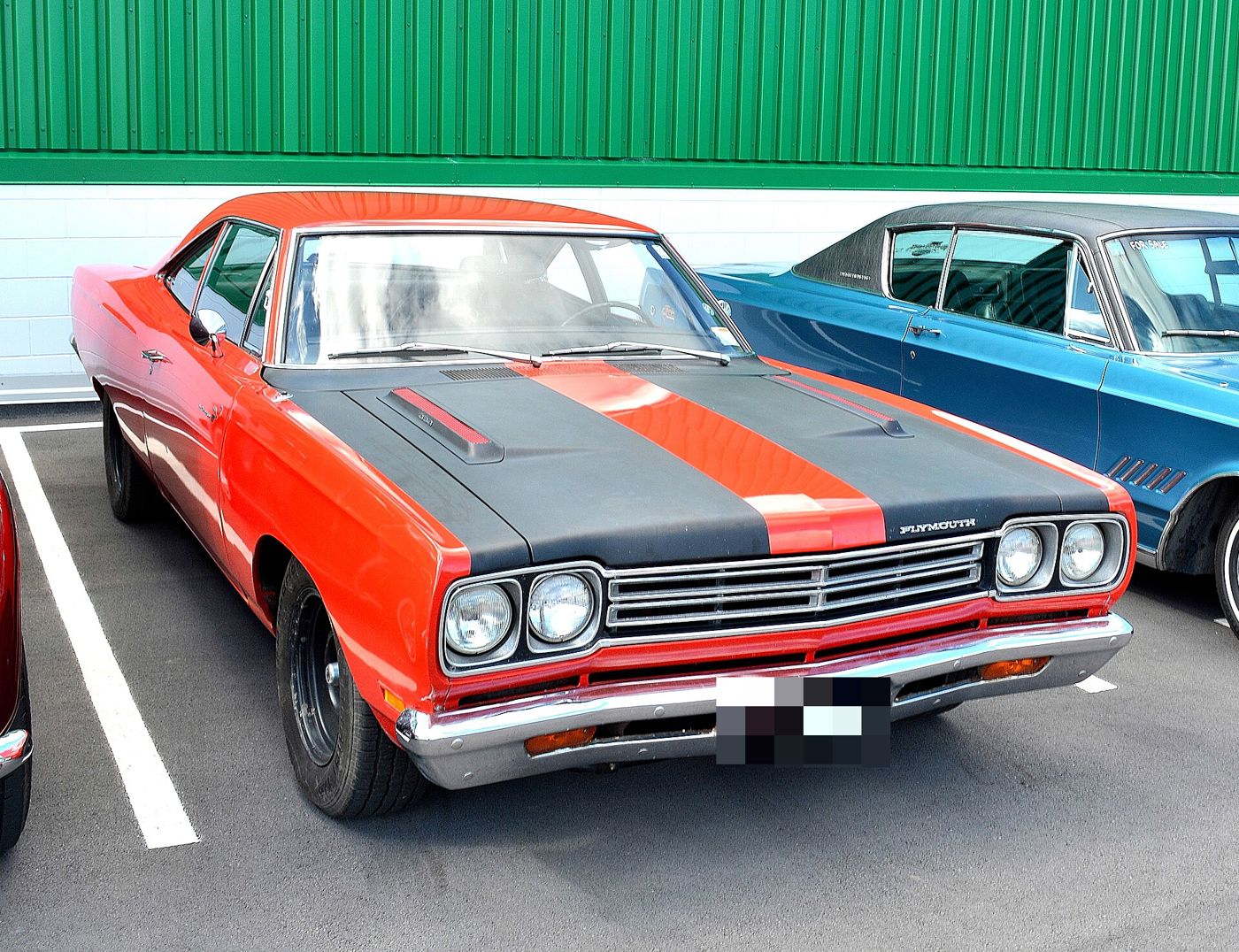
Plymouth made the Road Runner’s starting point unusually plain. The 1969 brochure put a 383 four-barrel and a Hurst-shifted four-speed at the center of the package, then left the Street Hemi as the spectacular option. Dodge approached the Charger R/T differently: its 440 Magnum came standard with TorqueFlite, while a four-speed and the Hemi opened other branches. Those details matter more than a corporate family resemblance. Chrysler sold several ideas of performance at once, and a useful comparison must preserve which division, body, transmission, and level of specialty a buyer actually selected.
The Road Runner 383 was advertised at 335 horsepower at 5,200 rpm and 425 lb-ft at 3,400. The full-line engine table gives a 4.25-inch bore, 3.38-inch stroke, 10.0:1 compression, unsilenced air cleaner, and dual exhaust. Its selected four-speed configuration reflects the brochure’s standard-equipment story. That combination helped make the car’s identity legible: a straightforward intermediate with serious factory hardware, not a bare body whose performance exists only in later folklore.
The optional Street Hemi changed more than the headline. Its 426 cubic inches came from a 4.25-inch bore and 3.75-inch stroke, with 10.25:1 compression, dual four-barrels, an unsilenced air cleaner, and dual exhaust. Plymouth advertised 425 horsepower at 5,000 rpm and 490 lb-ft at 4,000. The comparison retains the Hurst four-speed and labels the engine as Street Hemi. It does not attach race-car preparation, Super Stock results, or modern dynamometer claims to a normal customer configuration.
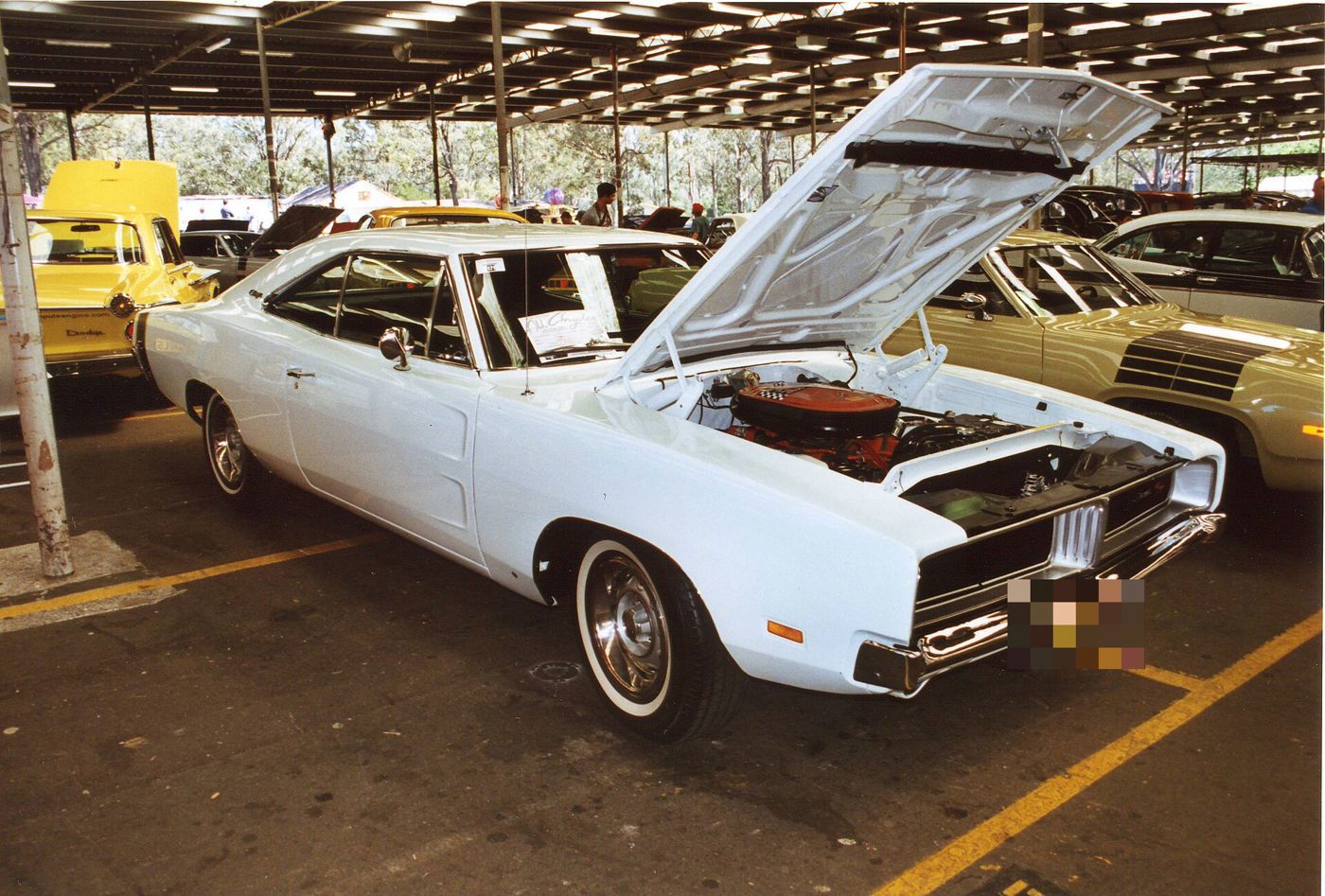
Dodge’s Charger R/T 440 supplies an especially useful transmission comparison. The 440 Magnum’s published 375 horsepower at 4,600 rpm and 480 lb-ft at 3,200 remain the same whether the buyer takes the standard TorqueFlite or optional Hurst-shifted four-speed. The two cards are separate because the drivetrain experience and factory power-team identity are separate. The engine used a 4.32-inch bore, 3.75-inch stroke, 10.1:1 compression, and premium fuel. One trim badge cannot express both cars accurately.
The Charger R/T Hemi and four-speed becomes the third Dodge branch. Its 425 horsepower and 490 lb-ft match Plymouth’s published Street Hemi figures, but the surrounding car does not. Body, standard equipment, dimensions, suspension choices, price, and purpose stay attached to their own marque. Shared engine data can be compared; it cannot collapse Road Runner and Charger into one generic Mopar. That distinction becomes even more important when authentication enters the discussion, because a correct-looking engine bay does not establish a car’s original package.
Midyear, Chrysler added another layer. Its August 5 Product/Parts Bulletin identifies Road Runners advertised as “440 6 Bbl.” and Super Bees advertised as “Six Pack.” Three pages list special rotating and valve-train pieces, intake, manual- and automatic-specific carburetors, fuel and oil hardware, shafts, cooler, hood, and scoop components. The bulletin is strong proof of a factory-supported special and exact terminology. It does not print the familiar 390-horsepower rating, so this release refuses to fill that cell from repetition.
The A12 cars therefore sit in a factory-special branch, close enough to compare but not disguised as initial brochure configurations. Their release needs a dated Chrysler sales or engineering artifact for output and a factory record for any production breakdown. Registry totals and surviving-car counts can help locate documents, but they are not interchangeable with production. This is also why the initial selector contains the Road Runner 383 and Hemi while the A12 story remains visibly held at one precise field.
The Charger Daytona requires an even clearer boundary. Its aerodynamic nose, rear wing, homologation purpose, and competition history make it more than a decorative R/T toggle. The period brochure supports 440 Magnum and 426 Hemi advertising, but exact order combinations and build totals wait for the homologation and shipping records. NASCAR Daytonas belong in event-specific racing records; a street Daytona belongs in a factory-special comparison. Neither should overwrite ordinary Charger R/T specifications.
Sox & Martin’s 1969 Hemi Barracuda makes the race/street boundary vivid. NHRA retrospectives connect Ronnie Sox to the Indianapolis Super Stock win and the season championship immediately before Pro Stock began. That competition car is not a Road Runner or Charger selector configuration, even when it shares recognizable Chrysler engine architecture and corporate colors. Its class, preparation, driver, entrant, event, and result need a dedicated record and the period Nationals sheet before exact times, opponent, or designation are published.
The 1969 Mopar story is richer when its branches remain distinct. A Road Runner 383 four-speed, Road Runner Hemi, Charger R/T 440 automatic, Charger R/T 440 four-speed, and Charger R/T Hemi four-speed make five honest street choices. A12 cars and Daytona occupy factory-special territory. Sox & Martin and NASCAR programs occupy racing. Instead of flattening the year into “Mopar had the Hemi,” the evidence shows a company using engines, transmissions, bodies, bulletins, suppliers, and competition rules to sell several different kinds of speed.
That structure leaves famous questions open in useful ways. A period A12 rating artifact can fill one field without changing the bulletin-supported parts story. A Chrysler shipping record can define production without turning a registry into a ledger. A Daytona homologation form can explain eligibility without making every winged race car a showroom configuration. An NHRA result sheet can complete the Sox & Martin event record without attaching its elapsed time to a Street Hemi bought for the road.
It also improves image review. A restored Road Runner, A12 car, Charger R/T, Daytona, or Super Stock Barracuda can look persuasive while depicting a different branch from the caption. Before publication, a candidate photograph needs body, engine-independent exterior details, restoration disclosures, event identity where relevant, creator, rights holder, and license. The page can ship text-only while those candidates wait; visual drama is never allowed to substitute for provenance.