Stories · 1987 · cross-marque
1987: When the Badge Stopped Being Enough
A Buick that outran the Corvette, a 5.0 that outsold everything, and a model year where the badge on the fender finally stopped telling you what you had.
Story reviewed July 27, 2026
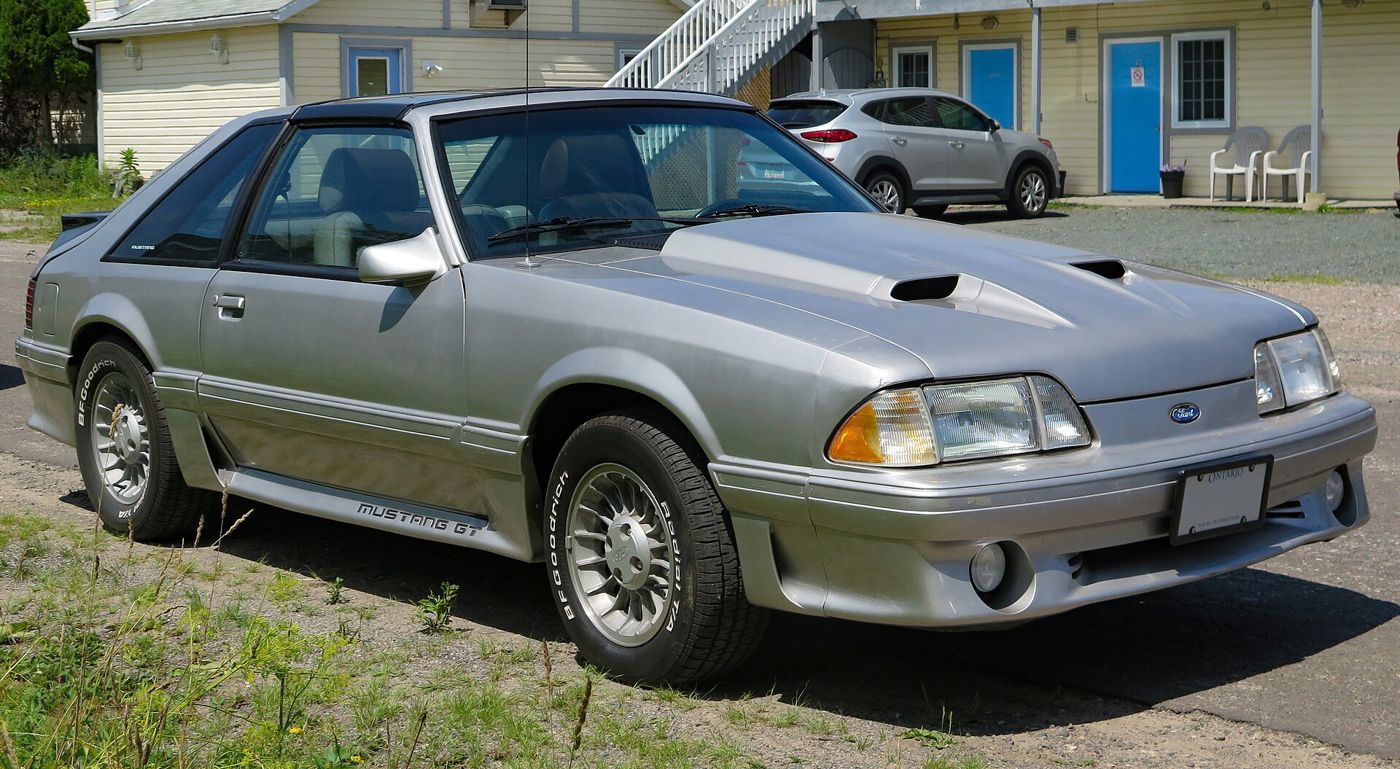
Open Ford’s 1987 Mustang brochure to the engine spread and the familiar shorthand begins to fail. The GT carries the assertive body treatment, but the quieter LX can be ordered with the same 5.0-liter High Output V-8 and much of the GT’s supporting equipment. Move to Chevrolet’s Camaro chart and the transmission changes the advertised output of the 305 Tuned Port Injection engine. Turn to Ford’s Thunderbird footnote and the difference is larger still: 190 horsepower with the five-speed, 150 with Automatic Overdrive. In 1987, “Mustang,” “Camaro,” or even “Turbo Coupe” is not a complete answer to the question, “Which car?”
The comparison selector therefore begins below the model name. Each row identifies model year, market, body, trim or package, engine, induction, transmission, and the rating basis used by the manufacturer. An axle joins that identity when the factory chart makes it material. This is more detailed than the language people commonly use at a cruise night, but it prevents a comparison from quietly borrowing the best number attached to a badge. It also lets a reader deliberately compare unlike ideas—a restrained LX coupe against an IROC-Z, or a turbocharged Buick against a Thunderbird—without pretending those ideas were mechanically equivalent.
Ford’s two released Mustang rows illustrate shared hardware without collapsed identity. The GT hatchback and LX two-door sedan both use the 5.0-liter EFI High Output V-8, advertised at 225 horsepower and 300 pound-feet of torque with a five-speed manual. The dedicated brochure says the engine was standard in the GT and optional in the LX, while the LX 5.0 package brought GT suspension and related performance equipment. The engine observation can be shared. The body, presentation, and package cannot. An LX is not renamed a GT merely because the order sheet put the same powertrain beneath its quieter exterior.
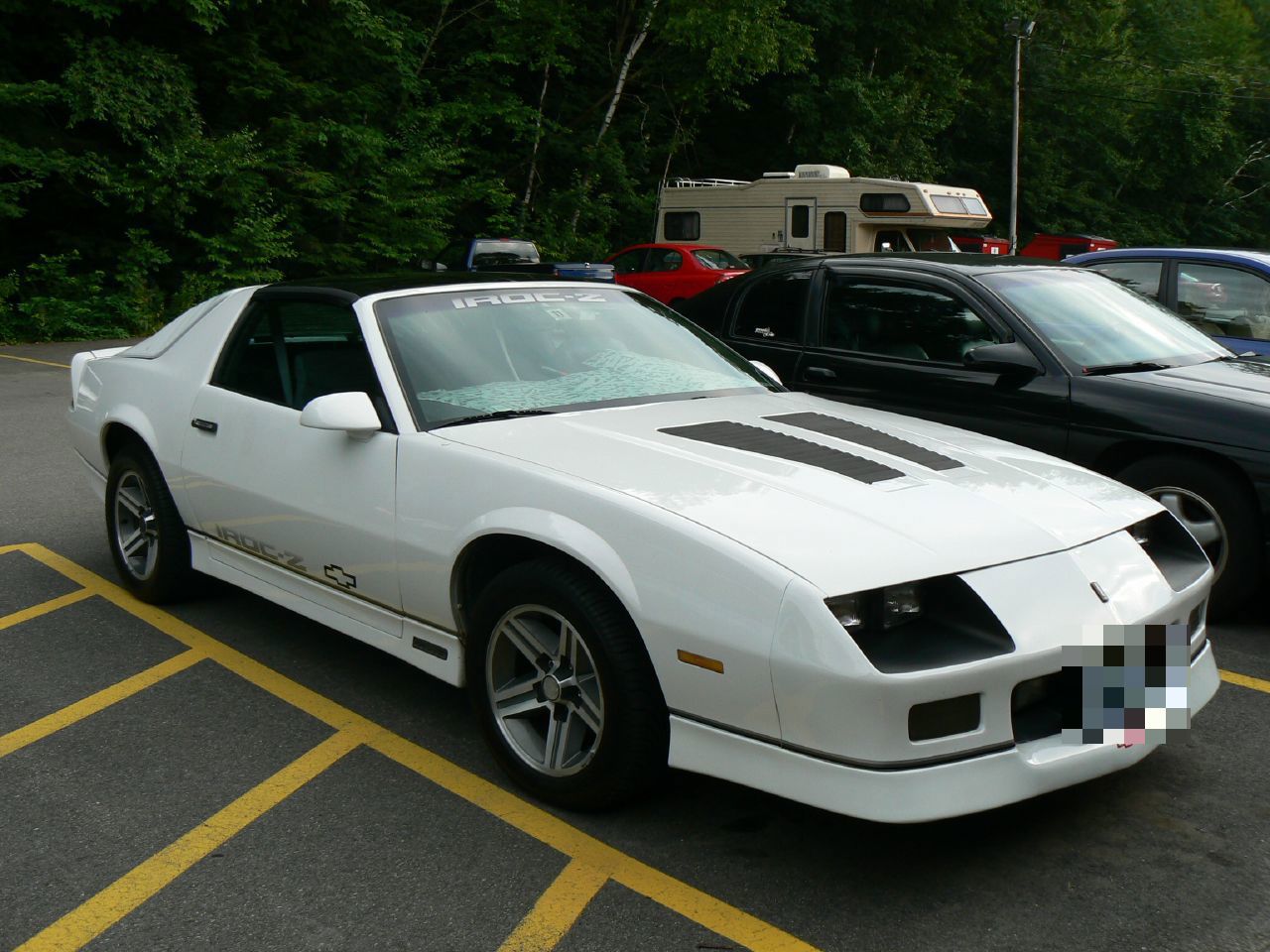
Chevrolet’s IROC-Z makes transmission part of the power claim. The factory power-team chart gives the LB9 305 with a five-speed 215 horsepower at 4,400 rpm and 295 pound-feet at 3,200. With the 700-R4 four-speed automatic, it gives 190 horsepower at 4,000 rpm and the same nominal 295 pound-feet at a lower 2,800 rpm. Those are two factory observations, not one number with a footnote hidden from the reader. The selector releases both configurations. It does not attach the manual rating to every 305 IROC-Z, and it does not average the two into a number Chevrolet never published.
The tempting third Camaro row remains absent. Chevrolet’s early chart limits the B2L 5.7-liter package to the IROC-Z, automatic transmission, and a 3.27 axle, but prints “NA” where an output number might be expected. Later material has been read as 225 horsepower and 330 pound-feet for the L98 350. Until the dated revision relationship and exact locator are preserved, this site treats the car as a documented research lead rather than a released selector configuration. “NA” does not mean zero, and a frequently repeated later figure does not erase what the early factory sheet actually says.
Pontiac’s Firebird sheet provides three clearer configurations and shows why shared corporate vocabulary still needs model-specific evidence. A five-speed Formula with the LB9 305 is advertised at 205 horsepower and 285 pound-feet. An automatic Trans Am GTA with an LB9 is 185 and 290. The GTA with the B2L ordering package and L98 350 is 210 and 320. Pontiac’s primary sheet says 320 pound-feet; many later summaries say 315. The factory observation leads, while the discrepancy remains visible in the research record instead of being “corrected” by repetition.
The B2L and L98 labels also demonstrate the danger of treating every code as if it names the same kind of thing. In the inspected GM documentation, B2L can describe the ordering package while L98 identifies the engine. One label need not defeat the other. The database keeps each in its proper role and waits for a dated bulletin before claiming that a code changed. That practice matters beyond Firebird and Camaro: an engine, an order package, a trim, and a marketing name can overlap without becoming interchangeable evidence fields.
Buick changes the shape of the 1987 field. The Grand National and the WE4 Turbo T both use the turbocharged, intercooled LC2 3.8-liter V-6, advertised at 245 horsepower and 355 pound-feet with a four-speed automatic. The WE4 has its own package identity, black appearance treatment, 3.42 axle, and positioning; it is not a counterfeit Grand National or a substitute GNX. The GNX itself is important enough to resist a premature row. General Motors directly supports the Buick, ASC, and McLaren program relationship and a total of 547, but this release holds the familiar 276-horsepower and 360-pound-foot claim until the project book is available at an exact locator.
Chevrolet’s Monte Carlo SS and SS Aerocoupe share another power-team observation while remaining distinct bodies. Both released rows carry the B4V 305 High Output four-barrel V-8 at 180 horsepower and 225 pound-feet, a four-speed automatic, and a 3.73 axle. The Aerocoupe’s sloping rear window matters to its street identity and to the cultural bridge toward NASCAR, but it does not turn the showroom car into a race car. Production totals also remain outside the comparison until final accounting records can support them. A body treatment and a power team can be documented without inventing rarity.
Oldsmobile offers one relevant 4-4-2 row rather than a symmetrical menu manufactured for display. Its factory performance brochure describes the W42 package, 307-cubic-inch four-barrel V-8, dual exhaust, four-speed overdrive automatic, console shift, 3.73 axle, and FE2 equipment. The brochure’s rating is 170 net horsepower and 250 pound-feet. Retrospectives that say 180 are not silently blended into the row. The factory number is published, the later claim is described as unresolved, and no nonexistent 1987 Hurst/Olds is created to make the family look broader.
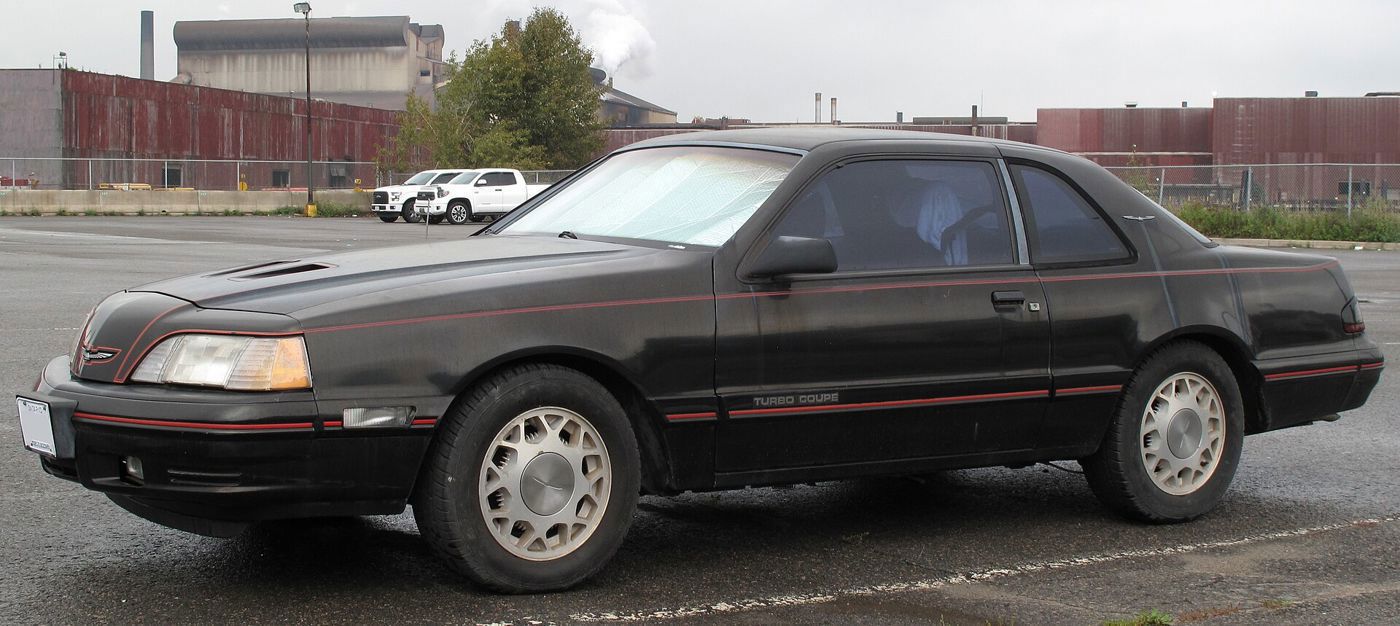
The Thunderbird Turbo Coupe turns a small footnote into the year’s sharpest warning. Ford advertises its intercooled turbocharged 2.3-liter four-cylinder at 190 net horsepower with the five-speed. The same brochure says output falls to 150 horsepower with Automatic Overdrive. Torque is not released because the acquired evidence does not yet establish it with the same precision. Both cars appear as independent configurations, and unknown torque renders as unknown rather than zero. A forty-horsepower difference is too consequential to hide behind a single Turbo Coupe row.
These fourteen configurations make comparison possible without declaring a universal winner. A Mustang GT offers one combination of body, engine, and manual transmission; an automatic IROC-Z represents another; the Grand National brings turbo torque and a different mission; the Monte Carlo and Oldsmobile preserve traditional rear-drive coupe formulas at more modest advertised output. The tool exposes those differences. It does not use horsepower alone to decide what “muscle” means, and it does not conceal front or rear drive, body class, seating, package content, or evidence quality behind a ranking.
Race names remain contextual bridges, never specification shortcuts. Bill Elliott’s NASCAR Thunderbird, Bob Glidden’s Pro Stock Thunderbird, and the identical-car IROC Camaros belong to separate race evidence and rule structures. The street Turbo Coupe’s four-cylinder specification cannot be pasted onto Glidden’s car. The IROC-Z’s showroom power team cannot describe Geoffrey Bodine’s purpose-built series car. Likewise, Chevrolet’s street Aerocoupe can help explain why the shape mattered without inheriting a NASCAR chassis, engine, weight, or speed.
The same boundary applies to neighboring Car Facts sites. The 1987 Mustang rows can link contextually to Mustang Facts’ 1987 year page, and the IROC-Z rows can point to Camaro Facts’ 1987 coverage. A link to Vette Facts’ 1987 C4 page can clarify shared Tuned Port Injection language, but no Corvette enters this catalog. A common phrase or displacement across GM cars does not establish identical hardware, calibration, or output.
The result is a picture of 1987 assembled from choices rather than badges. The reader can select the exact models and transmissions that interest them, including GT against IROC-Z or LX against Grand National, and can see why a missing configuration is missing. Holds are part of the story: the blank Camaro rating, the undossiered GNX output, Mustang automatic details, Thunderbird torque, and conversion counts show where the record is not ready. Precision does not make the era smaller. It reveals how many different kinds of American performance were competing under deceptively simple names.