People · Driver · NASCAR founding treasurer
Marshall Teague: The Driver Who Made the Hornet Fabulous
He helped found the sanctioning body, served as its first treasurer, then won Hudson its first NASCAR race — and the legend that followed grew far beyond the results he actually earned.
Story reviewed July 27, 2026
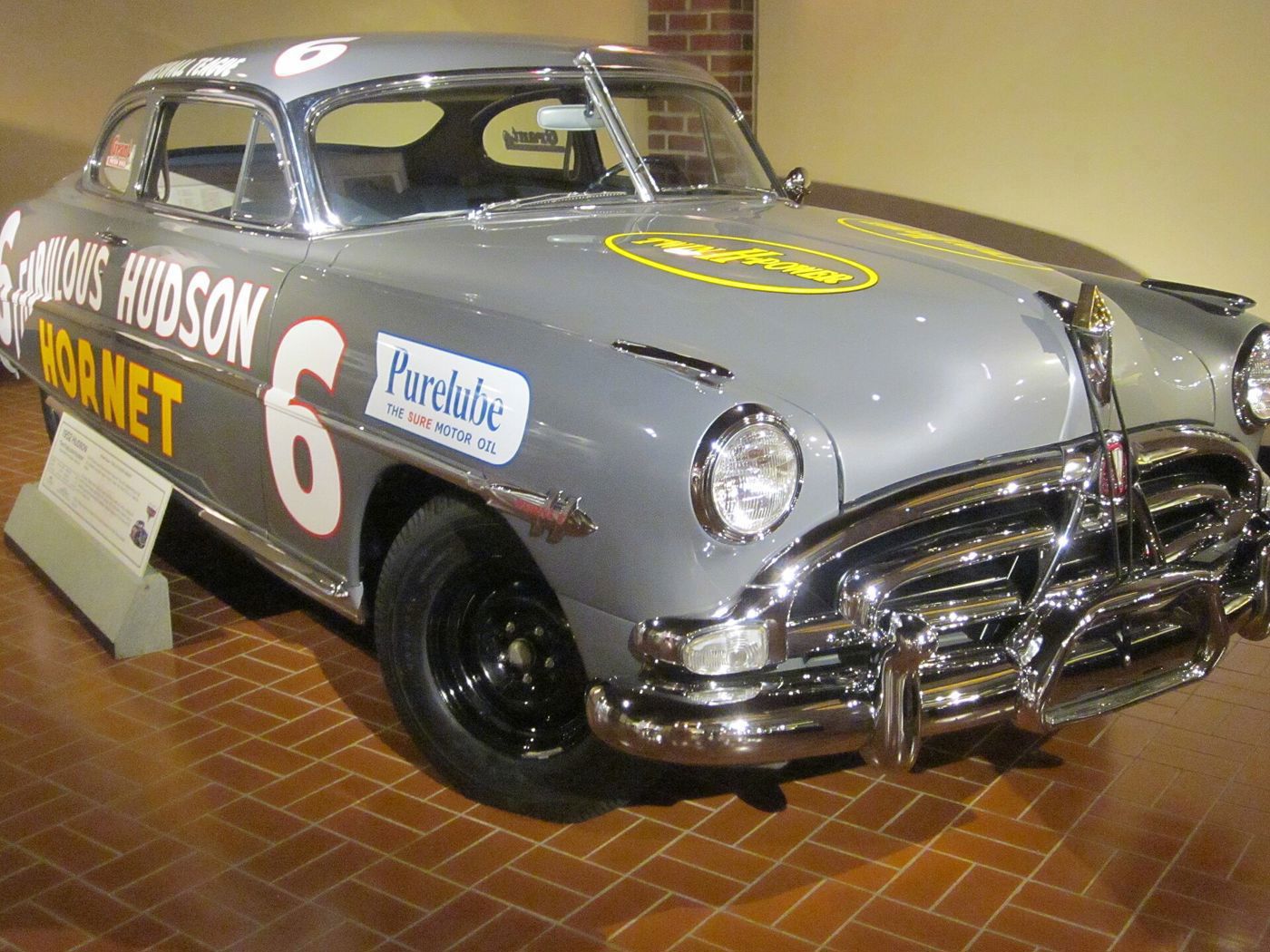
Marshall Teague’s Hornet story begins on the sand and pavement of Daytona in 1951. NASCAR records a field of fifty-five drivers and fourteen makes for the beach-road event, with Teague winning in a Fabulous Hudson Hornet. It was Hudson’s first NASCAR victory. The scene matters because the result arrived before the Hornet had accumulated the mythology later attached to it. One driver, one new car program, and one difficult race supplied a proof point that advertising could not manufacture.
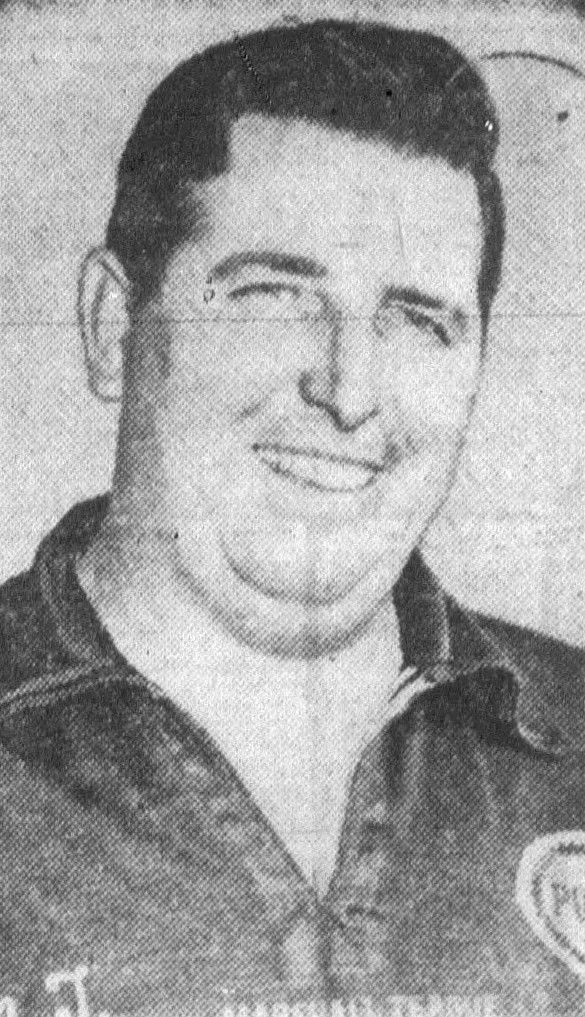
Teague was not merely a hired driver who appeared after NASCAR had taken shape. NASCAR’s archive places him at the Streamline Hotel founding meetings and identifies him as the organization’s first treasurer. That institutional role changes the portrait. He helped participate in the formation of the sanctioning world in which he would race, then became one of the competitors who demonstrated what manufacturer involvement could do. Administration and driving were separate responsibilities, but both put him close to stock-car racing’s early structure.
After Daytona, the success continued quickly. NASCAR says Teague won four of the next nine races he entered and credits him with seven premier-series victories in the No. 6 Hudson Hornet. He also won the Daytona beach-road event again in 1952. Those specific results are stronger than a vague claim that he “dominated NASCAR,” and they avoid absorbing victories earned by Herb Thomas or Tim Flock. Teague opened the Hornet’s winning chapter; he did not perform every part of it alone.
The car’s strengths were suited to the competition, but the technical story needs attribution. Hudson’s 308 was a long-stroke L-head six, and Twin H-Power used two carburetors. Later NASCAR recollections from Herb Thomas emphasize torque and a low center of gravity in the earlier Hornets. Those characteristics help explain why the cars worked, yet Teague’s page does not transfer every later statement to one exact chassis or race. Factory equipment, race preparation, gearing, tires, and driver judgment all shaped the result.
Smokey Yunick enters the story through institutional evidence rather than folklore. The International Motorsports Hall of Fame says Teague assigned Yunick to prepare a Hornet for Herb Thomas for the second Southern 500, which Thomas won. That sequence shows Teague as a connector inside the program. It also prevents the easy mistake of calling every Fabulous Hornet a Teague car. Thomas drove his own famous No. 92, Yunick prepared machinery, and Hudson support reached more than one entry.
Championship language is another place where Teague’s achievements can be distorted by careless compression. NASCAR’s archive credits him with AAA National Stock Car division championships in 1952 and 1954. Those were AAA titles, not NASCAR championships. In NASCAR’s premier series, Herb Thomas won the 1951 championship and Tim Flock the 1952 championship in Hudsons. Keeping the sanctioning bodies straight does not diminish Teague. It gives him the correct and still remarkable record.
The Fabulous Hudson Hornet name became larger than any individual car. Teague’s No. 6, Thomas’s No. 92, multiple prepared engines, factory relationships, and later restored survivors all contribute to the legend. A story that treats them as one uninterrupted vehicle creates false provenance. Teague’s role is best understood as the initiating driver and advocate whose early results established credibility, while other people expanded the program into championships and a broader fleet.
That program view also changes how the first victory is remembered. Daytona was not proof that every showroom Hornet would win a stock-car race, and it was not merely a driver overcoming an ordinary machine. It was evidence that a production-based design, factory attention, mechanical preparation, and Teague’s judgment could work together under competition conditions. The result gave Hudson a story it could repeat, but the historical value lies in the collaboration behind the headline.
By 1955, the world that had supported the first win was changing. Hudson had merged with Nash into American Motors, production moved away from Detroit, and NASCAR says the factory racing presence had disappeared. The 308 and Hornet name survived in the showroom, but the competitive organization had dispersed. Tim Flock, a 1952 Hudson champion, moved to Carl Kiekhaefer’s Chrysler effort and won the 1955 title. The movement of a fellow driver shows the consequence of Hudson’s retreat more clearly than a corporate date alone.
Teague’s life also continued beyond the stock-car results most often summarized, but this release stays within the evidence inspected for the ancestor batch. It does not invent private conversations with Hudson executives, mechanical development sessions, or race-day weather. Future research can add those scenes when period correspondence, interviews, or a sourced biography supplies them. For now the story relies on exact institutional results and clearly attributed roles, which already create a strong narrative arc.
The surviving Thomas Hornet illustrates why Teague’s individual story needs that restraint. The National Historic Vehicle Register documents a real NASCAR-campaigned Hudson, but it is connected to Thomas and Yunick, not automatically to Teague. It has also been restored, repainted, and fitted with an era-correct replacement engine block. Celebrating the artifact while attaching it to the correct people is part of responsible storytelling. Famous paint does not erase chassis identity.
Lifetime Hudson win totals remain disputed among institutions at 79, 80, and 81. Teague’s page does not need to choose one to show his importance. It can state the supported first: the 1951 Daytona victory was Hudson’s first NASCAR win. It can state his seven premier-series wins in the No. 6 and the repeat Daytona victory. Those bounded figures give readers more confidence than a grand total whose counting rule is unknown.
Teague made the Hornet fabulous by proving it in public competition, then by connecting people and preparation around the program. His founding role, Daytona wins, No. 6 results, AAA championships, and relationship to Yunick form a story richer than a one-line driver biography. He stands at the beginning of an American performance lineage in which showroom engineering, factory support, mechanics, and sanctioning rules met on rough courses. The legend grew beyond him, but it began with results he earned.