Hudson · 1951–1954
Hudson Hornet
Every Hudson Hornet model year from 1951 to 1954: production counts, engines, options, paint, prices and the stories behind them, with a source for every figure.
4 model years offered · 4 fact sheets · 1 story

Stories
People, racing and cross-marque stories
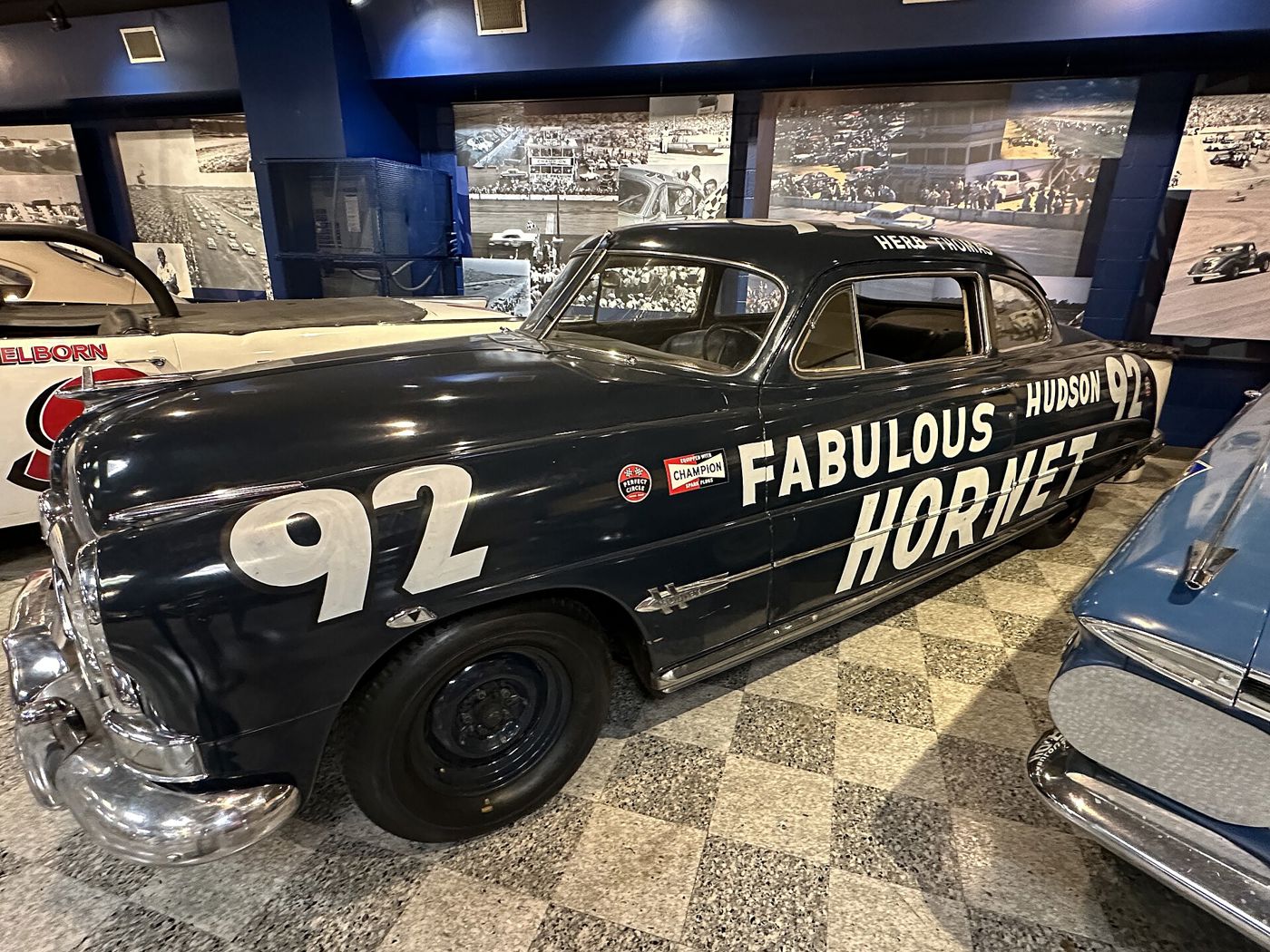
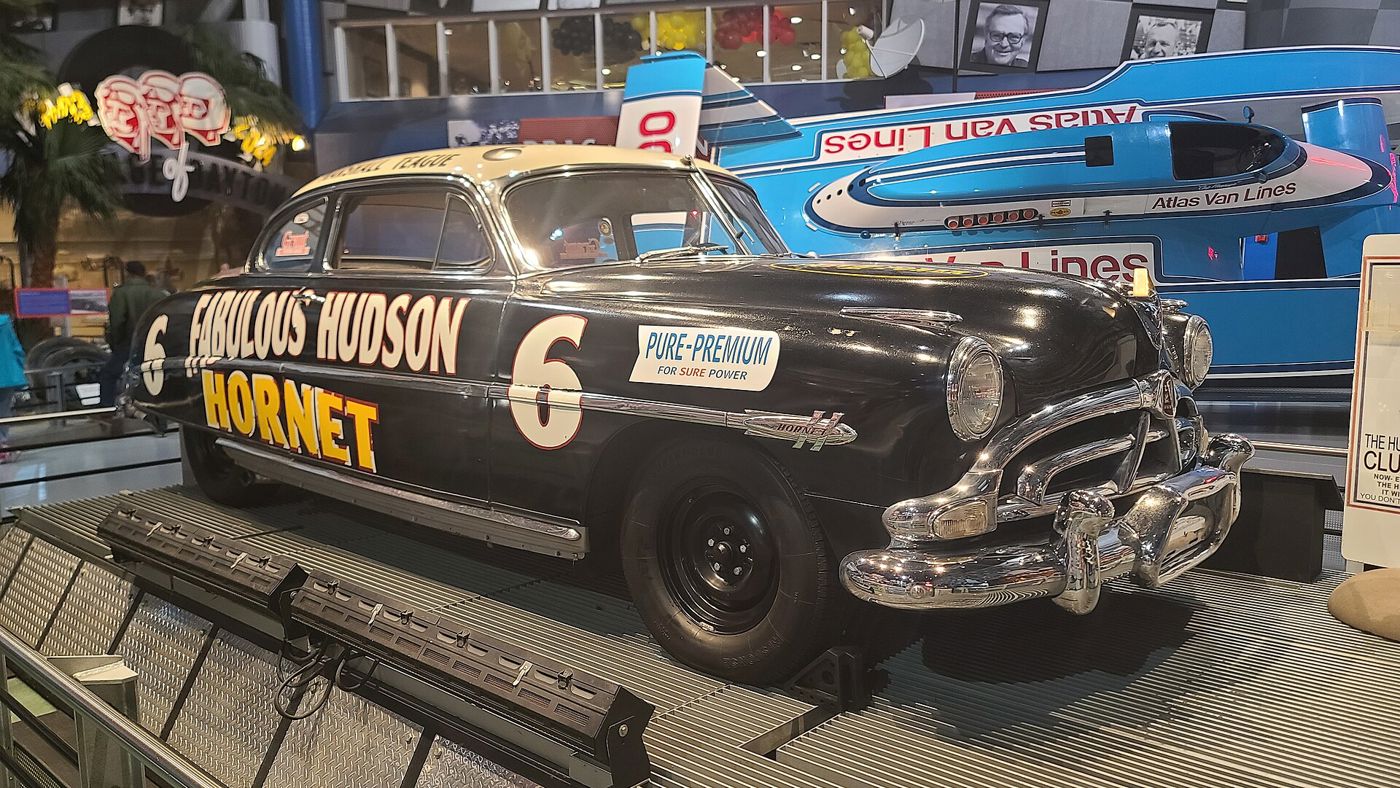
- The Fabulous Hudson Hornet Racing program
- Marshall Teague Person
Production by year
Each year's headline total, exactly as its source scopes it. Scopes differ from year to year (some include related models or other markets), so read the label before comparing years. Every year's fact sheet has the full breakdown.
| Year | What was counted | Count |
|---|---|---|
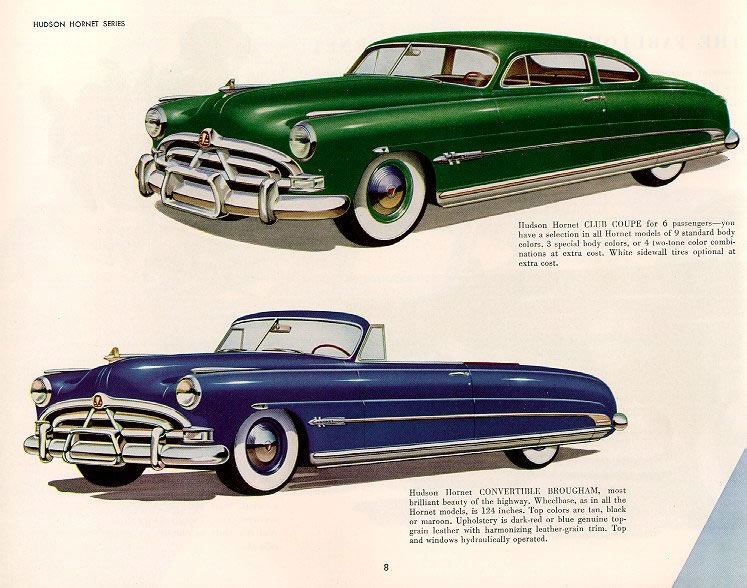
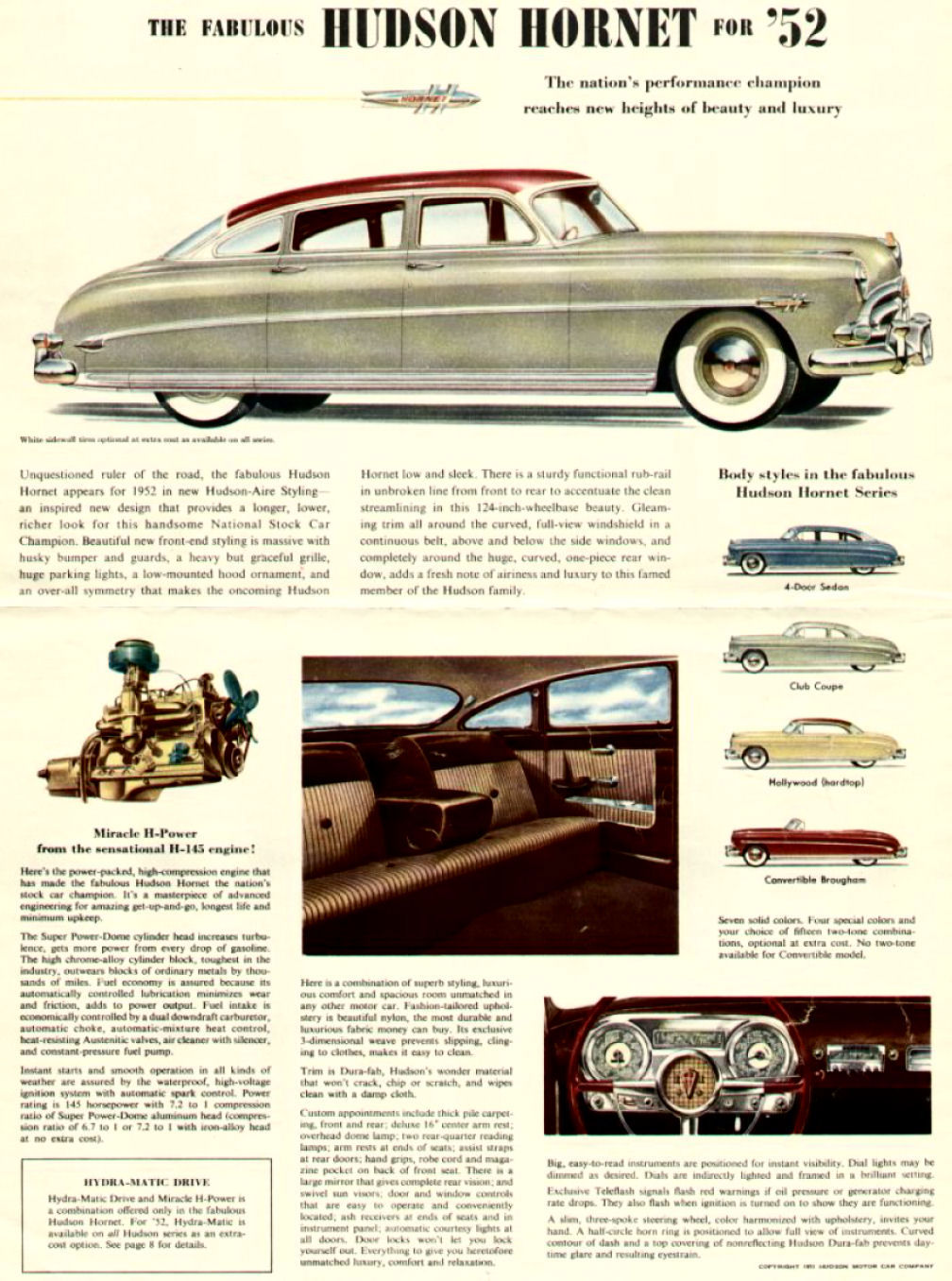
| 1951 | Hornet, all bodies (series 7A)built, model-year | 43,666 |
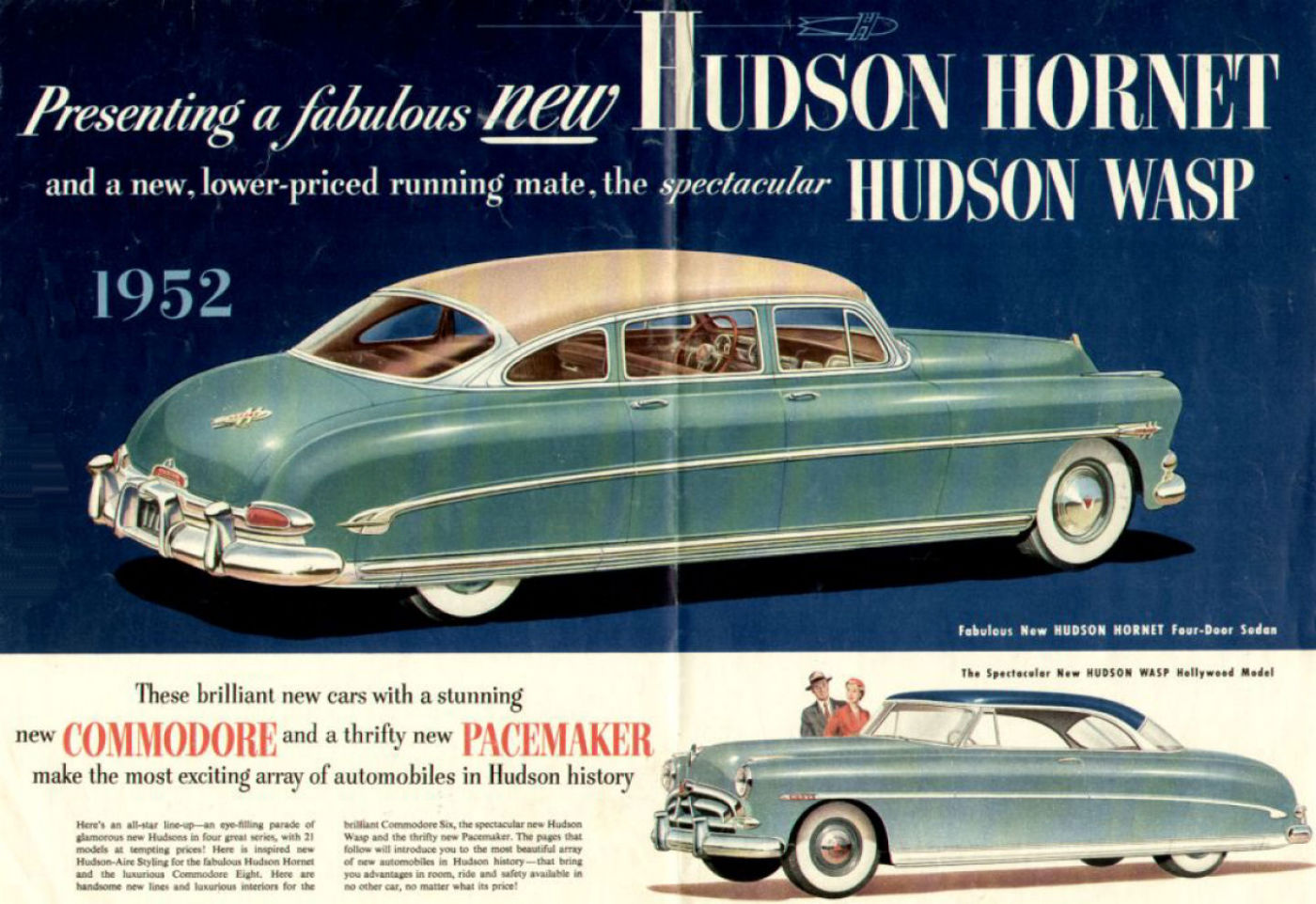
| 1952 | Hornet, all bodies (series 7B)built, model-year | 35,921 |
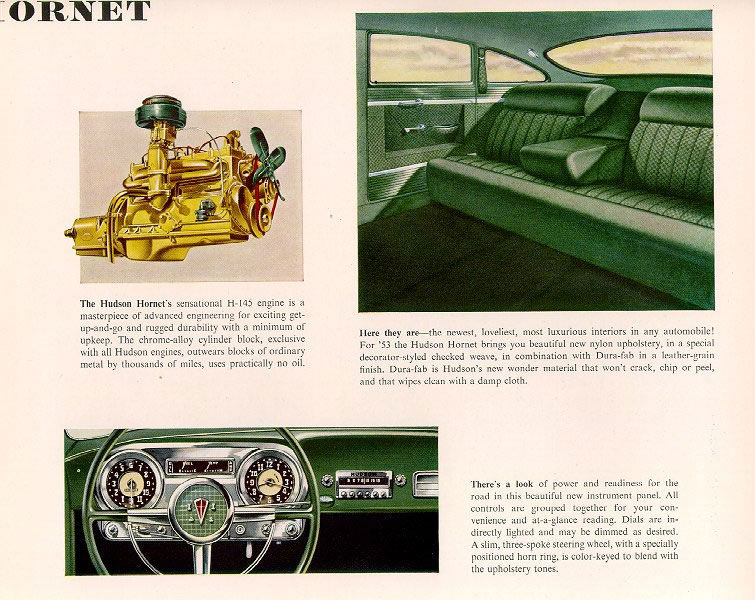
| 1953 | Hornet, all bodies (series 7C)built, model-year | 27,208 |
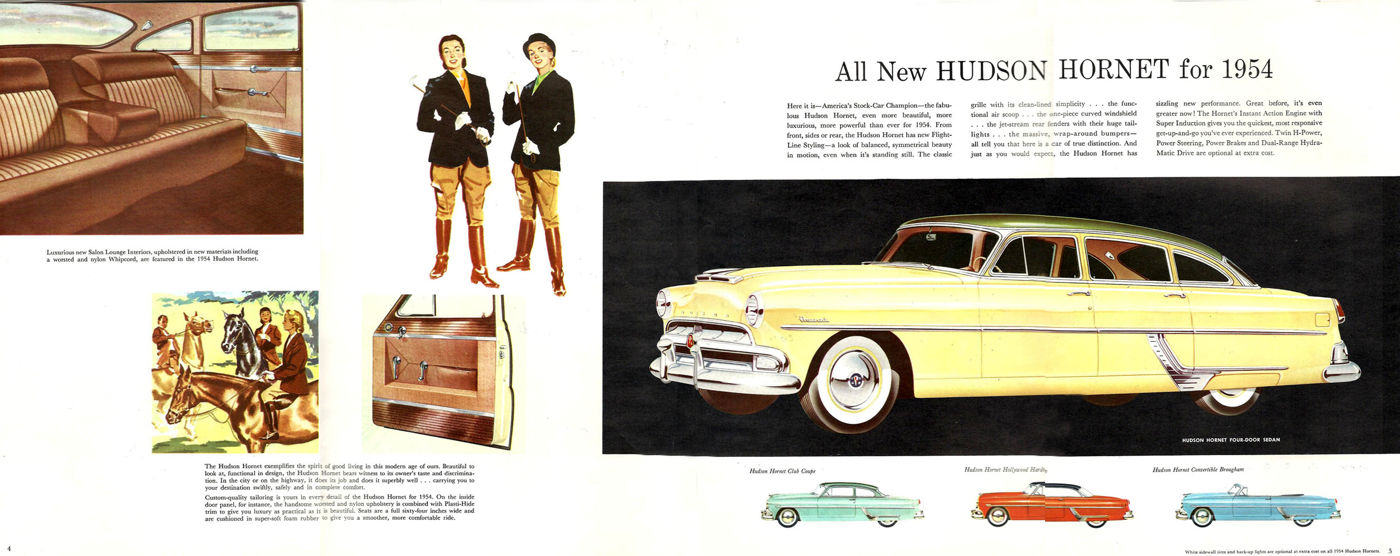
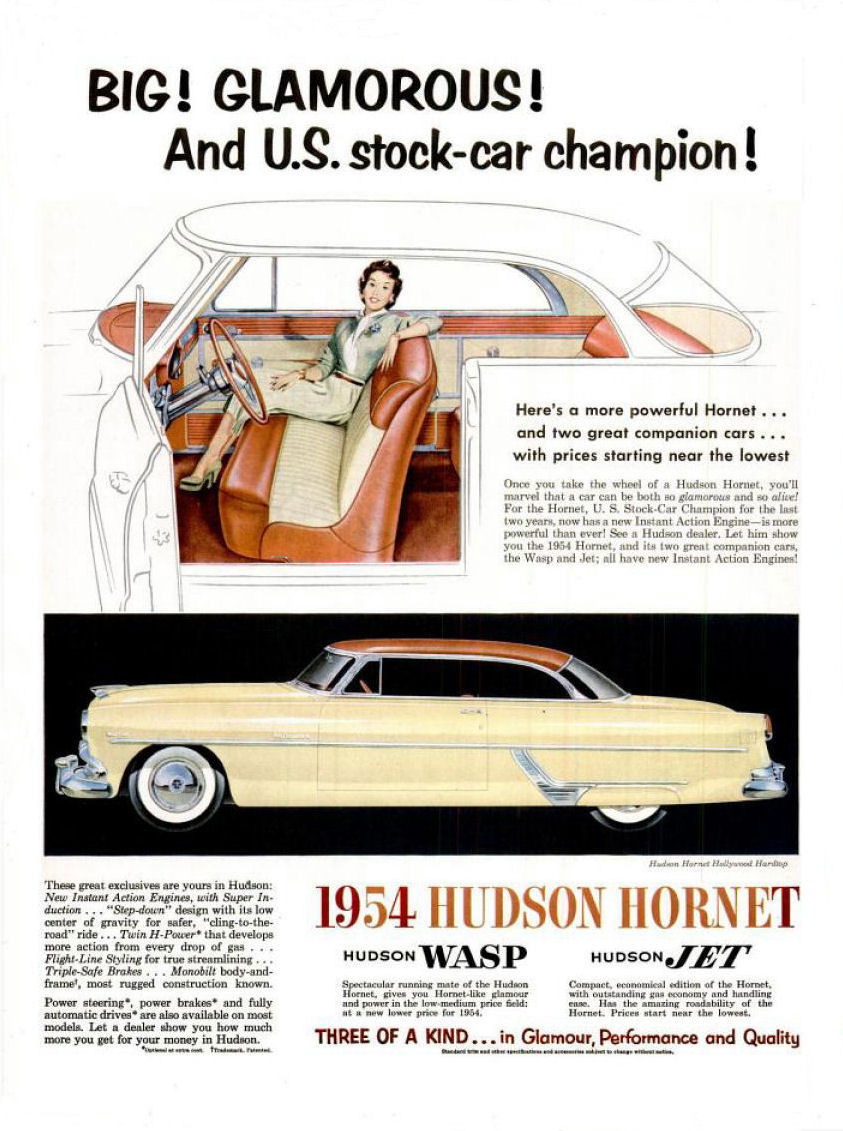
| 1954 | Hornet, all bodies (series 7D)built, model-year | 24,833 |


Model years
“Not offered” means this nameplate or performance model wasn't sold that year. It doesn't mean we're missing the research.
Specifications by year
36 factory specifications across 4 model years, gathered from each year's fact sheet so you can see how a dimension, a weight or a ratio changed over the run. Labels are carried as each source worded them, so the same measure may read differently from one year to the next.
1951
| Measure | Value | Applies to |
|---|---|---|
| Bore and stroke | 3-13/16 x 4-1/2 in | Hornet six |
| Wheelbase | 124 in | Hornet |
| Standard tires | 15 x 7.10 four-ply (15 x 7.60 on the Convertible Brougham) | Hornet |
| Rear axle ratio, standard transmission | 4.10:1 (3.58 or 4.55 optional) | 7A |
| Rear axle ratio with Overdrive | 4.55:1 (4.10 optional) | all series |
| Rear axle ratio with Hydra-Matic | 3.58:1 | Hydra-Matic-equipped models, 7A included |
1952
| Measure | Value | Applies to |
|---|---|---|
| Bore and stroke | 3-13/16 x 4-1/2 in | Hornet six |
| Wheelbase | 124 in | Hornet |
| Standard tires | 15 x 7.10 four-ply Super-Cushion (15 x 7.60 on the Convertible Brougham) | Hornet |
| Rear axle ratio, standard transmission | 4.10:1 (FF); 4.55:1 (LL) or 3.58:1 (JJ) optional on Hornets | 7B without Overdrive or Hydra-Matic |
| Rear axle ratio with Overdrive | 4.55:1 standard (4.10 optional) | all models |
| Rear axle ratio with Hydra-Matic | 3.58:1 (no other ratio) | all models |
1953
| Measure | Value | Applies to |
|---|---|---|
| Bore and stroke | 3-13/16 x 4-1/2 in | Hornet six |
| Standard tires | 7.10 x 15 (7.60 x 15 on the Convertible Brougham) | Hornet |
| Shipping weight, sedan | 3,570 lb | 7C four-door sedan |
| Shipping weight, club coupe | 3,530 lb | 7C club coupe |
| Shipping weight, Hollywood | 3,610 lb | 7C Hollywood hardtop |
| Shipping weight, convertible | 3,760 lb | 7C Convertible Brougham |
| Rear axle ratio, standard transmission | 4.09:1 (FF) | 4C, 5C, 7C without Overdrive or Hydra-Matic |
| Rear axle ratio with Overdrive | 4.55:1 (LL; also optional without Overdrive or Hydra-Matic) | 4C, 5C, 7C |
| Rear axle ratio with Hydra-Matic | 3.07:1 (TT; no other option) | 4C, 5C, 7C |
1954
| Measure | Value | Applies to |
|---|---|---|
| Wheelbase | 124 in | Hornet |
| Front tread | 58.5 in | Hornet |
| Rear tread | 55.5 in | Hornet |
| Compression ratio | 7.5 :1 | 308 six as reported |
| Compression ratio, optional cast-iron head | 7 :1 | 308 six with cast-iron head |
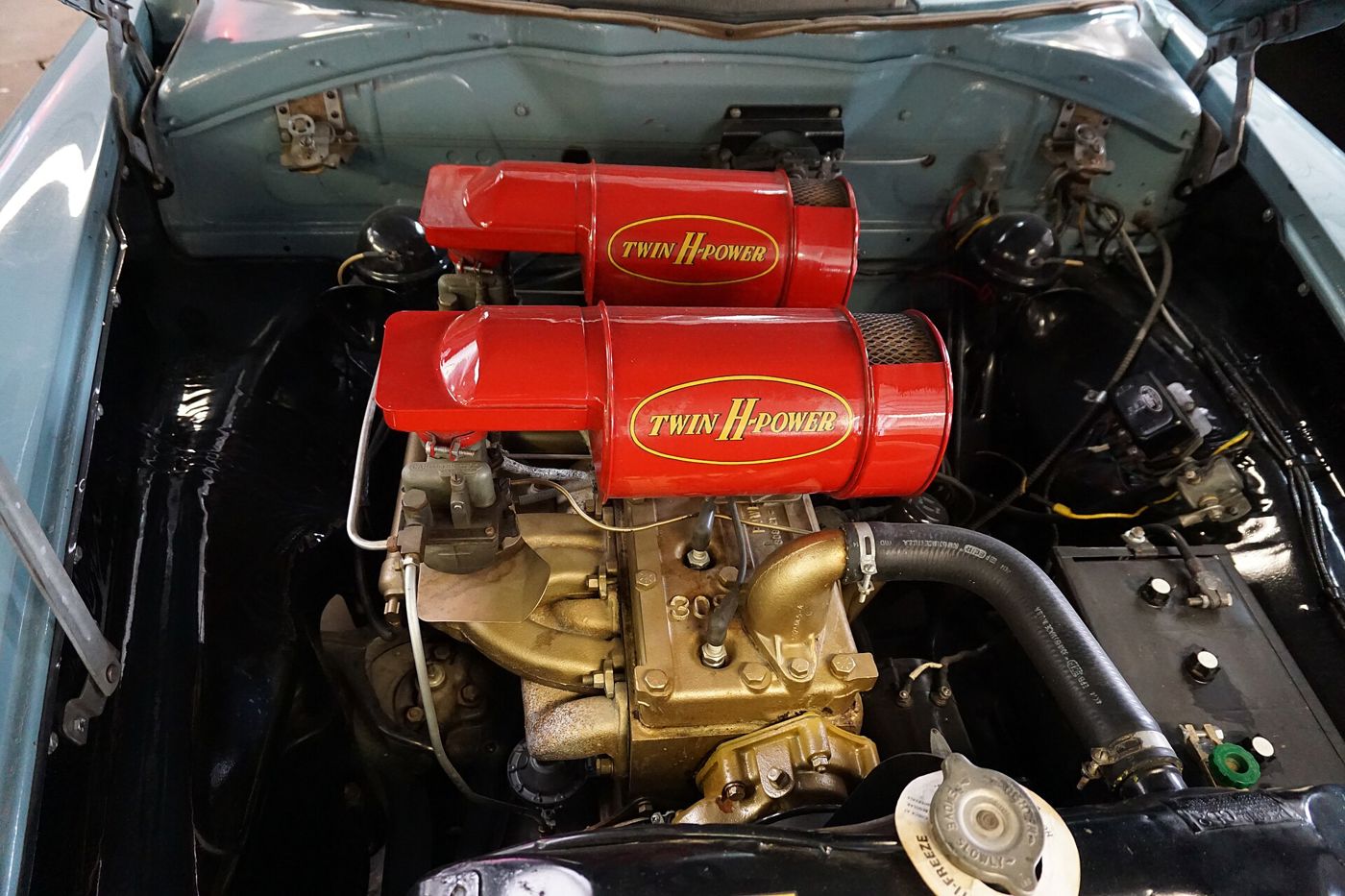
| Carburetor | Carter two-barrel type WGD, model 2115S | 308 six, single carburetor |
| Valve lifters / main bearings | solid lifters; four main bearings | 308 six |
| Overall length | 208-15/32 in | Hornet |
| Overall width | 77-1/4 in | Hornet |
| Overall height, loaded | 60-3/8 in | Hornet |
| Maximum head room | 38-3/4 in | Hornet |
| Hip room / elbow room | hip room 64 front and rear; elbow room 66 front, 65 rear in | Hornet |
| Turning radius | 20 ft 5 in right; 21 ft 2 in left | Hornet |
| Standard tires | 7.10 x 15 (7.60 x 15 on the Convertible Brougham, optional on other Hornets) | Hornet |
| Rear axle ratios | 4.09:1 manual (4.55 special); 4.55 or 4.09 with overdrive; 3.07 with Hydra-Matic | Hornet |