Stories · 1969 · cross-marque
1969 Showroom War: Twenty Ways to Buy Performance
Six manufacturers, one model year, and a showroom argument in which the badge on the fender told a buyer far less than the option code did.
Story reviewed July 27, 2026
In 1969 the argument began before anyone turned a key. A buyer could walk into a Chevrolet store asking for a high-revving Z/28, a big-block Camaro SS, or an intermediate Chevelle SS 396. Across town, Ford offered a Boss 302 shaped by road-racing rules and a Mach 1 whose 428 Cobra Jet made an entirely different promise. Pontiac, Plymouth, Dodge, AMC, and Oldsmobile filled still more branches of the decision tree. “Muscle car” is useful shorthand, but the order forms reveal a market divided by body size, engine character, transmission, price, purpose, and the kind of competition each company wanted buyers to imagine.
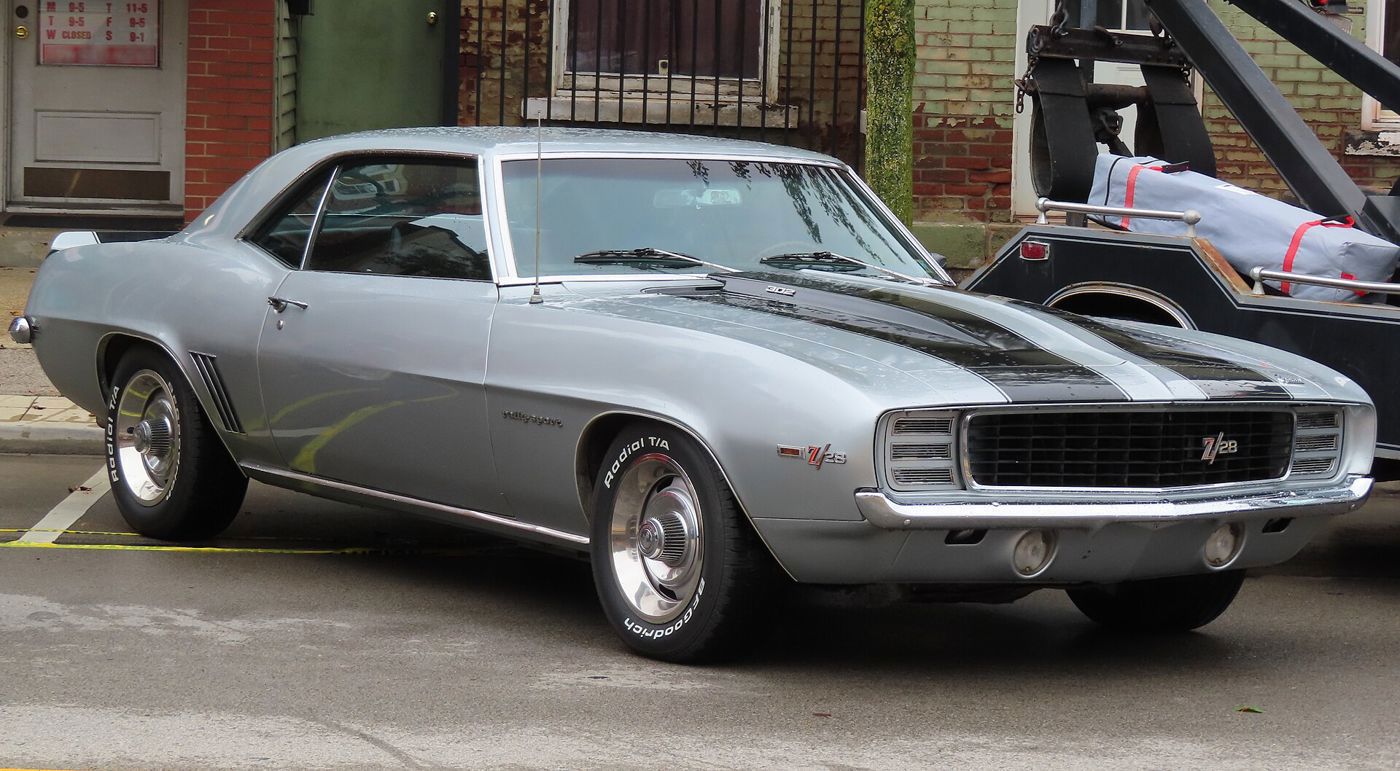
The Camaro pair makes the point immediately. Chevrolet’s Z/28 combined a 302.3-cubic-inch engine, mandatory four-speed, power front discs, special suspension, 15-inch wheels, and gearing chosen around a road-racing homologation idea. The factory published 290 brake horsepower at 5,800 rpm and 290 lb-ft at 4,200. The SS 396 L78 belonged to another branch: a 396 with a published 375 horsepower, mechanical lifters, four-barrel carburetion, and no air conditioning. Its currently inspected Camaro documents do not supply a clean torque number, so the selector says unknown. It does not borrow a figure from another Chevrolet line.
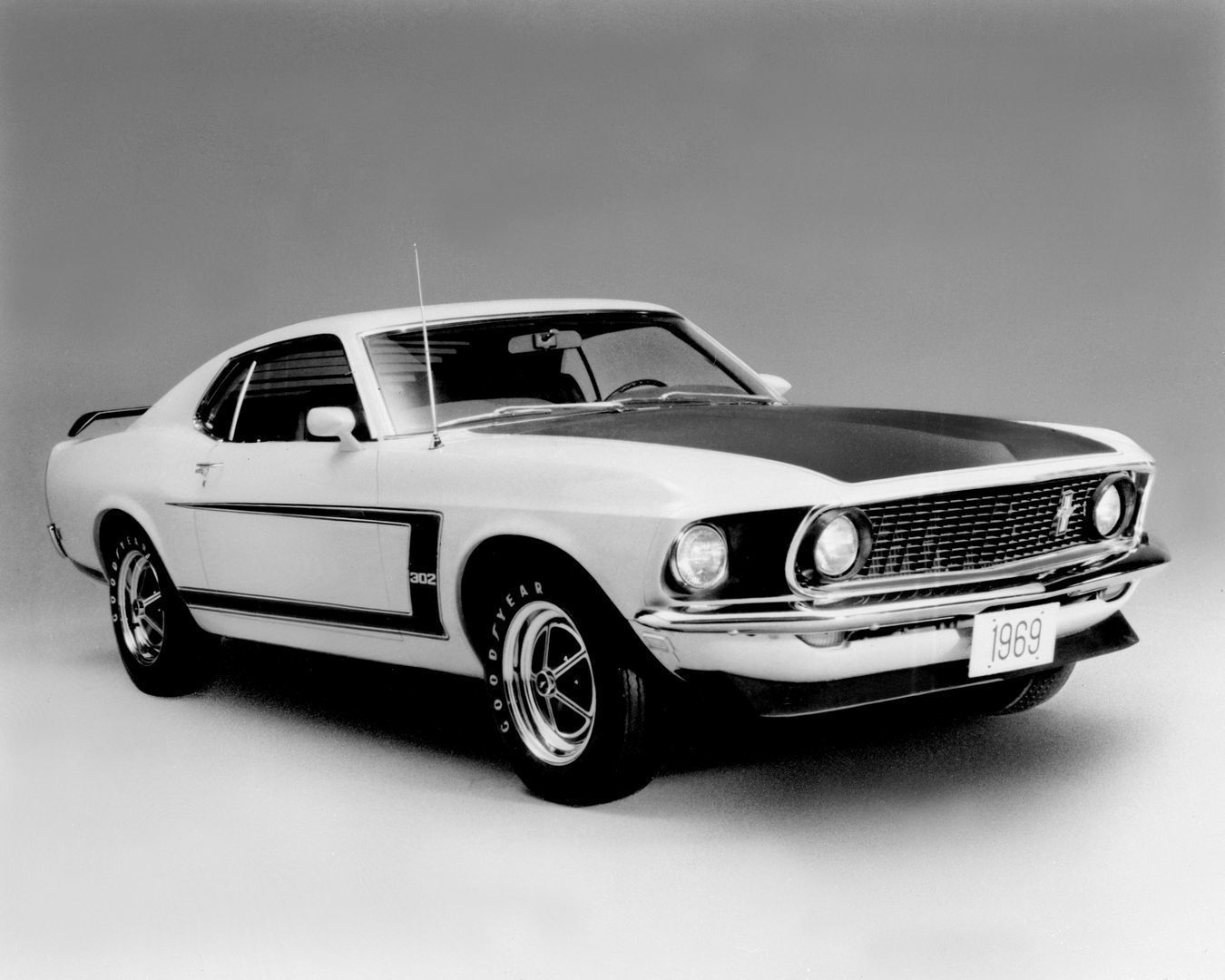
Ford answered with two equally distinct Mustangs. The Boss 302 sales folder describes a 302, four-speed, 3.50 axle, front discs, F60x15 tires, and special suspension. Ford’s street literature says 290 bhp at 5,800 rpm and 290 lb-ft at 4,300, while its FIA declaration places the same horsepower at 6,000 and lists 345 lb-ft at 3,200. Those figures remain two records, not ingredients for a convenient hybrid. The Mach 1 card instead selects the 428 Cobra Jet Ram-Air, close-ratio four-speed, and 3.50 axle: 335 advertised horsepower and 440 lb-ft in Ford’s dated technical material.
Those four cars make two honest pony-car comparisons. Z/28 versus Boss 302 asks how Chevrolet and Ford translated an under-five-liter racing requirement into roadgoing packages. SS 396 L78 versus Mach 1 428 Cobra Jet asks how the companies sold big-block street performance. Neither matchup imports race-car output, and neither lets a model badge hide the transmission or axle. Readers who want the complete single-marque histories can continue contextually to CamaroFacts’ 1969 page and Mustang Car Facts’ 1969 page, then return to the exact cross-marque selector.
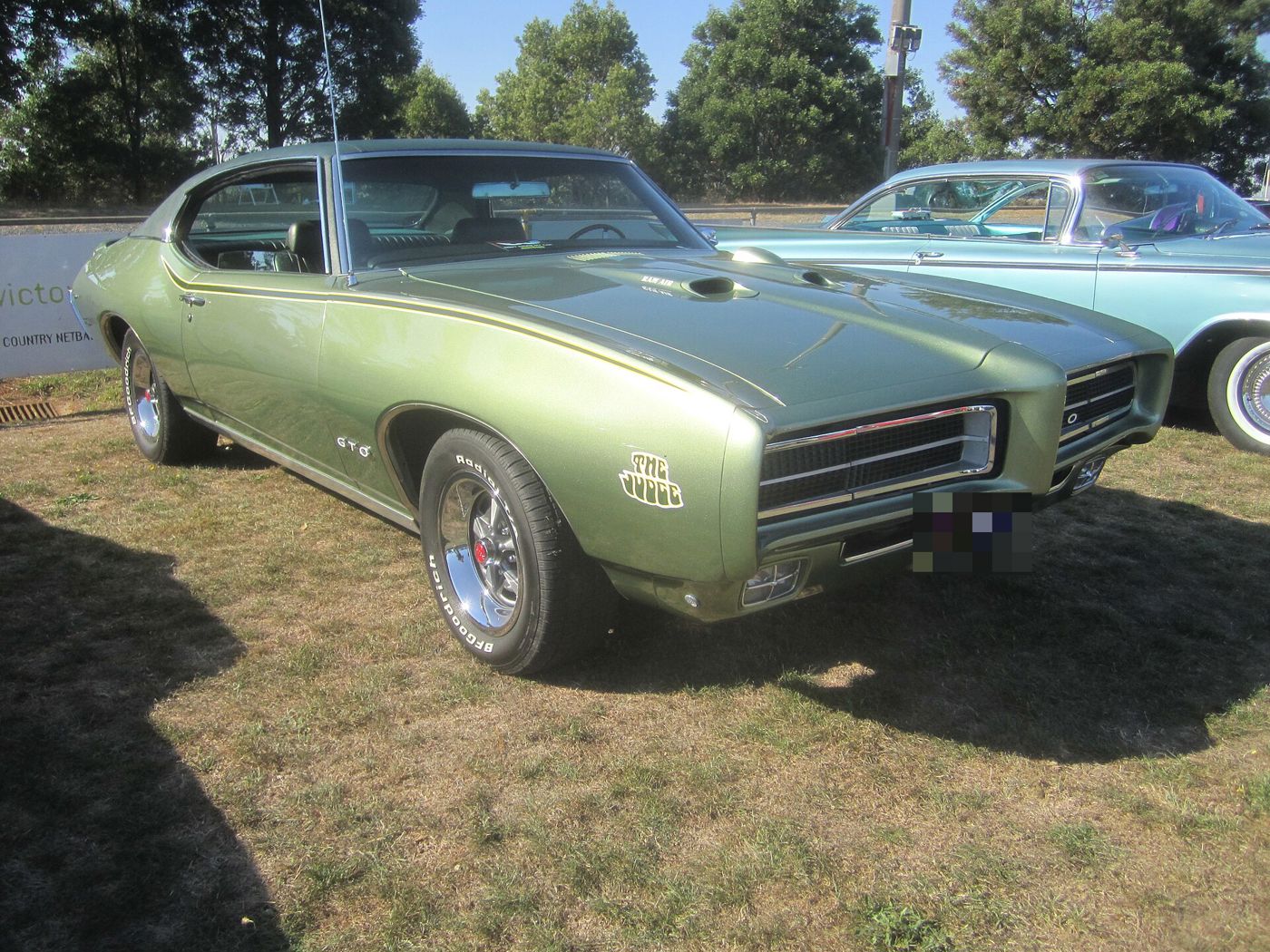
Intermediate buyers faced another set of choices. Pontiac’s GTO began with a 400 rated at 350 horsepower and offered Ram Air steps at 366 and 370. Chevrolet’s initial dated Chevelle release supports L35 and L34 SS 396 combinations at 325 and 350 advertised gross horsepower. Plymouth made its 335-horsepower 383 and Hurst-shifted four-speed central to the Road Runner, while offering the 425-horsepower Street Hemi. Oldsmobile’s 4-4-2 started with a 350-horsepower 400 and heavy-duty three-speed; the W-30 raised the published figure to 360 and paired its Force-Air hardware with a close-ratio four-speed.
Dodge’s Charger R/T exposes why transmission selection belongs in the identity. The 440 Magnum was advertised at 375 horsepower and 480 lb-ft, with TorqueFlite standard. A buyer could select a Hurst-shifted four-speed with the same engine, changing the operating experience without changing the headline rating. The Hemi and four-speed formed a third exact branch at 425 horsepower and 490 lb-ft. The comparison therefore contains all three. It does not reduce them to “1969 Charger R/T,” and it keeps the aerodynamic Daytona out of the ordinary Charger row because that car’s homologation purpose and bodywork demand separate provenance.
AMC made the field broader still. The Javelin SST and two-seat AMX could each carry a 343 four-barrel rated at 280 horsepower or a 390 rated at 315, both with a four-speed in the selected configurations. Shared engines do not make the cars interchangeable: seating, body, dimensions, and intended buyer remain part of the choice. Their presence also corrects a history that becomes a Detroit-three recital. AMC was not merely watching the performance market. It offered factory power teams and, with Hurst, constructed one of the year’s most vivid supplier collaborations.
The selector stops at ordinary factory street configurations even when the excluded names are famous. COPO Camaros used a central-office route rather than the public RPO list. The A12 Road Runner and Super Bee were midyear factory specials. The Charger Daytona and Boss 429 answered homologation demands. SC/Rambler and Hurst/Olds involved visible supplier relationships. Yenko and other dealer programs added distribution, preparation, or branding after the factory’s role. Each can be compared later, but only after its type and evidence are displayed. Rarity is not permission to erase how a car came into being.
Period output also needs a label. Chevrolet explicitly called its Chevelle table gross brake horsepower and gross torque. Other inspected brochures use their own period advertising language, which this release preserves instead of imposing a universal modern standard. Shipping weight, curb weight, official license weight, homologation weight, and magazine test weight are similarly separate. A brochure proves an offering; it does not prove that every combination was built. A road test describes one prepared vehicle; it does not become a performance result for every matching badge.
The result is not a tournament bracket and it has no default champion. A Boss 302 and a Hemi Road Runner were solutions to different problems. A 440 Charger with TorqueFlite and the same car with a four-speed can be meaningfully compared without pretending the transmission changes the engine’s advertised rating. Twenty configurations make the year look more complex, not less, and that is the point. In 1969 American performance was not one car or one formula. It was a crowded set of deliberate choices, now preserved closely enough that readers can choose the cars they actually mean.
That precision also creates room for the next research pass. Period tests can be attached to the exact configurations they actually measured; production ledgers can resolve counts without changing brochure availability; and authenticated specialty cars can join a separate selector without contaminating the street baseline. The first release is therefore a durable floor rather than a claim of completeness. It makes unknown fields visible, keeps disputed values open, and gives each later document a defined place to land.