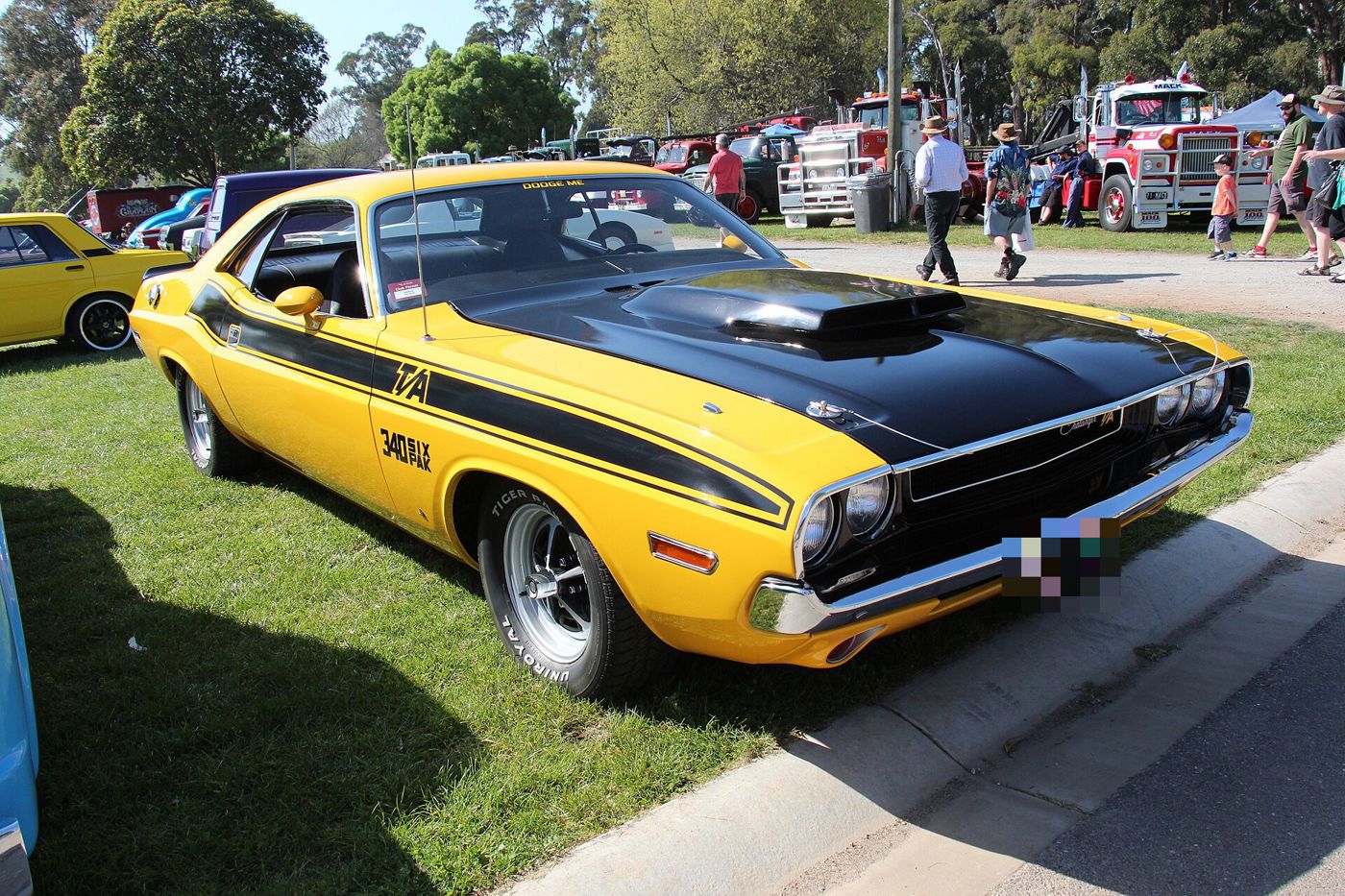
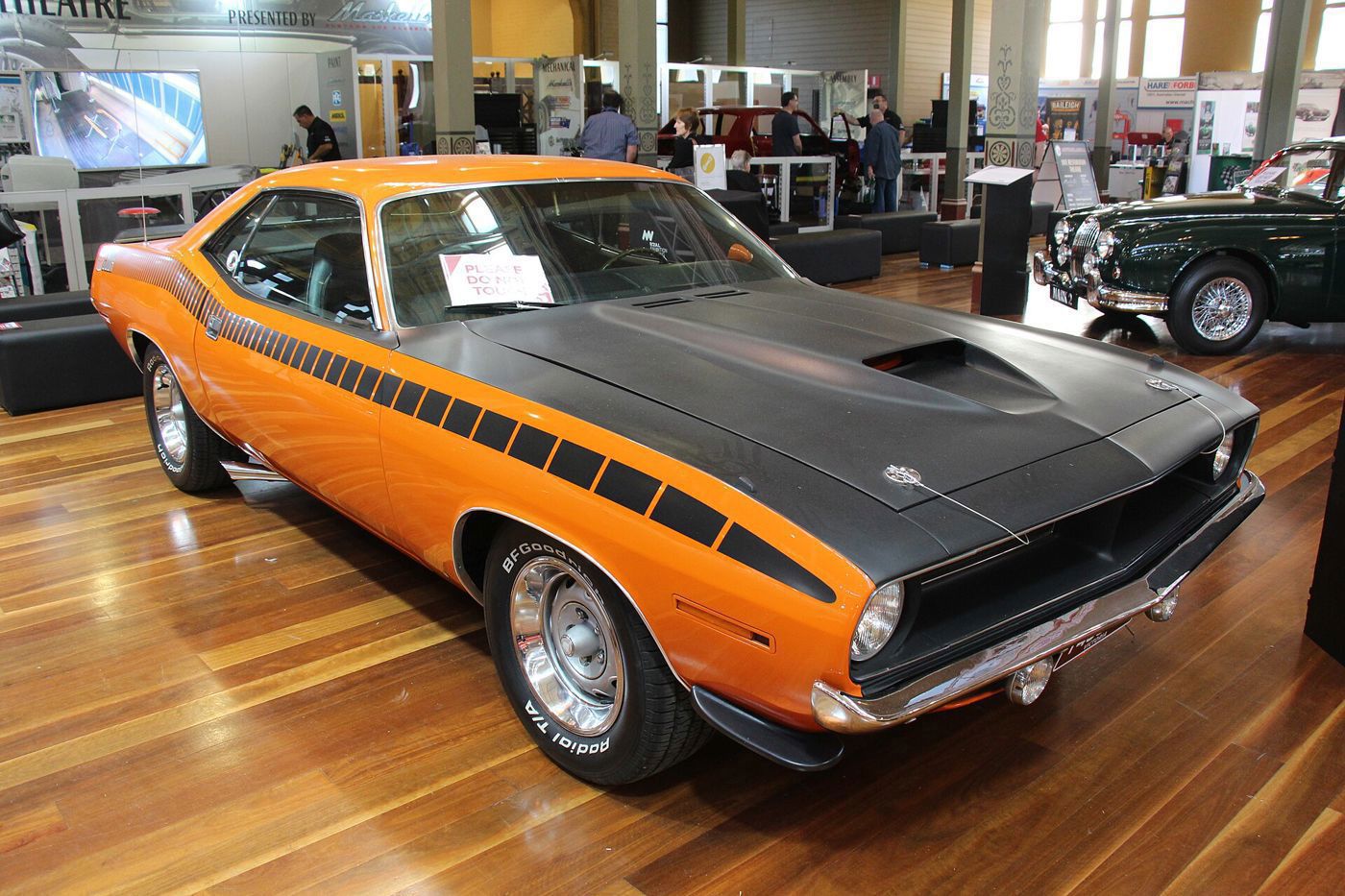
Racing · All American Racers · Plymouth, and Autodynamics · Dodge · 1970
AAR ’Cuda and Challenger T/A: Two Programs, One Winless Trans-Am Season
Two factory Mopar programs, one shared podium, repeated mechanical failures, and showroom legends that outlived a season neither of them won.
Story reviewed July 27, 2026
Mark Donohue reached the Road America finish first on July 19, 1970, but the two cars behind his Javelin made the day a Chrysler Corporation high point. Swede Savage brought the All American Racers Plymouth home second, 58 seconds behind. Sam Posey followed in the Autodynamics Dodge, third and 90 seconds behind Donohue. For one afternoon, separate Plymouth and Dodge programs occupied the same podium and looked close enough to make their famous showroom names feel inevitable.
They were not one team. SCCA’s season history maps Plymouth to Dan Gurney’s All American Racers in Southern California and Dodge to Ray Caldwell’s Autodynamics organization in Massachusetts. Gurney was AAR’s principal and one of its drivers; Savage became the Plymouth driver who appeared in every completed round. Posey carried the Dodge program through the full season. Treating all of that as a single “Mopar team” would erase the organizations that had to make two different new shapes work.
The calendar itself needs one correction before the racing begins. Twelve dates were scheduled, but heavy rain canceled the April 26 Dallas event before it produced a classification. The 11 completed over-2-liter races run from Laguna Seca on April 19 to Riverside on October 4. That distinction reconciles the Dallas artifact preserved by The Henry Ford with AAR’s description of an eleven-race season. Dallas was a lost date, not an unlocated result.
At Laguna Seca, Savage finished fourth and Posey sixth. Gurney’s second Plymouth retired after 21 laps with the transmission named on the SCCA sheet. Lime Rock reversed the emotional balance: Posey finished third while Gurney’s clutch and Savage’s engine ended both AAR entries. Those official reason fields are spare, but their repetition gives the season its pressure. The new programs could show speed and still spend Sunday being defeated by components.
Bryar was harsher. Savage’s engine ended his race after 33 laps, and Posey’s clutch lasted four. At Mid-Ohio, Posey finished fifth while an oil leak stopped Savage. Bridgehampton put both cars out after 54 laps, the Plymouth with a differential failure and the Dodge with the official reason “throttle.” The sheets do not identify the failed pieces more precisely, and they do not authorize a private conversation about what anyone blamed afterward.
The human structure matters more than a catalog of broken parts. AAR’s surviving Automobilia record identifies a 1970 Plymouth press kit connecting Gurney and Savage to the Barracuda program, though the small reproduction is only a lead to the underlying kit. Dodge’s later history credits Caldwell’s Autodynamics with preparing and running Posey’s Challenger. Neither source supplies a complete crew roster. Mechanics, fabricators, transporters, and engineers therefore remain real participants whose exact names and event duties still need team papers.
Savage made all eleven completed races. Gurney started four: Laguna Seca, Lime Rock, Kent, and Riverside. Across 15 starts, the AAR Plymouths recorded six finishes and nine retirements. That complete period ledger corrects later chronologies that compress the campaign into a simpler handoff between its two drivers. Savage did not merely arrive after Gurney; he was already fourth at the opening round and carried the car through every classification.
Posey also started all eleven completed races. Ron Bucknum joined the Dodge entries at Kent, and Tony Adamowicz joined at Riverside. Across 13 starts, the Autodynamics Challengers recorded six finishes and seven retirements. Posey’s three third-place results—Lime Rock, Road America, and Kent—were Dodge’s best finishes. The extra drivers establish expanded entries at two events, not a chassis count or the reason each car appeared.
Donnybrooke finally put Savage back at the finish in fifth while Posey retired after 13 laps with no cause printed. Then came Road America: Savage second, Posey third, and both programs together behind Donohue. The classification tells us the distances and positions, not the passes, pit calls, or private judgments that produced them. Its restraint is useful. A podium does not need invented radio chatter to become the turning point of a difficult season.
The races after that peak refused a tidy upward arc. Posey finished fourth at St. Jovite while Savage retired. At Watkins Glen, Savage finished sixth and Posey retired after 24 laps. The modern series account gives Watkins Glen a crowded 46-entry atmosphere, but it also prints internally incompatible qualifying times. This page leaves those numbers out. A good institutional source can preserve a valuable scene and still carry a copy error that should not become decorative precision.
Kent brought Posey his third third-place result, but the Plymouth side lost both Savage and Gurney to engine failures. Bucknum’s second Challenger also retired. At Riverside, Savage and Gurney finally finished together, fourth and fifth, while the Challengers of Adamowicz and Posey both retired with engine failures. The ending contained AAR’s best two-car finish and Autodynamics’ worst two-car durability result at once. It resists being edited into either triumph or collapse.
The manufacturer table explains what those finishes added up to. Under the best-nine-results adjustment, Ford ended with 72 points, AMC 59, Chevrolet 40, Dodge 18, and Plymouth 15. Neither AAR Plymouth nor Autodynamics Dodge won any of the eleven completed rounds. Ford won the contemporary manufacturers’ championship, the contest the series actually awarded in 1970. The Boss 302 campaign supplies the Mustang side of that benchmark.
Driver-title language belongs to a later layer of history. SCCA did not award a driver championship in 1970. After the 1980 season, a reconstruction applied driver points to the earlier years and produced a 142–141 result for Parnelli Jones over Donohue; the current series recognizes that retrospective title. Dodge’s later statement that Posey finished fourth in the standings belongs to that reconstructed driver accounting, not to a driver trophy awarded during his Challenger season.
The other winners show how broad the challenge was. Donohue and AMC interrupted Ford; Milt Minter won Donnybrooke in a Camaro; Vic Elford and Jim Hall won the wet Watkins Glen race. CamaroFacts’ racing history owns the Chevrolet transition, while the Penske Javelin story follows AMC into the next season. Those links explain the opposition without turning this page into a generic family directory.
The road-going Plymouth AAR ’Cuda and Dodge Challenger T/A are essential to the story but are not these race cars. Factory marketing establishes the public ranges, names, and the performance argument buyers saw. It does not establish the competition cars’ exact displacement, output, weight, chassis, brakes, tires, suspension, gearbox, fuel capacity, or per-event preparation. The ordinary showroom 340 four-barrel rating cannot simply be copied onto the specialty street engines, much less onto a prepared Trans-Am engine.
The street specialties became larger legends than the short factory campaigns that helped give their names meaning. That does not make the racing season a failure best forgotten. Fifteen AAR starts and 13 Autodynamics starts exposed every gap between an announcement and a finish: transmissions, clutches, engines, an oil leak, a differential, a throttle problem, and blanks the official sheet could not explain. Road America showed what the cars could reach. Riverside showed how differently two related programs could end the same afternoon.