Racing · Ford, Mercury, Chrysler, and Petty Enterprises · 1964
1964 Factory Racing in Public: Thunderbolt, Hemi, Comet, and Petty
Thunderbolts on the strip, a Hemi one-two-three at Daytona, and a Comet whose claim to be the first Funny Car the sanctioning body itself will not settle.
Story reviewed July 27, 2026
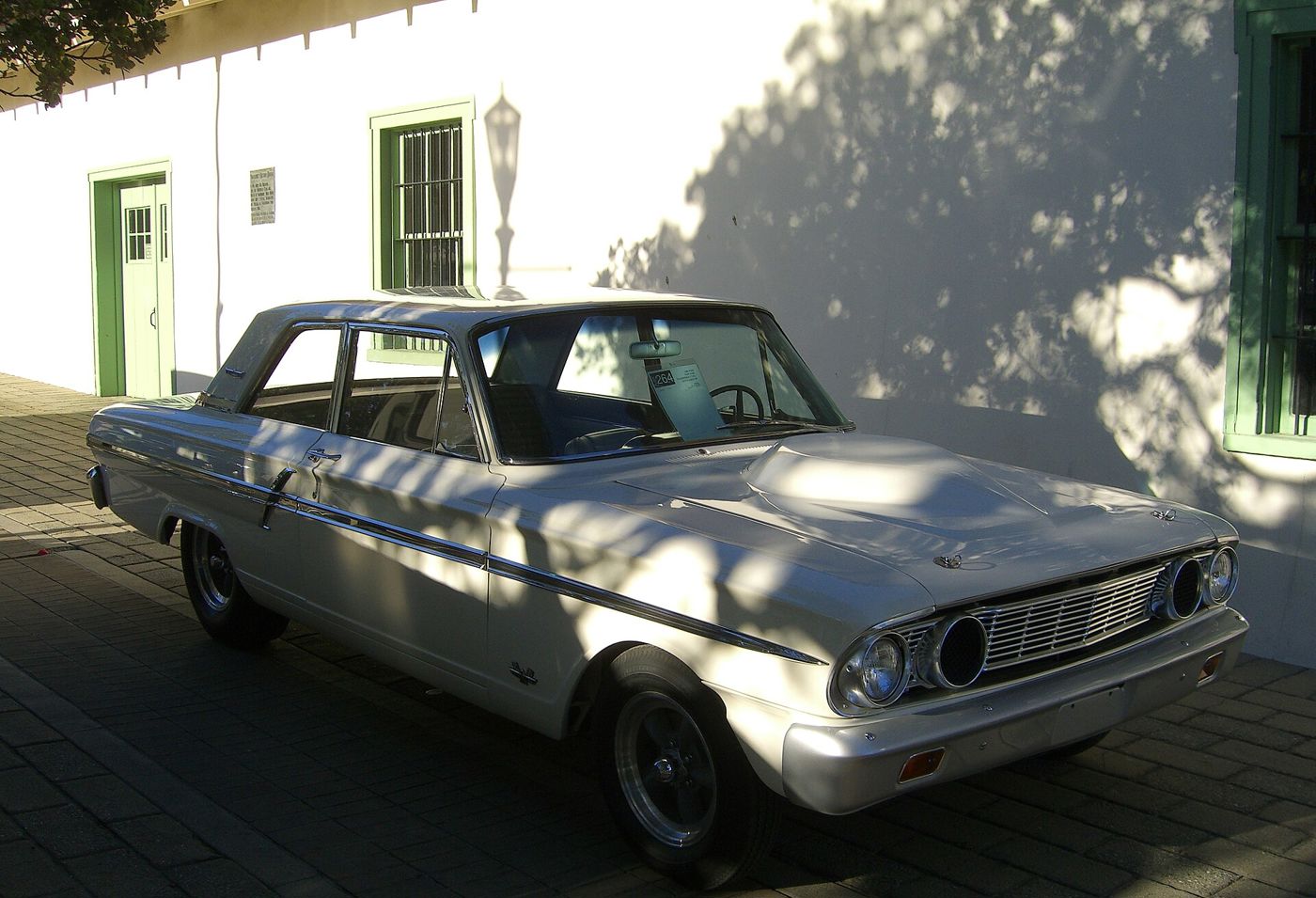
Pontiac’s GTO moved performance identity into a broad street option, but Ford and Chrysler were still building machines whose purpose was unmistakably public competition. The contrast is the 1964 racing story. A Fairlane Thunderbolt chased drag-racing classes, lightweight Hemi package cars met at the Nationals, a supercharged Mercury Comet helped reshape the idea of Funny Car, and Petty Plymouths swept Daytona. None belongs in the ordinary street selector. Together they show factories answering the same performance market through radically different access, preparation, and rules.
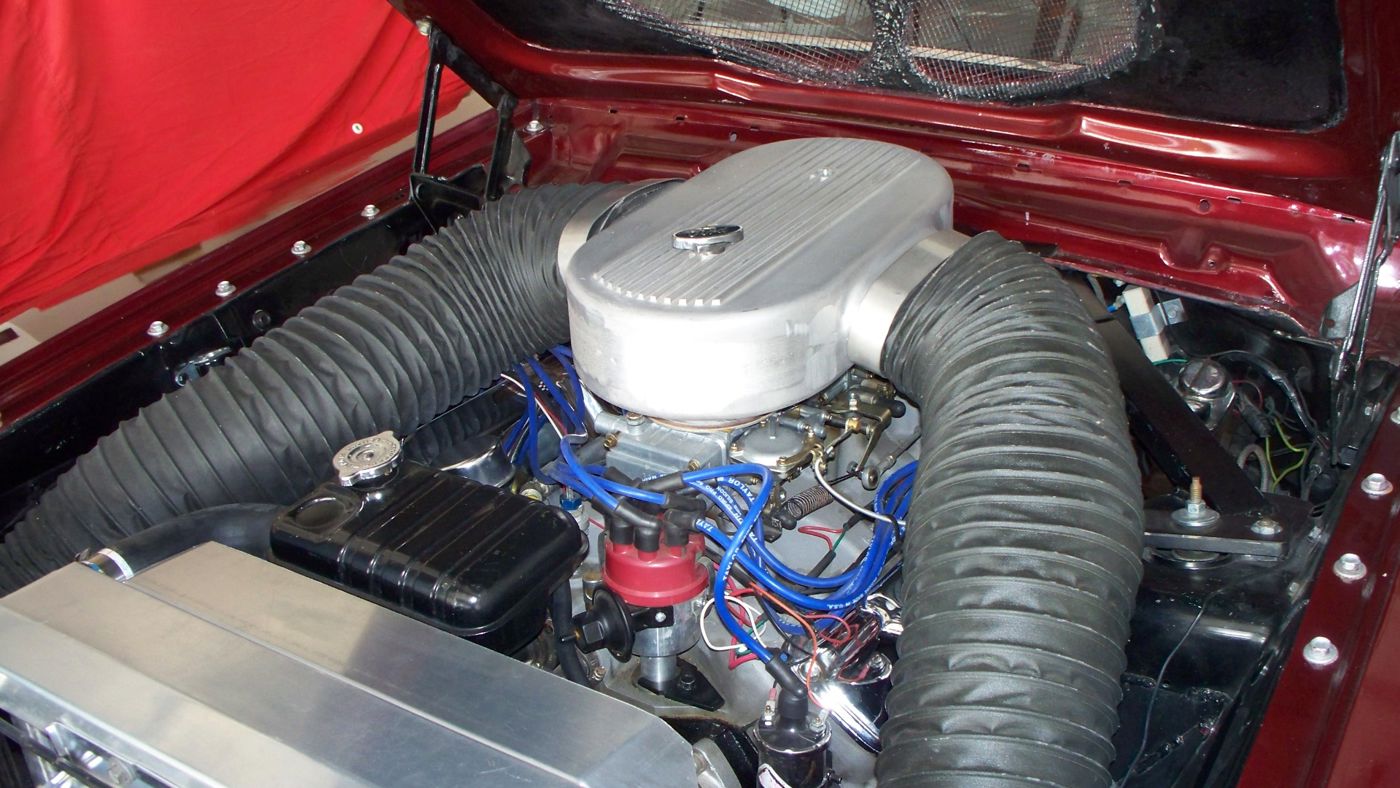
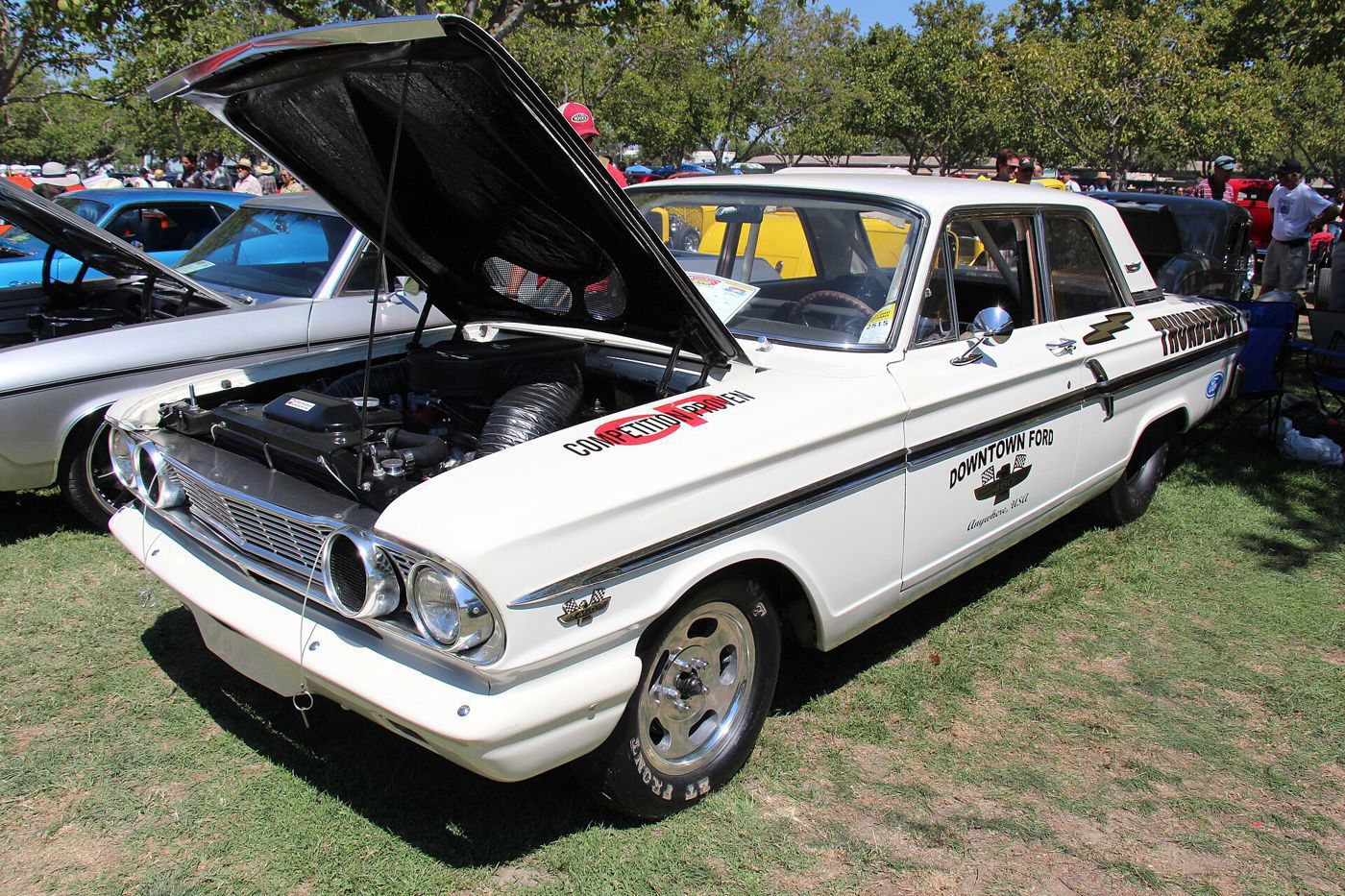
Gas Ronda’s Thunderbolt supplies the Ford opening. NHRA describes Ford placing a 427 into a midsize Fairlane and giving Ronda one of the early lightweight cars. He won the 1964 Hot Rod Magazine Championships and the NHRA Top Stock points championship, while another NHRA retrospective records his Winternationals victory over Butch Leal at 11.78 seconds and 123.40 mph. Those results attach to a class-directed race special, not to a Galaxie 500/XL or ordinary Fairlane.
Ronda also understood presentation. NHRA preserves the former dance instructor and dealership salesman’s insistence that his crew return in clean uniforms. The detail creates a scene without invented dialogue and connects racing to professional identity. Les Ritchey’s engine building and tuning belong beside Ronda’s driving because the car’s success was produced by a partnership and crew. A polished red Thunderbolt could be both competitive machine and highly legible Ford advertisement.
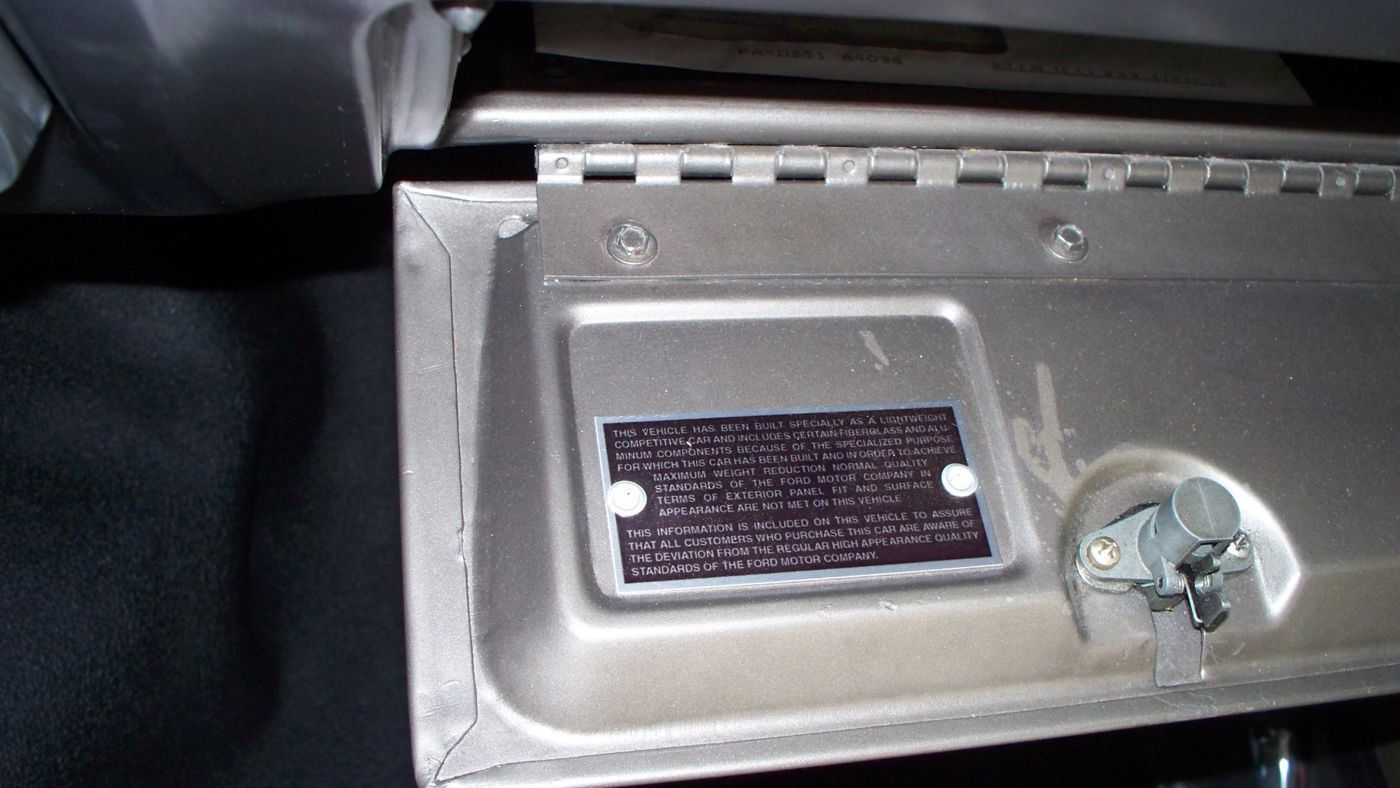
NHRA says more than one hundred Thunderbolts were built in the context of a class threshold. This release keeps that attributed wording rather than turning it into an exact ledger count. Ford invoices, builder records, recipients, and restrictions remain acquisition targets. The limitation does not prevent a strong racing page. It prevents a sanctioning-body summary from becoming a factory production database it was never meant to be.
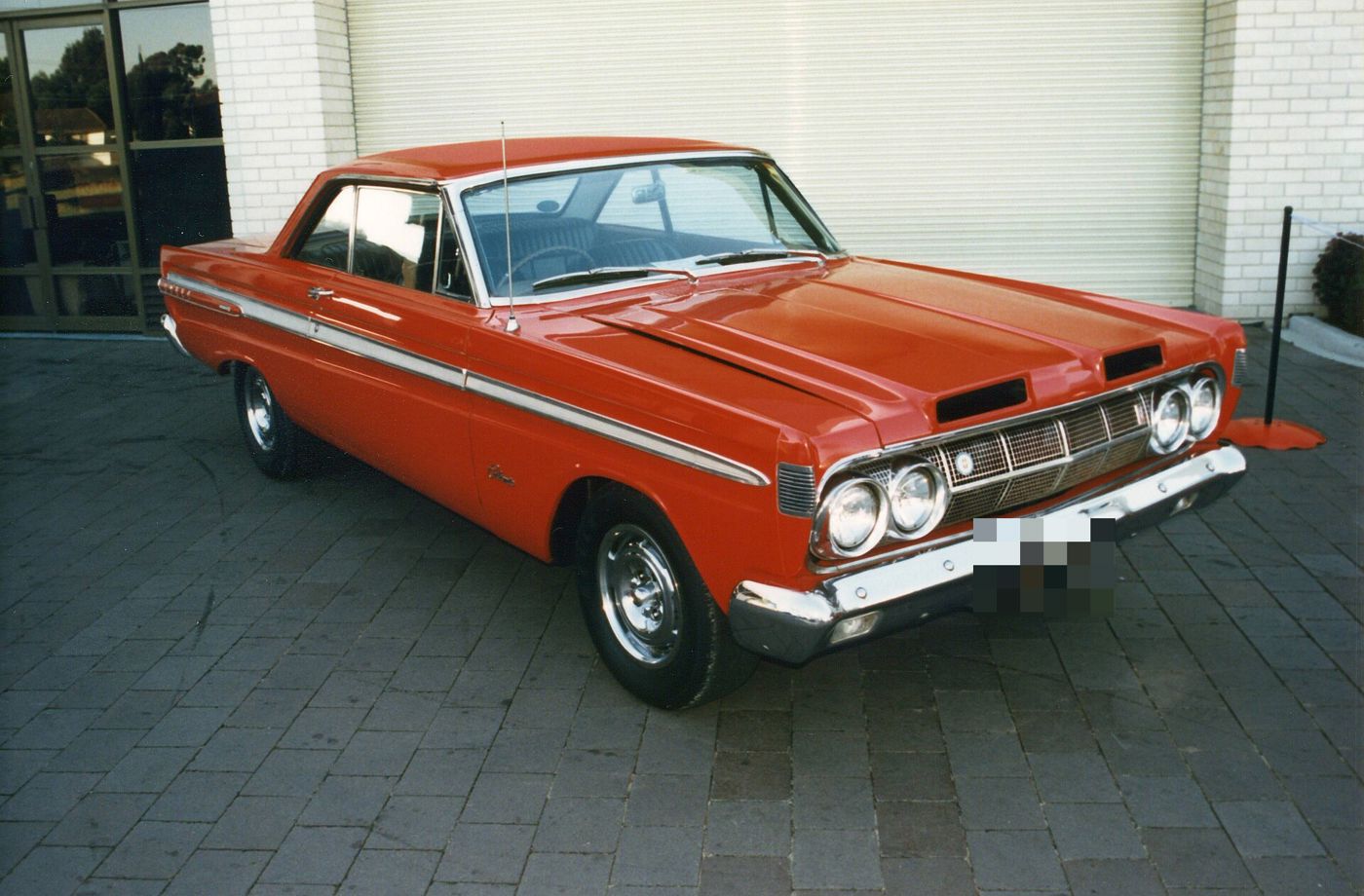
Mercury’s 1964 Comet pushed farther toward spectacle. NHRA says Jack Chrisman brought a supercharged Sachs & Sons Comet to the Nationals, recorded 10.25 seconds at 156.31 mph, ran in B/Fuel Dragster, and lost in eliminations. The organization says the car is considered by many to be the original Funny Car while also discussing earlier Dodge exhibition cars. “Considered by many” remains in the fact. Category origins are disputes, not trophies awarded retroactively by this site.
The Henry Ford’s Motorsports Records collection points toward the next layer of Mercury evidence. Its finding record lists Lincoln-Mercury Public Affairs correspondence, releases, photographs, proofs, and negatives covering racing and performance testing. A finding aid proves the archive exists and can be researched; it does not reveal the contents of a specific uninspected folder. The Comet story publishes NHRA’s bounded account and queues the collection for item-level work.
Chrysler’s A864 package cars created a different factory route. Stellantis describes off-road, non-street Dodge 330/440 and Plymouth Savoy/Belvedere packages with aluminum front panels, lightweight seating, rear-seat deletion, trunk-mounted battery, and deleted radio and heater. These were not Sport Fury or Polara 500 options with an exotic engine selected. Their bodies, equipment, and intended use were constructed around drag racing, so the race-special comparison gives them their own identity.
At the 1964 Nationals, Roger Lindamood’s “Color Me Gone” Dodge defeated the Ramchargers in an all-Dodge Top Stock final. NHRA confirms Lindamood’s victory, while Dodge’s history supplies the program context. The Ramchargers were learning how the new Hemi and altered weight distribution delivered power, and corporate retrospectives credit Gary Congdon with a carburetor recommendation. Exact event sheets and period engineering records remain priorities, but the central result and named participants are supported.
Tom Hoover can be identified as the engineering leader in Stellantis’s later account, not yet as the subject of a complete People page. A direct oral history, personnel file, SAE paper, patent record, or archived interview is still needed. That standard prevents a corporate retrospective from becoming an all-purpose biography. It also leaves room for Congdon, Ramchargers members, builders, mechanics, and drivers whose contributions disappear when one famous engineering name absorbs the program.
NASCAR made the Hemi story visible on a much larger stage. Its record says Richard Petty led all but sixteen laps as Plymouth finished one-two-three in the Daytona 500, then won his first season championship. Stellantis publishes more exact speed and margin details, but this page waits for the official period report before treating those as independent race data. NASCAR’s central result is sufficient to show a decisive public victory.
The human scene comes from Maurice Petty and Dale Inman. Richard remembered Maurice building engines one at a time without a dynamometer. Inman called Maurice instrumental in development and recalled that he also changed tires rather than occupying a narrow modern specialty. Richard’s driving, Maurice’s engines, Inman’s crew work, factory hardware, and the family organization meet in the result. The race cannot be reduced to “the Hemi won” without losing the people who made it function.
These programs belong together because they reveal different meanings of factory performance. Thunderbolt targeted a drag class with lightweight construction. Chrisman’s Comet blurred doorslammer and dragster categories. A864 cars were restricted non-street packages. Petty’s Plymouth operated in stock-car racing through a family team and factory hardware. Pontiac’s GTO, by contrast, reached broad street buyers and translated competition identity into the showroom. The distinction makes comparison richer than one horsepower ranking.
The 1964 factories raced in public, but not through one universal formula. Drivers, tuners, engineers, dealers, public-affairs teams, sanctioning bodies, and rules shaped machines with different routes from factory to track. Keeping those machines out of the street selector prevents a false contest and gives racing its own narrative space. The year’s lesson is not that one company kept racing while another stopped. It is that performance moved through several visible and semi-visible systems at once.