1964 · Plymouth · United States
1964 Plymouth Sport Fury: Street Commando, Race Hemi Kept Separate
A 383 or a street 426 Commando behind a Hurst shifter, from the division whose race Hemi swept Daytona the same season and belongs in an entirely separate record.
United States · researched through July 26, 2026
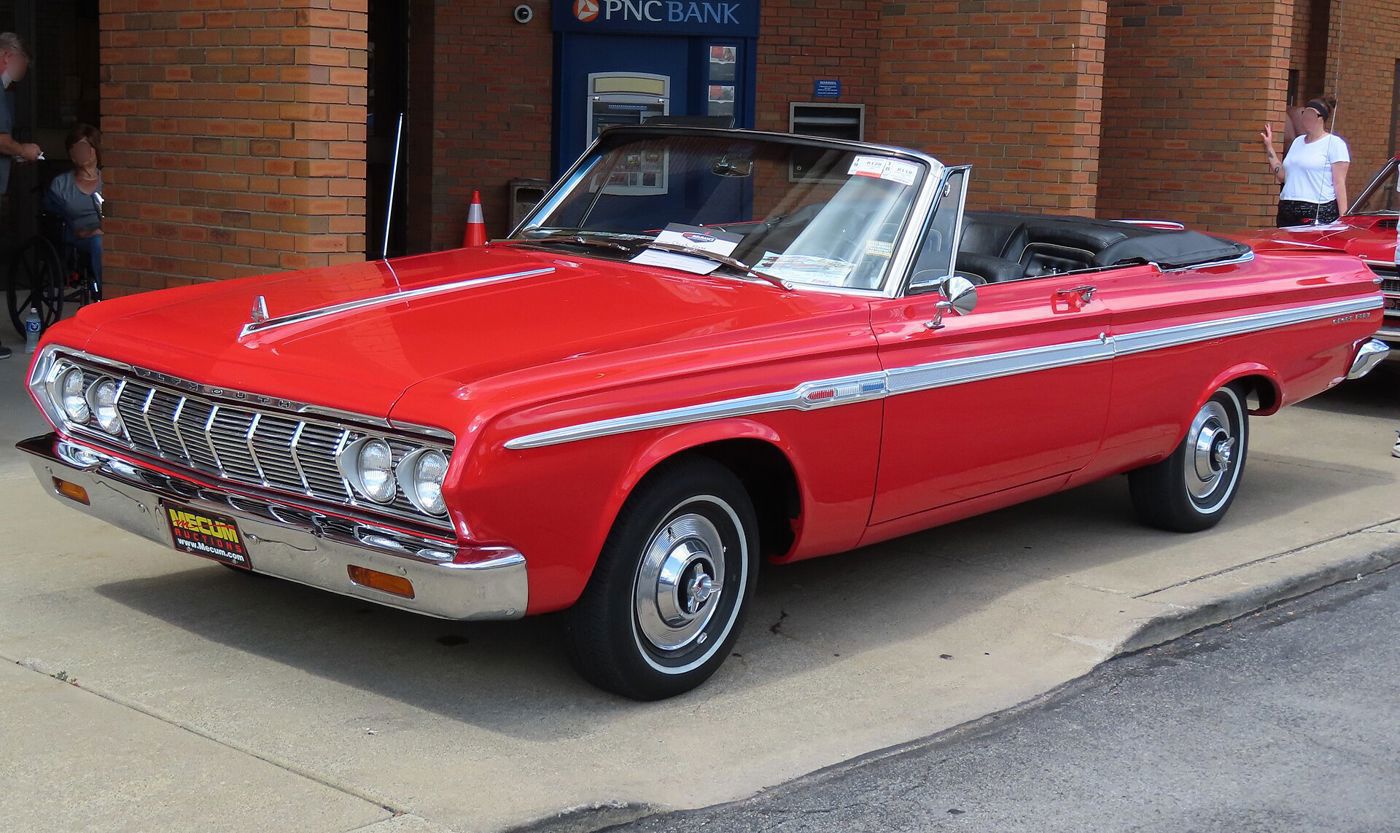
Power-team selector
Choose the exact Sport Fury
Plymouth’s 1964 brochure gave Sport Fury buyers two strong street choices without asking a race shop to complete the car. The two-door hardtop could be ordered with a 383 Commando or a larger 426 Commando and a Hurst-shifted four-speed. That combination of recognizable premium body, factory engine choice, and manual transmission belongs in the street selector. It also creates an essential boundary: the 426 Commando described for street use is not the lightweight 426 Race Hemi package that appeared in competition bodies.
The 383 displaced 383 cubic inches through a 4.25-inch bore and 3.38-inch stroke. Plymouth advertised 10.0:1 compression, 330 horsepower at 4,600 rpm, and 425 lb-ft at 2,400 rpm. The selected configuration pairs it with the optional four-speed manual in a Sport Fury hardtop. Those are period manufacturer figures and remain labeled as advertised. No modern conversion or period road-test result is used to change the configuration’s rating.
The 426 Commando kept the 4.25-inch bore and lengthened stroke to 3.75 inches. With 10.3:1 compression, Plymouth advertised 365 horsepower at 4,800 rpm and 470 lb-ft at 3,200 rpm. The same Hurst-shifted four-speed creates a clean within-family choice: 383 versus 426 without changing body or transmission type. That is the kind of comparison the site is designed to preserve, because the badge “Sport Fury” alone cannot tell a reader which power team is under discussion.
Plymouth described the 426 as competition-derived and modified for street use. That wording is meaningful advertising provenance, not proof that every part matched a racing engine. A manufacturer can borrow development experience, architecture, or prestige while changing compression, induction, durability, accessories, and calibration for customers. The page keeps Plymouth’s claim attributed and refuses to turn “derived” into “identical.” Exact component history requires engineering releases or parts documentation.
Body context matters too. The passenger-car brochure gives a 116-inch wheelbase, 206.5-inch overall length, and 75.6-inch width. This was a full-size performance car, closer in packaging to Dodge Polara and Ford Galaxie than to Pontiac’s intermediate GTO. The selector exposes those dimensions rather than presenting horsepower as the only axis. A larger body can offer space, presence, and stability while imposing different weight and gearing questions that cannot be answered by engine output alone.
Sport Fury trim also made performance part of a premium street identity. The hardtop was not a rear-seat-delete package or an off-road shell delivered for class preparation. Its customer proposition included style and ordinary use alongside engine choice. That distinction explains why the same corporation could build radically lighter competition cars without making them higher-output Sport Fury configurations.
The street car’s most famous 1964 racing association comes through a different Plymouth. NASCAR records Richard Petty leading all but sixteen laps in a Plymouth one-two-three sweep of the Daytona 500 and winning his first season championship. NASCAR’s Maurice Petty history adds the human workshop: Richard remembered Maurice building engines individually without a dynamometer, while Dale Inman described Maurice’s development and broader crew work. Those results animate Plymouth’s performance culture but do not become Sport Fury road-test data.
The A864 drag package requires an even firmer division. Stellantis describes it as an off-road, non-street package for Dodge 330/440 and Plymouth Savoy/Belvedere bodies. Aluminum panels, lightweight seats, rear-seat deletion, a trunk-mounted battery, and removal of radio and heater served a competition purpose. NHRA documents Roger Lindamood’s Top Stock victory in a Dodge. These cars can be compared with Ford Thunderbolts in a factory-special branch; they are not alternative Sport Fury trims.
Without that boundary, a 1964 Plymouth comparison would become a composite that never existed: Sport Fury comfort and identity, Race Hemi specifications, lightweight panels, and Petty race results combined under one model name. Separating street, drag, and NASCAR records produces more pages, but each page becomes true to an actual role. It also protects owners from captions and tables that imply a production body carried equipment proven only on a competition special.
The Sport Fury’s street story remains strong on its own. Both configurations have source-backed displacement, bore and stroke, compression, advertised horsepower and torque, and transmission availability. Exact equipped-car weights and matched period performance tests are not yet attached. Rather than borrow a generic shipping weight or a magazine result from another body, the comparison leaves those fields open. Future evidence can enter without displacing the factory record.
The same-family selector also prevents a simplistic hierarchy. The 426 offered more advertised output and torque, but price, availability, fuel requirements, gearing, and intended use influenced a buyer’s decision. A 383 four-speed was not merely a failed attempt to order the larger engine. It was a distinct factory configuration. Narrative history becomes better when ordinary choices receive identities rather than disappearing beneath the rarest and most powerful option.
Authentication remains vehicle-specific. A restored Sport Fury may carry correct-looking Commando hardware and a Hurst shifter, but period sales literature cannot certify its assembly-line state. A future featured survivor needs serial and body records, drivetrain evidence, provenance, and inspection. The page establishes the offering and the source boundary, which is more useful to an owner than an appearance-based verdict.
Plymouth’s place in 1964 consequently spans public racing and customer performance without confusing them. Petty’s team and the race-special programs demonstrated what factory hardware and professional preparation could do in competition. The Sport Fury brochure translated part of that atmosphere into a large street car with two serious Commando choices. The link between them is cultural and engineering context, not shared performance numbers.
The result is a full-size muscle ancestor that can stand beside Galaxie and Polara while remaining comparable to GTO and Chevelle when a reader deliberately crosses size classes. Its evidence is clear enough to support two selectable street configurations and rich enough to lead into racing stories. The discipline is equally clear: Commando is not Race Hemi, advertisement is not build authentication, and NASCAR victory is not a customer-car acceleration test.
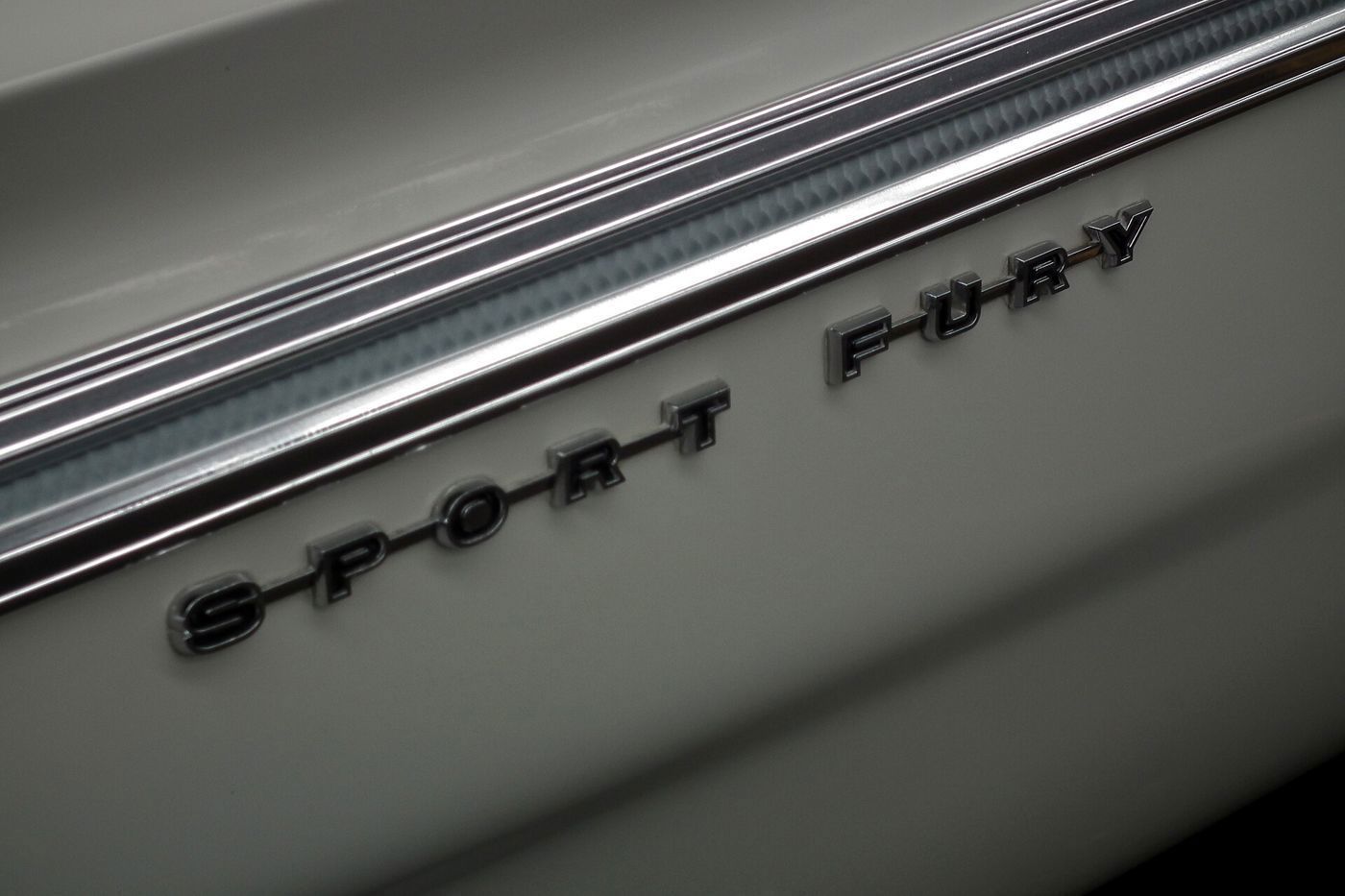
Same model year
Also in 1964
- Buick Riviera The 425 became standard, the dual-quad Super Wildcat 360 arrived as an option, and the Super Turbine 400 replaced the twin-turbine automatic.
- Buick Wildcat The best Wildcat year at 84,245, with a 425 in 340- or 360-hp form and an available four-speed.
- Chevrolet Chevelle and Malibu SS The first Chevelle; the Malibu SS was a series, and its strongest released engine was the midyear 300 hp L74 327.
- Chevrolet Chevy II and Nova First V8 (283) year in the source engine table. Enthusiast-compiled production: 191,691 cars; Super Sport 10,576.
- Chevrolet El Camino SS No factory Super Sport El Camino is documented for this year; the record carries the host El Camino production as context.
- Chevrolet Impala SS Super Sport becomes its own series: 185,325 built.
- Chrysler 300 letter series Cheaper by about $1,000, with a single-four-barrel 360 hp 413 standard, leather made optional and the convertible restored, the 300K became the best-selling letter car: 3,022 hardtops and 625 convertibles.
- Dodge Dart 330/440, Polara and Max Wedge The Max Wedge's last year brought the Ramcharger 426-III, a 365 hp street 426 for Polara buyers, and in midyear a competition-only 426 Hemi in lightened 330/440 bodies; Roger Lindamood's Dodge won Top Stock at the Nationals.
- Ford Fairlane The year of the Thunderbolt: a midsize Fairlane with a 427 installed for NHRA Super Stock, which carried Gas Ronda to the national Stock title.
- Ford Falcon Sprint The restyled Falcon kept the Sprint hardtop and convertible with the 164 hp 260 V8 standard; the club counts 18,108 built, many with a bench seat.
- Ford Galaxie Ford sold its 427 in the restyled full-size range in two advertised versions, 410 hp with one four-barrel and 425 hp with two, and the Galaxie 500 XL hardtop was the bucket-seat flagship.
- Ford Thunderbird The redesigned fourth-generation car offered one drivetrain, a 300-hp 390 with Cruise-O-Matic, and output rose to 92,465.
- Mercury Comet and Cyclone The Cyclone name first appeared on a 1964 Comet hardtop; the only production figure found is a single secondary total.
- Mercury Marauder and S-55 Marauder now meant the fastback roof on any full-size Mercury series, two-door or four-door, with the 390 standard and the 427 optional.
- Oldsmobile Cutlass, 4-4-2 and Hurst/Olds Oldsmobile's first 4-4-2 was a mid-year option package, B09 Police Apprehender Pursuit, with a 310 hp 330, a four-speed and dual exhausts; 2,999 are tabulated.
- Oldsmobile Starfire Production fell to 16,163 as the cheaper Jetstar I took the same body; Motor Trend timed a convertible at 9.7 s to 60.
- Plymouth Barracuda and 'Cuda Plymouth's glassback Valiant-based fastback launched in a short first season and sold 23,443 cars.
- Plymouth Savoy, Fury and Max Wedge Plymouth's last Max Wedge year offered the Super Stock 426-III beside a 365 hp street 426 Commando, while a competition-only 426 Hemi went into lightened Savoy/Belvedere drag cars and swept the Daytona 500.
- Pontiac Catalina 2+2 and Super Duty The 2+2 arrived as a $291 Catalina option and the 370 hp 421 HO replaced the Super Duty at the top.
- Pontiac GTO A $295 option on the Tempest LeMans that put Pontiac's 389 in the intermediate body; 32,450 were built.
- Pontiac Grand Prix A carryover year: 63,810 built, with the 370 hp 421 HO at the top of the option list.
- Pontiac Tempest and LeMans The Tempest becomes a 115-inch intermediate with a 326 V8, and the LeMans carries the new GTO option.
- Studebaker Avanti The last Studebaker Avanti, cut short when South Bend stopped building cars on 20 December 1963. It got rectangular headlamp bezels and a level stance, and 809 were built, including the nine production R3s.
- Studebaker Hawk The final Hawk, with a new deck lid and an optional vinyl 'Sports Roof', ended when South Bend closed on 20 December 1963. 1,767 were built, 1,484 of them domestic.
- Studebaker Lark and Super Lark Brooks Stevens restyled the Lark-type line and the Daytona became its top series. Of the V8 Daytonas, 111 got the R1 and 48 the supercharged R2, and one got the only production R4, before South Bend closed in December 1963.