Stories · 1969 · cross-marque
1969 Hurst Collaborations: A Supplier with a Showroom Voice
Hurst put its name on an Oldsmobile, an AMC, and a shifter in almost everything else — three different kinds of collaboration that get told as one.
Story reviewed July 27, 2026
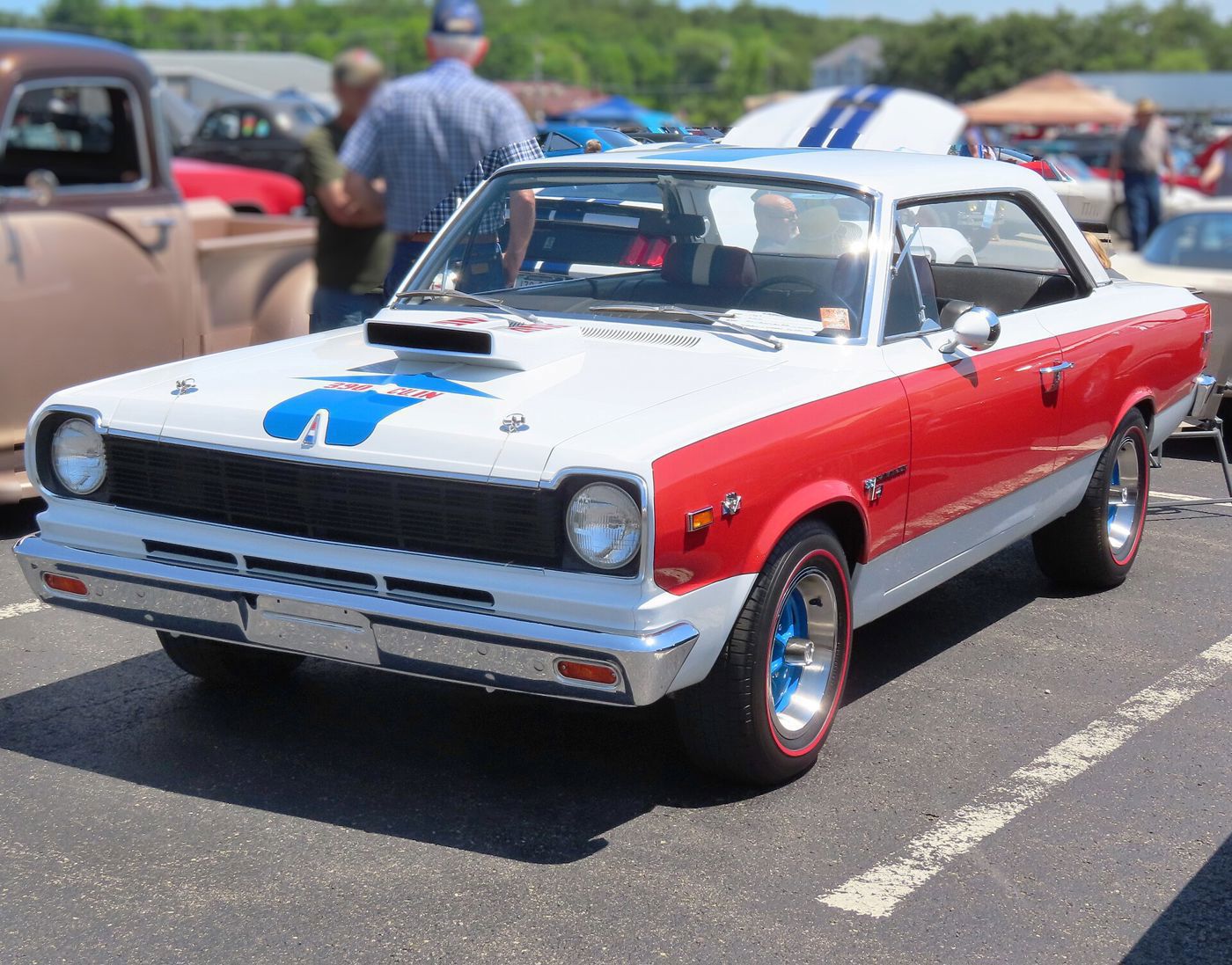
Hurst appears across 1969 brochures as a name on shifters, but two cars made the supplier part of the vehicle’s public identity. AMC’s SC/Rambler foldout says American Motors engineering worked with Hurst Performance Research to put a 390 into a compact Rambler. The Hurst/Olds brochure calls its car a limited-production custom special from Oldsmobile and Hurst, built around a modified 4-4-2 Holiday Coupe. They are tempting to file together as tuner cars. The primary literature instead shows two manufacturer-and-supplier collaborations with different bodies, transmissions, customers, warranties, and ideas about competition.
The SC/Rambler began with AMC’s 390-cubic-inch V8, a Carter AFB four-barrel, 10.2:1 compression, and factory-advertised output of 315 horsepower at 4,600 rpm and 425 lb-ft at 3,200. The foldout lists a 4.17-inch bore and 3.57-inch stroke. A close-ratio four-speed uses 2.33, 1.77, 1.35, and direct top gear. At an official shipping or license weight of 3,160 pounds, AMC calculated 10.03 pounds per horsepower. Each label remains attached because shipping weight and a manufacturer’s calculated ratio are not independent curb-scale measurements.
AMC connected the car directly to NHRA F/Stock under the 1969 rules. It also advertised that a stock SC/Rambler could cover the quarter mile in “little more than 14 seconds.” That sentence reveals the pitch but not a neutral test. The brochure does not supply an independent publication, sampling method, weather record, or full run sheet. The claim stays attributed to AMC and Hurst. A future measured comparison needs a period road test with the actual car, preparation, driver, timing method, and conditions.
The SC/Rambler’s conspicuous paint and compact body made the collaboration visible before anyone saw the specification panel. Yet appearance is fragile evidence. Its red, white, and blue schemes can be reproduced, and restoration details may mix early and later parts. Authentication requires the specific car’s factory and shipping records, not a hood scoop and decals. The publication’s media queue follows the same rule: a photograph needs year, scheme, restoration review, creator, rights holder, and license before it can illustrate an exact configuration.
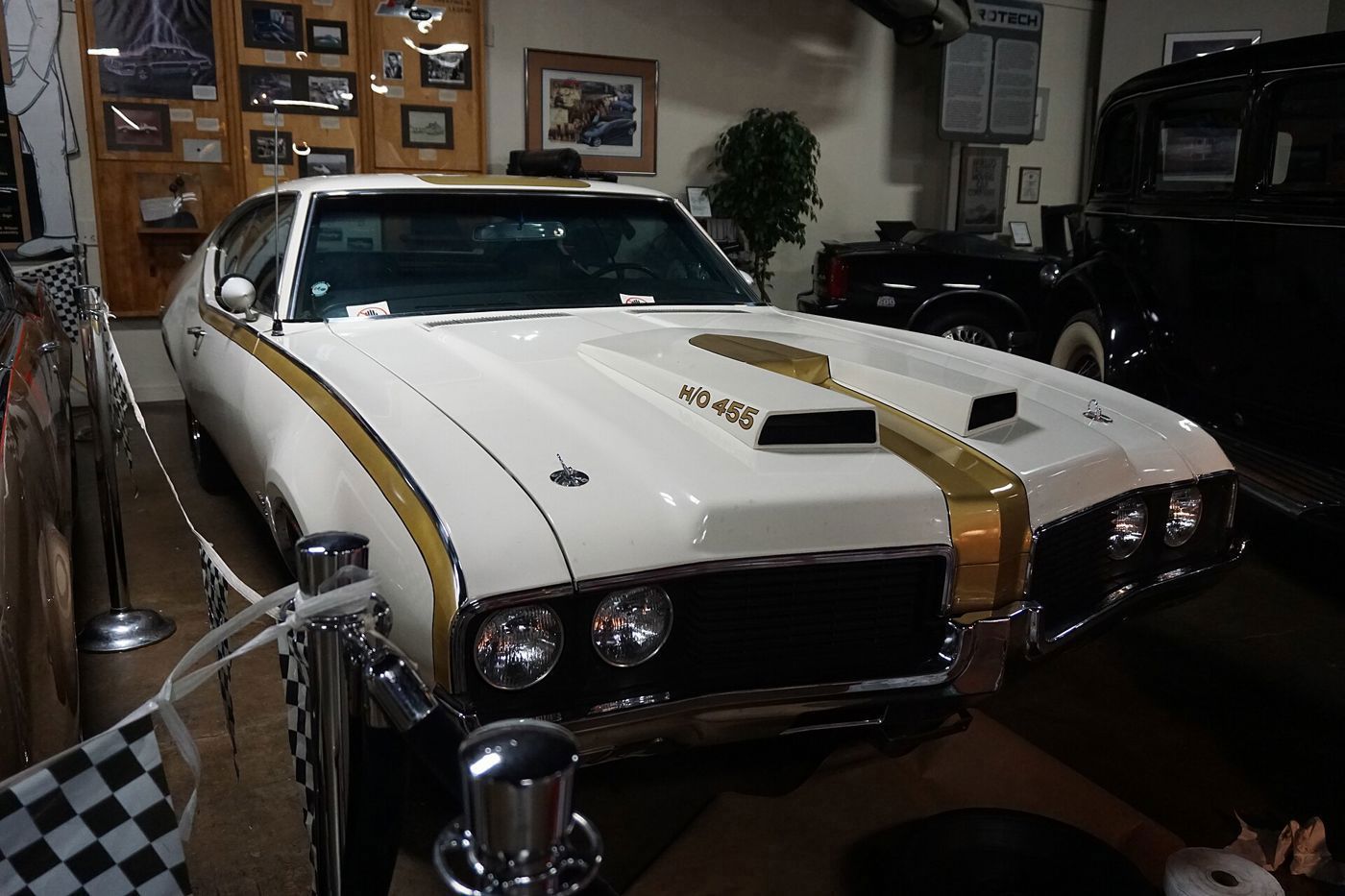
The Hurst/Olds started from a different platform and philosophy. Its brochure identifies a modified 4-4-2 Holiday Coupe with an Oldsmobile 455, Rochester 4MV four-barrel, special cold-air induction, hood scoop, and published 380 horsepower at 5,000 rpm. Torque was 500 lb-ft at 3,200, compression 10.5:1. A modified three-speed Turbo Hydra-Matic and Hurst Dual/Gate replaced the SC/Rambler’s manual-only persona. The standard limited-slip axle was 3.42, with 3.91 optional and 3.23 listed when air conditioning entered the combination.
The brochure gives the Hurst/Olds a 3,716-pound weight, which remains a brochure-defined value rather than being compared carelessly with the Rambler’s official shipping/license figure. Its 455 also does not become an ordinary 4-4-2 engine choice. Oldsmobile’s normal 4-4-2 used a 400 rated at 350 horsepower, while W-30 added Force-Air hardware and a 360-horsepower rating. The Hurst/Olds is a collaboration based on a modified 4-4-2, not another W-30 trim or an engine toggle on the standard selector.
Hurst’s role must be described component by component when sources allow it. A visible Dual/Gate, named development partnership, supplied shifter, or special assembly relationship does not mean Hurst engineered every part. The SC/Rambler brochure distinguishes AMC warranty coverage from Hurst guarantees, evidence that responsibility had boundaries. The Oldsmobile brochure similarly credits both organizations without granting license to assign every decision to one famous individual. A full George Hurst biography awaits an institutional archive or oral history.
That caution changes how dealer and supplier cars are classified across the site. A normal factory car equipped with a Hurst shifter remains a factory configuration. A supplier collaboration makes the supplier part of a defined package. A dealer conversion begins with a factory-built car and adds documented dealer work. A central-office special follows yet another factory route. Calling all of them “tuner cars” hides warranty, assembly, authentication, and the economic relationship that made each program possible.
Production totals remain held for both collaborations until manufacturer or supplier shipping records define the population. A registry may count known survivors; a club may reconcile VINs; a later article may repeat a number. Those sources can guide acquisition but do not replace the ledger. The same applies to “one of N” claims for a restored car. The denominator must have a stated year, model, body, engine, transmission, market, and method before rarity becomes a publication fact.
Placed side by side, the SC/Rambler and Hurst/Olds show how much room existed between a standard factory option and an independent custom. AMC and Hurst built a compact, four-speed, class-conscious statement; Oldsmobile and Hurst built a larger automatic special around 455 torque and a dual-path shifter. Hurst gave both a showroom voice without making them the same story. Preserving the partnership, warranty boundaries, promotional claims, and unknown totals makes the comparison more interesting than a badge count—and much harder for a replica to impersonate.
The ordinary AMC and Oldsmobile configurations remain useful controls. Javelin SST and AMX cards show the 343 and 390 with four-speeds in factory series production. Standard 4-4-2 and W-30 cards show Oldsmobile’s 400, three-speed and close-ratio four-speed paths. Putting those records beside—but not inside—the collaboration story reveals exactly what changed when Hurst’s name became part of the car rather than only a component inside it.
Future evidence can deepen the human story without fictionalizing it. Supplier correspondence, engineering releases, warranty agreements, shipping ledgers, and oral histories could identify who proposed each combination and how work moved between the organizations. Until then, the brochures support the partnerships, equipment, and public claims, not private conversations. The narrative stays scene-like through the artifacts themselves: two loud foldouts, two very different cars, and one supplier speaking directly from the showroom.
That is enough for a full first chapter, and it states plainly what the archive must answer next.