Stories · 2015 · cross-marque
Hellcat Arrives with Two Keys
Two keys, two power levels, one supercharged Hemi — a factory deciding how much of a car a driver gets to use.
Story reviewed July 27, 2026
The red key and black key turned engine access into a physical object an owner could hold. Dodge used the two-key device to frame the arrival of 707 advertised horsepower: one key enabled the full performance calibration, while the other constrained access. The story begins there because the keys made an abstract output claim into a daily decision about who could command it.
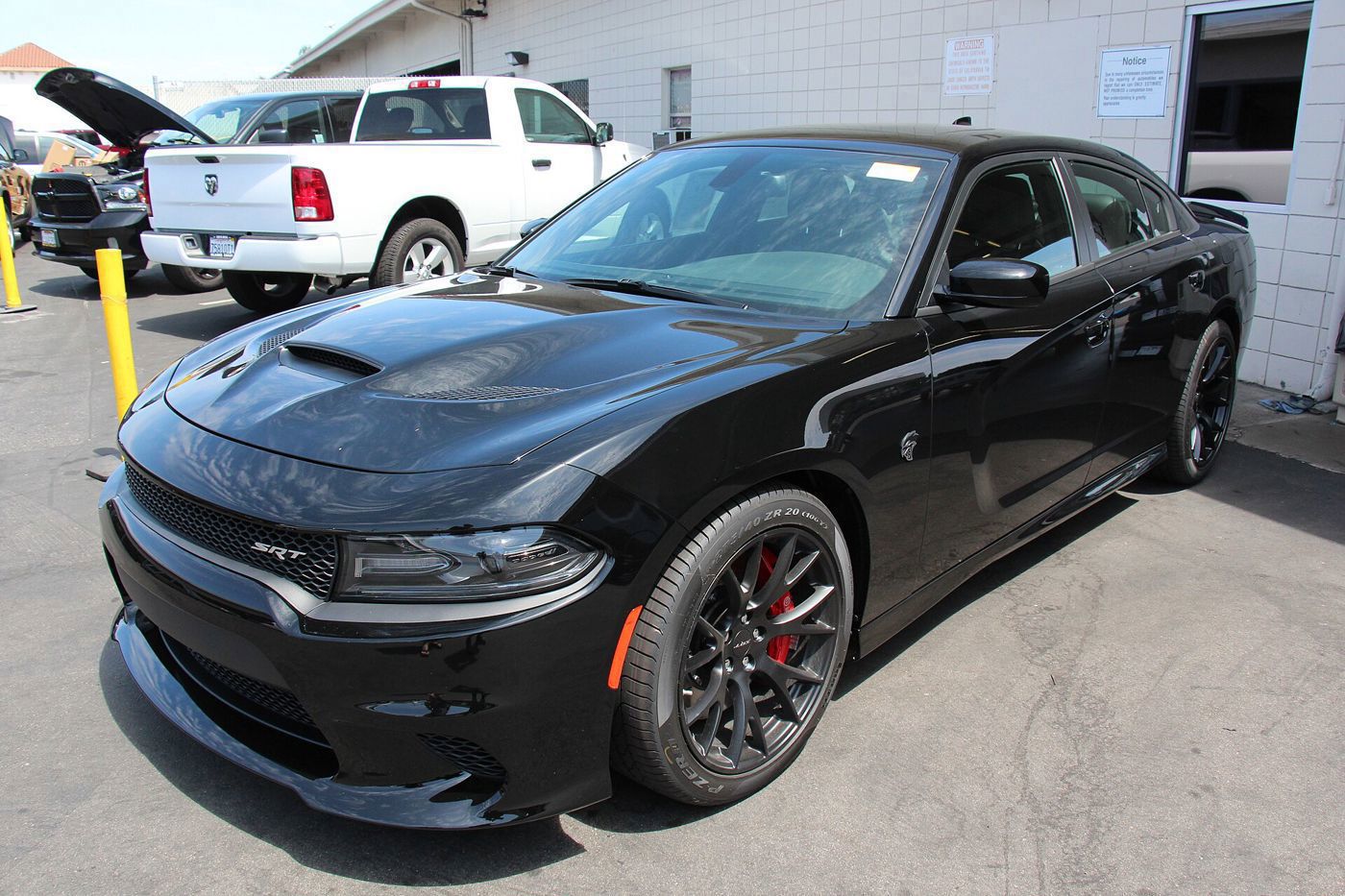
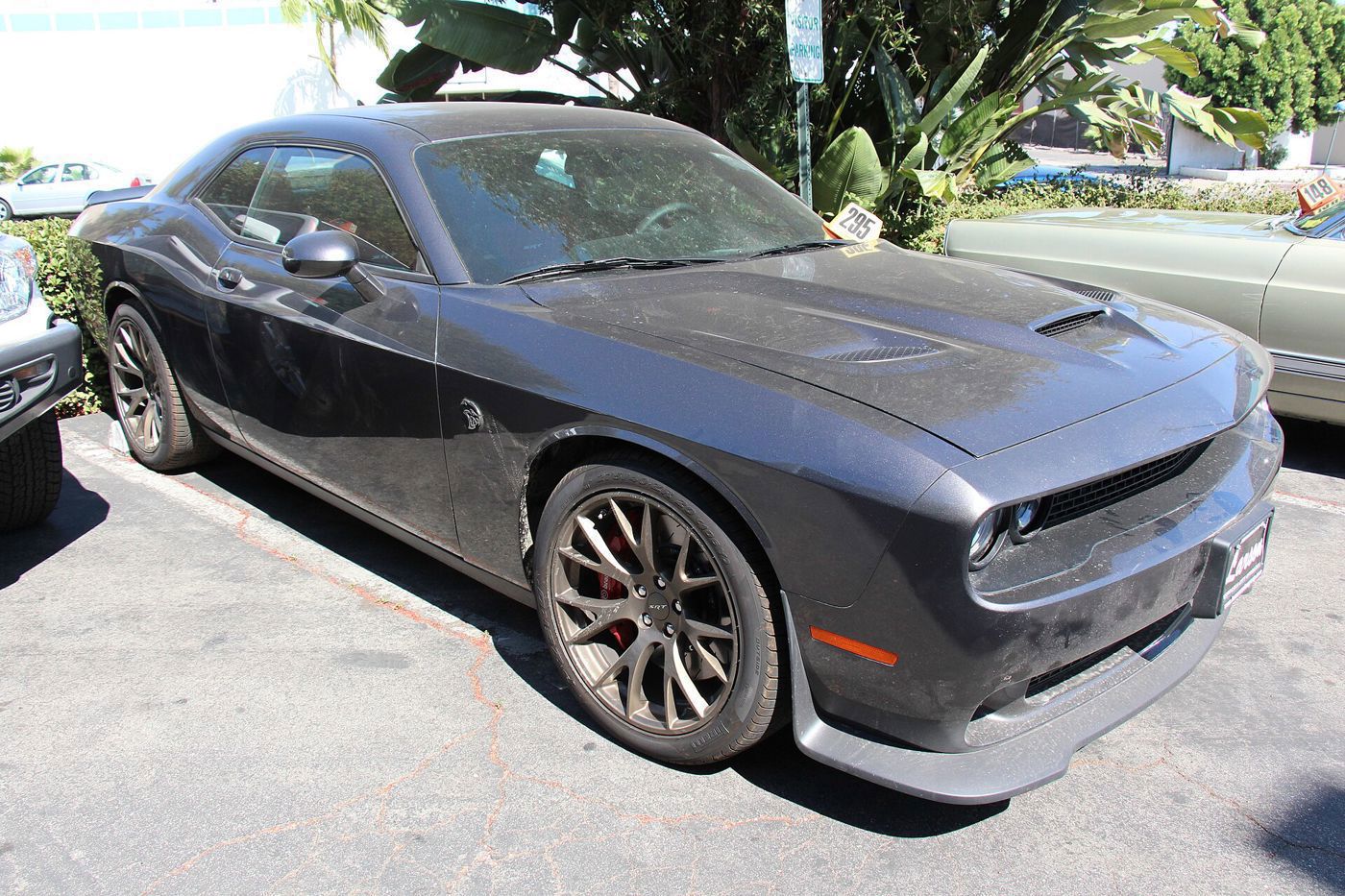
Hellcat did not create one interchangeable car. Challenger offered the supercharged 6.2-liter V-8 with a six-speed manual or eight-speed automatic. Charger offered it only through the eight-speed automatic in the supported 2015 matrix. Both were rated at 707 horsepower and 650 pound-feet, yet Challenger placed torque peak at 4,000 rpm while Charger’s guide placed it at 4,800.
Those torque locators remain attached to their factory artifacts. The site does not standardize Charger to Challenger because the engine family and headline numbers match. It also does not call one sheet wrong without a dated revision or engineering explanation. A shared supercharged HEMI identity can coexist with configuration-specific observations.
Transmission and axle make the Challenger choices more distinct. Manual Hellcat uses a six-speed and 3.70 axle; automatic Hellcat uses an eight-speed and 2.62. Charger Hellcat uses the eight-speed and 2.62. The selector lets readers choose the exact car rather than ranking “Hellcat” as if it were a complete drivetrain.
The black key requires careful wording from Dodge documentation. It can be described with the limited output or operating behavior the factory explicitly states, but it is not a second engine rating for leaderboard use. Key-selected modes are operating states of a configuration. A dyno run with one key, fuel, temperature, and software state must retain those conditions.
The 707 figure also changed the showroom scale around it. Mustang GT offered 435 horsepower; GT350 offered 526. Camaro ZL1 offered 580, while Z/28 pursued another track argument with 505. CTS-V Coupe carried 556. Hellcat’s number was larger, but a universal ranking would hide seats, mass, body, transmission, axle, tires, braking, and purpose.
Below Hellcat, Challenger’s 2015 matrix was unusually broad. SXT used the V6 and eight-speed. R/T manual and automatic had different 5.7-liter ratings. Scat Pack and SRT 392 shared 485 horsepower and 475 pound-feet, yet their guides placed horsepower peak at 6,000 and 6,100 respectively. Trim and source stay visible instead of being collapsed around displacement.
Charger offered its own hierarchy: R/T, Road/Track, Scat Pack, SRT 392, and Hellcat, all through the eight-speed in these supported rows. Road/Track’s 3.07 axle distinguishes its package identity from ordinary R/T’s 2.62. Scat Pack and SRT 392 share output and axle but remain different factory package/trim propositions.
The 2015 U.S. Chrysler 300 matrix creates an important absence. It lists Limited, 300S, 300C, and 300C Platinum with 3.6- and 5.7-liter engines but no SRT/6.4 configuration. Export-market 300 SRT evidence does not contradict that U.S. finding. The comparison publishes no 300 row rather than importing another market’s car.
The people behind Hellcat should enter by documented role. Powertrain engineers, calibration teams, SRT chassis engineers, designers, Brampton assembly workers, suppliers, test drivers, program leaders, and dealers all contributed. A reveal quote from an executive can frame intent without making that executive the sole author. Role-specific releases and oral histories remain an acquisition priority.
Claims that the car was quickest, fastest, or most powerful need their comparison class and factory source. Dodge’s reveal language can be reported as a manufacturer claim with its date and definition. NHRA results, independent tests, and owner measurements stay separate. None rewrites the advertised engine rating, and no launch claim becomes a timeless universal fact.
The two keys also raise a subtle comparison question: which state should a displayed specification represent? The configuration row uses Dodge’s full advertised factory output because that is the published capability of the delivered car. The narrative explains controlled access. It does not average key modes or treat the black key as evidence that the car had a different engine.
Images of keys, engine, Challenger, or Charger require separate depiction and rights review. A key photograph may include trademarks and a photographer’s copyright; a reveal photo may be restricted by Stellantis media terms. Candidate derivatives remain outside Git, with exact trim, transmission where visible, creator, holder, license, crop, credit, and commercial use recorded.
The story can link forward to later Hellcat derivatives and backward to earlier supercharged specialty cars only when exact routes exist. Those links should answer a technical or historical question, not become family navigation. Viper remains sports-car coverage and Grand Cherokee SRT remains an SUV, even though corporate performance stories intersect.
Hellcat changed the scale because 707 horsepower arrived in two distinct street configurations and one related sedan, controlled through a memorable pair of keys. The evidence-led version is more interesting than a single number: torque peaks disagree by body artifact, gearboxes and axles diverge, and neighboring 6.4-liter trims preserve their own rpm. The red key opens a story about exact choices, not permission to flatten them.
Fuel, cooling, and operating conditions remain part of later research. The advertised rating is a factory observation under its stated standard, while sustained track use, heat protection, and reduced-power states are separate behavior. An owner’s warning message or modified calibration cannot establish what every delivered car did. Technical manuals and engineering releases must control those descriptions.
Production and allocation claims are held until final corporate accounting. Dealer markups, waiting lists, auction copy, and survivor registries can illuminate reception when attributed, but they cannot prove exact totals or rarity. The two-key artifact was delivered broadly enough to become a cultural symbol; that fact does not turn every anecdote into program evidence.
The comparison remains arbitrary by design. A user may place manual Challenger Hellcat beside manual Chevrolet SS, automatic Charger Hellcat beside Taurus SHO, or the 2015 car beside an earlier Hemi Challenger. The interface keeps rating basis and configuration visible so a dramatic difference does not become a claim that engineering standards or purposes were identical.