1988 · Pontiac · United States
1988 Pontiac Grand Prix: The Front-Drive W-Body Arrives
A front-drive W-body coupe replaces the G-body.
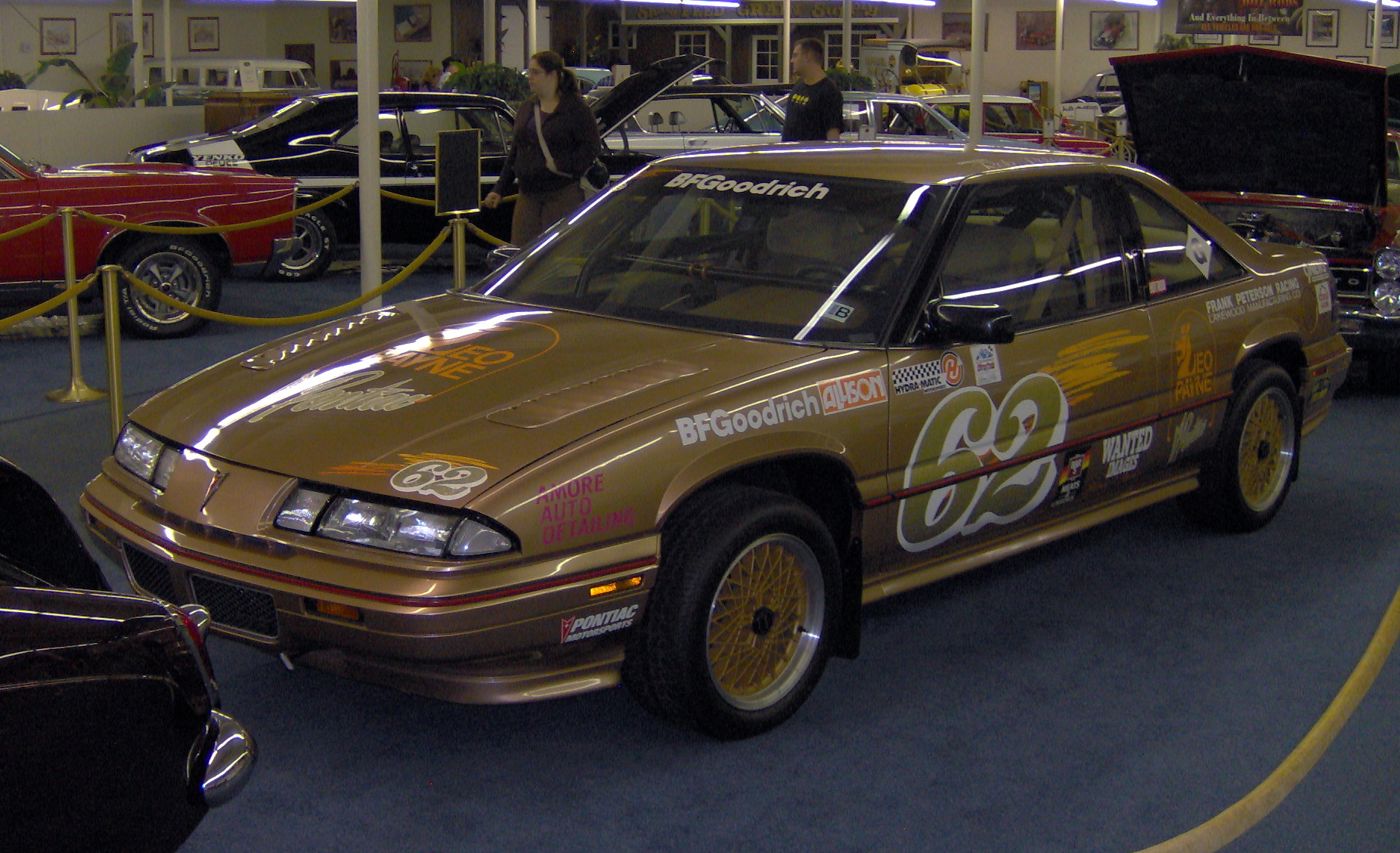

For 1988, the Grand Prix changed more than its shape: Pontiac moved the coupe from the rear-drive G-body to the front-drive W-body. The first catalog shows three versions, Base, LE and SE, and one engine, a fuel-injected 2.8-liter V6 rated at 130 horsepower and 160 lb-ft. Pontiac built 86,357 of the new coupes that year, all three versions combined. The new platform and smaller engine marked a clear break from the big, rear-drive Grand Prix that had ended with the 1987 model.1
That 86,357 is the production total for the whole Grand Prix series, with Base, LE and SE coupes counted together. In the showroom the three coupes were easy to tell apart. The Base had a Ripple cloth notchback bench with a folding armrest, the LE Pallex cloth 40/60 split reclining seats, and the SE articulating power bucket seats with a leather appointment group listed as standard.1,2
Pontiac's catalog placed the three trims at different price points: $12,539 for the Base, $13,239 for the LE and $15,249 for the SE. Each used the 2.8-liter V6, but buyers could pair it with either a four-speed automatic or a five-speed manual. The EPA listed both gearboxes separately, and the equipment is what set the three trims apart. The Base kept a straightforward bench-seat layout; the LE added features such as power windows, a tachometer and split reclining seats; the SE brought a sportier suspension and larger tires.3,1,4
The SE's equipment made the new coupe's sporting intent more visible. Pontiac listed Rally Tuned suspension, 15-inch aluminum wheels and Goodyear Eagle GT+4 tires, along with dual exhaust, fog lamps, cruise control and power bucket seats. The LE could be ordered with several of the same comfort and convenience items, including air conditioning, power locks and a deck-lid release. Option Group I bundled electronic air conditioning, a tilt wheel, a lamp group and a vanity mirror; Group II added cruise control and controlled-cycle wipers; Group III added power windows, power locks and a deck-lid release. A high-performance six-speaker sound system with power amplifier was limited to the LE and SE.1
The W-body coupe rode on a 107.6-inch wheelbase, with a 194.1-inch overall length, a listed weight of 3,038 pounds and a 16-gallon fuel tank. It also had four-wheel independent suspension and power disc brakes at all four corners. These details help explain the change in character: the 1988 car was a shorter, front-drive coupe with a transverse V6, quite different in layout from the traditional rear-drive models that came before it.
The first W-body coupes were built in October 1987 and reached their first buyers in January 1988. A later summary gives a different torque figure from Pontiac's catalog, which lists 160 lb-ft. The coupe was 71 inches wide and 53.3 inches high, with a 59.5-inch front and 58-inch rear track, a 15-cubic-foot trunk and a 15.7:1 steering ratio. Standard wheels were 14 by 6 inches on P195/75R14 all-season tires; the Y99 Rally Tuned suspension brought 15-inch wheels and a thicker 30-millimeter front stabilizer bar.
Fact sheet · 1988 · United States
The numbers
1988 Pontiac Grand Prix: A front-drive W-body coupe replaces the G-body.
Figures may describe different groups of cars. Add rows together only when the note says they make up a total.
Production
| What was counted | Built |
|---|---|
| Grand Prix total (Base/LE/SE Coupes)1,2 Base/LE/SE Coupes | 86,357 |
Prices when new
| Model | Price | Price type |
|---|---|---|
| Grand Prix (base)3 | $12,539 | factory price, 1988 model year |
| Grand Prix LE3 | $13,239 | factory price, 1988 model year |
| Grand Prix SE3 | $15,249 | factory price, 1988 model year |
Prices are the nominal dollars of the day, not adjusted for inflation.
Engines
| Engine | Factory rating | Availability |
|---|---|---|
| 2.8L V61 2.8 L | 130 hp, 160 lb-ft (SAE net (per source's note that post-1972 ratings are net)) |
Ratings are published figures, not dyno results. Gross and net ratings aren't directly comparable.
Transmissions
| Transmission | Availability |
|---|---|
| 4-speed automatic4 | EPA-listed configuration with the 2.8 L V6 (fueleconomy.gov vehicle record 4613) |
| 5-speed manual4 | EPA-listed configuration with the 2.8 L V6 (fueleconomy.gov vehicle record 4614) |
Options and packages
| Option |
|---|
| Option Group I (Grand Prix coupe): electronic air conditioning, tilt steering wheel, lamp group, right-hand visor vanity mirror |
| Option Group II (Grand Prix coupe): Group I contents plus cruise control and controlled-cycle wipers |
| Option Group III (Grand Prix coupe): Group II contents plus power windows with illuminated switches, power door locks with illuminated switches and deck lid release |
| Electric rear window defogger |
| Front and rear carpeted floor mats |
| Mechanical analog gauges with tachometer and trip odometer |
| Lower accent two-tone paint |
| Delco ETR AM/FM stereo radio (UM6) |
| Delco ETR AM stereo/FM stereo radio (UX1) |
| Power antenna |
| Power door locks |
| Power windows |
| 40/60 split seat with folding armrest |
| Reclining bucket seats with console |
| P195/70R15 Goodyear Eagle GT+4 tires (requires 15-inch wheels) |
| P215/65R15 Goodyear Eagle GT+4 tires (includes the Y99 Rally Tuned suspension) |
| 5-speed manual transmission (marked available on the Grand Prix; the SE lists it as standard) |
| Styled steel Sport 15-inch wheels |
| Aluminum 15-inch wheels with locking package |
| High-performance six-speaker sound system with power amplifier (LE and SE only) |
Interiors
| Trim |
|---|
| Ripple cloth notchback bench seat with folding armrest, standard on the Grand Prix coupe |
| Pallex cloth 40/60 split reclining seats, standard on the LE |
| Articulating power bucket seats, standard on the SE; the chart also lists a leather appointment group as standard on the SE; no fabric or color is named on the pages read |
Specifications
| Measure | Value | Applies to |
|---|---|---|
| Engine output | 130 hp | 2.8 L V6, all Grand Prix models; catalog prints no rpm |
| Engine torque | 160 lb-ft | 2.8 L V6, all Grand Prix models; catalog prints no rpm |
| Wheelbase | 107.6 in | all Grand Prix models |
| Track, front/rear | 59.5/58.0 in | all Grand Prix models |
| Overall length | 194.1 in | all Grand Prix models |
| Overall width | 71 in | all Grand Prix models |
| Overall height | 53.3 in | all Grand Prix models |
| Curb weight | 3,038 lb | in Vital Specs; the catalog does not separate it by trim |
| Fuel tank capacity | 16 gal | all Grand Prix models |
| Trunk capacity | 15 cu ft | all Grand Prix models |
| Steering ratio | 15.7:1 | all Grand Prix models |
| Stabilizer bar diameter, front/rear | 28/12 standard; 30/12 with the Y99 Rally Tuned suspension mm | all Grand Prix models |
| Wheel size | 14 x 6 standard; 15 x 6 with the Y99 Rally Tuned suspension in | all Grand Prix models |
| Standard tires | P195/75R14 steel-belted all-season; SE P215/65R15 Goodyear Eagle GT+4 | Grand Prix and LE; SE as stated |
| Standard transmission | 4-speed automatic; 5-speed manual standard on the SE | Grand Prix, LE and SE |
| Brakes | power four-wheel disc | all Grand Prix models, standard |
Identification
Read a 1988 Pontiac VIN
The VIN decoder runs in your browser and never sends the VIN anywhere. How the factory numbered this year's cars:
Same model year
Also in 1988
- Buick Riviera The low point of the small Riviera: 8,625 built, 2,065 T-Types.
- Chevrolet Monte Carlo SS Final G-body year: 16,204 SS coupes in a shortened model year.
- Ford Thunderbird Final Turbo Coupe year: the intercooled 2.3 continued with ABS, automatic ride control and 16-inch wheels standard.
- Lincoln Mark VII LSC The base car is dropped and the LSC gets a 225-hp 5.0 H.O. V8 and 16-inch wheels; 38,259 is the largest yearly figure in the widely repeated Mark VII table.
- Mercury Cougar The LS and the 155-hp V-8 XR-7: 113,801 Cougars in three sources, 119,162 in Conceptcarz.
- Oldsmobile Cutlass, 4-4-2 and Hurst/Olds Doc Watson built four 20th-anniversary Hurst/Olds on the last rear-drive Cutlass; their aero kits were then sold to the public.
- Pontiac Firebird and Trans Am The GTA at full strength: 11,218 built, and every manual one a 305.