1988 · Lincoln · United States
1988 Lincoln Mark VII LSC: The Mustang GT's V8 in Lincoln's Best-Selling Mark VII Year
The base car is dropped and the LSC gets a 225-hp 5.0 H.O. V8 and 16-inch wheels; 38,259 is the largest yearly figure in the widely repeated Mark VII table.
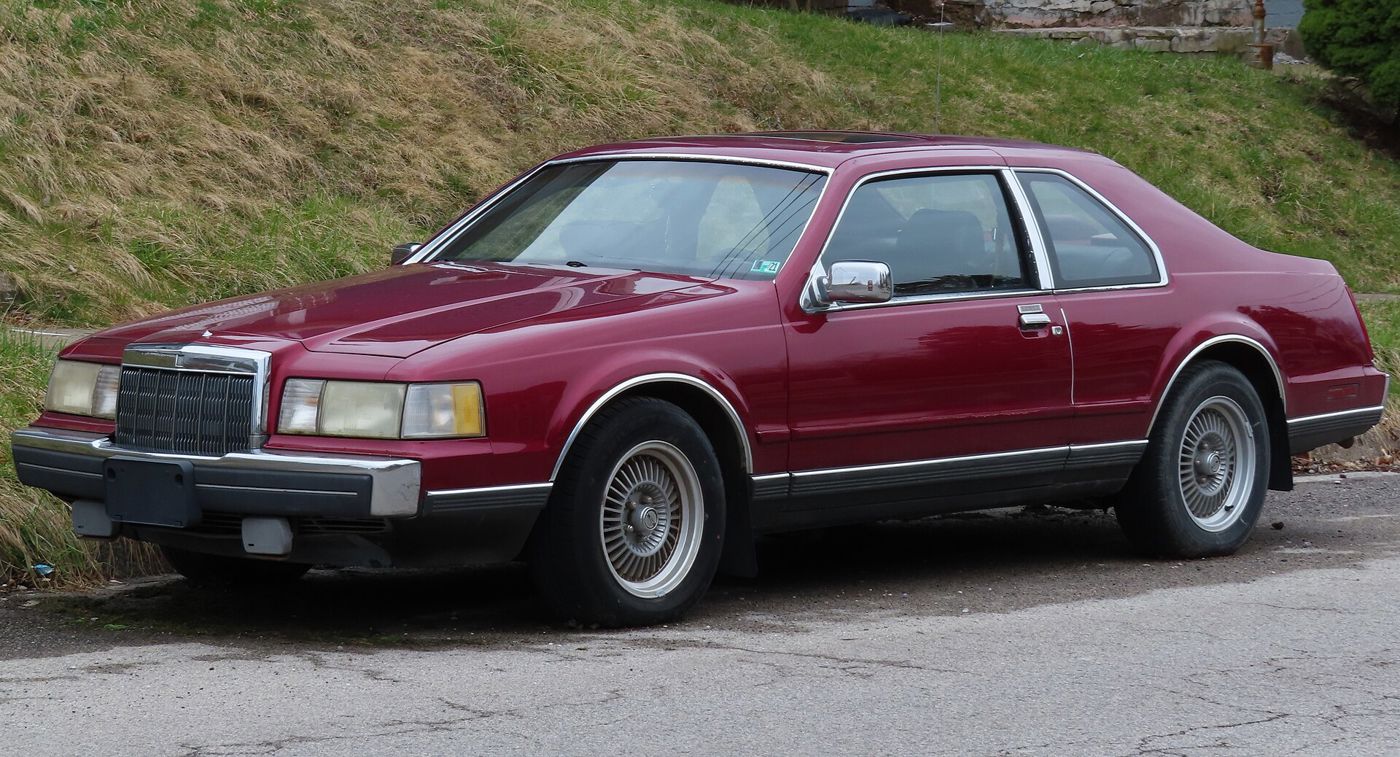

On July 14, 1987, United Press International auto writer Jan A. Zverina reported on the 1988 Lincoln Mark VII LSC, and his first news was power. The LSC was getting “an additional 25 horses under the hood,” he wrote: a 5.0-liter H.O. V8 rated at 225 horsepower in place of the previous 200. He also pointed out where the engine came from. It was, in his words, “the same motor found under the hoods of the Mustang GT.” A Lincoln luxury coupe was now sharing its engine with Ford's best-known performance car.1
The LSC had been building toward that point since the Mark VII's debut. The car was introduced in August 1983 as a 1984 model, a rear-drive coupe on Ford's Fox platform shared with the Thunderbird, Mercury Cougar and Lincoln Continental. The LSC, for Luxury Sports Coupe, was a new sport-oriented upper trim introduced with this generation. Old Car Memories writer Pete Dunton calls the 1984 LSC the hot rod Lincoln that Lincoln had never produced but should have, though its engine had not yet caught up with that idea.2,3,4
Power came in stages. Old Car Memories records that for 1985 the LSC got a throttle-body-injected 5.0 H.O. rated at 180 horsepower and 260 lb-ft, taken from the automatic-transmission 1985 Mustang GT. For 1986 and 1987 it carried the Mustang GT's port-injected 5.0 at 200 horsepower and 285 lb-ft. The 1988 engine completed the progression: 225 horsepower at 4,200 rpm and 300 lb-ft at 3,200. Each step came from the Mustang, and each came with the LSC's four-speed overdrive automatic, the only transmission UPI lists.4,3,1
Lincoln also simplified the Mark VII line for 1988. The base trim was discontinued, leaving the luxury-oriented Bill Blass Edition and the performance-oriented LSC. From 1988 through 1992 every Mark VII, the Bill Blass car included, had the 225-horsepower engine. The LSC was therefore no longer the only Mark VII with the strong V8. New on the LSC for 1988 were 16-inch aluminum wheels with P225/60R16 Goodyear Eagle GT+4 tires, which UPI describes as fat radials on finned wheels.2,3,4
The chassis had its own firsts. The Mark VII had four-wheel air suspension from its introduction, and the 1985 LSC was the first American vehicle with electronic four-channel anti-lock brakes. Zverina's 1988 report lists anti-lock four-wheel disc brakes as standard and describes gas-filled shock absorbers adjusted automatically through microprocessors. Old Car Memories credits the air suspension with a comfortable ride and the disc brakes with sports-car stopping. The 1988 LSC listed a curb weight of 3,722 pounds.3,1,4
Zverina's impressions were mixed in the useful way of a working road report. He found the handling agile and responsive, unlike earlier Lincolns that he said felt as though they were steered by a rudder, and he warned that the grip could lead to a false sense of security. He also found the ride rather harsh by Lincoln standards, noted a fair amount of road noise, judged the power seats too firm on long trips, and found that the tilt wheel in its lowest position blocked the instruments.1
The numbers attached to the test car are specific. UPI's LSC had a base price of $25,016 and came to $26,236 as tested, with a $101 Traction-Lok differential, a $506 JBL sound system with cassette, an $89 automatic-dimming mirror and a $524 destination charge. The EPA estimate fell from 17 city and 27 highway on the 1987 car to 17 and 24 for 1988, and the car's trip computer showed a 20.9 mpg average during Zverina's drive. Standard equipment included automatic door locks, automatic headlights and a digital compass between the sun visors.1
A timed test gives the performance. Old Car Memories reports that MotorWeek recorded 0 to 60 mph in 9.1 seconds and a 15.6-second quarter-mile with a 1988 Mark VII LSC. The same source gives MotorWeek's 1984 LSC figures as 9.7 seconds and 16.8 seconds. Neither result comes from MotorWeek's own published data, and each belongs to the car MotorWeek tested. Across four model years, the relayed figures show the LSC gaining about six-tenths of a second to 60 mph and more than a second in the quarter-mile.4
Zverina placed the car among serious rivals. He wrote that the LSC could run with the best of them, naming the Cadillac Eldorado, Buick Riviera, BMW and Jaguar, and suggested that with its new power it might outrun them. That is a reporter's judgment, not a comparison test, but it shows where the LSC was aimed: at American and European personal-luxury coupes, not at the Mustang that supplied its engine. The rivals he named were the benchmark; the LSC's engine came from a Ford pony car.1
Buyers responded strongly. Lincoln sold 38,259 Mark VIIs for 1988, up from 15,286 in 1987, and 1988 was the peak year of the car's run. The following years fell back: 28,607 for 1989 and 22,313 for 1990. That 38,259 counts the LSC and the Bill Blass Edition together.2,3
Measured against the whole run, 1988 stands out. Lincoln built 190,832 Mark VIIs from 1984 through 1992, which makes the 38,259 cars of 1988 about 20 percent of all Mark VIIs in one of nine model years. The jump from 1987 was about two and a half times. What changed that year is clear: more power, a simplified two-trim line and new wheels and tires. Which of those changes drew the added buyers, and how many chose the LSC over the Bill Blass car, is not known.3,2,4
The Mark VII continued through 1992 with the 225-horsepower engine and was replaced by the Lincoln Mark VIII for 1993. Dunton's verdict for Old Car Memories is that the LSC's role as Lincoln's performance flagship was a big reason for Lincoln's success. The 1988 car is the clearest version of that role: the Mustang GT's engine, air suspension, anti-lock brakes and 16-inch performance tires in a $25,016 Lincoln coupe, in the year more Mark VIIs were sold than in any other.3,4,1,2
Fact sheet · 1988 · United States
The numbers
1988 Lincoln Mark VII LSC: The base car is dropped and the LSC gets a 225-hp 5.0 H.O. V8 and 16-inch wheels; 38,259 is the largest yearly figure in the widely repeated Mark VII table.
Figures may describe different groups of cars. Add rows together only when the note says they make up a total.
Key facts
Production
| What was counted | Count | Counted as |
|---|---|---|
| Lincoln Mark VII, all versions (LSC and Bill Blass)2,3 LSC and Bill Blass · 2-door coupe · 5.0 H.O. V8 · 4-speed automatic OD | 38,259 |
Prices when new
| Model | Price | Price type |
|---|---|---|
| Mark VII LSC, base1 | $25,016 | base price, 1987-07 (1988 model year) |
| Destination charge1 | $524 | as reported, 1988 model year |
| As tested1 | $26,236 | UPI test car including destination, 1988 model year |
Prices are the nominal dollars of the day, not adjusted for inflation.
Engines
| Engine | Factory rating | Availability |
|---|---|---|
| 5.0-liter H.O. V81,3,2 5 L | 225 hp @ 4,200, 300 lb-ft @ 3,200 (manufacturer rating as reported) | standard (all 1988 Mark VIIs per secondary sources) |
Ratings are published figures, not dyno results. Gross and net ratings aren't directly comparable.
Transmissions
| Transmission | Availability |
|---|---|
| Four-speed overdrive automatic1 | standard (only transmission) |
Options and packages
| Option | Price |
|---|---|
| Traction-Lok differential1 | $101 |
| JBL sound system with cassette1 | $506 |
| Auto-dimming mirror1 | $89 |
Specifications
| Measure | Value | Applies to |
|---|---|---|
| Curb weight1 | 3,722 lb | 1988 LSC as reported by UPI |
| LSC tires and wheels1,4 | 16-in finned aluminum wheels, P225/60R16 Goodyear radials | 1988 LSC |
| EPA fuel economy, city1 | 17 mpg | 1988 LSC as reported by UPI |
| EPA fuel economy, highway1 | 24 mpg | 1988 LSC as reported by UPI |
Period road tests
| Test | Car tested | Result |
|---|---|---|
| MotorWeek (as relayed by Old Car Memories), 198840-60 mph | 1988 Mark VII LSC, 5.0 H.O. 225 hp, four-speed automatictelevision road test; broadcast not viewed | 9.1 s |
| MotorWeek (as relayed by Old Car Memories), 19884quarter-mile | 1988 Mark VII LSC, 5.0 H.O. 225 hp, four-speed automatictelevision road test; broadcast not viewed | 15.6 s |
| UPI (Jan A. Zverina), 1987-07-141observed fuel economy (trip computer) | 1988 Mark VII LSC, 5.0 H.O. 225 hp, four-speed automatic, Traction-Lok, JBL cassette, auto-dimming mirroron-board computer average over the test | 20.9 mpg |
A road test result belongs to the one car that was tested, with its engine, gearing, tires, and conditions. It is not a figure for every car of the year.
Identification
Read a 1988 Lincoln VIN
The VIN decoder runs in your browser and never sends the VIN anywhere. How the factory numbered this year's cars:
Same model year
Also in 1988
- Buick Riviera The low point of the small Riviera: 8,625 built, 2,065 T-Types.
- Chevrolet Monte Carlo SS Final G-body year: 16,204 SS coupes in a shortened model year.
- Ford Thunderbird Final Turbo Coupe year: the intercooled 2.3 continued with ABS, automatic ride control and 16-inch wheels standard.
- Mercury Cougar The LS and the 155-hp V-8 XR-7: 113,801 Cougars in three sources, 119,162 in Conceptcarz.
- Oldsmobile Cutlass, 4-4-2 and Hurst/Olds Doc Watson built four 20th-anniversary Hurst/Olds on the last rear-drive Cutlass; their aero kits were then sold to the public.
- Pontiac Firebird and Trans Am The GTA at full strength: 11,218 built, and every manual one a 305.
- Pontiac Grand Prix A front-drive W-body coupe replaces the G-body.