Racing · Ford, Chevrolet, and the 1970 field · 1970
1970 Trans-Am at Watkins Glen: Four Wet Tires, Then Only Two
A wet Glen that started on four tires and finished on two, in a season the period packet closed in Ford's favour.
Story reviewed July 27, 2026
Jim Hall stood in the Watkins Glen pits with the weather changing faster than a normal tire decision could follow. The institutional race account remembers him handling a discarded Mustang tire while Vic Elford’s Camaro waited for an answer. Rain had made wet tires necessary, then a drying line made four of them costly. Hall’s solution was asymmetrical: dry tires on the left side, wets retained on the right. The decision gives this story its opening because it joins observation, engineering judgment, and consequence without requiring invented radio dialogue or thoughts.
The Camaro arrived in 1970 with an entirely new body and a delayed model-year introduction. Chevrolet’s factory kit describes the street Z28 with a 350 rated at 360 gross horsepower, multiple four-speed choices, 3.73 axle, specific suspension, steering, wheels, and tires. Enthusiasts often call the car a “1970½,” but Chevrolet’s own papers call it a 1970 Camaro. The nickname can explain the timing in prose; it does not create a separate model year or license the race car to inherit the street car’s specifications.
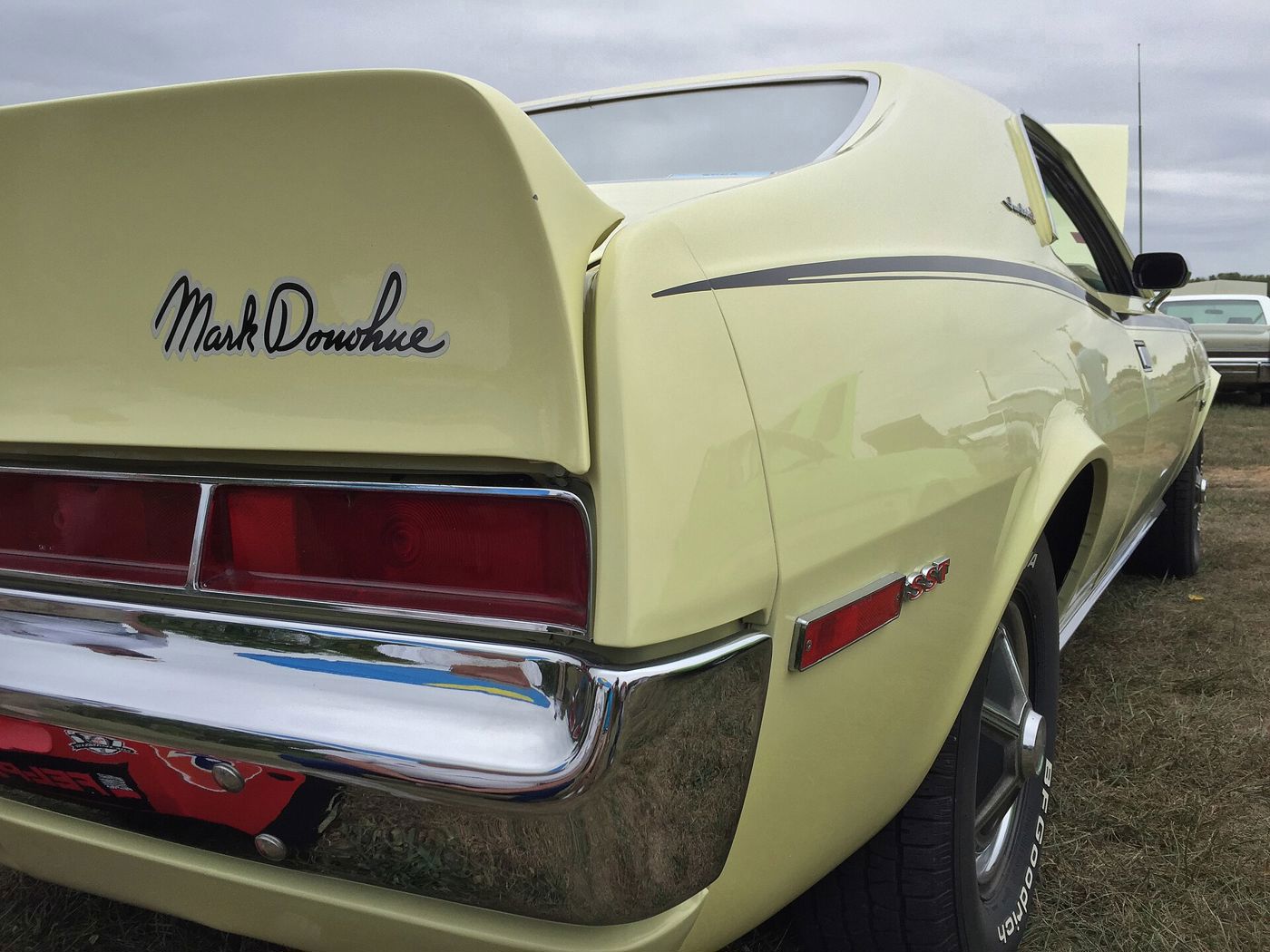
Chevrolet’s competition organization had also changed. Roger Penske and Mark Donohue parked their 1969 Camaros and moved to AMC Javelin. Jim Hall took the factory-linked Chevrolet effort while the new body and team developed together. Hall brought experience as a driver, constructor, and experimental thinker, but the story does not turn him into the sole engineer of every component. Chevrolet, Hall’s organization, mechanics, drivers, suppliers, and the sanctioning rules each shaped the program.
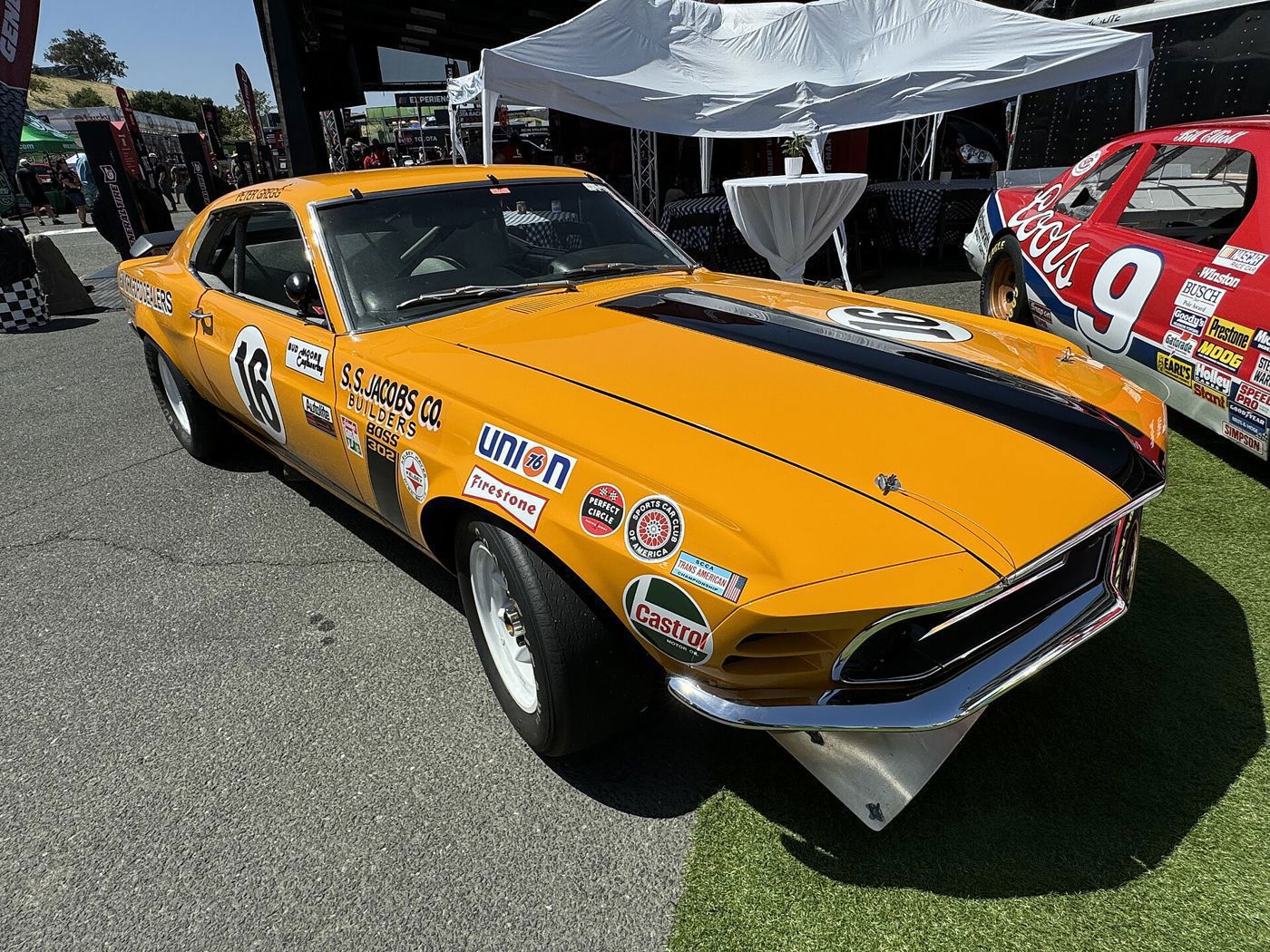
At Watkins Glen, Parnelli Jones put the Ford Mustang on pole. Donohue’s Javelin remained part of the fight, and Vic Elford was making only his second start for Hall’s Camaro team. Those identities matter because a simple “Camaro beat Mustang” sentence would erase AMC’s newly important program and the degree of transition inside Chevrolet. The 1970 season was the rare Trans-Am year in which Ford, Chevrolet, AMC, Dodge, and Plymouth programs all carried visible ambitions.
Changing rain turned the race into a sequence of pit choices. The source establishes Hall’s mixed-tire decision, not a verbatim planning conversation. Dry tires went on the left, where the developing line and loading made them useful; wet tires remained on the right. The unusual combination belongs to Elford’s event record, not to a general Camaro specification. It is evidence of one team responding to one track state, preserved because the choice affected what happened next.
Elford drove the Hall Camaro to victory. Behind him, Donohue passed George Follmer when the Mustang suffered fuel starvation. The official result packet fixes the finishing order, while the Trans-Am retrospective supplies the tire scene. Pairing them avoids asking either source to do too much: the results establish who finished where, and the later institutional narrative describes the decision that made the race memorable. Neither establishes every mechanical detail of the Camaro.
The result did not reverse Ford’s season. Bud Moore’s Mustangs had won the opening four rounds and retained the points foundation that would carry Ford to the manufacturers’ championship. Hall’s Watkins Glen victory mattered because it showed the new Chevrolet effort could win amid a difficult transition, not because one wet race erased the year. Milt Minter’s earlier Camaro victory also belonged to an ex-Penske car entered by Roy Woods, not to Penske’s current program.
The engine rule requires its own boundary. The street Z28’s move from 302 to 350 cubic inches did not mean Trans-Am simply raised its ceiling to 350. The sporting category remained tied to a no-more-than-five-liter framework in the acquired institutional material. Exact permitted preparation awaits the actual 1970 SCCA General Competition Rules and Production Car Specifications. Street displacement, marketing identity, and race eligibility are related histories, not interchangeable numbers.
Hall’s choice also illustrates why performance data needs provenance. A tire combination, lap time, pit stop, or finish belongs to Elford’s prepared race car under Watkins Glen’s conditions. It cannot become a selector field for every 1970 Z28. Conversely, Chevrolet’s gross horsepower rating describes the advertised street engine, not the race car’s output. The page lets the road package explain public identity while keeping observed competition facts in their own event record.
Watkins Glen is therefore not a documentary list of entrants. It is a scene about a new Camaro program after Penske, a versatile driver in his second start, changing rain, and a team leader willing to put different tire types on opposite sides of the car. Elford’s victory gave Chevrolet a brilliant result inside Ford’s championship season. Told at the proper scale, two dry tires and two wets reveal more about racing judgment than an unsupported horsepower estimate ever could.
The result also creates a natural bridge to the sibling sites. CamaroFacts can retain the complete launch-year and Jim Hall context, then link from its exact 1970 racing passage to this cross-marque event. Mustang Car Facts can link from the Boss 302 season record, while Penske and Donohue pages should point to the broader four-manufacturer story only where their move to AMC is being discussed. No footer or generic badge is needed.
Future research can add Hall team papers, Elford interviews, official weather observations, and the exact sporting regulations. Each would answer a different question: why the choice was made, how the car behaved, what conditions changed, and what preparation was permitted. Until those records are inspected, the published account stays with the source-supported decision and result rather than filling the rain with plausible but fictional detail.
The mixed tires endure as the page’s central object because they make judgment visible. A crew cannot control the weather or guarantee that a drying line will continue to develop; it can observe, choose, and accept risk. Hall’s documented choice and Elford’s documented win join those acts without claiming inevitability. Racing history becomes human at precisely the point where a specification table stops.