1985 · Mercury · United States
1985 Mercury Capri: The Year Roush's Capris Won Twelve of Fifteen
257 ASC McLaren Capri convertibles and 50 Motorsport Pace Cars, per Classic Industries.
United States · researched through 2026-09-28
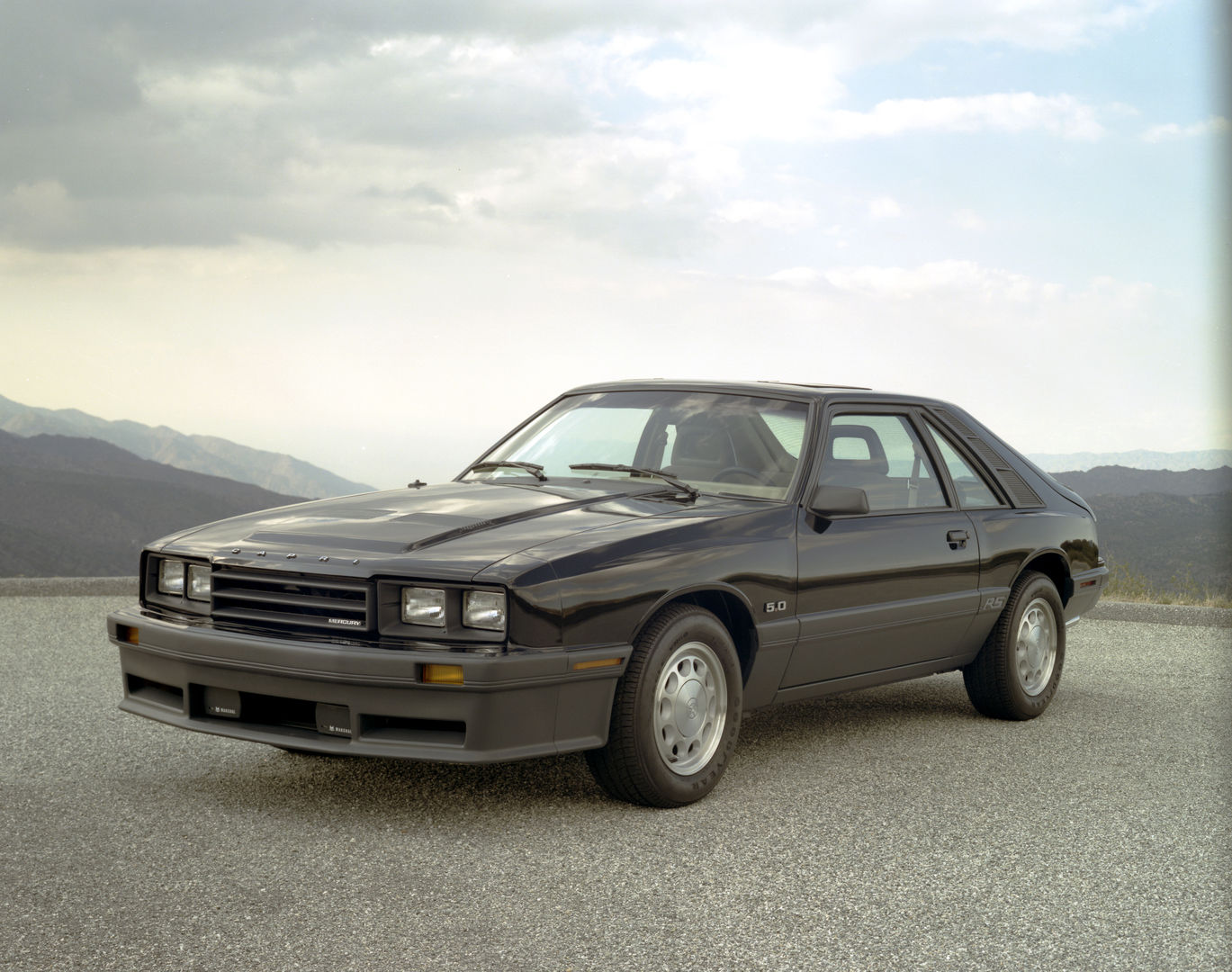
The 1985 Trans-Am season opened on April 21 at Firebird Raceway in Chandler, Arizona, and it opened with two Mercury Capris in front. The series' own history records a one-two finish for Roush Protofab: Willy T. Ribbs in the No. 3 Motorcraft Capri won the 67-lap, 102-mile race by 19.55 seconds over teammate Wally Dallenbach Jr. Tom Gloy's No. 7 Seven-Eleven Capri led early before giving way to Ribbs, and Chris Kneifel finished fourth in another Roush Motorcraft Capri. For a nameplate that sold as a restyled Mustang, it was an emphatic start.1
The rest of the year followed the same pattern. According to Trans-Am's history, the Roush pair won 12 of the 15 races. The season results list confirms the split: Ribbs won seven, at Firebird, Sears Point, Summit Point, Brainerd, Road America, Trois-Rivieres and St. Petersburg, and Dallenbach won five, at Portland, Mid-Ohio, Watkins Glen, Mosport and St. Louis. Only three races escaped the Capris. Elliott Forbes-Robinson won Detroit and the second Sears Point race in a Buick Somerset, and Paul Miller won Lime Rock in a Porsche Carrera.1,2
More wins did not produce the championship. Dallenbach finished with 228 points to Ribbs's 212, with Gloy third on 170, according to the season standings. The Trans-Am Hall of Fame says Roush brought Dallenbach into the Protofab stable for 1985, where he won five races and the title, and that at 22 he became what was then the youngest champion in the series. Classic Industries' Capri history names the same result from the Mercury side: Dallenbach, driving a Capri 5.0L for Roush, won the 1985 Trans-Am championship.2,3,4
The road car those racers represented was a close relative of the Mustang. Conceptcarz calls the 1985 Capri a clone of its Ford sibling, set apart by its own grille and horizontal louvers behind the quarter windows. Its most distinctive feature dated from 1983, when Mercury redesigned the hatch around a large compound-curve “bubble-back” rear window, a change recorded by both Classic Industries and Wikipedia. Classic Industries adds that the Capri used the same drivetrains as the Mustang, from four-cylinder to V8, with manual and automatic transmissions.5,4,6
Mercury's own brochure, form P-3720 printed in July 1984, shows the showroom side of that lineup as two models, the Capri GS and the Capri RS. The GS came standard with a 2.3-liter one-barrel overhead-cam four and a four-speed manual. It could be ordered with a three-speed SelectShift automatic, or with a 3.8-liter fuel-injected V6 that came paired with that automatic. The RS came standard with the 5.0-liter High-Output four-barrel V-8 and a five-speed manual overdrive. A fuel-injected 5.0 with a four-speed Automatic Overdrive was optional on both, and the chart marks the V6 and the four as unavailable on the RS.
The brochure rates the RS engine at 210 horsepower at 4800 rpm, footnoted as based on SAE J1349, and says it yellow-lines at 5200 rpm and red-lines at 5800. Conceptcarz's specification table gives the same 210 horsepower at 4400 rpm with 270 lb-ft at 3200, and lists 88 horsepower for the four and 120 for the V6. FordMuscle says the fuel-injected automatic cars were rated at 180. The brochure also says the RS can go from zero to 50 mph in under six seconds, a claim printed without test conditions. All of these are published ratings, and no period road test of a 1985 Capri was found to set beside them.7,8
The brochure's equipment lists show how the RS differed from a GS with the same engine. Standard on the RS were the Handling Package with Nitra-Cushion suspension, quicker-ratio power steering, nitrogen gas-pressurized shocks with Quadra-shock rear suspension, cast-aluminum wheels with P225/60VR15 tires, a front air dam with fog lamps, a sport three-oval steering wheel, a sport-tuned exhaust with bright dual tail pipe extensions, and articulated sport seats. A GS buyer could order a TR Performance Package instead, with Michelin TRX tires, cast-aluminum wheels and the same handling hardware. The brochure lists the P205/70R14 tire as a GS option only, which does not match conceptcarz's pairing of that tire with the 210-horsepower V-8.5
The brochure prints twelve exterior colors for the GS: Black, Oxford White, Silver Metallic, Medium Charcoal Metallic, Dark Slate Metallic, Sand Beige, Dark Sable Metallic, Dark Sage, Light Regatta Blue Metallic, Midnight Blue Metallic, Bright Red and Medium Canyon Red Metallic. The RS was limited to six of them: Black, Oxford White, Silver Metallic, Medium Charcoal Metallic, Bright Red and Medium Canyon Red Metallic. Interiors followed the same split, with Charcoal, Sand Beige, Regatta Blue and Canyon Red for the GS and only Charcoal and Sand Beige for the RS. No paint or trim codes are printed, and no source read gives how many cars left the factory in any color.
Prices are the weak point of the record. The brochure prints none, and the only prices in a primary source come from a Lincoln-Mercury mailer for the GS with the 2.3 engine. It offers a Special Value Fuel Efficiency Equipment Package of power door locks at $177, Polycast wheels at $178, the Premium Sound System at $138 and speed control at $176, a $669.00 value it lists at $0.00 to the buyer. Conceptcarz does publish a base price and an RS price for 1985, but they are not used here: this site withdrew a lineage of price figures of that kind on September 24, and those numbers appear to belong to it.5
Above the RS stood a car Mercury did not build itself. From 1984 through 1986, according to Classic Industries, the American Sunroof Company converted Capri hatchbacks into convertibles and coupes. Wikipedia describes the process: donor cars were shipped from Ford's assembly lines to ASC, where the roofs were removed, box-section subframe connectors were added, fiberglass rear body panels were fitted and the windshield was angled back two degrees. McLaren Performance Technologies supplied springs, Tokico gas shocks, heavier sway bars and mesh wheels.4,6
How many were built is harder to say. Classic Industries describes a 1985 ASC McLaren convertible as one of 257 built, and gives program totals of 290 coupes and 557 convertibles for 1984 through 1986. Conceptcarz reports 552 ASC McLaren Capris for 1985 alone, and Wikipedia's production table gives 874 Capris across all three years. The 552 and 257 figures do not reconcile, and neither do the three-year totals of 847 and 874. All the counts are for a dealer-sold conversion, not a Mercury factory model, and none is adopted here as the definitive figure.4,9,6
Classic Industries also describes an ASC McLaren performance coupe fitted with Ford Motorsport's B303 camshaft, which it says gave the 5.0 more horsepower and torque than stock and could reach 60 mph in under six seconds. No rating or tested car accompanies the claim, so it stays a description, not a measurement. It still shows where the Capri's image was pointed in 1985: a Mercury hatchback that could be ordered as a four-cylinder commuter, a 210-horsepower RS, or a convertible conversion.4
The rarest 1985 Capri connected the road car to a race weekend. Classic Industries reports that just 50 Mercury Capri Motorsport Pace Cars were built for the Detroit Grand Prix, each with the 5.0-liter V-8 and a five-speed manual. FordMuscle tells a messier story: 54 cars associated with the program, 53 ordered plus a prototype, and only 41 converted, seven of them with the fuel-injected automatic. It describes white and silver cars with gray or red interiors, headlight and taillight covers, side skirts, a rear wing and a decal package. FordMuscle also says dealers marked the cars up about $1,400 over sticker. Detroit was also a Trans-Am round, held on June 22, and one of the three races a Capri did not win.4,8,2
The brochure's dimensions describe one car for both models: a 100.5-inch wheelbase, 179.3 inches long, 69.1 wide and 52.1 high, with a 37.4-foot turning diameter and a 15.4-gallon fuel tank. Cargo volume is 32.5 cubic feet with the low-back front seats and the rear seat folded, and front head room drops an inch with the optional moonroof. Curb weight is printed as 2872 pounds for 49 states. Conceptcarz gives 2615 pounds for the same year, and no source read says why the two differ, so both stay on the record.7
The racing success did not keep the Capri in the lineup. Wikipedia records that the second-generation Capri was produced through the 1986 model year, and that for 1987, when the Mustang received a mid-cycle update that lasted to 1993, Mercury withdrew the Capri. Classic Industries puts the last ASC McLaren season at 194 convertibles and 115 coupes in 1986. The Mustang continued as Ford's V8 pony car, and Mercury left the segment after 1986.6,4
That makes 1985 the Capri's high point on the track and one of its last years in the showroom. Roush's Capris won 12 of 15 races, and Dallenbach and Ribbs finished first and second in the drivers' points. In the showroom the same name covered an 88-horsepower four, a 120-horsepower V6 and a 210-horsepower 5.0, a GS with a $669 equipment package listed at no cost, a convertible conversion, and a pace-car edition whose count nobody agrees on. The sources found do not give how many 1985 Capris were built in all, and a forum post that relays Ford figures could not be cited, so the year's biggest production question is still unanswered.1,2,4,8
Fact sheet · 1985 · United States
The numbers
1985 Mercury Capri (RS, 5.0 and special editions) — 257 ASC McLaren Capri convertibles and 50 Motorsport Pace Cars, per Classic Industries.
Coverage: Partial — researched sections are shown; missing ones are not yet sourced. Researched through 2026-09-28.
Every figure is labeled with how sure we are. Reported means a manufacturer, registry, or reference figure we cite but have not reconciled against factory records ourselves. Disputed means credible sources disagree and both are shown. Rows are separately scoped; don't add them together unless the note says they make up a total.
Key facts
- Mercury's 1985 US brochure lists two Capri models, the GS and the RS. The GS is standard with a 2.3-liter four and four-speed manual; the RS is standard with the 5.0-liter High-Output V-8 and a five-speed manual overdrive.
- The brochure rates the RS 5.0 High-Output four-barrel at 210 horsepower at 4800 rpm, based on SAE J1349, and says it yellow-lines at 5200 rpm and red-lines at 5800. Conceptcarz gives 210 at 4400 rpm; the two are recorded under conflicts.7
- The brochure prints 12 exterior colors for the GS and 6 for the RS, and four GS interior colors against two for the RS. It prints no paint or trim codes.
- A Lincoln-Mercury mailer for the GS with the 2.3 engine prices four items at $177 (power door locks), $178 (Polycast wheels), $138 (Premium Sound System) and $176 (speed control), a $669.00 package value offered at $0.00 to the buyer.
- The brochure prints no base price, no option prices and no production figures. Nothing read in this pass gives a 1985 Capri production total.
Production
| What was counted | Count | Basis | Status |
|---|---|---|---|
| ASC McLaren Capri convertible4 ASC McLaren · convertible (ASC conversion) · as published Dealer-sold ASC conversion; provenance differs from factory models. | 257 | built, model-year | Reported |
| Capri Motorsport Pace Car4 Motorsport Pace Car · hatchback coupe · as published | 50 | built, model-year | Reported |
Rows are separately scoped; do not add them.
No sourced whole-year Capri production figure for 1985 was found beyond the separately scoped ASC McLaren and pace-car rows. Searched 2026-09-29: Wikipedia (its Capri page carries only ASC McLaren counts), conceptcarz (Capri pages exist only for 1976, 1980, 1981, 1984, 1985 and 1991, and the 1984 and 1985 pages print no production block), the Classic Industries history, the ascMcLaren forum thread (forum, lead only), and automobile-catalog.com (blocked; see leads). A Ford production report, a Standard Catalog of American Cars 1976-1999 Mercury section, or the automobile-catalog page read directly would close this gap.
Prices when new *
No price is shown here. One was, until 2026-09-24: a figure from J.D. Power's live valuation pages, pulled from every page on this site because those pages can change without our knowing and we have no way to check them independently. We haven't found a source we can stand behind to put in its place yet. A price for this car elsewhere that looks suspiciously exact may be quoting that same J.D. Power figure rather than confirming it — several sites we checked turned out to be doing exactly that, without saying so.
Engines
| Engine | Factory rating | Availability | Built |
|---|---|---|---|
| 2.3-liter one-barrel OHC four7 2.3 L · naturally aspirated | 88 hp @ 4,200, 122 lb-ft @ 2,600 (as published by conceptcarz (standard not stated)) | GS: standard with the four-speed manual, optional with the three-speed SelectShift automatic; not available on the RS | Not yet sourced |
| 3.8-liter EFI V67 3.8 L · naturally aspirated, electronic fuel injection | 120 hp @ 3,600, 205 lb-ft @ 1,600 (as published by conceptcarz (standard not stated)) | GS: optional with the three-speed SelectShift automatic; not available on the RS | Not yet sourced |
| 5.0-liter High-Output four-barrel V-87 5 L · naturally aspirated, four-barrel carburetor | 210 hp @ 4,800 (SAE J1349, as printed in the brochure); 210 hp @ 4,400, 270 lb-ft @ 3,200 (as published by conceptcarz (standard not stated)) | RS: standard with the five-speed manual overdrive; not available on the GS | Not yet sourced |
| 5.0-liter High-Output EFI V-8 with Automatic Overdrive8 5 L · naturally aspirated, electronic fuel injection | 180 hp (as published by FordMuscle (standard not stated)) | optional on both the GS and the RS | Not yet sourced |
Ratings are the manufacturer's advertised figures under the standard shown (SAE gross before 1972, SAE net after). They are not dyno results, and gross and net ratings can't be compared directly.
Transmissions
| Transmission | Availability | Built |
|---|---|---|
| Four-speed manual with self-adjusting clutch | GS standard with the 2.3-liter engine | Not yet sourced |
| Three-speed SelectShift automatic | GS: optional with the 2.3-liter engine; paired with the 3.8-liter EFI V6 | Not yet sourced |
| Five-speed manual overdrive | RS standard with the 5.0-liter High-Output four-barrel V-8 | Not yet sourced |
| Four-speed Automatic Overdrive | paired with the optional 5.0-liter High-Output EFI V-8, on both the GS and the RS | Not yet sourced |
Options and packages
| Code | Option | Price | Installed |
|---|---|---|---|
|
TR Performance Package (GS only): P220/55VR390 BSW Michelin TRX tires, cast-aluminum wheels, handling package with Nitra-Cushion shock absorbers, rear Quadra-shocks, quicker-ratio power steering | — | Not yet sourced |
|
Special Value Fuel Efficiency Equipment Package (GS with 2.3 engine): power door locks, Polycast wheels, Premium Sound System and speed control, printed as a $669.00 value at $0.00 to the buyer | — | Not yet sourced |
|
Motorsport Capri pace-car package: headlight and taillight covers, side skirts, rear valance with exhaust cutouts, rear wing and Graphik Concepts decal package8 | — | Not yet sourced |
|
Speed control (includes two-spoke steering wheel), optional on GS and RS | $176 | Not yet sourced |
|
Power Door Lock Group (power door locks and decklid/liftgate release), optional on GS and RS | $177 | Not yet sourced |
|
Polycast wheels, optional on GS | $178 | Not yet sourced |
|
Premium Sound System, optional on GS and RS | $138 | Not yet sourced |
|
Air conditioning, manual, optional on GS and RS | — | Not yet sourced |
|
Extended Service Plan, optional on GS and RS | — | Not yet sourced |
|
AM/FM electronic stereo with cassette tape player, optional on GS and RS | — | Not yet sourced |
|
Flip-up open-air roof, optional on GS and RS | — | Not yet sourced |
|
T-roof, optional on GS and RS (starred in the chart) | — | Not yet sourced |
|
P205/70R14 WSW tires, optional on GS, not available on RS | — | Not yet sourced |
|
P220/55VR 390 BSW Michelin TRX tires (as printed), optional on GS, not available on RS | — | Not yet sourced |
|
TR-type cast-aluminum wheels, optional on GS | — | Not yet sourced |
|
Wire-styled wheel covers, optional on GS | — | Not yet sourced |
Paint
| Code | Color | Built |
|---|---|---|
|
Black (GS and RS) | Not yet sourced |
|
Oxford White (GS and RS) | Not yet sourced |
|
Silver Metallic (GS and RS) | Not yet sourced |
|
Medium Charcoal Metallic (GS and RS) | Not yet sourced |
|
Bright Red (GS and RS) | Not yet sourced |
|
Medium Canyon Red Metallic (GS and RS) | Not yet sourced |
|
Dark Slate Metallic (GS only) | Not yet sourced |
|
Sand Beige (GS only) | Not yet sourced |
|
Dark Sable Metallic (GS only) | Not yet sourced |
|
Dark Sage (GS only) | Not yet sourced |
|
Light Regatta Blue Metallic (GS only) | Not yet sourced |
|
Midnight Blue Metallic (GS only) | Not yet sourced |
Color names are the factory's. We don't show color swatches, because a screen color is no guide for a restoration.
Interiors
| Code | Trim | Built |
|---|---|---|
|
GS interior color: Charcoal | Not yet sourced |
|
GS interior color: Sand Beige | Not yet sourced |
|
GS interior color: Regatta Blue | Not yet sourced |
|
GS interior color: Canyon Red | Not yet sourced |
|
RS interior color: Charcoal | Not yet sourced |
|
RS interior color: Sand Beige | Not yet sourced |
|
GS standard seating: low-back individual seats with cloth trim and recliners | Not yet sourced |
|
RS standard seating: Tu-Tone articulated sport seats | Not yet sourced |
Specifications
| Measure | Value | Applies to |
|---|---|---|
| Wheelbase | 100.5 in | Capri (one column printed for GS and RS) |
| Overall length | 179.3 in | Capri (one column printed for GS and RS) |
| Overall width | 69.1 in | Capri (one column printed for GS and RS) |
| Overall height | 52.1 in | Capri (one column printed for GS and RS) |
| Turning diameter | 37.4 ft | Capri (one column printed for GS and RS) |
| Wheel tread, front | 56.6 in | Capri (one column printed for GS and RS) |
| Wheel tread, rear | 57 in | Capri (one column printed for GS and RS) |
| Head room, front | 37 in | Capri; footnote as printed: one inch less with optional moonroof |
| Head room, rear | 35.6 in | Capri (one column printed for GS and RS) |
| Leg room, front (max) | 41.7 in | Capri (one column printed for GS and RS) |
| Leg room, rear (min) | 30.7 in | Capri (one column printed for GS and RS) |
| Shoulder room, front | 55.9 in | Capri (one column printed for GS and RS) |
| Shoulder room, rear | 54.3 in | Capri (one column printed for GS and RS) |
| Hip room, front | 55.8 in | Capri (one column printed for GS and RS) |
| Hip room, rear | 47.1 in | Capri (one column printed for GS and RS) |
| Cargo volume | 32.5 cu ft | Capri; footnote as printed: with standard low-back front seats and rear seats folded down (the GS page cites MVMA) |
| Fuel capacity | 15.4 gal | Capri (one column printed for GS and RS) |
| Curb weight | 2,872 lb | Capri, 49 states (one column printed for GS and RS) |
Period road tests
| Test | Car tested | Result |
|---|---|---|
| Lincoln-Mercury Division (1985 Capri brochure), 1984-070-50 mph | Capri RS, 5.0 High-Output four-barrel V-8, five-speed manual overdrive, standard Traction-Lok axlebrochure copy says the RS 'can blast from zero to 50 mph in under six seconds'; no test conditions printed | under 6 s |
A road test result belongs to the one car that was tested, with its engine, gearing, tires, and conditions. It is not a figure for every car of the year.
Where the sources disagree
ASC McLaren Capri production, 1984-1986 combined
Both shown; the digits may be transposed in one source, but neither is corrected here.
RS 5.0 High-Output four-barrel peak-power engine speed
Both shown as separate ratings on the 5.0 engine. The brochure is the primary source for its own 4800 rpm figure; the 4400 rpm figure comes from secondary sources that do not state a rating standard, so neither is chosen over the other.
Tires fitted to the 210 hp 5.0 Capri
- P225/60VR15 BSW standard on the RS; P205/70R14 WSW not available on the RS
- P205/70R14 with the 210 hp 5.0 engine5
Both shown. The brochure lists the P205/70R14 as a GS option only, so the conceptcarz pairing is not adopted; a GS ordered with the 5.0 could carry P205/70R14 tires, which may be what conceptcarz describes.
1985 Capri curb weight
- 2872 lb (49 states)
- 2615 lb7
Both shown. The brochure prints one figure for the model with no engine stated; conceptcarz does not say which configuration its weight describes, so the 257 lb difference is not explained.
Motorsport Capri pace-car count and transmissions
- 50 built, each with the 5.0-liter V-8 and five-speed manual4
- 54 cars associated with the program, 53 ordered plus a prototype, 41 converted; seven built with the automatic8
Both shown. FordMuscle attributes its figures to an owner-researcher and says about 29 of the 41 have been located. The counts describe different things (planned, ordered, converted) and are not reconciled; the 50 in the production table stays attributed to Classic Industries.
Identification
Read a 1985 Mercury VIN
The VIN decoder runs in your browser and never sends the VIN anywhere. How the factory numbered this year's cars:
Same model year
Also in 1985
- Buick Regal Turbo, Grand National and GNX A carry-over year for the black, fuel-injected Grand National: 2,102 built, inside a T Type count that sources put at 4,169 or 4,204.
- Buick Riviera Record sales of 65,305 in the last big E-body year; 1,069 T Types and 47 or 49 turbo convertibles depending on the ROA page version.
- Chevrolet El Camino SS RPO Z15 SS Sport Decor trim on the fifth-generation El Camino; no production count from a verifiable source was found.
- Chevrolet Monte Carlo SS The SS gains a four-speed overdrive automatic and 3.73 axle; 35,484 built.
- Ford Thunderbird The Turbo Coupe moved to 15-inch wheels and P225/60VR15 tires, and its output rose.
- Lincoln Mark VII LSC Last year of the Continental name: the LSC is credited with a high-output 5.0 V8 and four-channel anti-lock brakes, though the engine rating is disputed.
- Mercury Cougar Outside the muscle focus: 117,274 Cougars for 1985 per Wikipedia's table.
- Oldsmobile Cutlass, 4-4-2 and Hurst/Olds The W42 4-4-2 on the rear-drive Cutlass Supreme, with a 307 V-8 and a four-speed automatic.
- Pontiac Firebird and Trans Am A restyled Trans Am and the first tuned-port 305: 95,880 Firebirds.
- Pontiac Grand Prix The 305 4-barrel is listed at 165 hp for this year only.