1968 · Plymouth · United States
1968 Plymouth Road Runner: A Cartoon Bird, a Stripped Coupe and a Forecast Off by 42,000 Cars
Plymouth added a stripped Belvedere-based coupe and hardtop with a special 335-hp 383 as standard and the 426 Hemi as the only engine option, and sold 44,599 of them.
United States · researched through 2026-09-22
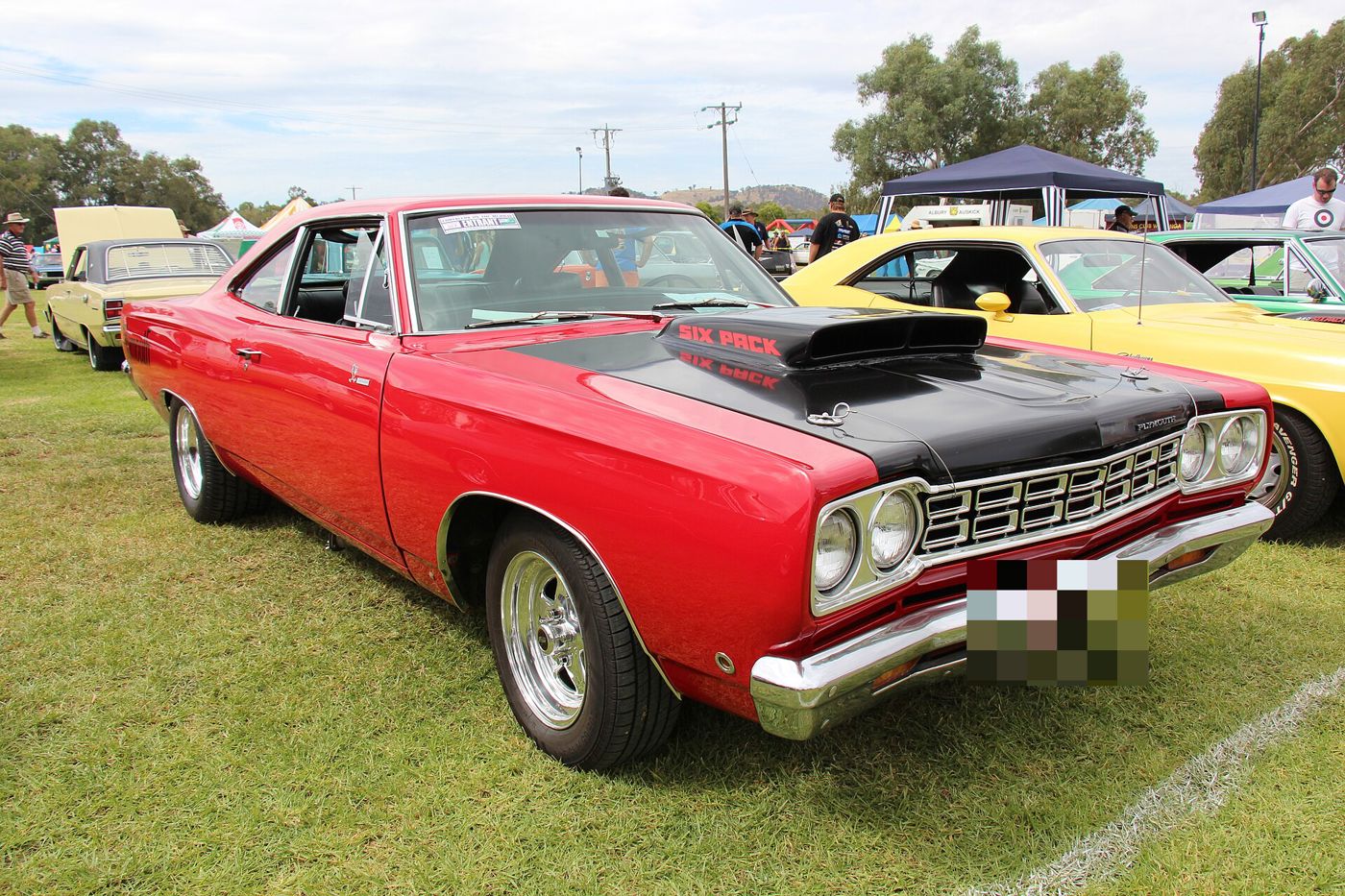
Chrysler-Plymouth expected to sell about 2,500 Road Runners at first. Ate Up With Motor's history records that grim forecast, and it records the result: 44,599 Road Runners for the 1968 model year, a figure the Over-Drive production table matches as 29,240 coupes and 15,359 hardtops. The same history adds that conservative projections limited the supply of parts, so Plymouth probably could have sold more. Few muscle cars have a cleaner measure of how badly their own makers misjudged them. The gap between 2,500 and 44,599 is the story of 1968, and it began with a magazine editor's memo.1,2
During the 1966 model year, according to Ate Up With Motor, Car and Driver's Brock Yates drafted a memo to Chrysler-Plymouth general manager Bob Anderson proposing an econo-racer: a plain, cheap car with a big engine. Car and Driver's own January 1968 road test credits the concept to Yates as well, and then argues that Plymouth diluted it with styling gimmicks. Inside Plymouth, product planning chief Joe Sturm and analysts Jack Smith and Gordon Cherry wanted something more than an understated street racer. By Ate Up With Motor's account, they wanted an icon, and the icon came from Saturday morning television.1,3
Gordon Cherry, the history says, had the idea while watching cartoons with his young children: a tie-in with Warner Brothers' Road Runner. A $50,000 deal secured the rights to the Road Runner and Coyote characters, and engineering reworked the Belvedere horn to approximate the cartoon's beep-beep. The two accounts of the money do not quite match. Ate Up With Motor attaches the $50,000 to the character rights, while Car and Driver reported in January 1968 that Plymouth paid about $50,000 to capture the horn sound. Both are reports, and neither is a Chrysler contract, so the figure stays attached to each source's description.1,3
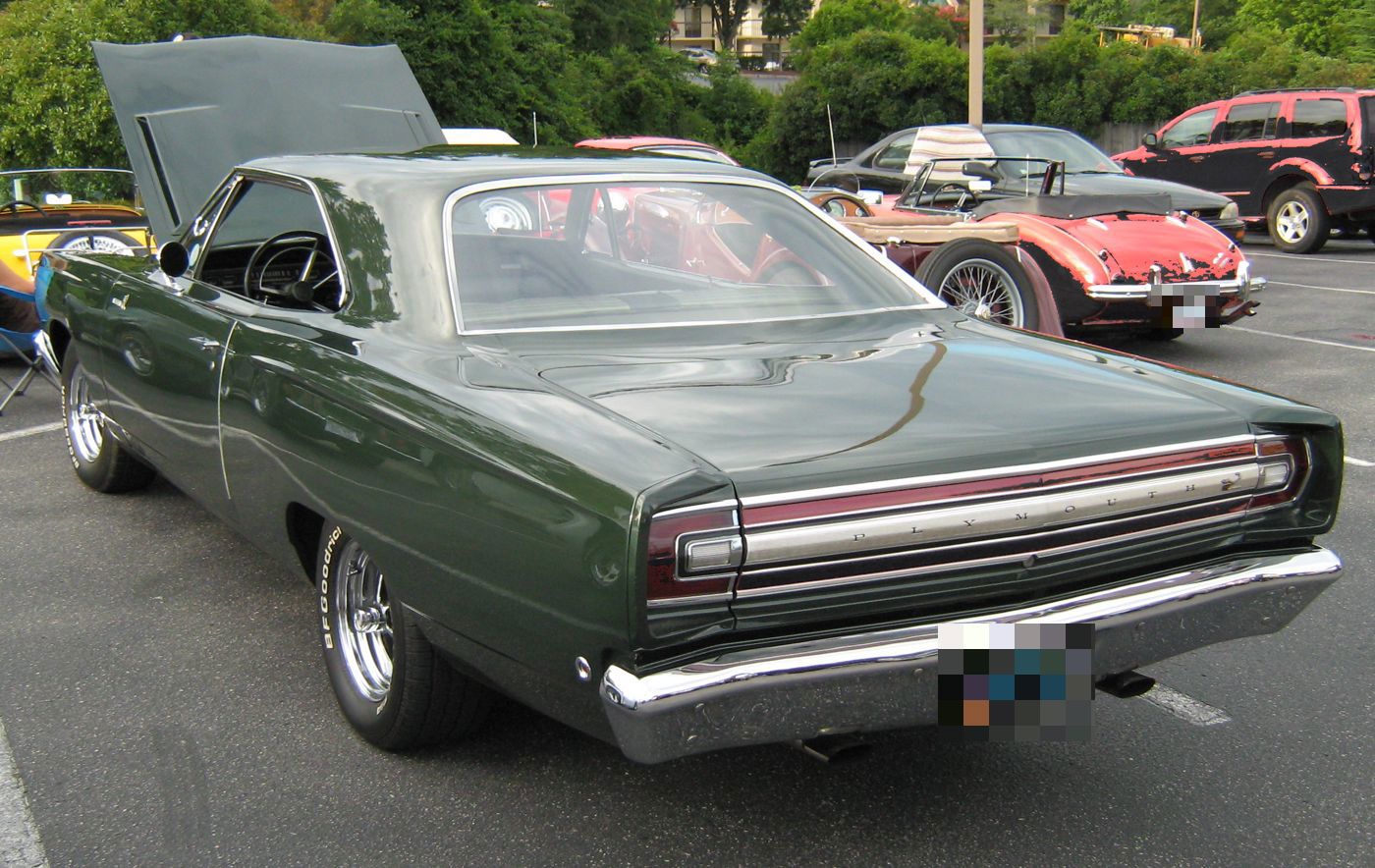
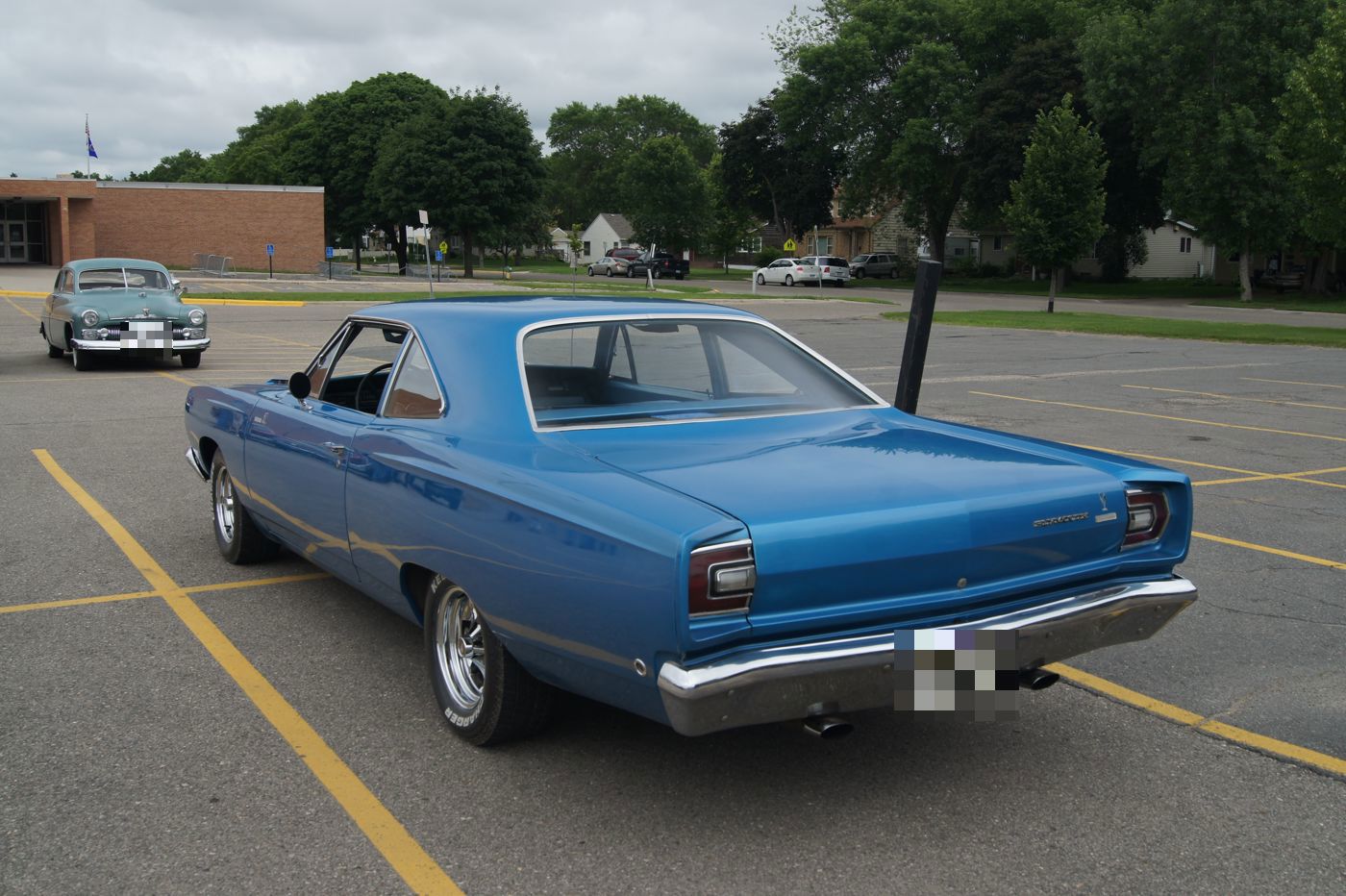
The mechanical recipe was simpler than the marketing. The Road Runner rode Plymouth's 116-inch intermediate platform as a two-door coupe, body RM21, and a two-door hardtop, RM23. Its standard engine was a Road Runner-only 383 four-barrel rated 335 horsepower at 5,200 rpm and 425 lb-ft, a gross rating. Car Life and Car and Driver both describe it as using the 440 Super Commando's heads, camshaft and intake parts. A four-speed manual was standard, with a heavy-duty TorqueFlite as the only transmission option, and the only optional engine was the 426 Hemi at $714. There was nothing in between.2,4,3
Price was the weapon. The coupe listed at $2,870, which Ate Up With Motor says was a little above Yates's target but $231 under a base Pontiac GTO hardtop and $559 under an equivalent Plymouth GTX. The hardtop listed at $3,034. The history says the hardtop arrived later in the year, and Plymouth issued a separate sales sheet introducing the Road Runner hardtop as an addition to the 1968 line. The standard tire was an F70x14, and the shipping weights were 3,405 pounds for the coupe and 3,400 for the hardtop, factory figures rather than scale readings.1,2
The option sheet showed how quickly a stripper could stop being one. Car and Driver's test coupe started at $2,870 and left at $3,753.40 as tested. Its extras included an $87.50 axle group with a heavy-duty 3.55 ring and pinion, limited slip, heavy-duty radiator and viscous fan, $72.95 front disc brakes and a $17.55 flat-black hood finish. Across the Belvedere range, air conditioning was listed at $355, power steering at $94, power brakes at $44 and a tachometer at $51. The Sure-Grip axle for the Road Runner and GTX was listed at $146, and the list stayed long for a car sold on simplicity.3,2
The magazines measured two different Road Runners, and the numbers stay with their cars. Car and Driver's 383 four-speed coupe with the 3.55 axle weighed 3,843 pounds as tested, reached 60 mph in 7.1 seconds on the best of four runs, and ran the quarter-mile in 15.0 seconds at 96 mph. It stopped from 80 mph in 242 feet, at 0.88 g, with the optional front discs fitted, and saw 114 mph. Car Life's TorqueFlite car with a 3.23 Sure-Grip axle weighed 4,020 pounds with two aboard, reached 60 in 7.3 seconds, ran 15.37 seconds at 91.4 mph and reached 122 mph at 5,200 rpm.3,4
Those figures made the case that mattered. Neither car was a Hemi, and neither was dressed up, yet both ran mid-15-second quarter-miles or better at a list price under $3,100. Car Life's automatic car cost $3,637 as tested, less than Car and Driver's four-speed car, and gave up only a fraction of a second. For a buyer weighing a GTO, the Plymouth coupe started $231 lower. No production count for the Hemi or the TorqueFlite in 1968 has been found in an accessible documented source, so how many buyers took the bigger engine or the automatic remains unknown.4,3,1,2
Even the headline number carries a small dispute. The Over-Drive table counts 29,240 coupes; MuscleCarClub's year-by-year table prints 28,978, while both agree on 15,359 hardtops, and neither names the underlying record. Until a factory ledger surfaces, the coupe count is best read as 29,240 in one table and 28,978 in the other. The model total of 44,599 comes from the Over-Drive table and from Ate Up With Motor's history. Paint, too, stays open: the fact sheet lists twenty-one colors from Buffed Silver to Sierra Tan, including Turbine Bronze and Electric Blue, but no documented count by color has been found for any of them.2,5,1
The first-year success set the pattern for everything that followed. Ate Up With Motor records that Plymouth expanded the line for 1969 with a convertible, the Air Grabber hood scoop and a 440 option, and that Motor Trend named the Road Runner its 1969 Car of the Year. The bird on the door and the beep-beep horn outlasted the argument over whether they diluted Yates's idea. What Plymouth had proved in 1968 was narrower and more useful: that a plain intermediate with a strong standard engine and a low price could find tens of thousands of buyers the company itself had not expected.1,3,2
Fact sheet · 1968 · United States
The numbers
1968 Plymouth Road Runner — Plymouth added a stripped Belvedere-based coupe and hardtop with a special 335-hp 383 as standard and the 426 Hemi as the only engine option, and sold 44,599 of them.
Coverage: Partial — researched sections are shown; missing ones are not yet sourced. Researched through 2026-09-22.
Every figure is labeled with how sure we are. Reported means a manufacturer, registry, or reference figure we cite but have not reconciled against factory records ourselves. Disputed means credible sources disagree and both are shown. Rows are separately scoped; don't add them together unless the note says they make up a total.
Key facts
Production
| What was counted | Count | Basis | Status |
|---|---|---|---|
| Road Runner 2-door coupe (RM21)2 Road Runner · 2-door coupe · not stated | 29,240 | not stated (production table), model-year | Reported |
| Road Runner 2-door hardtop (RM23)2 Road Runner · 2-door hardtop · not stated | 15,359 | not stated (production table), model-year | Reported |
| What was counted | Count | Basis | Status |
|---|---|---|---|
| Road Runner model total2 Road Runner · not stated The table states this total; it equals the two body rows. | 44,599 | not stated (production table), model-year | Reported |
| What was counted | Count | Basis | Status |
|---|---|---|---|
| Road Runner with 426 Hemi6 Road Runner · 426 Hemi · not stated Single secondary lineage (Chrysler/Govier figures as repeated by UltimateMuscleCar); scope not stated. | 1,019 | not stated, model-year | Reported |
No engine, transmission, or paint breakdown was found in an accessible documented source for 1968; Hemi and TorqueFlite counts remain open.
Prices when new
| Model | Price | Basis |
|---|---|---|
| Road Runner 2-door coupe2,3 | $2,870 | factory price (list, per production table), 1968 model year |
| Road Runner 2-door hardtop2,4 | $3,034 | factory price (list, per production table), 1968 model year |
Prices are the nominal dollars of the day, not adjusted for inflation.
Engines
| Engine | Factory rating | Availability | Built |
|---|---|---|---|
| 383 4-bbl (Road Runner)2,3 383 cu in · single 4-barrel | 335 hp @ 5,200, 425 lb-ft @ 3,400 (SAE gross) | standard | Not yet sourced |
| 426 Hemi2 426 cu in · two 4-barrels | 425 hp @ 5,000, 490 lb-ft @ 4,000 (SAE gross) | optional, $714 in Road Runner | Not yet sourced |
Ratings are the manufacturer's advertised figures under the standard shown (SAE gross before 1972, SAE net after). They are not dyno results, and gross and net ratings can't be compared directly.
Transmissions
| Transmission | Availability | Built |
|---|---|---|
| Four-speed manual, floor shift2,3 | standard in Road Runner | Not yet sourced |
| TorqueFlite three-speed automatic (heavy-duty)2,4 | optional; $227 with V-8s other than the 273 (Belvedere-range price) | Not yet sourced |
Options and packages
| Code | Option | Price | Installed |
|---|---|---|---|
|
426 Hemi V-8 (Road Runner)2 | $714 | Not yet sourced |
|
Sure-Grip axle (Road Runner and GTX)2 | $146 | Not yet sourced |
|
Performance hood finish2 | $18 | Not yet sourced |
|
Air conditioning2 | $355 | Not yet sourced |
|
Power steering2 | $94 | Not yet sourced |
|
Power brakes2 | $44 | Not yet sourced |
|
Tachometer2 | $51 | Not yet sourced |
|
Vinyl roof2 | $79 | Not yet sourced |
|
AM radio2 | $60 | Not yet sourced |
|
Axle group (heavy-duty 3.55 ring and pinion, limited-slip, heavy-duty radiator, viscous fan)3 | $87.50 | Not yet sourced |
|
Front disc brakes3 | $72.95 | Not yet sourced |
|
Hood paint (flat black)3 | $17.55 | Not yet sourced |
|
TorqueFlite automatic in Road Runner (3-speed manual standard)2 | $39 | Not yet sourced |
|
Automatic speed control2 | $53 | Not yet sourced |
|
Bumper guards, front and rear2 | $14 | Not yet sourced |
|
Deluxe wheel covers, 14 inch2 | $22 | Not yet sourced |
|
Electric clock2 | $16 | Not yet sourced |
|
Left and right head restraints2 | $44 | Not yet sourced |
|
Rear window defogger2 | $21 | Not yet sourced |
|
Remote-control left outside mirror2 | $9 | Not yet sourced |
|
Right manual outside mirror2 | $7 | Not yet sourced |
|
Road Runner body accent stripes2 | $15 | Not yet sourced |
|
Road Runner custom sill moulding2 | $21 | Not yet sourced |
|
Road wheels, except with Street Hemi2 | $102 | Not yet sourced |
|
Solid-state AM radio with stereo tape2 | $195 | Not yet sourced |
|
Special buffed paint2 | $22 | Not yet sourced |
|
Sport-style wheel covers, except Street Hemi2 | $38 | Not yet sourced |
|
Tinted glass, all windows2 | $42 | Not yet sourced |
|
Tinted windshield2 | $22 | Not yet sourced |
|
Upper belt mouldings, coupe and hardtop2 | $18 | Not yet sourced |
Paint
| Code | Color | Built |
|---|---|---|
A |
Buffed Silver2 | Not yet sourced |
B |
Black Velvet2 | Not yet sourced |
C |
Medium Blue2 | Not yet sourced |
D |
Mist Blue2 | Not yet sourced |
E |
Midnight Blue2 | Not yet sourced |
F |
Mist Green2 | Not yet sourced |
G |
Forest Green2 | Not yet sourced |
H |
Yellow Gold2 | Not yet sourced |
J |
Ember Gold2 | Not yet sourced |
K |
Mist Turquoise2 | Not yet sourced |
L |
Surf Turquoise2 | Not yet sourced |
M |
Turbine Bronze2 | Not yet sourced |
P |
Matador Red2 | Not yet sourced |
Q |
Electric Blue2 | Not yet sourced |
R |
Burgundy2 | Not yet sourced |
S |
Sunfire Yellow2 | Not yet sourced |
T |
Avocado Green2 | Not yet sourced |
U |
Frost Blue2 | Not yet sourced |
W |
Sable White2 | Not yet sourced |
X |
Satin Beige2 | Not yet sourced |
Y |
Sierra Tan2 | Not yet sourced |
Color names are the factory's. We don't show color swatches, because a screen color is no guide for a restoration.
Specifications
| Measure | Value | Applies to |
|---|---|---|
| Wheelbase2 | 116 in | all Road Runner bodies |
| Overall length2 | 202.7 in | sedans, coupes, hardtops |
| Overall width2 | 76.4 in | all |
| Front tread2 | 59.5 in | all |
| Rear tread2 | 59.2 in | all |
| Shipping weight, coupe2 | 3,405 lb | RM21 |
| Shipping weight, hardtop2 | 3,400 lb | RM23 |
| Standard tire, 383 Hi-Po2 | F70x14 | Road Runner |
Period road tests
| Test | Car tested | Result |
|---|---|---|
| Car and Driver, 1968-0130-60 mph | 383/335 4-bbl, four-speed manual, 3.55 axle, 2-door coupe (as tested $3,753.40)test weight 3,843 lb; four runs varied 7.1-7.3 s | 7.1 s |
| Car and Driver, 1968-013standing quarter mile | 383/335 4-bbl, four-speed manual, 3.55 axle, 2-door coupe (as tested $3,753.40)at 96 mph | 15 s |
| Car and Driver, 1968-013top speed observed | 383/335 4-bbl, four-speed manual, 3.55 axle, 2-door coupe (as tested $3,753.40) | 114 mph |
| Car and Driver, 1968-01380-0 mph panic stop | 383/335 4-bbl, four-speed manual, 3.55 axle, 2-door coupe (as tested $3,753.40)0.88 g | 242 ft |
| Car Life, 1968-0540-60 mph | 383/335 4-bbl, TorqueFlite automatic, 3.23 Sure-Grip axle, 2-door (as tested $3,637)test weight 4,020 lb, two aboard | 7.3 s |
| Car Life, 1968-054standing quarter mile | 383/335 4-bbl, TorqueFlite automatic, 3.23 Sure-Grip axle, 2-door (as tested $3,637)at 91.4 mph | 15.37 s |
| Car Life, 1968-054top speed | 383/335 4-bbl, TorqueFlite automatic, 3.23 Sure-Grip axle, 2-door (as tested $3,637)at 5,200 rpm | 122 mph |
A road test result belongs to the one car that was tested, with its engine, gearing, tires, and conditions. It is not a figure for every car of the year.
Identification
- Series and body numbers
- Series DR2; body RM21 = 2-door coupe, RM23 = 2-door hardtop.2
Where the sources disagree
Identification
Read a 1968 Plymouth VIN
The VIN decoder runs in your browser and never sends the VIN anywhere. How the factory numbered this year's cars:
Same model year
Also in 1968
- AMC AMX AMC's two-seat AMX arrived mid-year on a 97-inch wheelbase. The enthusiast production table counts 6,725 cars, two-thirds of them with the 390.
- AMC Javelin AMC's first pony car, launched in September 1967 as base and SST hardtops. Production of the two combined was about 55,000.
- AMC Rebel and Rebel Machine Now badged AMC, the Rebel came in 550, 770 and SST trims and could be ordered with the 315-hp 390. It is host-car context for the 1970 Machine.
- Buick Riviera Record Riviera sales of 49,284, including 5,337 with the GS handling option.
- Buick Skylark Gran Sport, GS and GSX On the new 112 in two-door body the GS 400 was joined by a GS 350 hardtop, and a dealer-installed Stage 1 package arrived for the 400.
- Buick Wildcat 73,561 Wildcats with the 430 V-8.
- Chevrolet Chevelle and Malibu SS The restyled Chevelle kept SS 396 as its own series and added an SS 396 El Camino: 62,785 SS 396s in three bodies.
- Chevrolet Chevy II and Nova SS engines per the source: L48 350, L34 396 and L78 396. Enthusiast-compiled production: 183,552 cars; Super Sport 5,571.
- Chevrolet El Camino SS The first factory Super Sport El Camino: a separate SS 396 model, 13880, built 5,190 times.
- Chevrolet Impala SS Super Sport becomes an option again (RPO Z03): 36,432, plus 1,778 SS427 (RPO Z24).
- Dodge Charger The redesigned 'Coke bottle' Charger and the new R/T multiplied sales roughly sixfold over 1967.
- Dodge Coronet R/T and Super Bee The redesigned Coronet kept the 440-powered R/T and added the budget Super Bee coupe, a 383 car with an optional Hemi.
- Dodge Dart GTS, Swinger and Demon The new Dart GTS brought a 275 hp 340 or a 300 hp 383, and in February Dodge released 80 Hurst-completed LO23 Hemi Darts for Super Stock drag racing; GTS production was not reported separately.
- Ford Fairlane The restyled intermediate split into Fairlane, Fairlane 500 and the new Torino series; the Fairlane 500 fastback shared the Torino GT body and the 428 Cobra Jet arrived on April 1, 1968.
- Ford Ranchero GT The Ranchero GT carried Torino GT trim; 1,669 GTs were built, per reference-site counts in the Standard Catalog lineage.
- Ford Thunderbird The new 429 Thunder Jet V-8 arrived as the Thunderbird's optional engine at 360 hp.
- Ford Torino Torino arrived as the new top series of the restyled Fairlane line, the Torino GT fastback became its volume performance car, and the 428 Cobra Jet was added on April 1, 1968.
- Mercury Comet and Cyclone The Cyclone moved to the new Montego-based intermediate; the fastback outsold the notchback hardtop by about ten to one, and the 428 Cobra Jet arrived mid-year.
- Mercury Cougar The year of the 427 GT-E, the mid-year 428 Cobra Jet, and the XR7-G, with production down to 113,741.
- Mercury Marauder and S-55 Neither the S-55 nor the Marauder model appears in the sources for 1968; no performance full-size Mercury production figure was found.
- Oldsmobile Cutlass, 4-4-2 and Hurst/Olds The restyled 4-4-2 became its own series, the W-31 small-block arrived, and Hurst built the first 455 Hurst/Olds: 515 cars in the tabulation.
- Plymouth Barracuda and 'Cuda The new 340 arrived in the Formula S alongside the 383, and Plymouth issued a competition-only Hemi Barracuda under order code BO29.
- Plymouth GTX, Belvedere and Satellite The GTX became its own model on the restyled 1968 intermediate body, still with the 375-hp 440 standard and the Hemi at $605, and outsold its first year.
- Pontiac Firebird and Trans Am The first full season: the six grew to 250 cu in, the 326 gave way to a 350, and output rose to 107,112.
- Pontiac GTO A new 112-inch-wheelbase body with an Endura nose, the sport coupe dropped, and 87,684 built.
- Pontiac Grand Prix The last full-size Grand Prix: 31,711 hardtops, with a 390 hp 428 HO at the top.
- Pontiac Tempest and LeMans The new two-door body arrives, and a 350 HO replaces the 326 HO.