Plymouth · 1968–1980
Plymouth Road Runner
The history of the Plymouth Road Runner from 1968 to 1980, and every model year's production counts, engines, options, paint and prices, with a source for every figure.
13 model years offered · 13 fact sheets · 0 stories
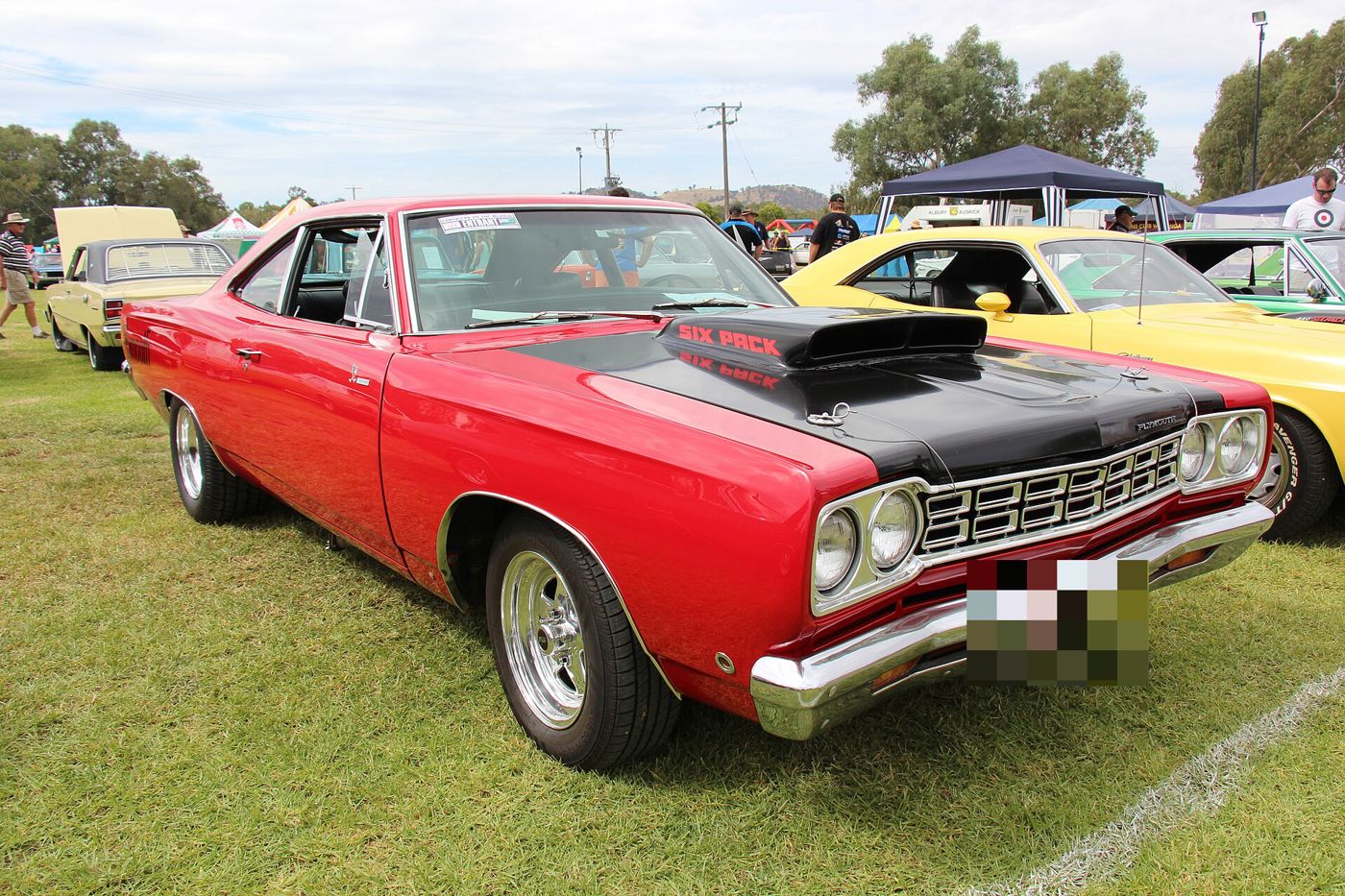

The Plymouth Road Runner, 1968–1980
Plymouth thought it might sell 2,500 Road Runners in 1968. It sold 44,599. The forecast was so low that Plymouth planned its parts supply around it, and the shortage probably cost it more sales. Plymouth had guessed wrong by a factor of almost eighteen.
The idea came from outside the company. During the 1966 model year, Car and Driver's Brock Yates sent Chrysler-Plymouth general manager Bob Anderson a memo proposing an econo-racer: a plain, cheap car with a big engine. The magazine's January 1968 road test credited Yates, and then complained that Plymouth had diluted his idea with gimmicks. The gimmicks came from product planning chief Joe Sturm and analysts Jack Smith and Gordon Cherry, who wanted the car to be noticed. Cherry thought of the Warner Brothers cartoon while watching it with his children. The tie-in cost about $50,000, but accounts differ on what it bought: the history site Ate Up With Motor says the rights to the Road Runner and Coyote characters, Car and Driver said the horn sound. Engineering reworked the Belvedere horn into a beep-beep either way.
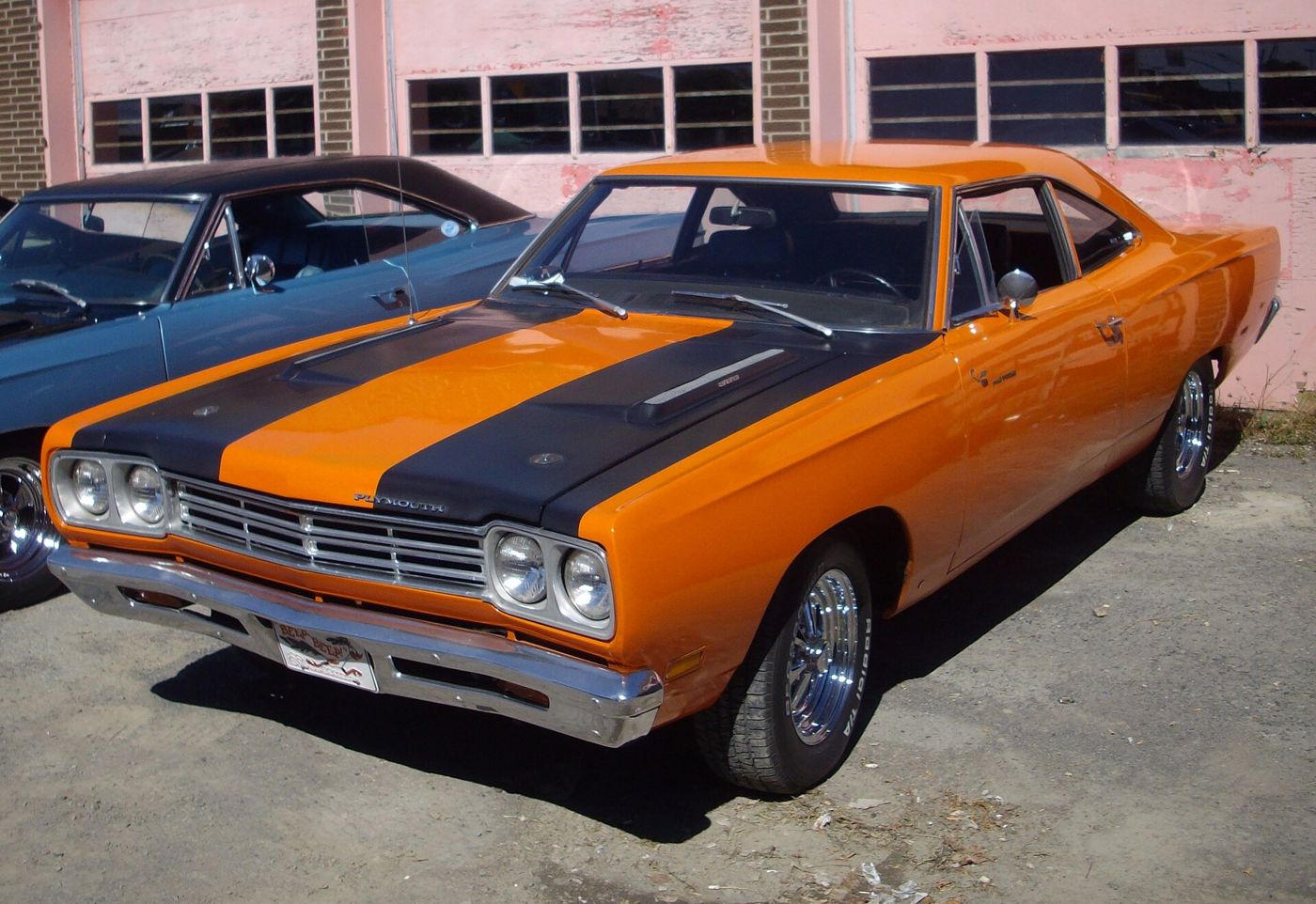
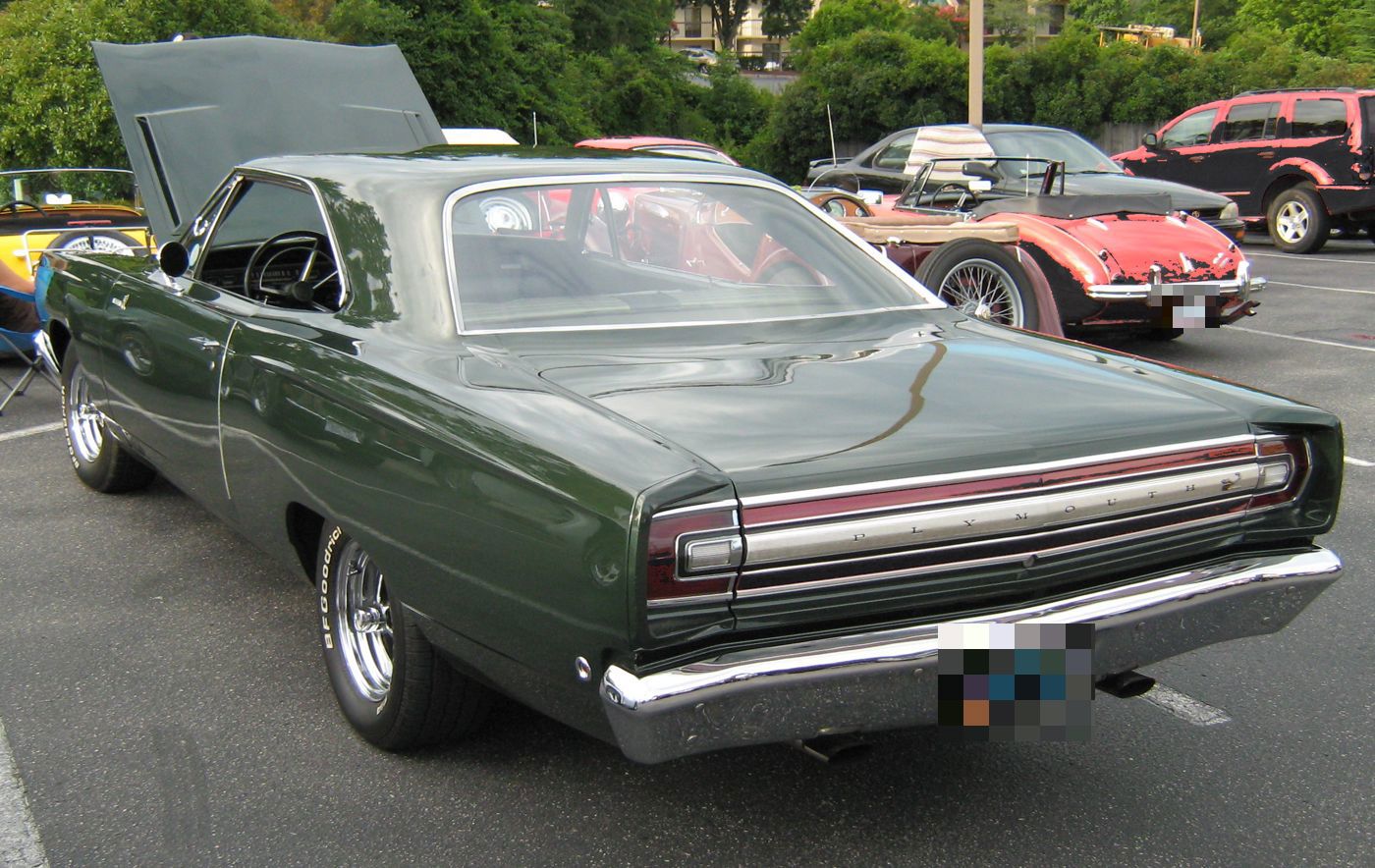
Under the cartoon bird the recipe was simple. The 1968 Road Runner rode Plymouth's 116-inch intermediate platform as a two-door coupe, body RM21, and later a hardtop, RM23. Its standard engine was a Road Runner-only 383 four-barrel rated 335 gross horsepower, which Car Life and Car and Driver both describe as using the 440 Super Commando's heads, camshaft and intake parts. A four-speed was standard and the only optional engine was the 426 Hemi, at $714. The coupe listed at $2,870, which Ate Up With Motor puts $231 under a base Pontiac GTO hardtop. Car and Driver's four-speed test car ran the quarter-mile in 15.0 seconds at 96 mph; Car Life's automatic ran 15.37 at 91.4. Neither was a Hemi, and neither cost more than $3,800 as tested.
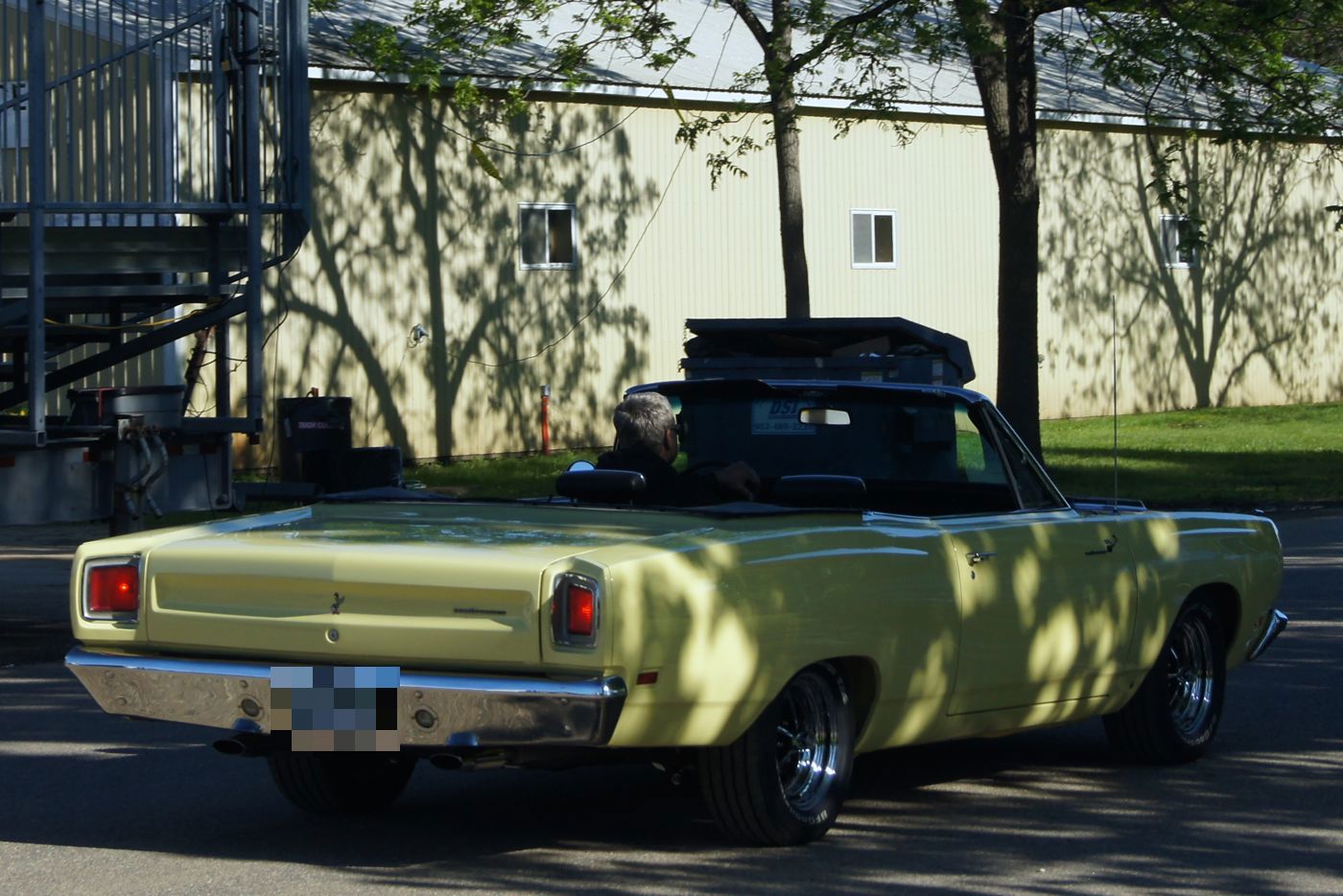

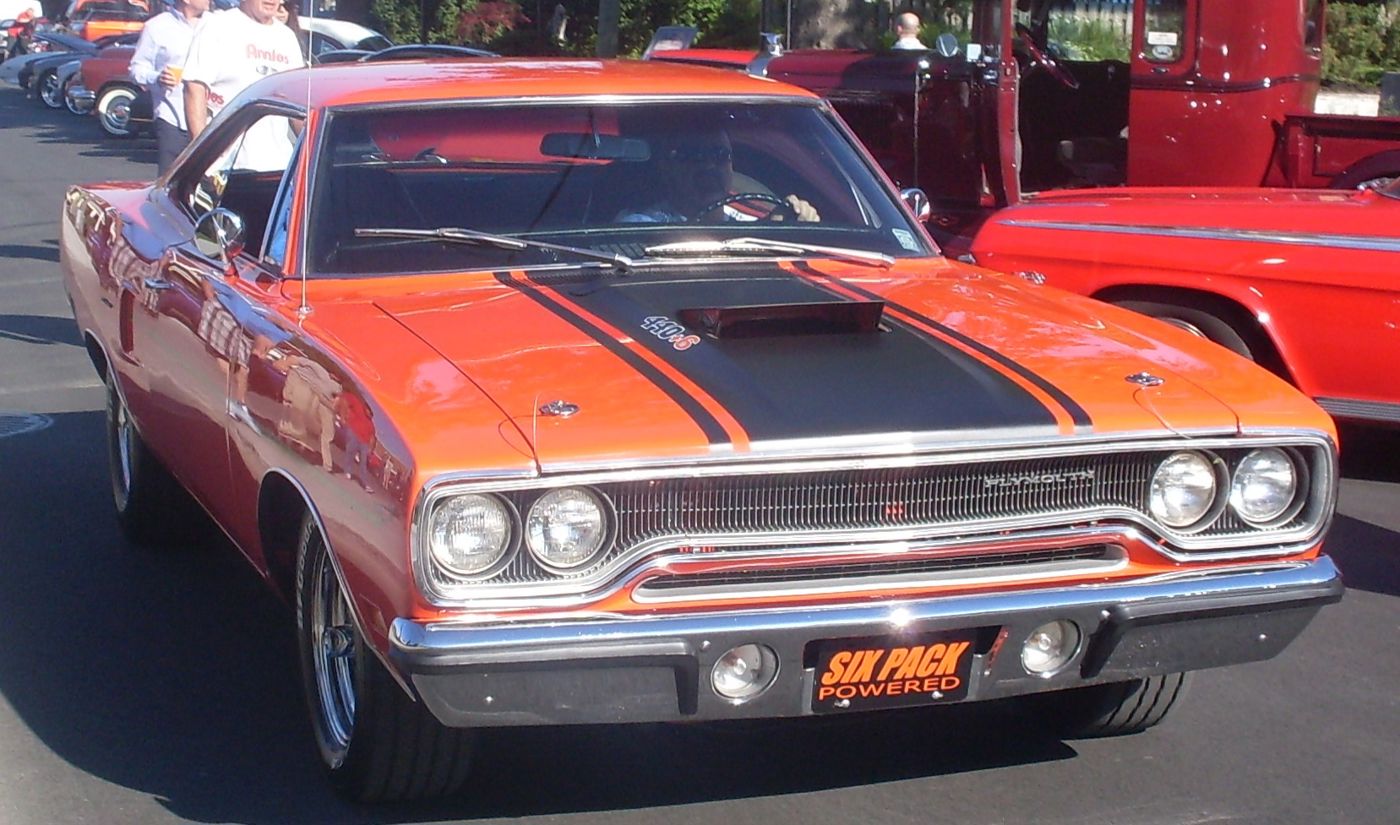
The 1969 car was the peak. A convertible joined the coupe and hardtop, the 440 Six Barrel arrived during the year, and Plymouth built 33,743 coupes, 48,549 hardtops and 2,128 convertibles: 84,420 cars, 81,125 of them for the domestic market and 3,295 for Canada and elsewhere. Ate Up With Motor gives a sales figure of 82,109 without saying what it counts, and it matches neither number. Motor Trend named the Road Runner its Car of the Year. For the January 1969 issue of Car Craft, the drag racer Ronnie Sox took a Hemi press car with a TorqueFlite and a 4.10 axle to Irwindale and, in stock form, ran the quarter-mile in 13.35 seconds at 107.39 mph. Its window sticker read $4,437, which shows how far a $2,945 coupe could be optioned.
For 1970 the menu grew and the buyers thinned. The 383 stayed standard at 335 horsepower; the 440 Six Barrel, rated 390, became a regular $250 option; and the Hemi, $841, had a hydraulic camshaft for the first time. Plymouth built 15,716 coupes, 24,944 hardtops and 824 convertibles, 43,404 in all, a total that includes the winged Superbird; without the Superbirds it comes to 41,484. By either reckoning the ordinary Road Runner sold about half as many as it had the year before.
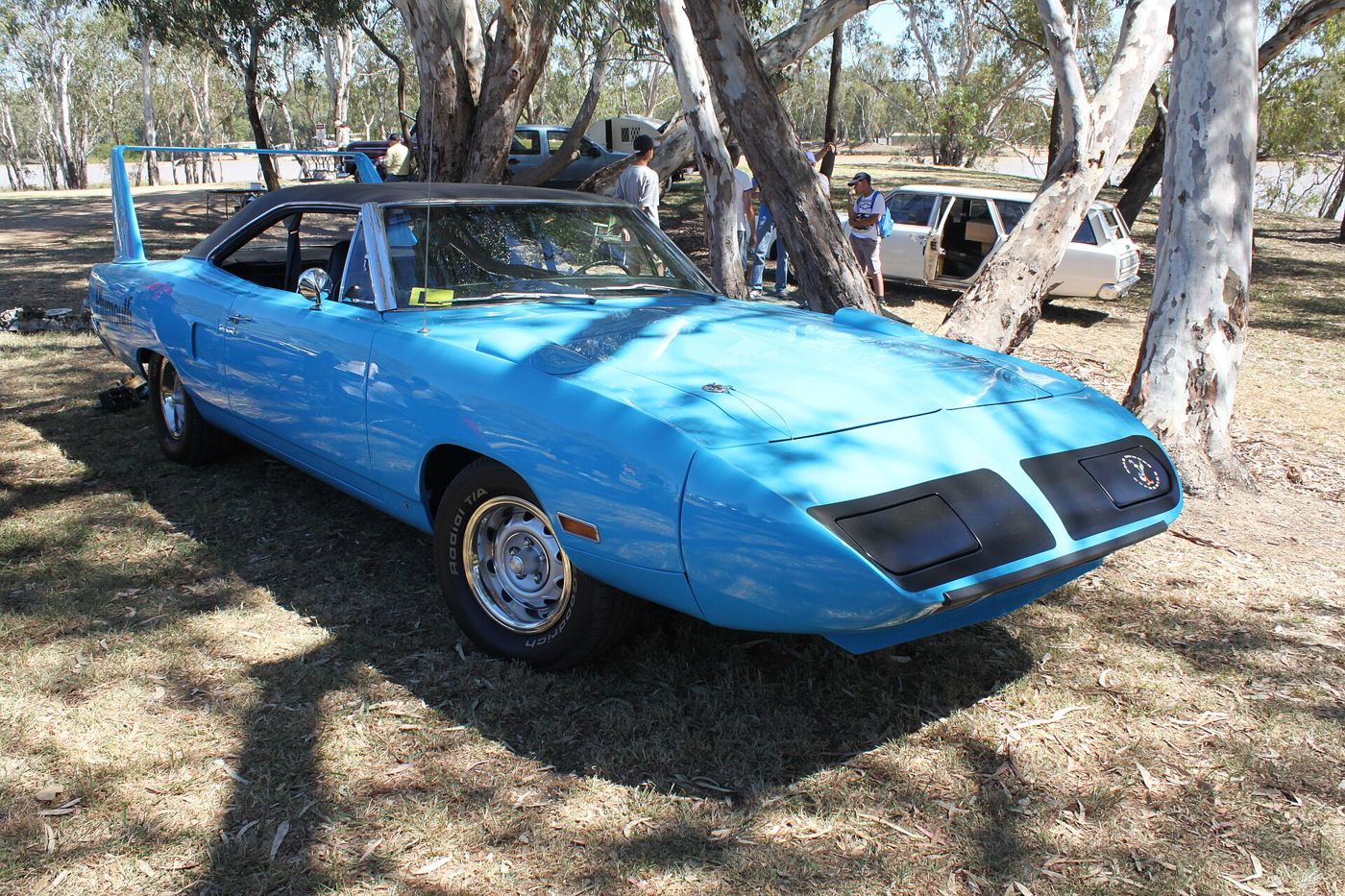
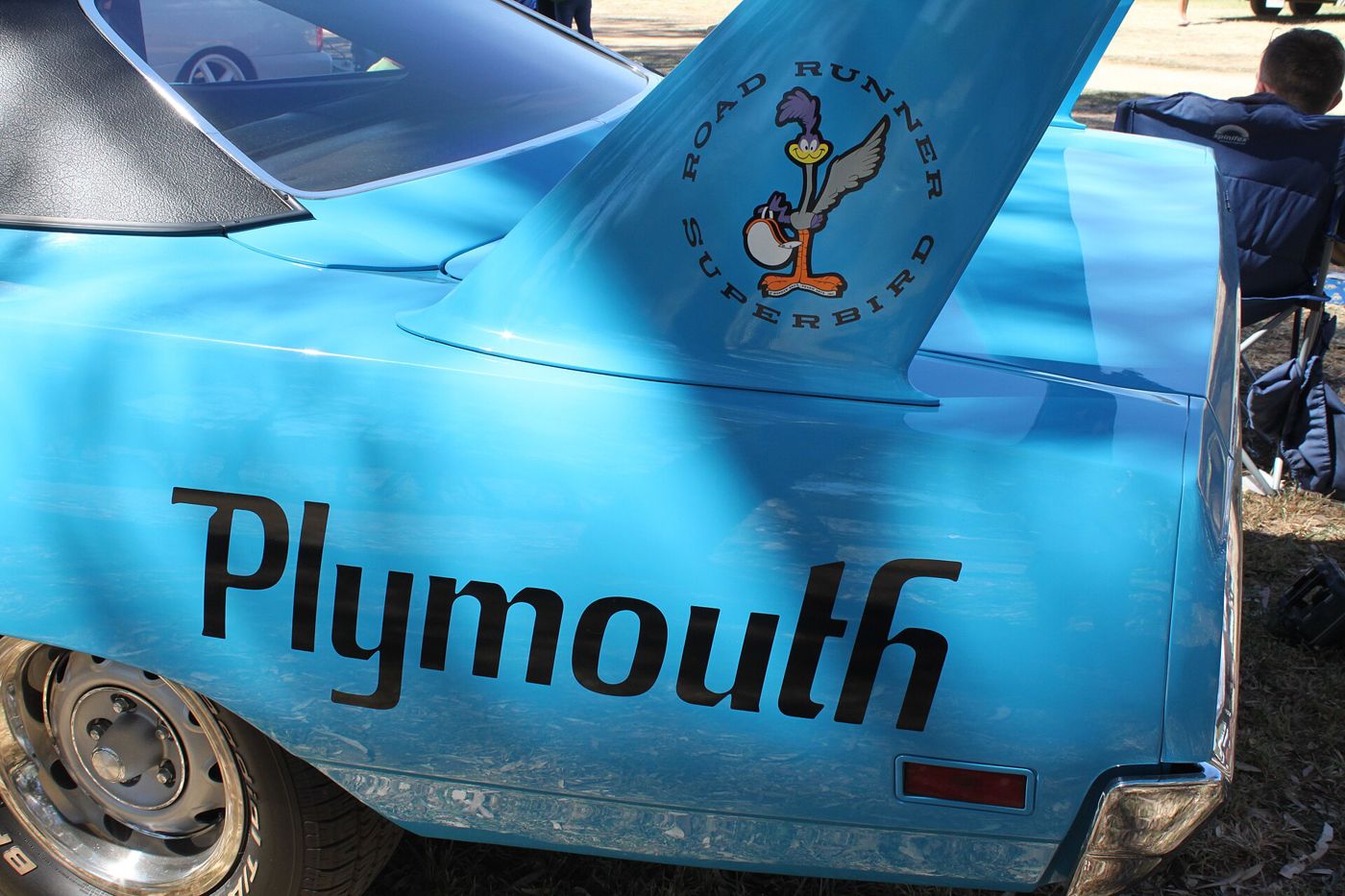
The Superbird existed because a rulebook demanded it. Motor Trend reported in January 1970 that the sanctioning body required one street car for every two Plymouth dealers before the winged body could race, and credited its development to George Wallace, Gary Romberg and Bill McNulty. The street cars were built between October 22 and December 15, 1969, and listed at $4,298 against $3,034 for a regular Road Runner hardtop. How many were built depends on which document is counted: Motor Trend and a NASCAR serial list give 1,920, a Chrysler Historical count gives 1,935, and an independent researcher who compared the lists concludes only that fewer than 2,000 were made. On the track, Pete Hamilton won the 1970 Daytona 500 in the second Petty Enterprises Superbird, a story told on the site's 1970 Petty and Hamilton page.

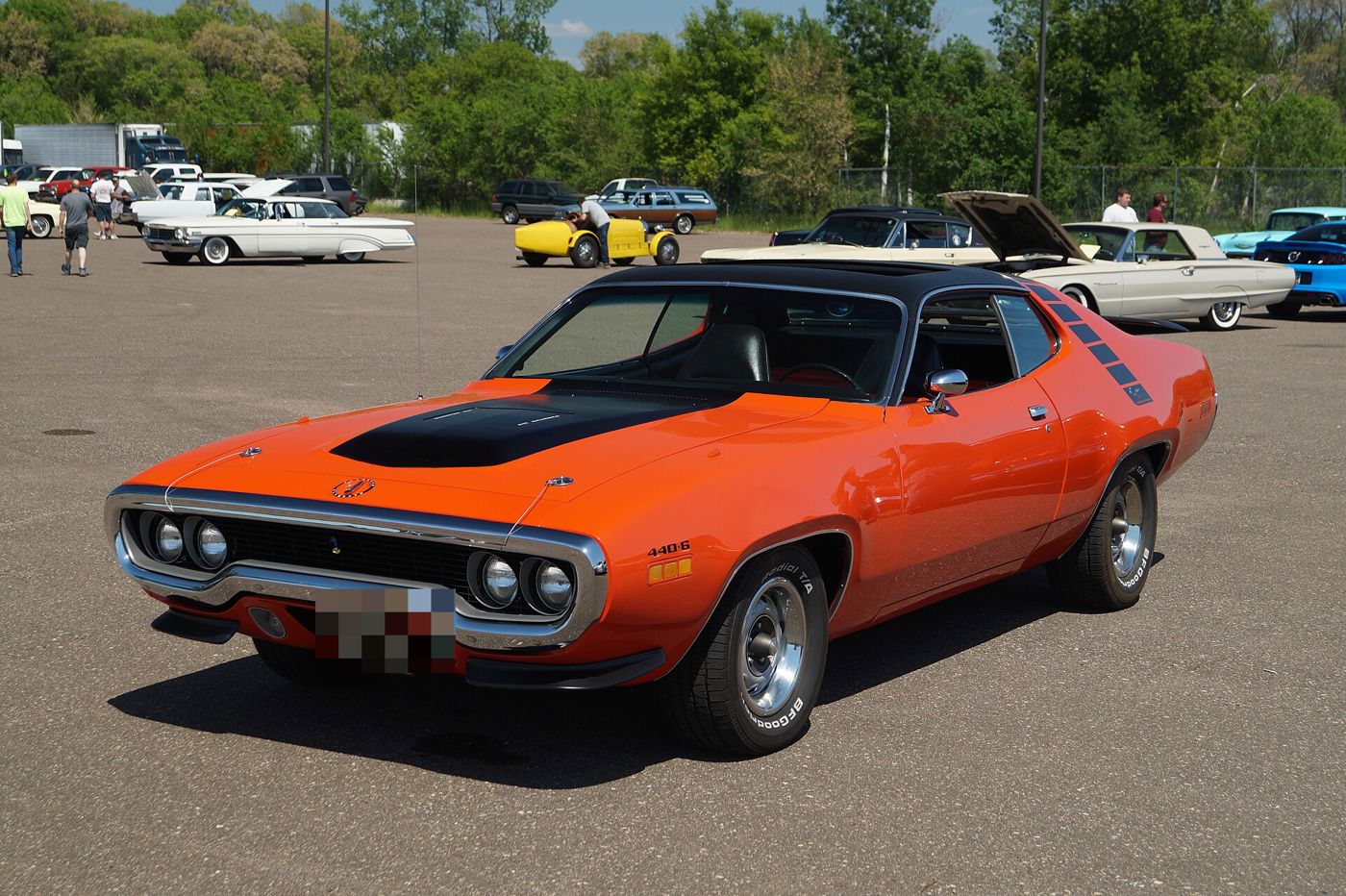
The 1971 redesign brought a swoopy, fuselage-style body shared with the Satellite Sebring and left the Road Runner a hardtop only. Plymouth's 1971 brochure opened its performance pages with a photograph of Richard Petty's winged car, but the showroom numbers ran the other way. Plymouth built 14,218 Road Runners, 13,664 for the United States and 554 for Canada and export. The engine counts hold a surprise: 1,681 Road Runners with the 340 small-block, an engine the brochure's chart did not list. Ate Up With Motor blames punishing insurance rates.
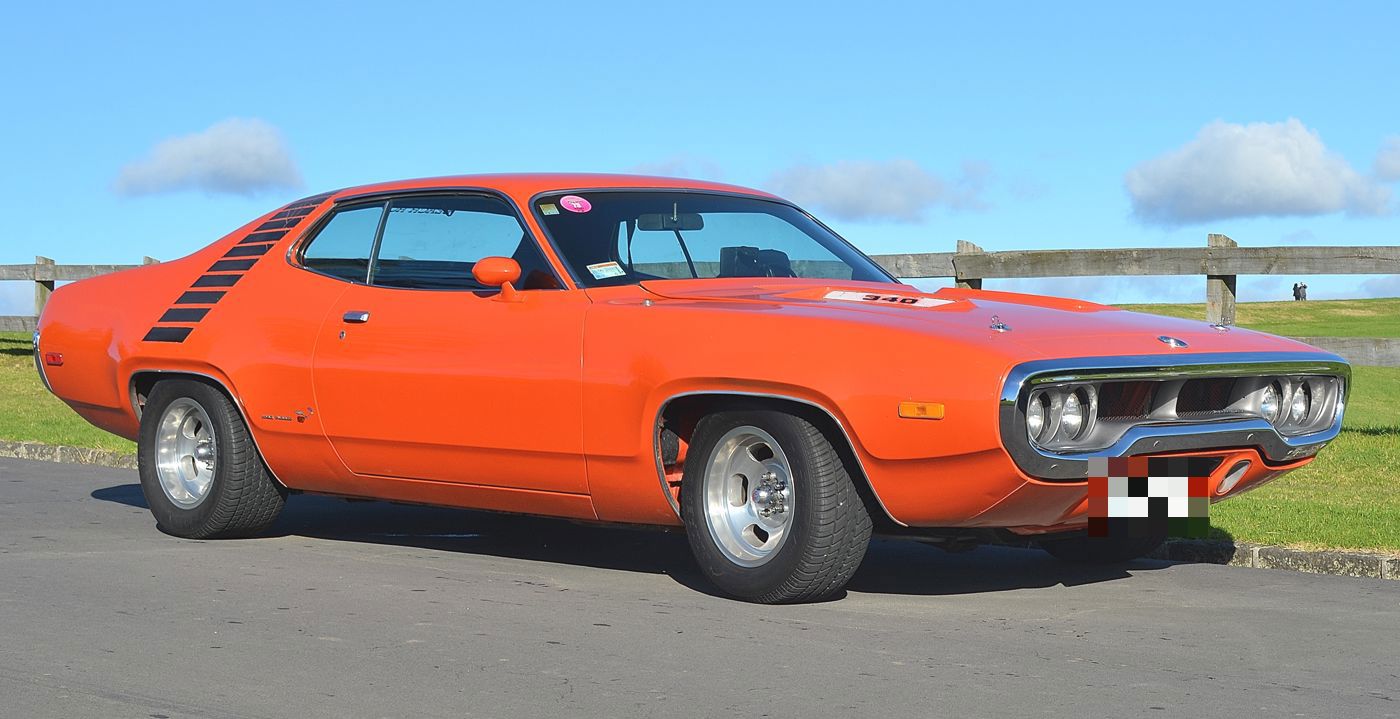
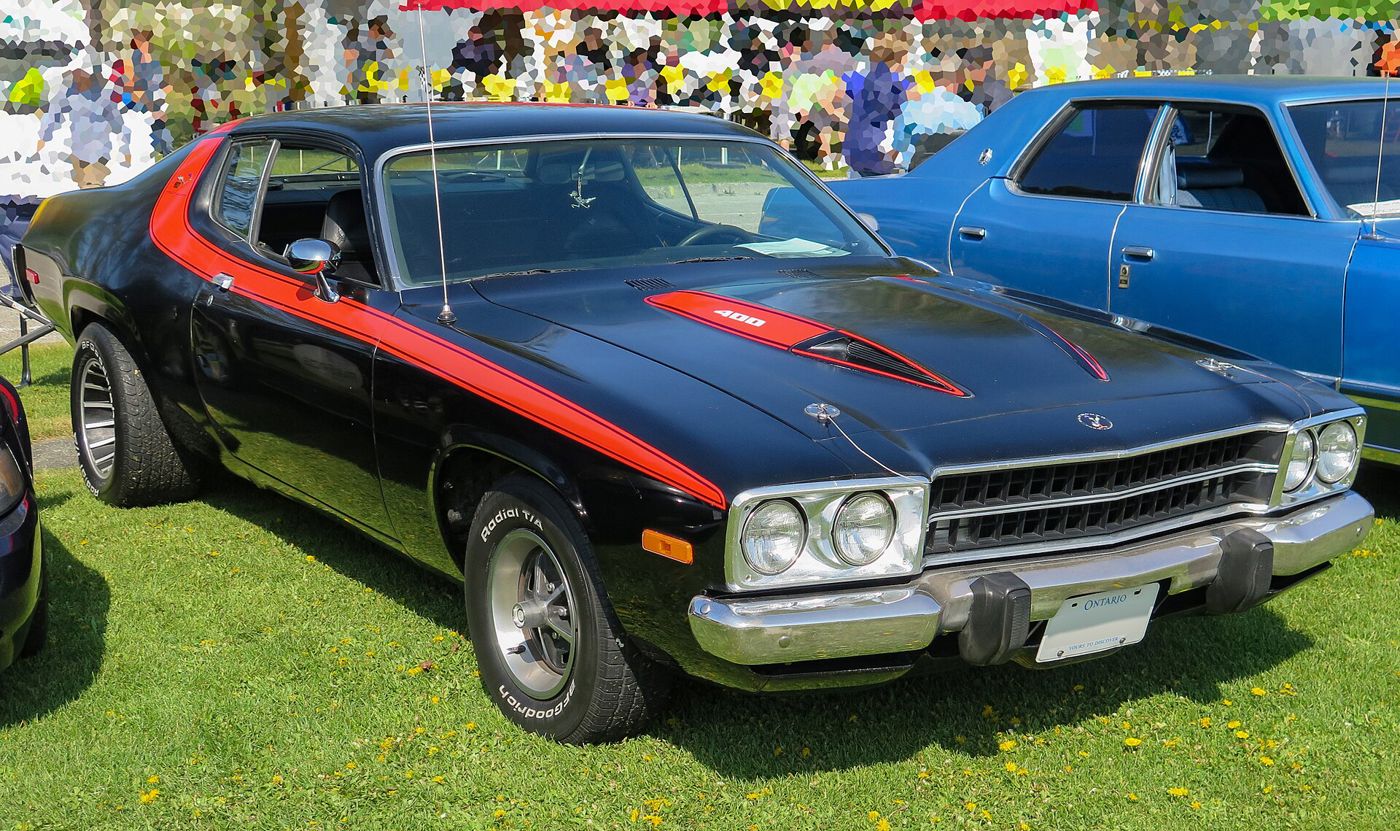
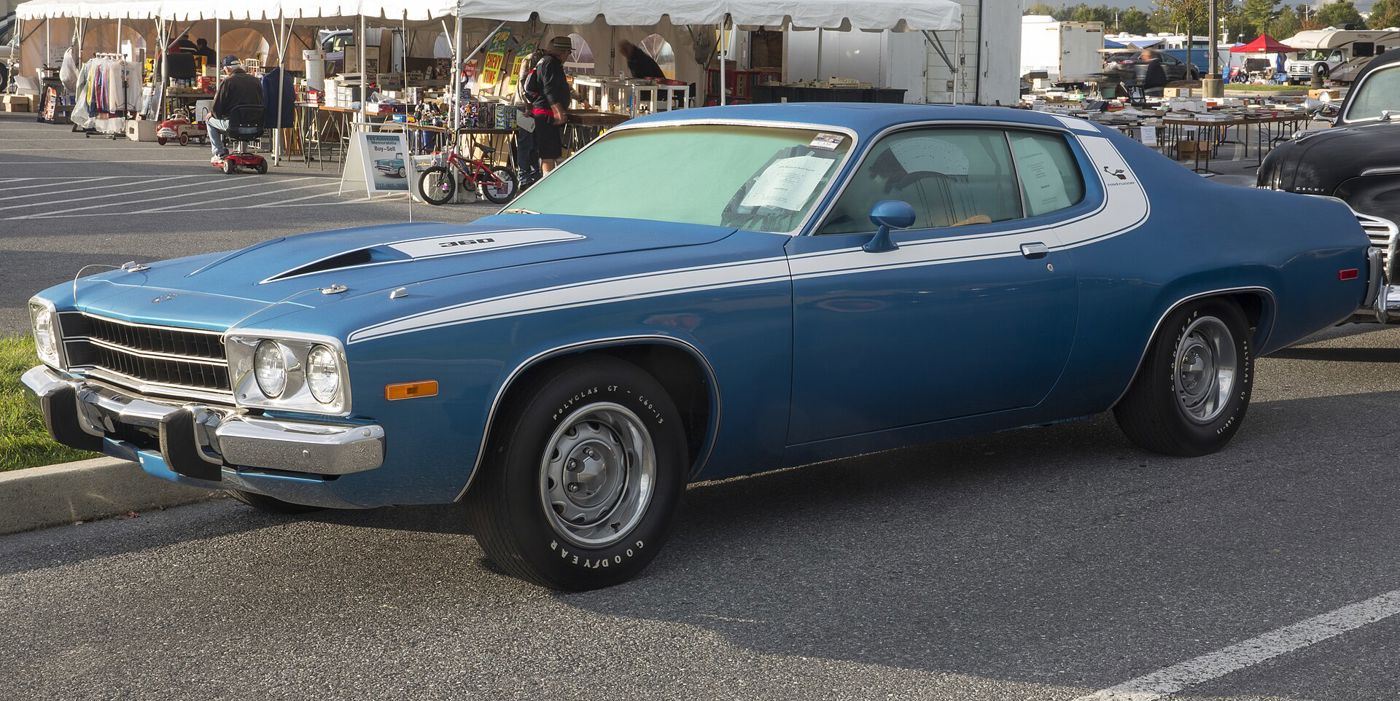
Through the next three years the Road Runner stayed on the Satellite body while its ratings and its counts both changed character. For 1972 the data book rated every engine in SAE net horsepower alone, and the standard engine became a 400 four-barrel rated 255. Production arrives in two versions every year: MuscleCarClub gives 6,861 for 1972, 19,056 for 1973 and 9,646 for 1974, while the Standard Catalog of Chrysler and Mike Mueller's Muscle Car Source Book give 7,628, 19,056 and 11,555, the last including 386 cars with the GTX 440 package. For 1973 the standard engine dropped to a 318 two-barrel with dual exhausts, rated 170 net horsepower, a Road Runner-only version of an engine other Satellites ran at 150. The 1974 brochure was the last to present the Road Runner inside the Satellite range.
For 1975 the name moved to Plymouth's Fury catalogue for one year. Plymouth built 7,183, all Fury-based coupes, priced from $3,973. The standard engine remained a 318 with dual exhausts, and a 400 four-barrel, also with dual exhausts, was the top option.
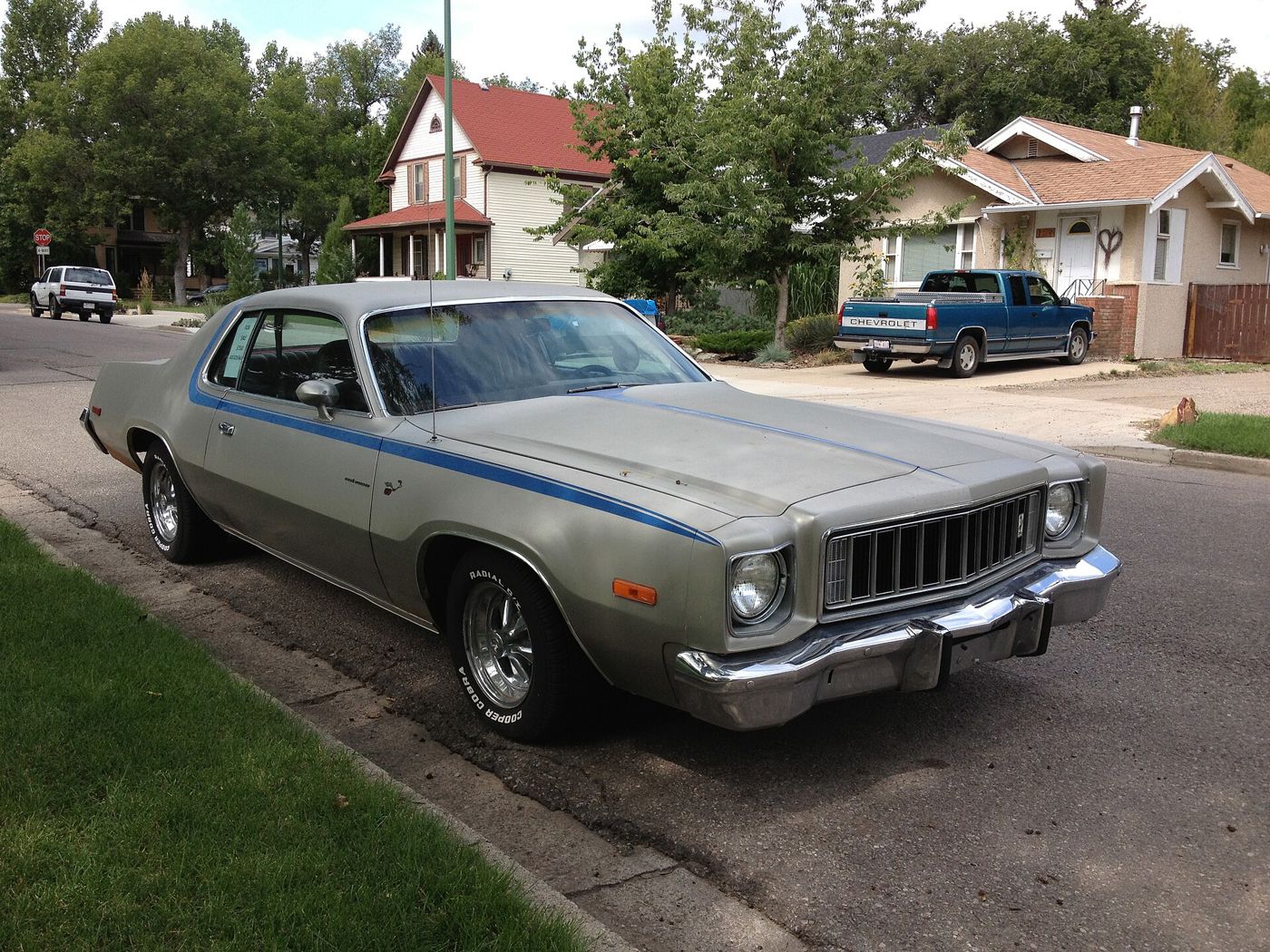

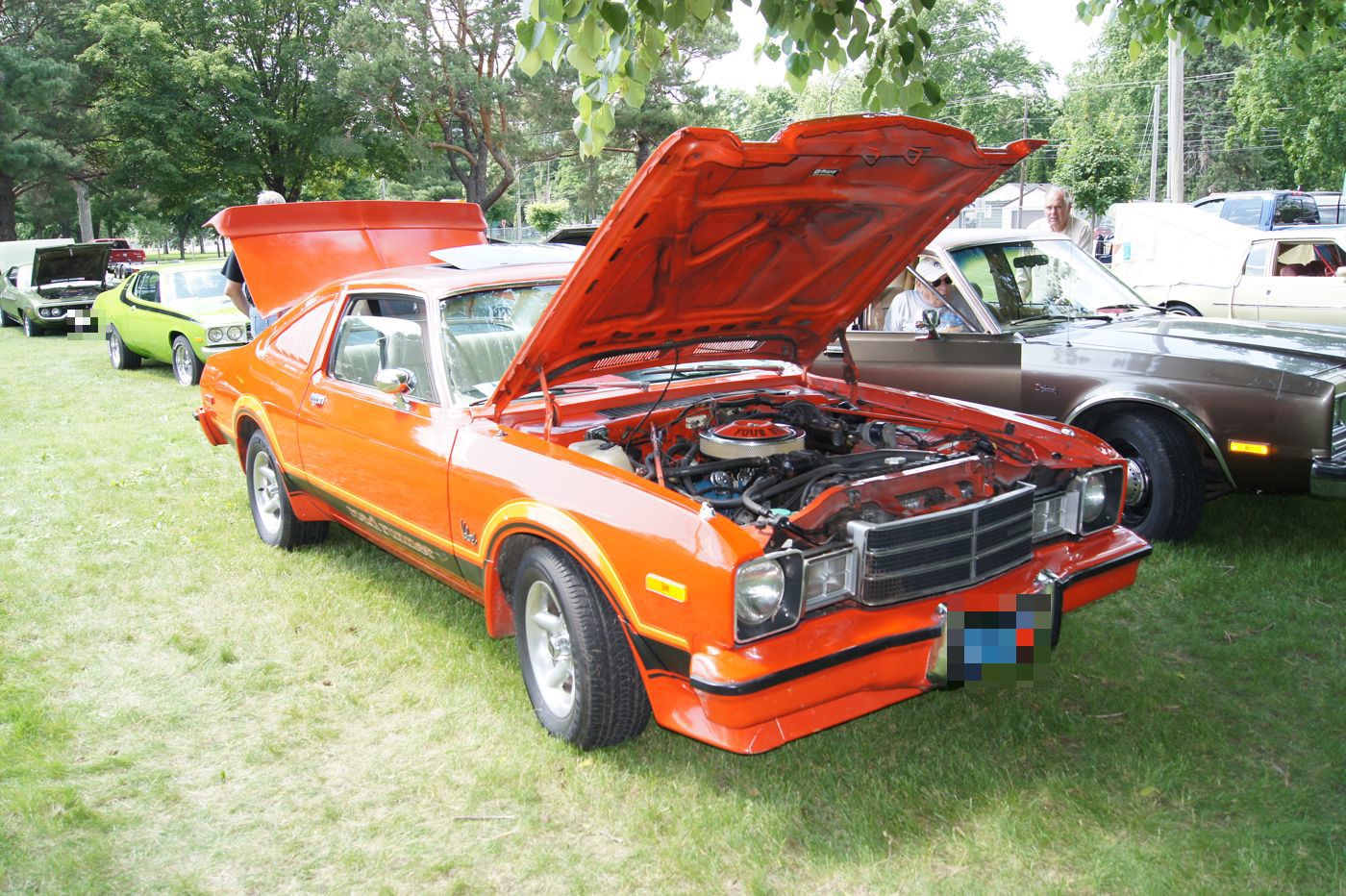
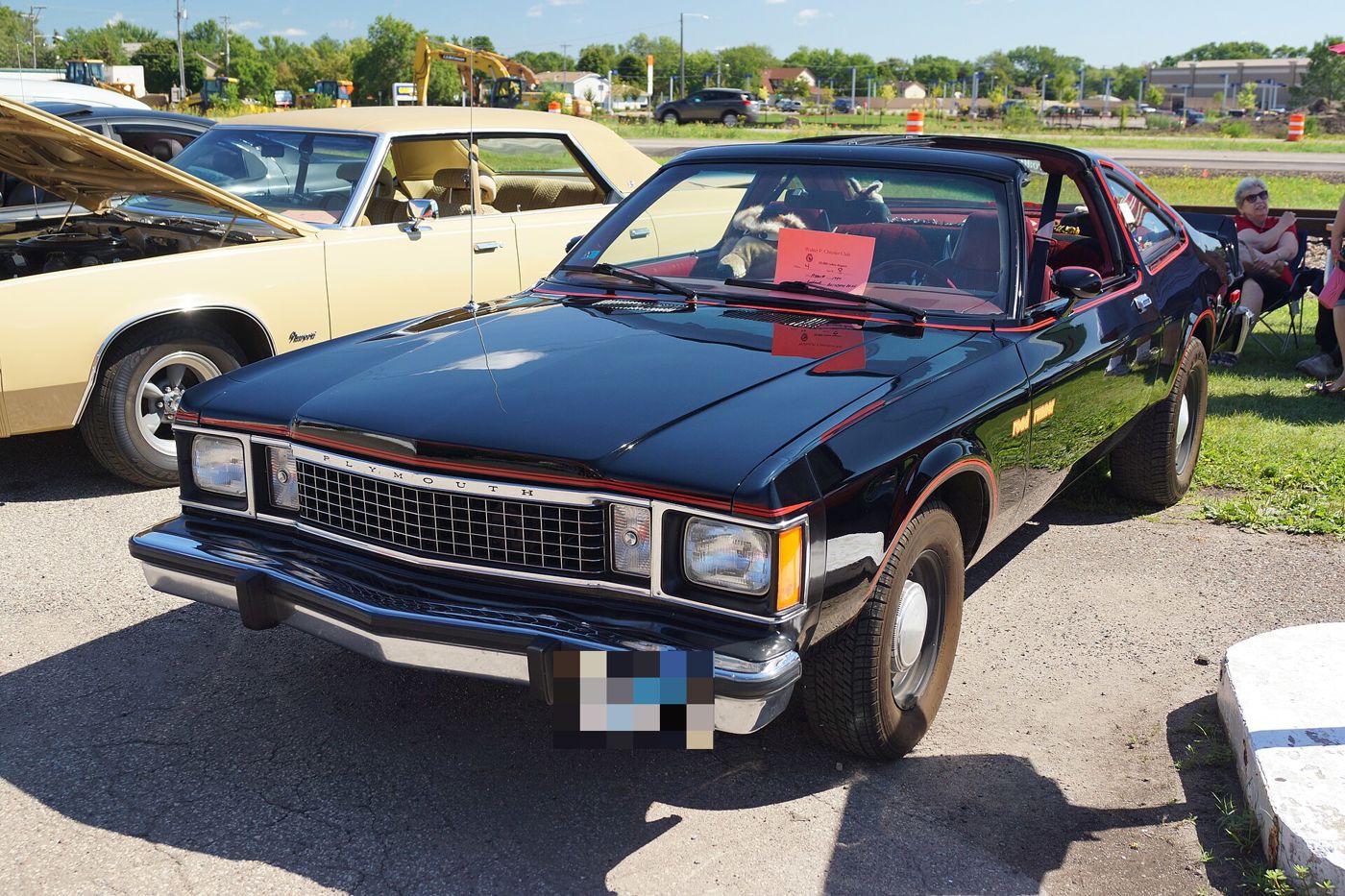
From 1976 the Road Runner was a package on the compact Volaré two-door coupe. Consumer Guide prices it at $205 with E70-14 tires, heavy-duty suspension and its own trim, while a separate catalogue entry lists a $95 Road Runner decor group. The 8,769 that MuscleCarClub prints for 1976 is, read in the Standard Catalog itself, the count of all V-8 base Volaré coupes, 83.8 percent of which carried the Road Runner package. For 1977, 4,585 Volarés had the package and 2,390 were Super Road Runners. In 1978 the package required a V-8 and MuscleCarClub's count fell to 1,357; in 1979 it cost $651 and 1,122 were built.
The 1980 Volaré brochure was the last Plymouth catalogue to list a Road Runner, at $586. Plymouth built 496. The 360 had gone, the most powerful engine left was a 318 rated 120 horsepower, and Plymouth's own order form lists the 225 Slant Six as the package's base engine. A car sold in 1968 as a plain intermediate with a 335-horsepower V-8 ended twelve years later as stripes, wheels and a horn on a six-cylinder compact.
The Road Runner's numbers tell its history on their own: a forecast of 2,500, a first year of 44,599, a peak of 84,420 in 1969, and a last year of 496. Every year has its own page on this site with the full production breakdown, engines, prices and paint, and the sources behind each figure.
People, racing and cross-marque stories
- Pete Hamilton and the 1970 Superbird Racing program
- Richard Petty in 1971 Racing program
- The First Pro Stock Final Racing program
- 1969 Mopar Choices Cross-marque story
- 1969 Showroom War Cross-marque story
- 1970 Showroom Argument Cross-marque story
- 1971: Two Horsepower Languages on One Factory Page Cross-marque story
Production by year
Each year's headline total, exactly as its source scopes it. Scopes differ from year to year (some include related models or other markets), so read the label before comparing years. Every year's fact sheet has the full breakdown.
| Year | What was counted | Count |
|---|---|---|
| 1968 | Road Runner model totalnot stated (production table), model-year | 44,599 |
| 1969 | Road Runner model totalnot stated (production table), model-year | 84,420 |
| 1970 | Road Runner model total (incl. Superbird)not stated (production table), model-year | 43,404 |
| 1971 | Road Runner totalnot stated (registry), model-year | 14,218 |
| 1972 | Road Runner 2-door hardtopnot stated, model-year | 6,861 |
| 1973 | Road Runner 2-door hardtopnot stated, model-year | 19,056 |
| 1974 | Road Runner 2-door hardtopnot stated, model-year | 9,646 |
| 1975 | Road Runner 1975not stated, model-year | 7,183 |
| 1976 | Road Runner 1976not stated, model-year | 8,769 |
| 1977 | Road Runner 1977not stated, model-year | 6,975 |
| 1978 | Road Runner 1978not stated, model-year | 1,357 |
| 1979 | Road Runner 1979not stated, model-year | 1,122 |
| 1980 | Road Runner 1980not stated, model-year | 496 |
Model years
- 1968 Fact sheet
- 1969 Fact sheet
- 1970 Fact sheet
- 1971 Fact sheet
- 1972 Fact sheet
- 1973 Fact sheet
- 1974 Fact sheet
- 1975 Fact sheet
- 1976 Fact sheet
- 1977 Fact sheet
- 1978 Fact sheet
- 1979 Fact sheet
- 1980 Fact sheet
“Not offered” means this nameplate or performance model wasn't sold that year. It doesn't mean we're missing the research.
Specifications by year
88 factory specifications across 12 model years, gathered from each year's fact sheet so you can see how a dimension, a weight or a ratio changed over the run. Labels are carried as each source worded them, so the same measure may read differently from one year to the next.
1968
| Measure | Value | Applies to |
|---|---|---|
| Wheelbase | 116 in | all Road Runner bodies |
| Overall length | 202.7 in | sedans, coupes, hardtops |
| Overall width | 76.4 in | all |
| Front tread | 59.5 in | all |
| Rear tread | 59.2 in | all |
| Shipping weight, coupe | 3,405 lb | RM21 |
| Shipping weight, hardtop | 3,400 lb | RM23 |
| Standard tire, 383 Hi-Po | F70x14 | Road Runner |
1969
| Measure | Value | Applies to |
|---|---|---|
| Wheelbase | 116 in | all Road Runner bodies |
| Overall length | 204 in | non-wagon bodies |
| Overall width | 76.4 in | non-wagon bodies |
| Shipping weight, coupe | 3,435 lb | RM21 |
| Shipping weight, hardtop | 3,450 lb | RM23 |
| Shipping weight, convertible | 3,790 lb | RM27 |
| Front brakes (Road Runner and GTX) | 11 x 3 in | drum; rear 11 x 2-1/2 in. |
1970
| Measure | Value | Applies to |
|---|---|---|
| Wheelbase | 116 in | non-wagon bodies |
| Overall length | 204 in | non-wagon bodies |
| Overall width | 76.4 in | all |
| Overall height, hardtop and coupe | 53 in | hardtops and coupes |
| Overall height, convertible | 54.1 in | convertible |
| Front tread | 59.7 in | all |
| Rear tread, V-8 | 59.2 in | V-8 cars |
| Standard axle ratio, 383 Hi-Po | 3.23 :1 | all transmissions |
| Standard axle ratio, 426 Hemi or 440 with four-speed | 3.54 :1 | four-speed |
| Standard axle ratio, 426 Hemi or 440 with automatic | 3.23 :1 | TorqueFlite |
| Shipping weight, coupe | 3,450 lb | RM21 |
| Shipping weight, hardtop | 3,475 lb | RM23 |
| Shipping weight, Superbird | 3,785 lb | Superbird |
| Shipping weight, convertible | 3,550 lb | RM27 |
1971
| Measure | Value | Applies to |
|---|---|---|
| Rear track | 62 in | V-8 models (61.6 in. with Sixes, 63.4 in. wagons) |
1972
| Measure | Value | Applies to |
|---|---|---|
| Wheelbase | 115 in | Satellite hardtops and coupes |
| Overall length | 203 in | Satellite hardtop |
| Overall width | 79.1 in | Satellite hardtop |
| Overall height | 52.2 in | Satellite hardtop |
| Track, front | 59.7 in | Satellite hardtop |
| Track, rear | 62 in | Satellite hardtop |
| Fuel tank | 21 gal | Satellite |
1973
| Measure | Value | Applies to |
|---|---|---|
| Wheelbase | 115 in | 2-door models |
| Overall length | 210.8 in | 2-door models |
| Overall width | 79.1 in | 2-door models |
| Overall height | 52.5 in | Road Runner RM21 |
| Track, front | 61.9 in | all models |
| Track, rear | 62 in | all except wagons |
| Curb weight | 3,705 lb | Road Runner coupe with automatic transmission |
| Shipping weight (estimated) | 3,525 lb | Road Runner coupe |
| Fuel tank | 19.5 gal | Satellite (non-wagon) |
1974
| Measure | Value | Applies to |
|---|---|---|
| Wheelbase | 115 in | 2-door models |
| Overall length | 212.4 in | 2-door models |
| Overall width | 79.1 in | 2-door models |
| Overall height | 52.2 in | 2-door models |
| Track, front | 61.9 in | 2-door models |
| Track, rear | 62 in | 2-door models |
1975
| Measure | Value | Applies to |
|---|---|---|
| Wheelbase | 115 in | Fury 2-door hardtop |
| Overall length | 213.8 in | Fury 2-door hardtop |
| Overall width | 77.4 in | Fury 2-door hardtop |
| Overall height | 52.6 in | Fury 2-door hardtop |
| Track, front | 61.9 in | Fury 2-door hardtop |
| Track, rear | 62 in | Fury 2-door hardtop |
| Rear axle ratio (standard) | 3.21 ratio | Road Runner, 8-1/4 in. axle |
1976
| Measure | Value | Applies to |
|---|---|---|
| Wheelbase | 108.5 in | Volaré coupe |
| Overall length | 197.5 in | Volaré coupe |
| Overall width | 72.8 in | Volaré coupe |
| Overall height | 53.1 in | Volaré coupe |
| Track | 58.5 in | Volaré coupe (drawing dimension) |
| Fuel tank | 18 gal | Volaré |
| Rear axle ratio, 360 V-8 with TorqueFlite (standard) | 2.76 ratio | Volaré 360; optional 2.45, 2.94, 3.21; Sure-Grip 2.71, 3.21 |
| Rear axle ratio, 318 V-8 with 3-speed manual (standard) | 2.45 ratio | Volaré 318; optional 2.94, 3.21; Overdrive-4 2.94 std; TorqueFlite 2.45 std |
1978
| Measure | Value | Applies to |
|---|---|---|
| Wheelbase | 108.7 in | Volaré coupe |
| Overall length | 197.2 in | Volaré coupe |
| Overall width | 73.3 in | Volaré coupe |
| Overall height | 53.3 in | Volaré coupe |
| Track, front | 60 in | Volaré coupe |
| Track, rear | 58.5 in | Volaré coupe |
| Fuel tank | 19.5 gal | V-8 models |
1979
| Measure | Value | Applies to |
|---|---|---|
| Wheelbase | 108.7 in | Volaré coupe |
| Overall length | 197.2 in | Volaré coupe, with optional bumper guards |
| Overall width | 72.8 in | Volaré coupe |
| Overall height | 53.3 in | Volaré coupe |
| Track, front | 60 in | Volaré coupe |
| Track, rear | 58.5 in | Volaré coupe |
| Fuel tank | 19.5 gal | V-8 models |
| Rear axle ratio, 360 4-bbl with TorqueFlite | 2.7 ratio | Volaré coupe (3.2 optional) |
1980
| Measure | Value | Applies to |
|---|---|---|
| Wheelbase | 108.7 in | Volaré 2-door |
| Overall length | 200.3 in | Volaré 2-door |
| Overall width | 72.4 in | Volaré 2-door |
| Overall height | 53.6 in | Volaré 2-door |
| Curb weight | 3,200 lb | Volaré 2-door (base, six-cylinder) |
| Fuel tank | 18 gal | Volaré 2-door |