1968 · Dodge · United States
1968 Dodge Dart GTS: A 340 for the Street, and 80 Hemi Darts That Were Never Meant for It
The new Dart GTS brought a 275 hp 340 or a 300 hp 383, and in February Dodge released 80 Hurst-completed LO23 Hemi Darts for Super Stock drag racing; GTS production was not reported separately.
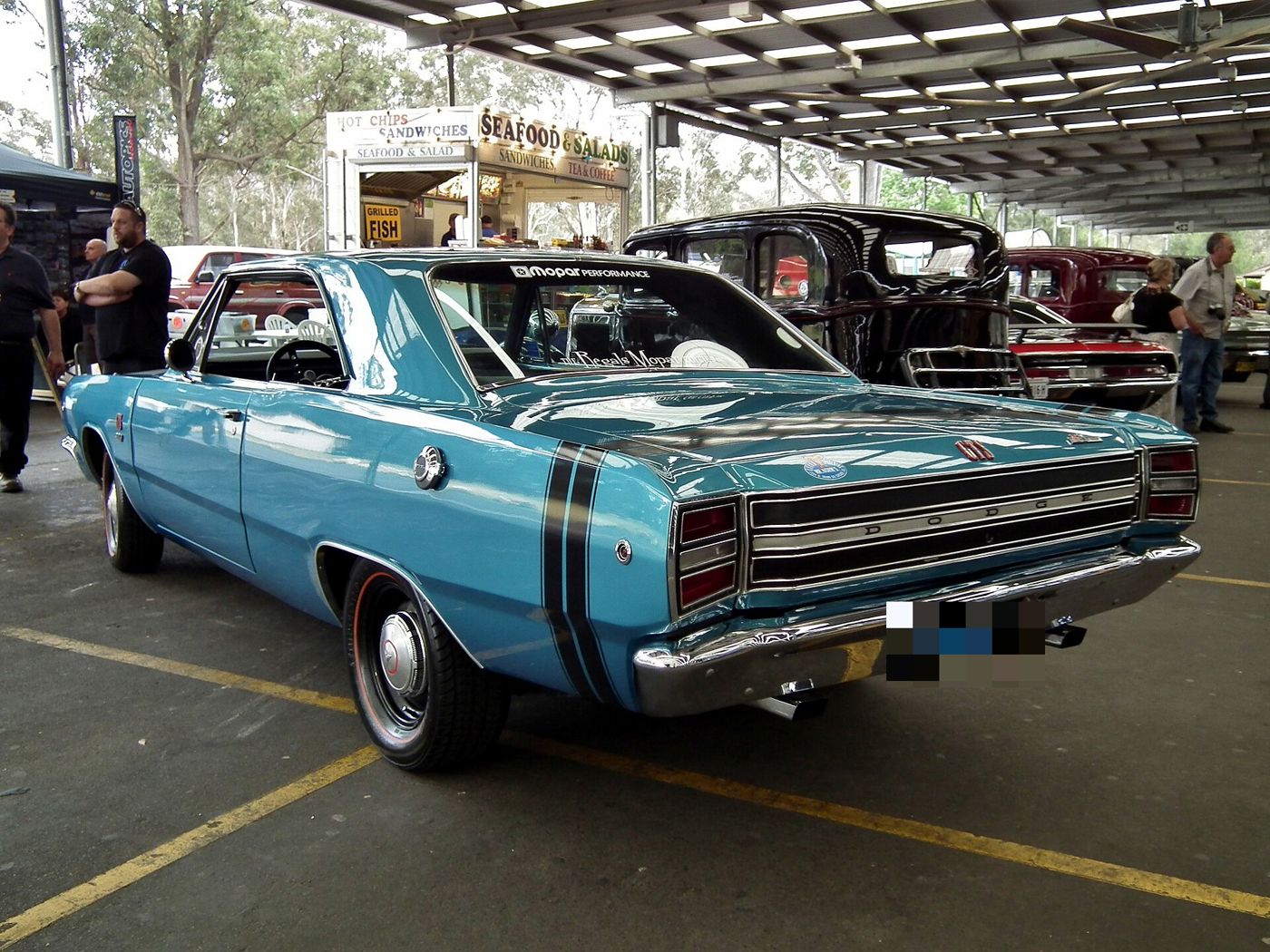

On December 7, 1967, Chrysler's Race Group wrote to W. E. 'Farmer' Dismuke at the National Hot Rod Association about proposed 1968 Super Stock B race cars. On February 20, 1968, Dodge released the option: a 1968-only Dart built for drag racing, assembled by Hurst Performance, fitted not with the Street Hemi but with the full cross-ram race 426, and sold with a non-warranty disclaimer. There were 80 of them. The same model year gave ordinary buyers a very different fast Dart.1,2
That car was the GTS, new for 1968; the initials stood for GT Sport. It was a high-performance version of the GT with its own body designation, offered as a two-door hardtop and a convertible. Its standard engine was also new that year. The 318 and 340 V8s arrived in the Dart for 1968, and the 340 came from Chrysler's 273 and 318 family: a 4.04-inch bore and 3.31-inch stroke, 10.5:1 compression and a single four-barrel, rated at 275 horsepower at 5,000 rpm and 340 lb-ft at 3,200 rpm, the manufacturer's advertised figure.3,2
The GTS put its equipment where a buyer could see it. It had a low-restriction dual exhaust with chrome tips, heavy-duty Rallye suspension, firm-ride shock absorbers, 14 x 5.5 wheels, E70-14 red-stripe tires, a hood with power bulges and vents, and body-side stripes, with the bumblebee stripe around the tail as a no-cost option. A column-shifted three-speed manual was standard; the four-speed cost $179 and the TorqueFlite $181 with a V8, and 3.23, 3.55 and 3.91 axles were offered. Vinyl front buckets were standard in the hardtop and optional in the convertible.3,2
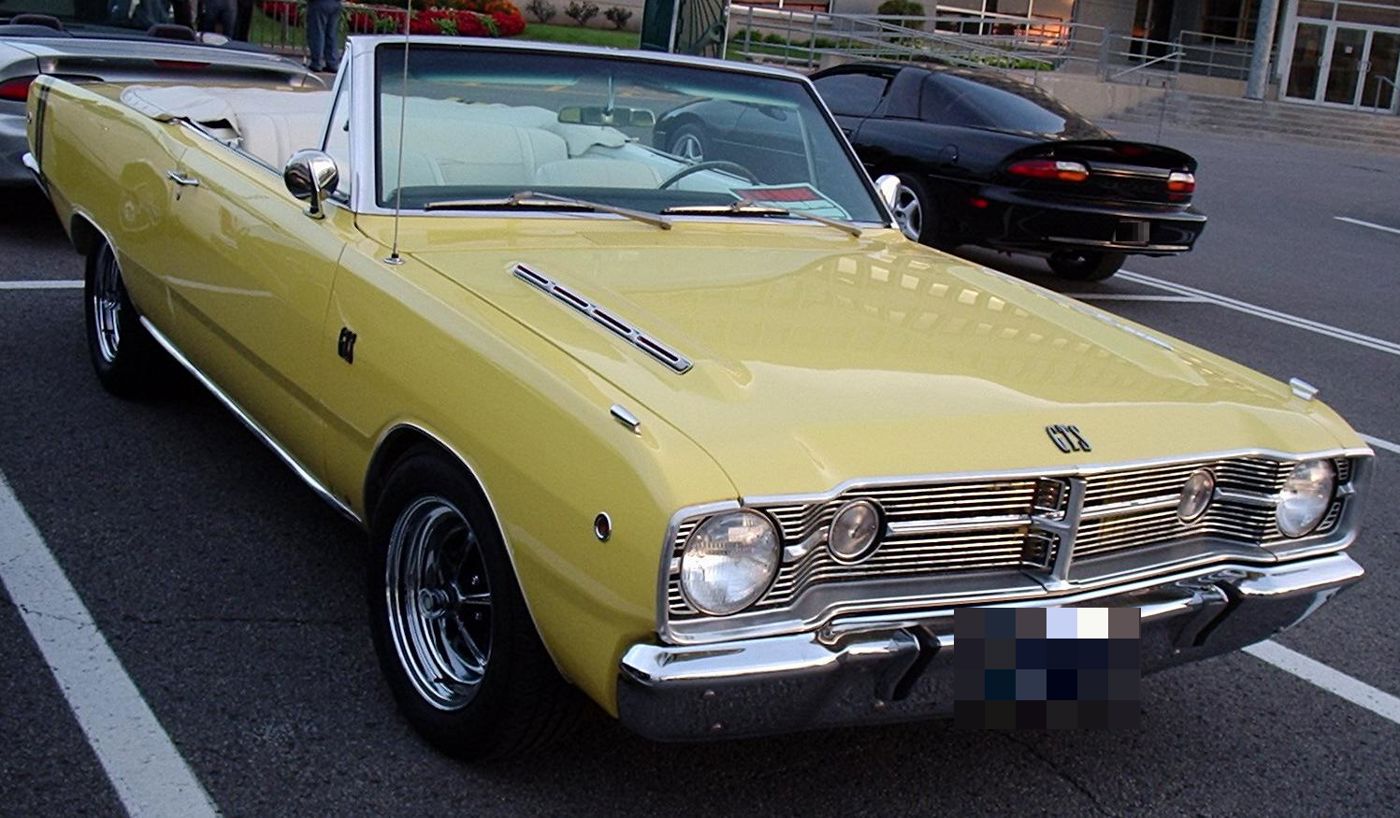

For more displacement there was the 383. It was rated at 300 horsepower at 4,400 rpm and 400 lb-ft at 2,400 rpm on 10.0:1, with freer-breathing exhaust manifolds and carburetor secondaries enlarged from 1.56 to 1.69 inches, and a 383 car wore '383' just below its GTS badge. The bigger engine added 89 pounds with the four-speed and 136 with the automatic.2,3
The GTS hardtop cost $2,611 and the convertible $3,383, a $772 spread between two bodies of one model. GTS output was counted within 24,100 Dart GT-series V8s. A 340-production compilation that names Galen Govier and Consumer Guide among its sources counts 5,828 GTS 340s, about a quarter of that GT-series V8 total. For scale, Dodge delivered 56,900 six-cylinder base Darts the same year, more than nine for every GTS 340.3,4,2
The magazines liked the smaller engine. Hot Rod ran a 340 GTS with the TorqueFlite through the quarter-mile in 14.38 seconds at 97 mph, a figure for that tested car from an issue that is not identified. Hot Rod suggested that 'the GTS might be a more sensible package' than Plymouth's Road Runner, pointing to carpet, fat tires and bucket seats, and thought the smaller engine could prove an advantage in drag-racing classes. The comparison was pointed: both cars came from the same corporation, and the Dart made its case on equipment rather than engine size.3
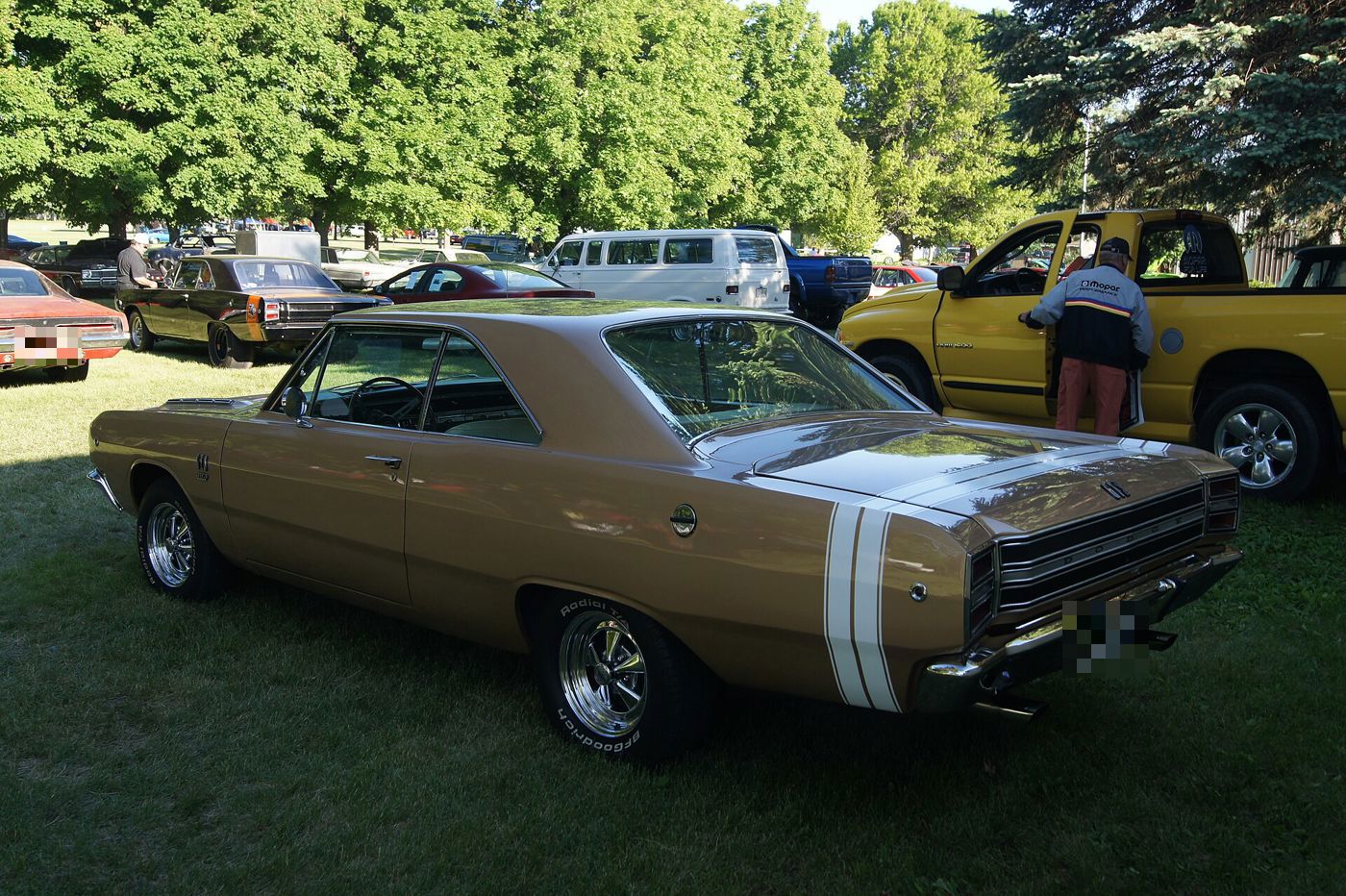

The LO23 began where the GTS ended. LO23 was the car's VIN model designation, and the bodies started down the line at Hamtramck before a specialized Chrysler and Hurst completion. The conversion took place at Hurst's Ferndale, Michigan, facility, and the list of what happened there is long: a fiberglass hood with a scoop and hold-down pins, fiberglass fenders, acid-etched doors without mirrors, side windows of thin Chemcor worked by straps, enlarged rear wheel wells, van bucket seats on aluminum brackets, and bodies delivered unpainted. Street Muscle puts the finished weight at 3,020 pounds, a figure it does not source.1,5
The drivetrain was chosen for one job. There were two combinations: an A833 four-speed with a Hurst shifter driving a Dana rear with 4.88 gears, or a modified A727 TorqueFlite with an 8.75-inch rear and 4.86 gears, both behind a Hemi breathing through two Holley four-barrels on an aluminum cross-ram. The published rating was 425 horsepower and the original price was under $5,000. The driveline as delivered depended on the transmission chosen. None of that made the car a road car, and the disclaimer made the point in writing: it was sold for competition, without the warranty a showroom Dart carried.5,1,2
Two sources count 80 LO23 cars, and they agree on that number. The Plymouth half of the program is less settled: DodgeGarage reports 72 Hemi Barracuda package cars, while NHRA's 2024 account of the Barracuda prototype says Chrysler built 50. The two A-body race cars shared an engine, a converter and a purpose, but their counts come from different accounts and cannot be added into a program total.1,2,6,7
On the drag strip the LO23 did what the letter to NHRA had proposed. The cars began to dominate the SS/B and SS/BA classes and set progressively better records through 1968 and after. Several racers are associated with original cars, but many of the cars pictured today are tributes and re-creations, and they cannot prove what every original looked like when it left Hurst. What the program established was a factory-authorized race car built from a showroom body, with its provenance, its code and its count all resting on documents that are still only partly public.5,1
The street car's own consequence showed up in the next year's numbers. The same 340 compilation counts 3,645 Dart GTS 340s for 1969, down from 5,828, and 16,637 Swinger 340s. The GTS had shown that a small Dodge with the 340 could sell on performance; in 1969, by those counts, more than four buyers chose the Swinger 340 for every one who chose the GTS 340. The Hemi Dart's story, by contrast, is told by a letter, a dealer release and a converter's parts list rather than by a production table.4,1,5
Fact sheet · 1968 · United States
The numbers
1968 Dodge Dart GTS and the LO23 Hemi Dart: The new Dart GTS brought a 275 hp 340 or a 300 hp 383, and in February Dodge released 80 Hurst-completed LO23 Hemi Darts for Super Stock drag racing; GTS production was not reported separately.
Figures may describe different groups of cars. Add rows together only when the note says they make up a total.
Key facts
Production
| What was counted | Built |
|---|---|
| Dart GT-series V8s (GT and GTS combined)3 GT series incl. GTS · 2-door hardtop and convertible · V8 (all) | 24,100 |
| Dart GTS, hardtop and convertible (Over-Drive table)8 GTS · hardtop and convertible | 8,295 |
| Dart GT, hardtop and convertible (Over-Drive table)8 GT · hardtop and convertible | 37,605 |
| Dodge Dart (base series), rounded8 Dart · 2-door and 4-door sedan | 60,300 |
| Dodge Dart 270, rounded8 Dart 270 · 2-door and 4-door sedan, 2-door hardtop | 76,500 |
| What was counted | Built |
|---|---|
| Dart GTS with 3404 GTS · 2-door hardtop and convertible · 340 4-bbl | 5,828 |
| Dart GT, V-8 (Over-Drive table)8 GT · hardtop and convertible · V-8 (all) | 26,705 |
| Dart GT, six-cylinder (Over-Drive table, rounded)8 GT · hardtop and convertible · six (all) | 10,900 |
| What was counted | Built |
|---|---|
| LO23 Hemi Dart (race-only)1,2 LO23 Hemi Dart · 2-door hardtop · 426 Hemi Race-only provenance, not a showroom Dart. | 80 |
| What was counted | Built |
|---|---|
| Total Dodge Dart Production, all series8 all Dart | 182,700 |
Prices when new
| Model | Price | Price type |
|---|---|---|
| Dart GTS hardtop3 | $2,611 | price, 1968 model year |
| Dart GTS convertible3 | $3,383 | price, 1968 model year |
| Base price, Dart GTS 2-door hardtop (LS23), Over-Drive table8 | $3,163 | base price, 1968 model year |
| Base price, Dart GT 2-door hardtop V-8 (LP23)8 | $2,739 | base price, 1968 model year |
| Base price, Dart GT convertible V-8 (LP27)8 | $2,959 | base price, 1968 model year |
Prices are the nominal dollars of the day, not adjusted for inflation.
Engines
| Engine | Factory rating | Availability | Built |
|---|---|---|---|
| 340 V8, 4-bbl2,3,9 340 cu in · 4-barrel | 275 hp @ 5,000, 340 lb-ft @ 3,200 (manufacturer published); 275 hp @ 5,000, 340 lb-ft @ 3,200 (SAE gross (AMA power-team table)) | standard in GTS | 5,8284 |
| 383 V8, 4-bbl2,9 383 cu in · 4-barrel | 300 hp @ 4,400, 400 lb-ft @ 2,400 (manufacturer published); 300 hp @ 4,400, 400 lb-ft @ 2,400 (SAE gross (AMA power-team table)) | optional in GTS | |
| 426 Hemi (LO23 race package)1 426 cu in | LO23 race-only cars | 801 |
Ratings are published figures, not dyno results. Gross and net ratings aren't directly comparable.
Transmissions
| Transmission | Availability |
|---|---|
| Four-speed manual (2.66 / 1.91 / 1.39 / 1.00)2 | optional |
| TorqueFlite three-speed automatic (2.45 / 1.45 / 1.00)2 | optional |
| 3-speed manual9 | not listed for the GTS (LS); the AMA power teams give the 340 and 383 GTS only automatic or 4-speed |
Options and packages
| Option | Price |
|---|---|
| 4-speed manual floor shift (V-8 only)2 | $179 |
| Automatic transmission with V-82 | $181 |
| Sure-Grip positive traction rear axle2 | $39 |
| Vinyl top2 | $58 |
Paint
| Code | Color |
|---|---|
A |
Silver2 |
B |
Black2 |
C |
Medium Blue2 |
D |
Pale Blue2 |
E |
Dark Blue2 |
F |
Light Green2 |
G |
Racing Green2 |
H |
Light Gold2 |
J |
Medium Gold2 |
K |
Light Turquoise2 |
L |
Medium Dark Turquoise2 |
M |
Bronze2 |
P |
Red2 |
Q |
Bright Blue2 |
R |
Burgundy2 |
S |
Yellow2 |
T |
Medium Green2 |
U |
Light Blue2 |
W |
White2 |
X |
Beige2 |
Y |
Medium Tan2 |
33 |
Charger Red2 |
66 |
Dark Green2 |
Color names are the factory's. We don't show color swatches, because a screen color is no guide for a restoration.
Interiors
| Trim |
|---|
| Vinyl front bucket seats standard in the GTS hardtop, optional in the convertible3 |
Specifications
| Measure | Value | Applies to |
|---|---|---|
| Wheelbase2 | 111 in | all Darts |
| Overall length2 | 195.4 in | |
| Overall width2 | 69.7 in | |
| Tires, GT/GTS with heavy-duty suspension2 | D70 x 14 or E70 x 14 | GT/GTS |
| Shipping weight, GTS hardtop8 | 3,038 lb | LS23 |
| Shipping weight, GTS convertible8 | 3,310 lb | LS27 |
| Standard axle ratio, GTS 340 (automatic or 4-speed)9 | 3.23 :1 | GTS 340; 3.55 and 3.91 only with Sure-Grip |
Period road tests
| Test | Car tested | Result |
|---|---|---|
| Hot Rod, 1968 (issue not identified)3quarter mile | Dart GTS, 340, TorqueFlite97 mph trap speed; reported secondhand by Old Cars Weekly, magazine page not inspected | 14.38 s |
A road test result belongs to the one car that was tested, with its engine, gearing, tires, and conditions. It is not a figure for every car of the year.
Identification
- LO23 code
- LO23 is the VIN model/body designation DodgeGarage decodes for the 1968 Hemi Dart; the cars began at Hamtramck before Hurst completion.1
- 383 badge
- 383-engined GTS cars carried '383' just under the GTS designation.2
Where the sources disagree
Identification
Read a 1968 Dodge VIN
The VIN decoder runs in your browser and never sends the VIN anywhere. How the factory numbered this year's cars:
Same model year
Also in 1968
- AMC AMX AMC's two-seat AMX arrived mid-year on a 97-inch wheelbase. The enthusiast production table counts 6,725 cars, two-thirds of them with the 390.
- AMC Javelin AMC's first pony car, launched in September 1967 as base and SST hardtops. Production of the two combined was about 55,000.
- AMC Rebel and Rebel Machine Now badged AMC, the Rebel came in 550, 770 and SST trims and could be ordered with the 315-hp 390. It is host-car context for the 1970 Machine.
- Buick Riviera Record Riviera sales of 49,284, including 5,337 with the GS handling option.
- Buick Skylark Gran Sport, GS and GSX On the new 112 in two-door body the GS 400 was joined by a GS 350 hardtop, and a dealer-installed Stage 1 package arrived for the 400.
- Buick Wildcat 73,561 Wildcats with the 430 V-8.
- Chevrolet Chevelle and Malibu SS The restyled Chevelle kept SS 396 as its own series and added an SS 396 El Camino: 62,785 SS 396s in three bodies.
- Chevrolet Chevy II and Nova SS engines per the source: L48 350, L34 396 and L78 396. Enthusiast-compiled production: 183,552 cars; Super Sport 5,571.
- Chevrolet El Camino SS The first factory Super Sport El Camino: a separate SS 396 model, 13880, built 5,190 times.
- Chevrolet Impala SS Super Sport becomes an option again (RPO Z03): 36,432, plus 1,778 SS427 (RPO Z24).
- Dodge Charger The redesigned 'Coke bottle' Charger and the new R/T multiplied sales roughly sixfold over 1967.
- Dodge Coronet R/T and Super Bee The redesigned Coronet kept the 440-powered R/T and added the budget Super Bee coupe, a 383 car with an optional Hemi.
- Ford Fairlane The restyled intermediate split into Fairlane, Fairlane 500 and the new Torino series; the Fairlane 500 fastback shared the Torino GT body and the 428 Cobra Jet arrived on April 1, 1968.
- Ford Ranchero GT The Ranchero GT carried Torino GT trim; 1,669 GTs were built among 16,712 Rancheros.
- Ford Thunderbird The new 429 Thunder Jet V-8 arrived as the Thunderbird's optional engine at 360 hp.
- Ford Torino Torino arrived as the new top series of the restyled Fairlane line, the Torino GT fastback became its volume performance car, and the 428 Cobra Jet was added on April 1, 1968.
- Mercury Comet and Cyclone The Cyclone moved to the new Montego-based intermediate; the fastback outsold the notchback hardtop by about ten to one, and the 428 Cobra Jet arrived mid-year.
- Mercury Cougar The year of the 427 GT-E, the mid-year 428 Cobra Jet, and the XR7-G, with production down to 113,741.
- Mercury Marauder and S-55 The year between Mercury's big performance cars: the S-55 ended with 1967 and the next Marauder arrived for 1969.
- Oldsmobile Cutlass, 4-4-2 and Hurst/Olds The restyled 4-4-2 became its own series, the W-31 small-block arrived, and Hurst built the first 455 Hurst/Olds: 515 cars in the tabulation.
- Plymouth Barracuda and 'Cuda The new 340 arrived in the Formula S alongside the 383, and Plymouth issued a competition-only Hemi Barracuda under order code BO29.
- Plymouth GTX, Belvedere and Satellite The GTX became its own model on the restyled 1968 intermediate body, still with the 375-hp 440 standard and the Hemi at $605, and outsold its first year.
- Plymouth Road Runner Plymouth added a stripped Belvedere-based coupe and hardtop with a special 335-hp 383 as standard and the 426 Hemi as the only engine option, and sold 44,599 of them.
- Pontiac Firebird and Trans Am The first full season: the six grew to 250 cu in, the 326 gave way to a 350, and output rose to 107,112.
- Pontiac GTO A new 112-inch-wheelbase body with an Endura nose, the sport coupe dropped, and 87,684 built.
- Pontiac Grand Prix The last full-size Grand Prix: 31,711 hardtops, with a 390 hp 428 HO at the top.
- Pontiac Tempest and LeMans The new two-door body arrives, and a 350 HO replaces the 326 HO.