Stories · 1970 · cross-marque
1970 Showroom Argument: When Every Package Meant Something Different
The peak year, read across twelve sources: what six manufacturers advertised in 1970 and how little of it can be compared directly.
Story reviewed July 27, 2026
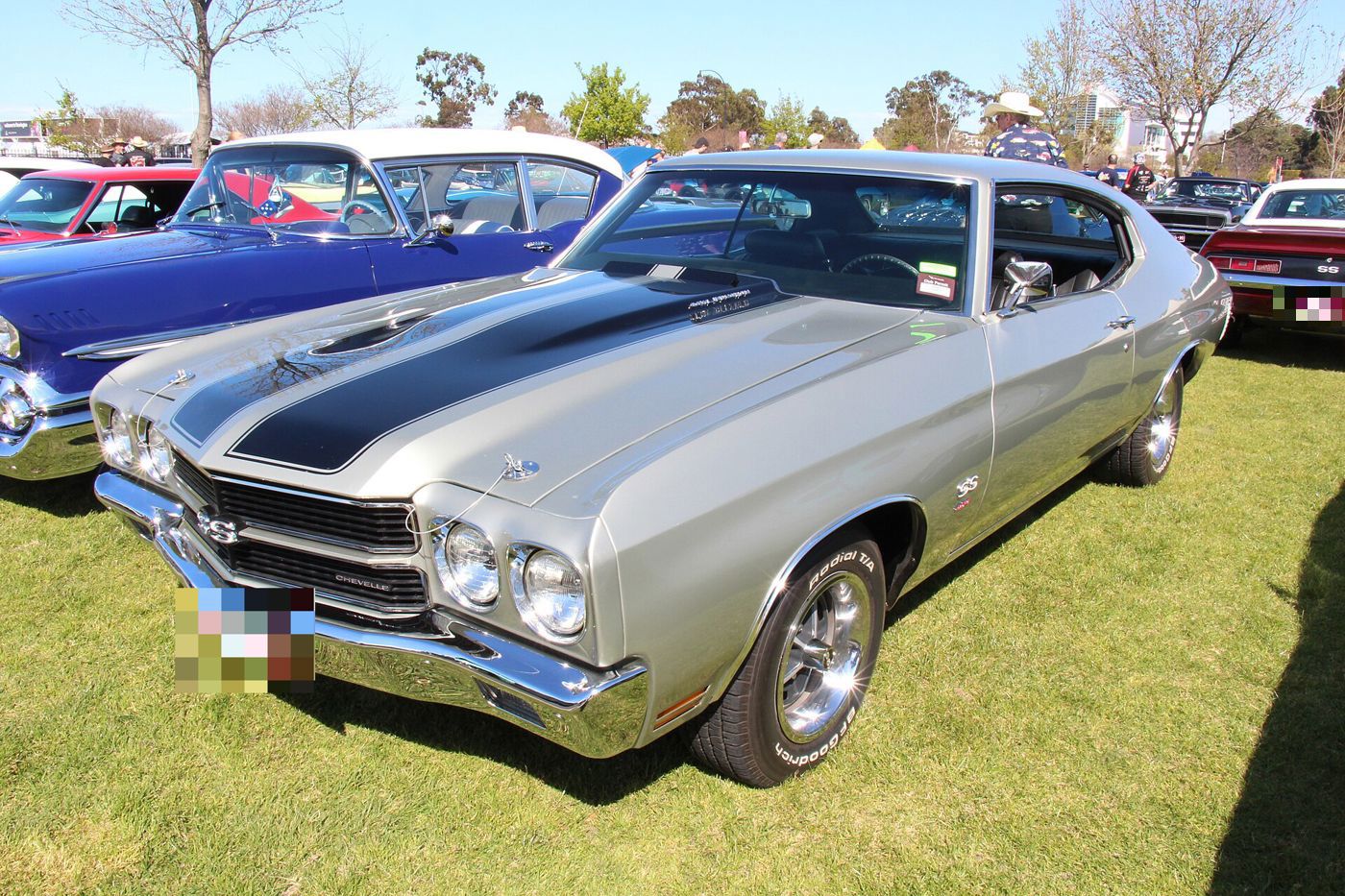
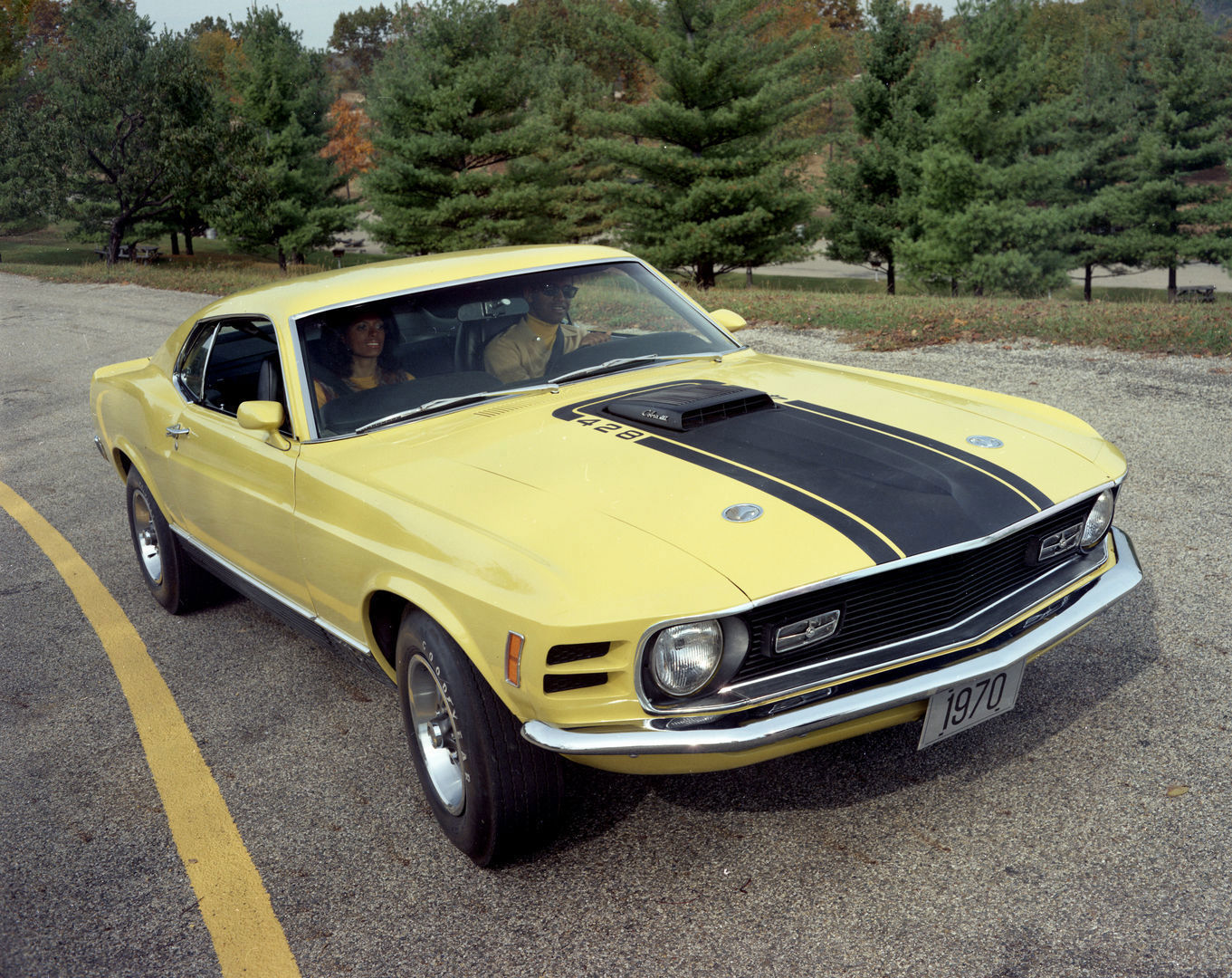
The 1970 order books read like an argument conducted with engines. Ford offered a Boss 302 shaped by road-racing homologation, a 351 Cleveland Mach 1, and a 428 Cobra Jet Ram-Air car. Chevrolet launched a completely new Camaro with SS 350, Z28 350, and SS 396 choices while placing a 450-horsepower LS6 in the Chevelle. Pontiac split its performance identity between GTO and the new Firebird Formula and Trans Am. Chrysler spread overlapping 340, 383, 440, and Hemi choices through Plymouth and Dodge bodies. AMC, Oldsmobile, and Buick supplied answers that make any two-marque account incomplete.
The comparison begins with complete configurations rather than badges. A 1970 Boss 302 means a 302 four-barrel, four-speed, 3.50 axle, brakes, tires, suspension, and Ford-advertised 290 horsepower at 5,800 rpm. A Camaro Z28 means a 350, 360 advertised gross horsepower at 6,000, heavy-duty four-speed, and 3.73 axle in the selected row. Their showroom engines were different sizes, but both packages translated a sporting identity into road hardware. Neither card imports the specifications of Jones’s Bud Moore Mustang or Hall’s Trans-Am Camaro.
The street-power pairing asks another question. Ford’s Mach 1 428 Cobra Jet Ram-Air carried 335 advertised horsepower and 440 lb-ft with a close-ratio four-speed. Chevrolet’s SS 396 L34 used an engine its own sheet identifies as 402 cubic inches, rated at 350 gross horsepower and 415 lb-ft. The badge remains “SS 396” because that is the marketed name; the actual displacement remains 402 because that is the factory technical fact. The interface can show both without correcting history into a name Chevrolet never used.
Intermediate buyers encountered even more branching. Pontiac advertised four GTO power teams, from the 350-horsepower 400 through the 455 and two Ram Air steps. Chevrolet offered Chevelle L34, LS5, and LS6 engines, with the October supplement supporting the LS6’s 450 brake horsepower. Buick’s GS 455 and Stage 1 shared a published 510 lb-ft while differing in horsepower, axle, and disputed compression evidence. Oldsmobile’s 4-4-2 and W-30 used 455 power with separate ratings and equipment. One remembered “top engine” cannot represent those order sheets.
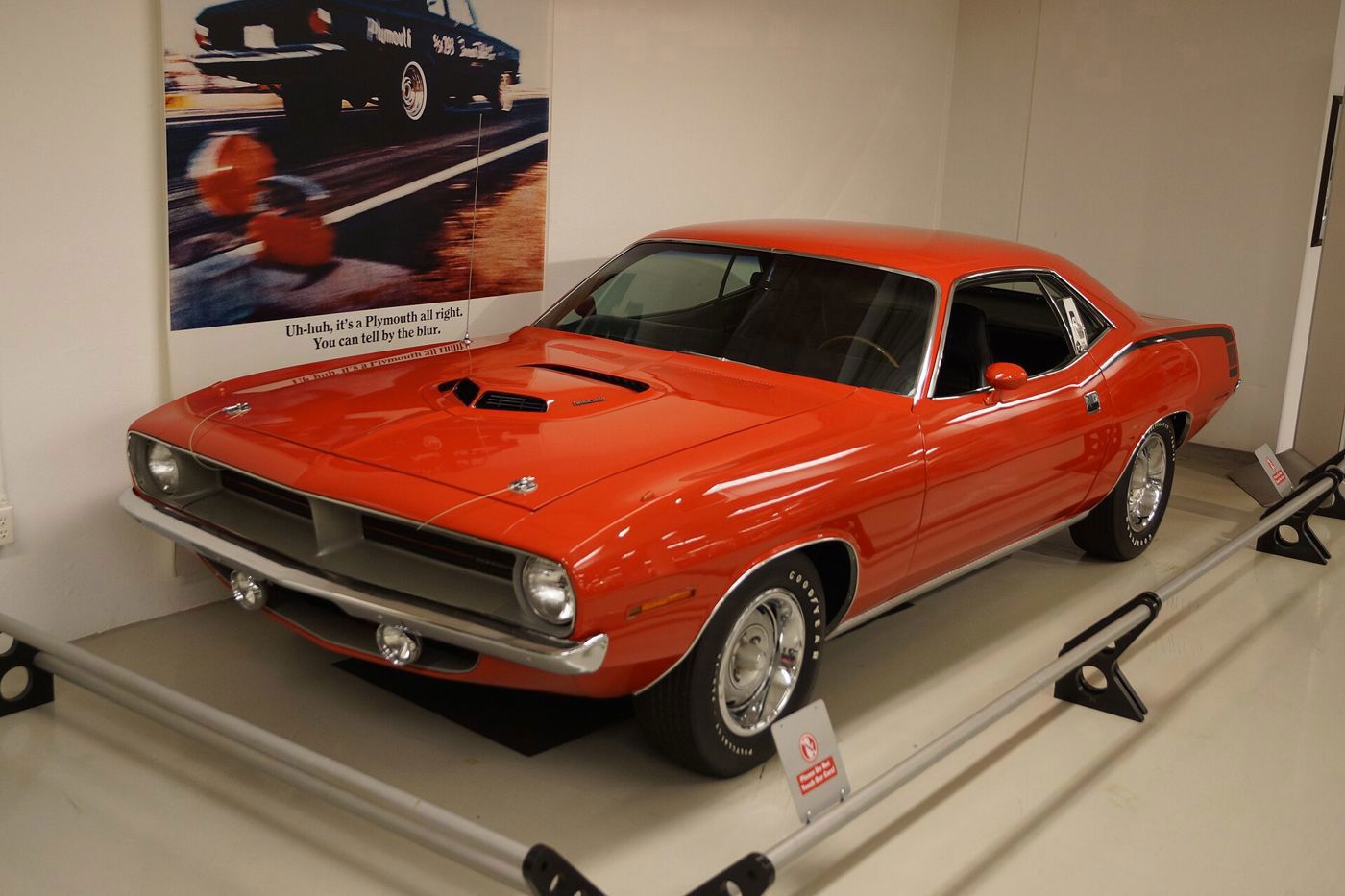
Plymouth made the overlap visible across bodies. Road Runner offered 383, 440 Six Barrel, and Hemi configurations. The new ’Cuda offered 340, 383, 440 Six Barrel, and Hemi combinations. Duster 340 placed the small-block in a lighter compact proposition. Dodge’s Challenger R/T answered with 383 Magnum, 440 Six Pack, and Hemi, while Charger R/T began with a 440 Magnum and TorqueFlite before opening Six Pack and Hemi branches. Plymouth’s “Six Barrel” and Dodge’s “Six Pack” remain source-facing names for related hardware.
AMC’s choices prevent 1970 from becoming only a maximum-displacement contest. Javelin SST and the two-seat AMX each supported 360 and 390 four-speed combinations, while the Rebel Machine received a distinct 390 rated at 340 horsepower. Ford’s Torino Cobra similarly offered two 429 paths, with Drag Pack treated as a package-specific projection rather than a new model. These cars show manufacturers repositioning body size, seating, and identity around power trains that cannot be understood from displacement alone.
Specialties occupy adjacent, labeled territory. Boss 429, Superbird, AAR ’Cuda, Challenger T/A, GSX, Judge, and Drag Pack do not all represent the same kind of upgrade. GSX is a package that could use standard GS 455 or Stage 1, so not every GSX is Stage 1. Judge is a GTO package, not an engine. Superbird is an aero homologation special. AAR and T/A require dedicated power-team evidence before their street output enters the selector. Famous names receive more context, not relaxed proof.
The Camaro’s separate February 26 sheets demonstrate why dates matter. They document 402/375 and 454/450 plans outside the normal February power table, but a technical insert alone does not prove ordinary customer ordering or delivery. Both remain visible holdbacks pending price schedules, order or cancellation records, and build evidence. The same discipline catches an internal L48 torque conflict: one GM page says the 380 lb-ft peak occurs at 2,200 rpm, another at 3,200. The selector holds the rpm instead of choosing the tidier answer.
Ratings keep their original scope. Chevrolet explicitly labels gross brake horsepower and gross torque. Other brochures often print period advertised output without stating the convention beside the table, so the database does not silently relabel every number SAE gross. Shipping, curb, performance, homologation, and race weights remain separate. An advertisement proves an offer, not production. A test result belongs to the vehicle, preparation, driver, conditions, and timing method actually observed.
The result is a 41-configuration map across fourteen models, not a bracket seeking one champion. Readers can compare Mach 1 to SS 350, Boss 302 to Z28, or Cobra Jet to SS 396/402, then move through GTO, LS6, Hemi, Stage 1, W-30, Torino, and Rebel Machine choices without losing provenance. Corvette remains on VetteFacts and the sports-car site, linked only where shared engines or people advance a specific story. In 1970, accuracy means preserving the crowded argument rather than declaring that one headline ended it.
Transmission selection keeps that map honest. A TorqueFlite Charger and a four-speed Charger can share an advertised engine rating while presenting different factory configurations. The same principle will permit automatic Camaro, Mustang, and other variants when their exact combination records are projected. A reader can compare manuals like for like or deliberately examine a transmission change. No trim-level summary silently decides which drivetrain the badge means.
The release is also designed to accept better evidence without destabilizing existing facts. A dated bulletin can resolve a running change; a build sheet can authenticate one car; a production ledger can define a population; and a period road test can add an observed result. Each enters its own layer. Unknown and disputed fields remain visible until then, making the first publication a durable foundation rather than a polished guess.
Most importantly, the breadth does not lower the evidence threshold. Every row still needs a manufacturer locator for package, engine, rating, and transmission. Families with one cleared variant remain visible without being padded, and famous specialties remain held when a dedicated sheet is missing. Forty-one choices are useful because each means something exact, not because the database pursued the largest possible count.