1971 · Buick · United States
1971 Buick GS: a prototype preview and two rating languages
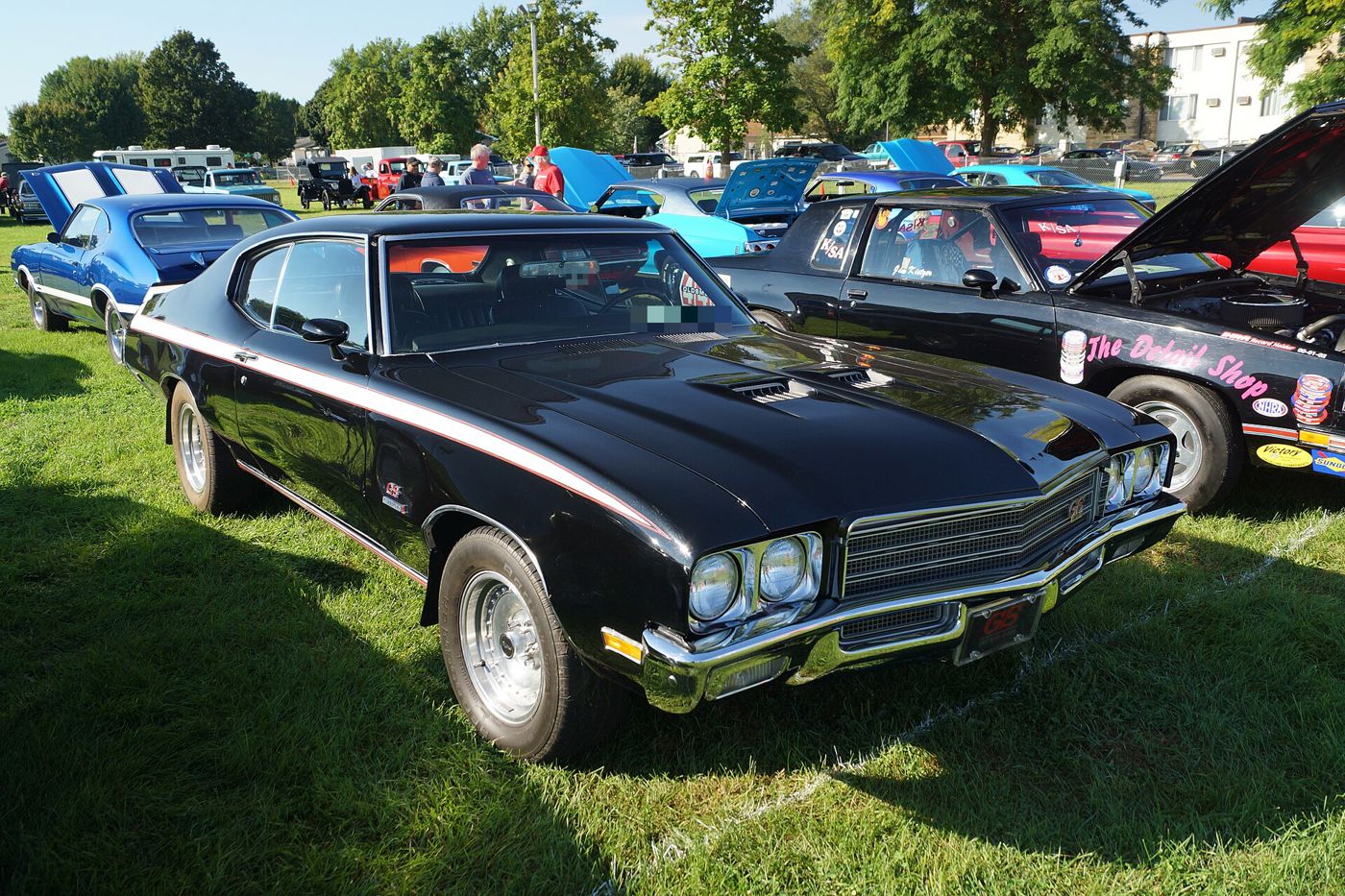
Buick’s revised factory form lists gross and net ratings for the GS engines; the early Stage 1 test used a pre-production car, and GSX appearance did not identify an engine.
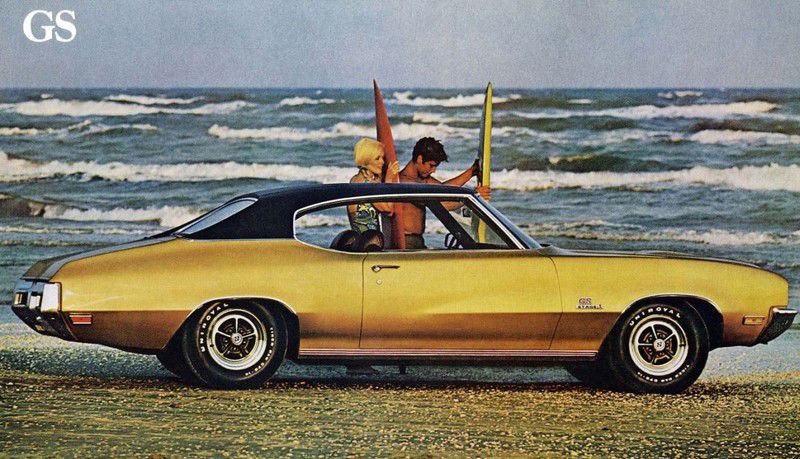
Motor Trend’s October 1970 preview reached 60 mph in 6.5 seconds with a Buick GS Stage 1 and recorded a 14.7-second quarter mile at 92.5 mph. The car was an early look at 1971: a 1970 body carrying a 1971 engine, with a Turbo Hydra-Matic and a 3.42 axle. Its two-person acceleration test was of that pre-production prototype or pilot-line car. It was not a production-car result, even though the engine represented the coming year. The magazine reported 8.5:1 compression, a measurable change, without giving a reason for it. A familiar body, a changed engine and a clearly limited test: that is where the 1971 GS story begins.1
Buick’s factory AMA form describes the production car. Issued October 3, 1970, its power-team page was revised May 1, 1971. The body-model table lists one GS series with a 43437 two-door hardtop and 43467 convertible; the power-team table then places the 350, ordinary 455 and Stage I 455 beneath that GS identity. All three listed GS engines have 8.5:1 compression and four-barrel carburetion. The GS name alone, then, did not say which engine a car had; that came with the body and equipment ordered. The revised factory table describes the specification as of its own revision, and it cannot settle every detail of the earlier magazine prototype.2,2,1
The factory Stage I row gives the rating directly. It lists 345 gross bhp at 5,000 rpm and 460 lb-ft at 3,000 rpm, alongside 275 net bhp at 4,400 rpm and 395 lb-ft at 3,000 rpm. These are separately labeled published nominal figures, not two competing answers or a measured rear-wheel result. The table itself gives different correction conditions for gross and net, so the labels and operating speeds matter. Over-Drive gives two figures of its own, 345 hp in its engine-tab heading and 315 hp at 4,400 rpm in its body text. The factory Stage I row is the period document for the revised specification.2,3
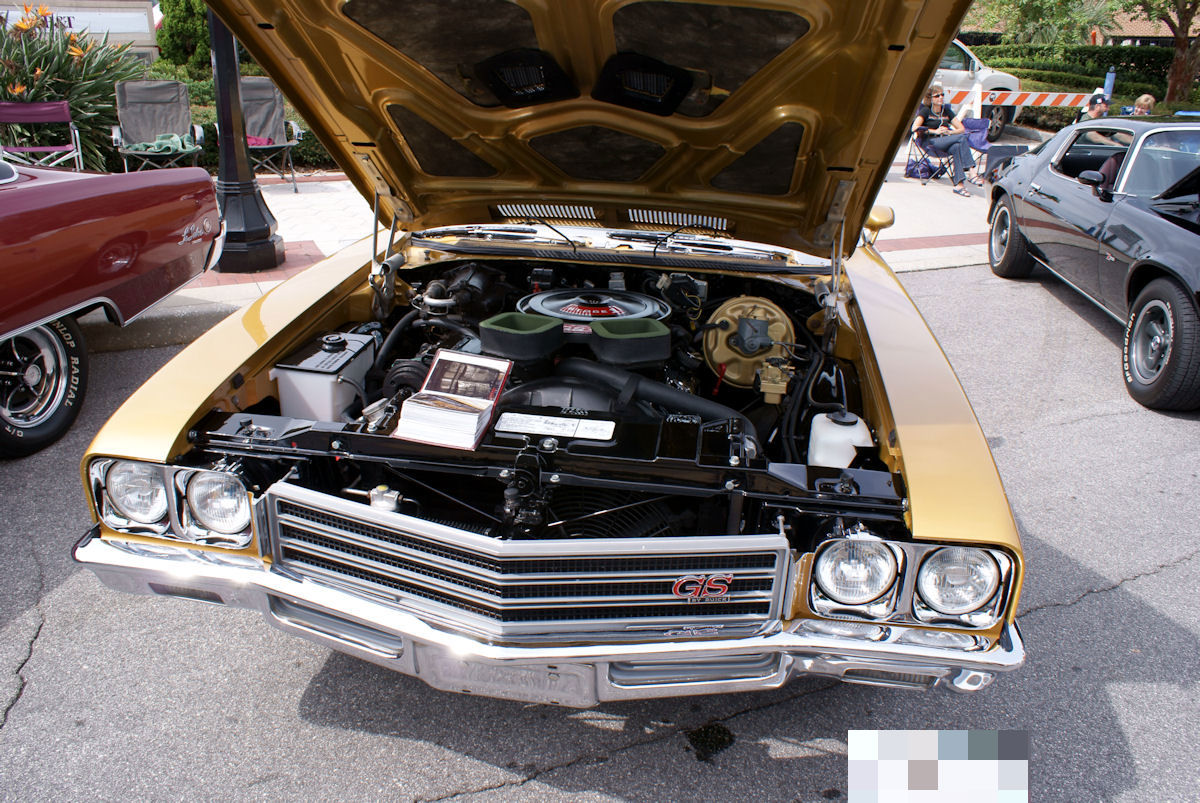

The other two engines show why the rating basis cannot be dropped from a comparison. Buick’s GS 350 row lists 260 gross bhp at 4,600 rpm and 360 lb-ft at 3,000 rpm, or 195 net bhp at 4,000 rpm and 290 lb-ft at 2,800 rpm. The ordinary 455 is listed at 315 gross bhp at 4,400 rpm and 450 lb-ft at 2,800 rpm; its net figures are 255 bhp at 4,200 rpm and 380 lb-ft at 2,800 rpm. Putting one engine’s gross horsepower beside another engine’s net horsepower would disguise what the table actually says. Read gross against gross and net against net, the parallel columns describe the engine choices far better than one unlabeled horsepower number could.2
The transmission and axle columns also attach the engine choices to particular power teams. The GS 350 table allows three- or four-speed manuals and an automatic, with its listed standard and performance axle alternatives. For Stage I, the revised table lists a four-speed manual or automatic with a 3.42 limited-slip axle for either. That matches the numerical axle ratio in Motor Trend’s early Stage 1, but one matching part does not make the prototype a production-representative car. The magazine’s 6.5-second and 14.7-second figures belong to its own car. The later factory ratings belong to their revised form. Put together, the two still do not make an authenticated specification for any surviving Buick.2,1
The GS 350-engined hardtop was priced at $3,666 and the convertible at $3,857. Those are nominal period amounts for the 350 cars, not the cost of every GS carrying a 455 or Stage 1 engine. Over-Drive also lists the Turbo Hydra-Matic 400 for the GS 455, a four-speed option for both engine branches, and the Turbo Hydra-Matic 350 in its GS powertrain account. The factory power-team page uses the generic word automatic rather than giving those transmission names. Engine, gearbox and price went together on each car, and the shared GS label was the start of an order, not a completed purchase specification.3,2
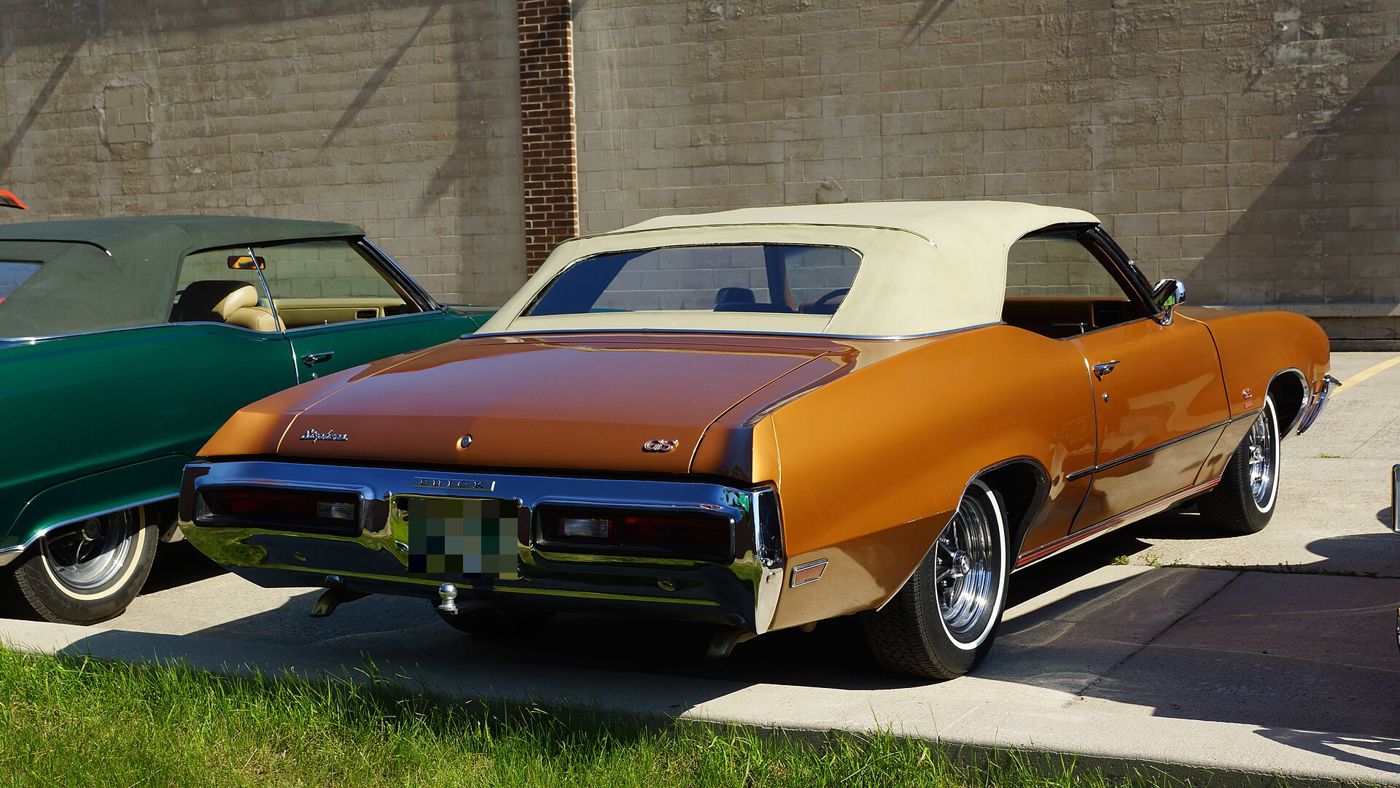

Buick built 9,170 GS cars, split into 8,268 hardtops and 902 convertibles, with GS 350 and GS 455 production combined. There is also an identifier disagreement: Over-Drive's table labels the convertible row 44667, while Buick’s factory body table and TeamBuick use 43467. All Buick intermediates, including the other Skylark series, came to 181,154. That larger number gives the whole line for context; it is not a GS-only production figure.3,2,4
The finer engine counts appear only in the compiler’s image captions, not in its headline production table. They give 5,986 GS 350 hardtops, 1,481 ordinary GS 455 hardtops and 801 Stage 1 hardtops; the last are divided into 114 four-speed and 687 automatic cars. The convertible captions give 656, 165 and 81 for those engine groups. The compiler quotes a GSX total of 124. None of these figures is fine enough to support an exact rarity claim for a particular combination of body, transmission, color and trim.3
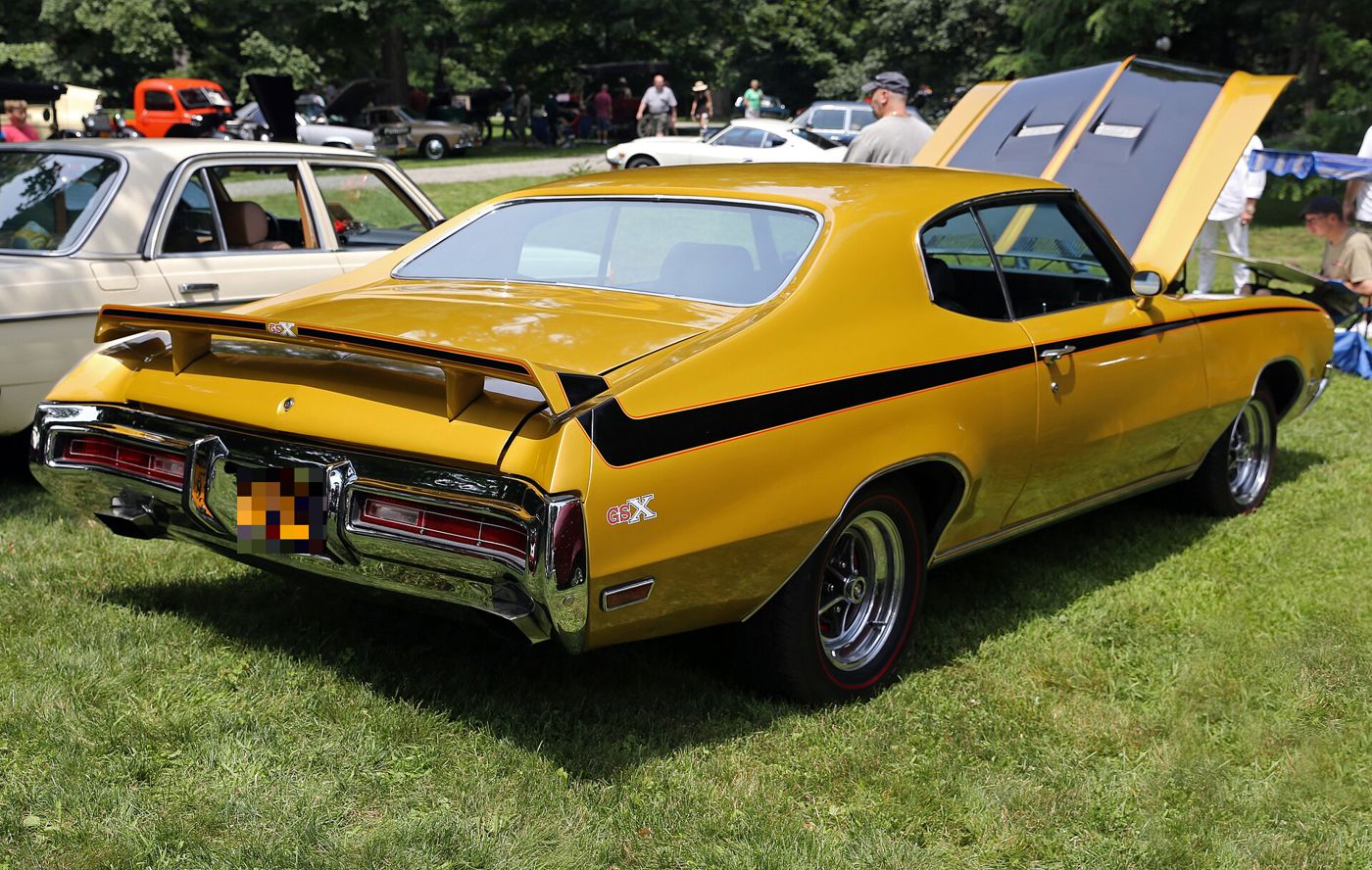

The GSX’s relationship to the range had its own limits. Over-Drive describes an appearance package available across the GS engine choices. Buick’s optional-equipment weight table labels its GSX automatic-and-console and four-speed-and-console entries for model 43437 only, the hardtop identified in the body table. Those lines say nothing about whether a convertible could have the same package, and they are not an installed production count. Nor is an equipment differential a complete curb weight. GSX stripes and a spoiler on a car today show the appearance, but they cannot establish the engine, original order or untouched condition. The factory document and the car itself answer different parts of the buyer’s question.3,2,2
Color, trim and engine markings finish that identification trail. The paint chart had twenty-five coded entries; trim ran to ten hardtop entries and five convertible entries, covering green, sandalwood, black, saddle and pearl white. The trim legend distinguishes bucket seats from notchback or 60–40 seats. TeamBuick's engine-code reference lists TB and TD for the 350 at 260 hp, TR for the 455 at 310 hp and TS for Stage 1 at 345 hp, figures that differ from the revised AMA ratings.3,4,2,1
Fact sheet · 1971 · United States
The numbers
1971 Buick GS, GS 455, Stage 1 and GSX: Buick’s revised factory form lists gross and net ratings for the GS engines; the early Stage 1 test used a pre-production car, and GSX appearance did not identify an engine.
Figures may describe different groups of cars. Add rows together only when the note says they make up a total.
Key facts
Production
| What was counted | Built |
|---|---|
| GS series (GS 350 and GS 455), all bodies3 GS · hardtop and convertible · 350, 455 and 455 Stage 1 | 9,170 |
| All Buick intermediates in table3 Skylark, Skylark Custom, GS | 181,154 |
| What was counted | Built |
|---|---|
| GS hardtop coupe (43437)3 GS · 2-door hardtop coupe | 8,268 |
| GS convertible (44667)3 GS · 2-door convertible | 902 |
| GS convertible, TeamBuick style number 434674 GS · 2-door convertible | 902 |
| What was counted | Built |
|---|---|
| GS 350 hardtop3 GS 350 · 2-door hardtop coupe · 350 4-barrel | 5,986 |
| GS 455 hardtop (standard 455)3 GS 455 · 2-door hardtop coupe · 455 | 1,481 |
| GS Stage 1 hardtop3 GS 455 Stage 1 · 2-door hardtop coupe · 455 Stage 1 | 801 |
| GS 350 convertible3 GS 350 · 2-door convertible · 350 | 656 |
| GS 455 convertible (standard 455)3 GS 455 · 2-door convertible · 455 | 165 |
| GS Stage 1 convertible3 GS 455 Stage 1 · 2-door convertible · 455 Stage 1 | 81 |
| What was counted | Built |
|---|---|
| GS Stage 1 hardtop, 4-speed3 GS 455 Stage 1 · 2-door hardtop coupe · 455 Stage 1 · 4-speed manual | 114 |
| GS Stage 1 hardtop, Turbo Hydra-Matic 4003 GS 455 Stage 1 · 2-door hardtop coupe · 455 Stage 1 · TH400 automatic | 687 |
| What was counted | Built |
|---|---|
| GSX package, all engines3 GSX · 350, 455 or 455 Stage 1 | 124 |
Prices when new
| Model | Price | Price type |
|---|---|---|
| GS hardtop (43437), GS 3503 | $3,666 | factory price, 1971 |
| GS convertible (44667), GS 3503 | $3,857 | factory price, 1971 |
Prices are the nominal dollars of the day, not adjusted for inflation.
Engines
| Engine | Factory rating | Availability |
|---|---|---|
| 350 V-8 4-barrel, GS 3502,3 350 cu in · one 4-barrel | 260 hp @ 4,600, 360 lb-ft @ 3,000 (Gross bhp (factory AMA, revised May 1, 1971)); 195 hp @ 4,000, 290 lb-ft @ 2,800 (Net bhp (factory AMA, revised May 1, 1971)) | standard, GS |
| 455 V-8, GS 4552,3 455 cu in · one 4-barrel | 315 hp @ 4,400, 450 lb-ft @ 2,800 (Gross bhp (factory AMA, revised May 1, 1971)); 255 hp @ 4,200, 380 lb-ft @ 2,800 (Net bhp (factory AMA, revised May 1, 1971)) | optional, GS |
| Stage 1 · 455 V-8 Stage 12,3 455 cu in · one 4-barrel | 345 hp @ 5,000, 460 lb-ft @ 3,000 (Gross bhp (factory AMA, revised May 1, 1971)); 275 hp @ 4,400, 395 lb-ft @ 3,000 (Net bhp (factory AMA, revised May 1, 1971)) | optional, GS 455 |
Ratings are published figures, not dyno results. Gross and net ratings aren't directly comparable.
Transmissions
| Transmission | Availability | Built |
|---|---|---|
| Turbo Hydra-Matic 4003 | optional, GS 455; reported 687 count covers Stage 1 hardtops only | 6873 |
| 4-speed manual3 | optional, GS 350 and GS 455 | |
| Turbo Hydra-Matic 3503 | optional, GS |
Options and packages
| Option | Installed |
|---|---|
| GSX package (two versions: without spoilers, with spoilers), any GS3 | 1243 |
Paint
| Code | Color |
|---|---|
11 |
Arctic White3 |
13 |
Platinum Mist3 |
16 |
Tealmist Gray3 |
19 |
Regal Black3 |
24 |
Cascade Blue3 |
26 |
Stratomist Blue3 |
29 |
Nocturne Blue3 |
39 |
Twilight Turquoise3 |
41 |
Silver Fern3 |
42 |
Willowmist Green3 |
43 |
Lime Mist3 |
49 |
Verdemist Green3 |
50 |
Bamboo Cream3 |
53 |
Cortez Gold3 |
55 |
Cornet Gold3 |
61 |
Sandpiper Beige3 |
62 |
Bittersweet Mist3 |
65 |
Copper Mist3 |
67 |
Burnished Cinnamon3 |
68 |
Deep Chestnut3 |
70 |
Pearl Beige3 |
73 |
Sunset Mist3 |
74 |
Vintage Red3 |
75 |
Fire Red3 |
78 |
Rosewood3 |
Color names are the factory's. We don't show color swatches, because a screen color is no guide for a restoration.
Interiors
| Code | Trim |
|---|---|
100 |
GS 2-Door Hardtop: Green, vinyl4 |
150# |
GS 2-Door Hardtop: Green, vinyl4 |
104 |
GS 2-Door Hardtop: Sandalwood, vinyl4 |
154# |
GS 2-Door Hardtop: Sandalwood, vinyl4 |
108 |
GS 2-Door Hardtop: Black, vinyl4 |
158# |
GS 2-Door Hardtop: Black, vinyl4 |
168* |
GS 2-Door Hardtop: Black, vinyl4 |
156# |
GS 2-Door Hardtop: Saddle, vinyl4 |
166* |
GS 2-Door Hardtop: Saddle, vinyl4 |
165* |
GS 2-Door Hardtop: Pearl White, vinyl4 |
134 |
GS Convertible: Sandalwood, vinyl4 |
138 |
GS Convertible: Black, vinyl4 |
150# |
GS Convertible: Green, vinyl4 |
155# |
GS Convertible: Pearl White, vinyl4 |
156# |
GS Convertible: Saddle, vinyl4 |
Specifications
| Measure | Value | Applies to |
|---|---|---|
| Wheelbase3 | 112 in | two-door bodies |
| Overall length3 | 203.2 in | two-door bodies |
| Stage 1 axle ratio1,3 | 3.42 :1 | Stage 1, stick or automatic |
Period road tests
| Test | Car tested | Result |
|---|---|---|
| Motor Trend, 1970-1010-60 mph | GS Stage 1 pre-production car ('70 body with '71 engine), Turbo Hydra-Matic, 3.42 axle, regular fuelprototype/pilot-line car; 2 aboard | 6.5 s |
| Motor Trend, 1970-101standing quarter mile | GS Stage 1 pre-production car, Turbo Hydra-Matic, 3.42 axle92.5 mph; prototype/pilot-line car | 14.7 s |
A road test result belongs to the one car that was tested, with its engine, gearing, tires, and conditions. It is not a figure for every car of the year.
Identification
- VIN
- E.g. 452691H000000: 4 = Buick; 2-3 = series (34 = GS); 4-5 = body (37 2-door hardtop, 67 convertible); 6 = year (1); 7 = plant (C, G, H, I, X, Y, Z); last six = production number.4
- Engine codes (GS)
- GS engines TB, TD (350, 260 hp), TR (455, 310 hp) and TS (455 Stage 1, 345 hp), all 8.5:1; ratings from TeamBuick.4
Where the sources disagree
1971 Stage 1 rating
Identification
Read a 1971 Buick VIN
The VIN decoder runs in your browser and never sends the VIN anywhere. How the factory numbered this year's cars:
Read next
The people and races behind the 1971 Buick Skylark Gran Sport, GS and GSX
- 1971: Two Horsepower Languages on One Factory Page Cross-marque story
- Every Buick Skylark Gran Sport, GS and GSX year 1965–1975
Same model year
Also in 1971
- AMC AMX The AMX name moves onto the redesigned Javelin as its top model. It is a derivative badge, not a continuation of the two-seater. 2,054 were built, all with the 360 or 401.
- AMC Hornet SC/360 AMC's one-year compact muscle car pitched as an insurance-friendly alternative. AMC reportedly planned 10,000, but 784 were built.
- AMC Javelin A new, flared-fender Javelin, with the AMX name as its top model. Javelin won AMC the 1971 Trans-Am manufacturers' championship.
- AMC Matador Machine The Rebel Machine's unadvertised successor: a 'Machine Go' package for the Matador hardtop, with reported counts from 43 to 68.
- Buick Riviera The boattail Riviera: 455 rated 315 gross / 255 net, GS 330 / 265; 3,175 of 33,810 were GS.
- Chevrolet Chevelle and Malibu SS A single RPO Z15 SS package now spanned small- and big-block V8s; 9,502 of 19,293 SS cars carried the LS5 454, and Chevrolet began printing net ratings beside gross.
- Chevrolet Chevy II and Nova SS limited to the L48 350 per the source; Rally Nova (RPO YF1) offered. Enthusiast-compiled production: 194,878 cars; Super Sport 7,015.
- Chevrolet El Camino SS A single RPO Z15 SS package on the Malibu/Custom El Camino, up to the 425 hp LS6; 19,293 SS cars across Malibu models.
- Chevrolet Monte Carlo SS The last SS 454 year: RPO Z20 on 1,919 of 128,600 Monte Carlos.
- Dodge Challenger Challenger's second year lost the SE, the R/T convertible, and the T/A; a new pillared coupe joined the hardtop and convertible, and production fell to roughly a third of 1970's.
- Dodge Charger A new, shorter third-generation body absorbed the Coronet two-doors and the Super Bee; it was the last year for the R/T and for a factory Hemi Charger.
- Dodge Coronet R/T and Super Bee The end of the line for Coronet performance: the two-door Coronets were replaced by the Charger, taking the Super Bee with them.
- Dodge Dart GTS, Swinger and Demon Dodge's version of the Duster fastback arrived as the Demon, and the Demon 340 became the performance Dart: 10,098 built, plus 85 Canadian Swinger 340 Specials.
- Ford Maverick Grabber The Grabber became its own model with a dual-scoop hood, and the 210 hp 302 V8 arrived; Classic Industries counts 38,963 Grabbers.
- Ford Ranchero GT The second Torino-based Ranchero year; reference counts give 3,632 GTs, while Barn Finds rounds the GT figure to about 3,900 of 24,946 Rancheros.
- Ford Thunderbird The last fifth-generation year kept the 360-hp 429 as standard; production fell to 36,055.
- Ford Torino A carryover year for the 1970 body; the Torino Cobra now came standard with a 351 four-barrel and offered the 429 Cobra Jet-R, but only 3,054 Cobras were built.
- Mercury Comet and Cyclone The final Cyclone year: production fell to a few thousand across Cyclone, Cyclone GT and Cyclone Spoiler.
- Mercury Cougar A larger second-generation Cougar, new body codes, and the one-year 429 Cobra Jet option, fitted to 448 cars.
- Oldsmobile Cutlass, 4-4-2 and Hurst/Olds Compression fell to 8.5:1 for regular fuel, the W-31 was dropped, the sports coupe was gone, and 4-4-2 production fell to 7,589.
- Plymouth Barracuda and 'Cuda Four headlamps and a new grille marked the second E-body year; the Hemi and 440 Six Barrel stayed on the 'Cuda order form, but Barracuda-line production fell to about a third of 1970's.
- Plymouth Duster 340 and 360 The Duster 340's second year brought a new grille, a Thermo-Quad 340 rated 275 gross and 235 net hp, and a $2,703 list price, while output fell to about 12,900.
- Plymouth GTX, Belvedere and Satellite On the redesigned 1971 Satellite body the GTX fell to 2,942 cars, only 30 of them with the Hemi.
- Plymouth Road Runner Redesigned on the new Satellite body as a hardtop only, the Road Runner fell to 14,218 cars, and a 340 joined the 383, 440, and Hemi.
- Pontiac Firebird and Trans Am The 455 HO year: the Trans Am's biggest engine, 2,116 cars, and a Formula line split across three V-8s.
- Pontiac GTO Lower compression, dual gross and net ratings, the 455 HO as the top engine, and production down to 10,532.
- Pontiac Grand Prix Boat-tail styling, lower compression, and the manual transmission gone by March: 116 of 58,325 had one.
- Pontiac Tempest and LeMans The Tempest name gives way to T-37; the GT-37 option carries on and the 455 HO is available in two-door LeMans models.